

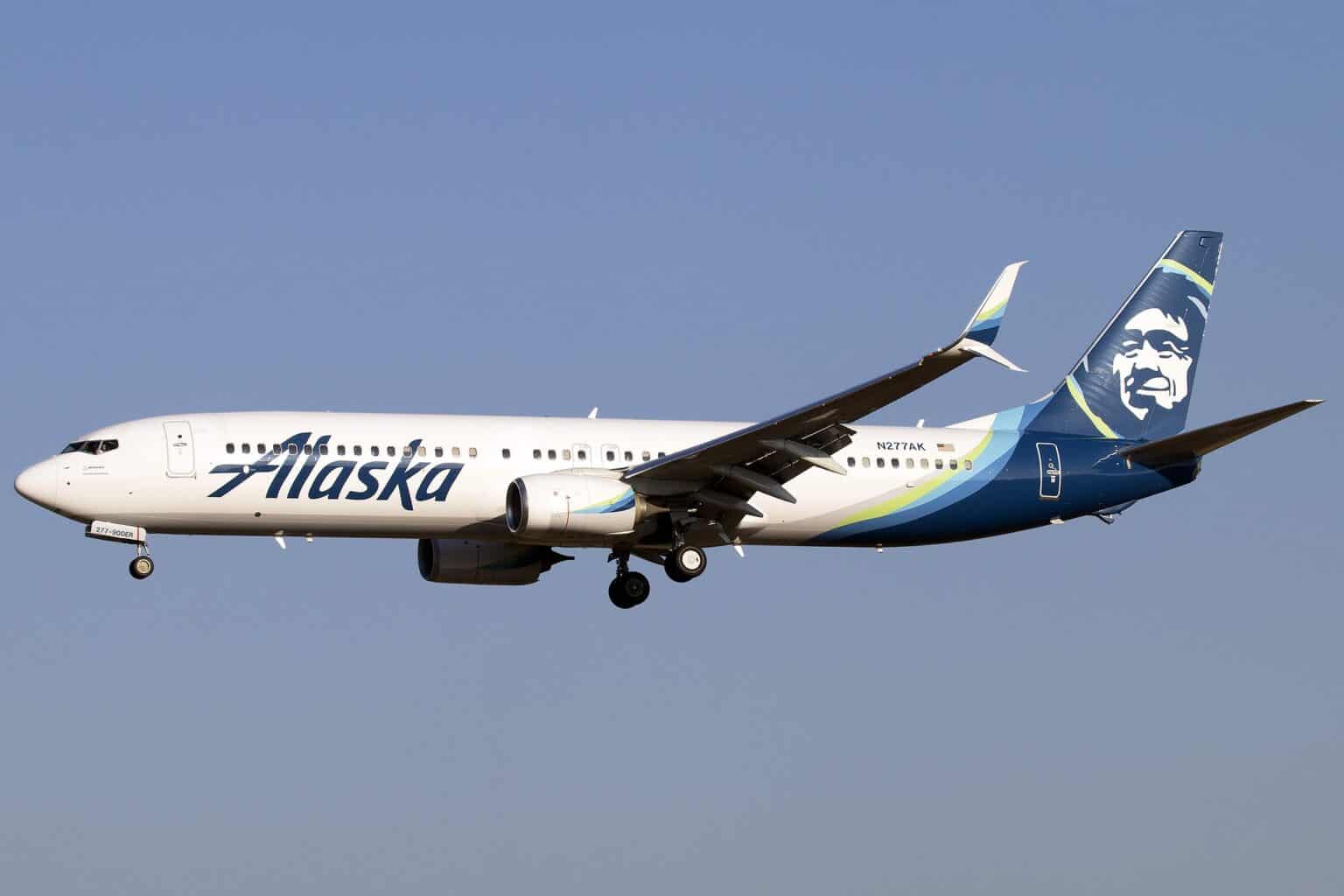
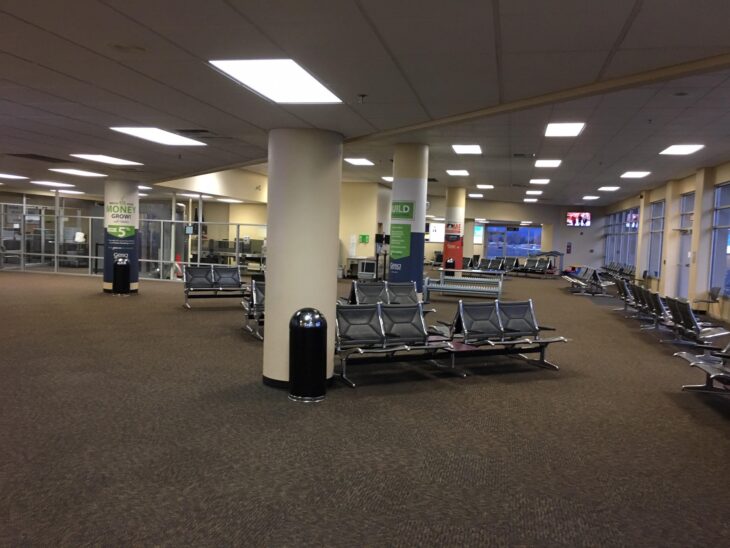
Alaska Airlines flight AS322 from Dallas-Fort Worth to Seattle diverted to Yakima, Washington, on Saturday night, November 7, 2026, after abandoning a rough approach to Seattle. Its 127 passengers and eight crew members spent the night on cots inside the Yakima Air Terminal and did not reach Seattle until the next afternoon.
Alaska did not put passengers in hotels or hand out meal vouchers, Elkhorn Media Group reported. Airport and county officials, the American Red Cross and Alaska’s sister airline Horizon Air filled the gap.
From a turbulent approach to a night in Yakima
The flight was operated by a Boeing 737-900ER, registration N277AK, according to Flightradar24 tracking data. It left Dallas-Fort Worth at 6:56 p.m. Central time, about 50 minutes behind schedule.
Elkhorn Media Group reported that the crew aborted a turbulent approach into Seattle-Tacoma International Airport late Saturday and the captain chose to divert. The jet landed in Yakima at about 9:25 p.m. Pacific time.
Sea-Tac’s weather reports show a burst of wind and heavy rain that evening. At 8:30 p.m. the wind swung from the south-southeast to the west-southwest, and by 8:53 p.m. the airport reported heavy rain, visibility of 3 miles (5 km) and gusts to 36 knots (41 mph). The peak gust, 41 knots (47 mph), came at 9 p.m.
Yakima, about 100 miles (165 km) to the southeast on the dry side of the Cascades, reported light wind, clear skies and 10 miles (16 km) of visibility at the same hour.
Weather, or a fuel indicator?
Only one of the two local reports mentions a mechanical problem. The Yakima Herald-Republic attributed the diversion to rough weather over western Washington.
Elkhorn Media Group added a mechanical issue: while the jet was being fueled for the short hop to Seattle, it was grounded over a faulty fuel indicator that needed inspection. Flightradar24 lists a Yakima to Seattle leg for AS322 scheduled at 9:55 p.m., with no departure recorded.
According to Elkhorn, Yakima Air Terminal director Christopher Hopkins coordinated the relief effort, and Tony Miller, director of the Yakima County Office of Emergency Management, requested mutual aid. The Red Cross brought cots, blankets, baby formula and water, and Horizon Air supplied meals.
A Seattle-based maintenance crew arrived Sunday morning to inspect the jet, Elkhorn reported.
The aircraft left Yakima at 2:02 p.m. Sunday under the flight number AS9230 and landed at Sea-Tac about half an hour later, according to Flightradar24. That was more than 16 hours after it had touched down in Yakima.
Yakima has taken Sea-Tac diversions before. In December 2023, a Delta A330 from London carrying 166 passengers and 13 crew diverted there because of fog and fuel, The Chronicle reported.

What an airline owes after a weather diversion
The answer depends on how the disruption is labeled. Large US airlines report a cause code to the Department of Transportation for every cancellation and every delay of 15 minutes or more, and the “Air Carrier” code covers only causes within the airline’s control, such as maintenance or crew scheduling. Weather has its own code.
The meal and hotel promises in airline customer service plans attach to controllable disruptions, the DOT says in its Federal Register rule. Weather is not a controllable cause, so a weather diversion falls outside those promises.
The fuel indicator would not necessarily have changed that. Under a new federal rule in force since October 19, 2026, unscheduled maintenance that cannot be deferred or must be fixed before flight no longer counts under the Air Carrier code.
The DOT’s own analysis expects the total value of amenities airlines provide to fall as a result. The passenger group FlyersRights has asked a federal appeals court to review the rule.
What is still unknown
AeroCorner could not find an Alaska Airlines statement on the diversion or on how the airline classified the overnight delay. The fuel indicator fault rests on a single local report.
Sources and references used for research and fact-checking.
Get the Newsletter
The latest aviation news and stories sent to your inbox.
About the Author

AeroCorner News is the aviation news desk of AeroCorner.com. It covers accidents and incidents, safety rulings, airline and airport disruption, and new aircraft. It works from primary sources such as the NTSB, FAA, EASA and the manufacturers' own announcements.