

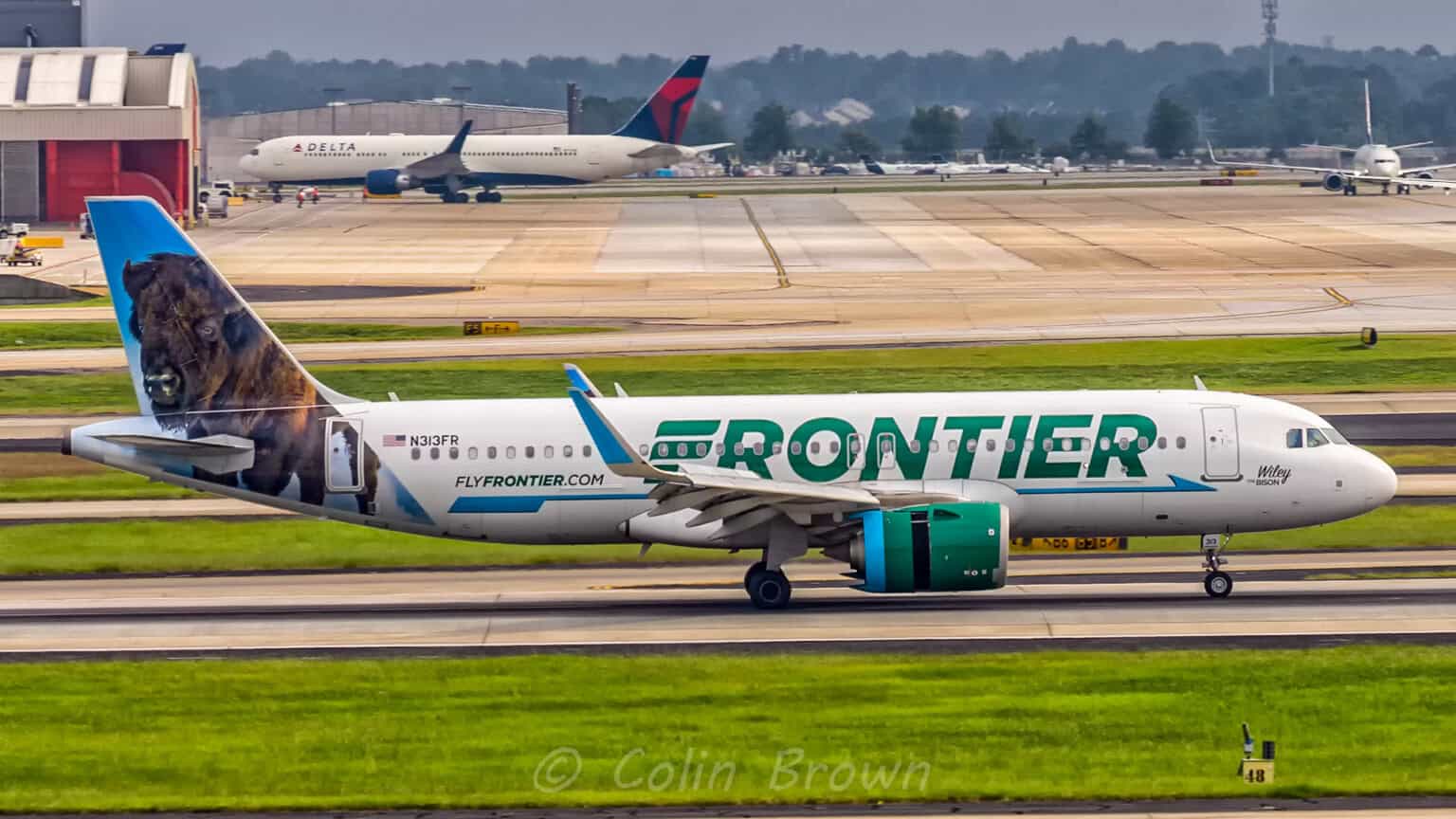
Passengers on Frontier Airlines flight 3409 from Detroit to Atlanta spent the night of Friday, September 11, 2026, in Knoxville, Tennessee. Weather in Atlanta forced the jet to divert, and the crew then ran out of legal duty time before the flight could continue.
In a statement reported by WBIR, Frontier said the flight “was forced to divert to Knoxville due to weather in Atlanta, and was subsequently forced to cancel due to legal time constraints.”
What happened to flight 3409
The Airbus A320 left Detroit at 3:43 p.m. and landed at McGhee Tyson Airport at 5:50 p.m. Eastern time, according to FlightAware data. On the days before and after, the same flight covered the full trip to Atlanta in about an hour and a half.
Frontier said passengers received $150 vouchers for ground transportation to their final destination and were offered hotel vouchers on request. It added a $100 voucher for future travel for each passenger “as a customer service gesture.”
Some passengers stayed in the terminal overnight, WBIR reported, because leaving would have meant getting new boarding passes, and their checked bags were still on the aircraft.
Passenger Nathan Hill told the station Frontier had given them “a series of excuses and vouchers, $10, $15 and $150,” for rental cars and food that were not available. Hill eventually got a rideshare and said the journey took more than 12 hours, against a scheduled 2.5.
Frontier had no scheduled flights of its own out of Knoxville to move passengers onto. It paused its only route there, a nonstop to Denver, after a final flight on August 17, which the airport authority described as a temporary hiatus, WVLT reported.
How a short diversion becomes an overnight stop
US airline pilots work under the FAA’s flight and duty rules in Part 117 of its regulations. The clock that matters is the flight duty period, which starts when a pilot reports for work, not at takeoff, and ends when the aircraft is parked after the last flight.
Part 117 caps that period at between 9 and 14 hours for a crew with no relief pilots, depending on when the day began and how many flights it includes.
A crew that reports between 5 p.m. and 9:59 p.m. is capped at 9 to 12 hours, while one that starts between 7 a.m. and 11:59 a.m. can be scheduled for up to 14.
The rules bend once an aircraft is in the air. If something unforeseen happens after takeoff, the captain and the airline may extend the limit as far as needed to land safely at the destination or an alternate airport, which covers the diversion itself.
A new takeoff is different. Before departure, an extension for unforeseen circumstances, which the rule says include unforecast weather, is capped at two hours, and an extension of more than 30 minutes can be used only once before the crew’s next rest.
Once a crew times out, the pilots need at least 10 consecutive hours of rest, with an 8-hour uninterrupted sleep opportunity, before they can fly again. That is why a timed-out evening flight so often means a night on the ground, unless the airline can bring in a fresh crew.
A diversion eats into the duty clock quickly. Flight 3409 spent more than two hours in the air to reach an airport short of its destination, and any time on the ground in Knoxville counted toward the same limit.
Storm diversions to secondary airports are a recurring summer problem. Earlier this summer, a United jet diverted to an Air Force base after storms closed Phoenix.
What is not yet known
Frontier has not said how long the crew had been on duty before the flight, whether it tried to send a replacement crew, or how many passengers were on board. It is also not known how long the aircraft sat in Knoxville before the flight was cancelled.
Sources and references used for research and fact-checking.
Get the Newsletter
The latest aviation news and stories sent to your inbox.
About the Author

Tim is the owner and lead editor of AeroCorner since 2019, overseeing aviation content covering aircraft, airlines, airports, and the broader aviation industry. Through years of researching, writing, editing, and publishing aviation-focused content, he has developed extensive practical knowledge of commercial aviation and air travel. Based in Asia and a frequent traveler himself, Tim also brings firsthand passenger experience to AeroCorner’s coverage. Outside of publishing, he has also explored aviation firsthand through hands-on flight training in New Zealand.