

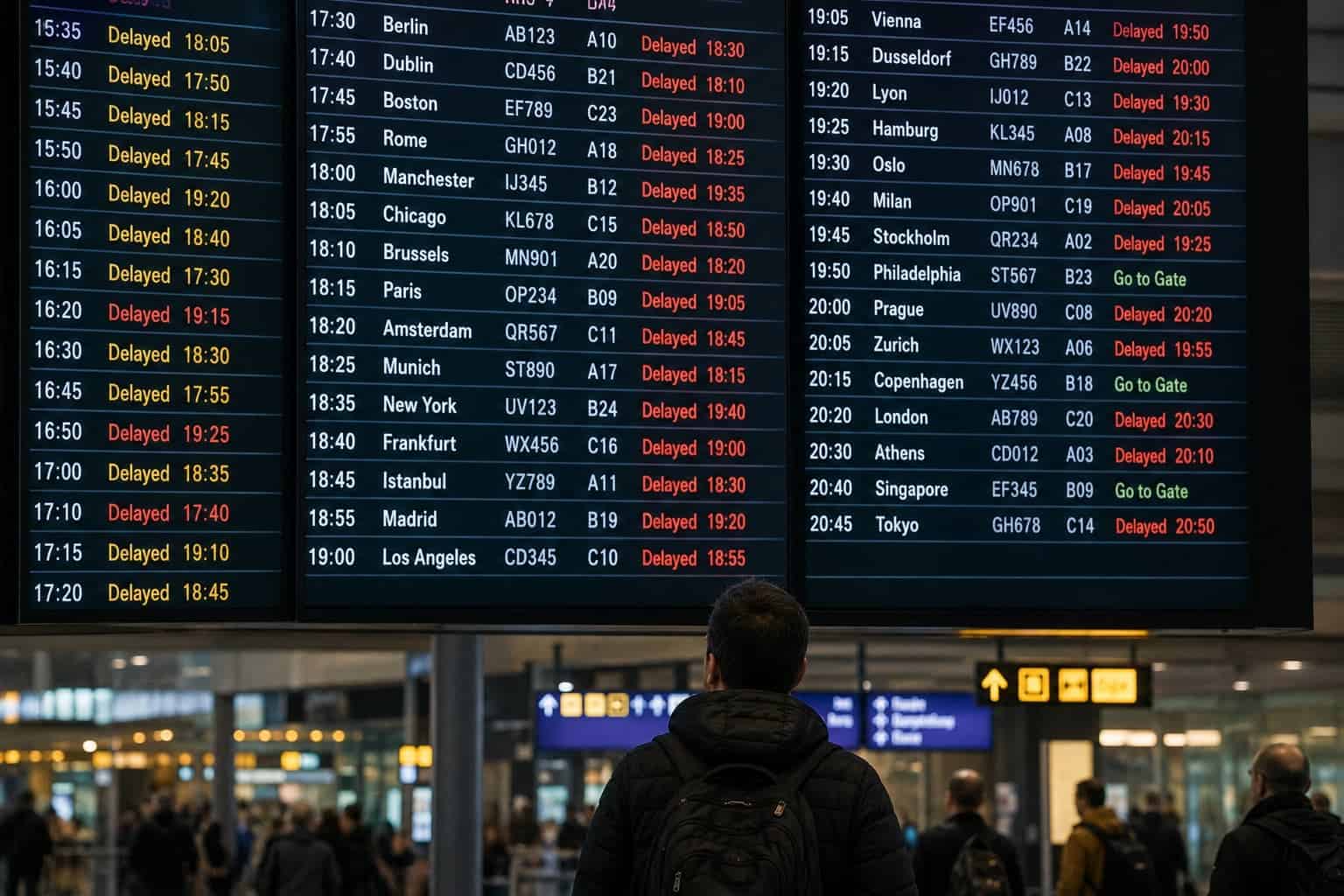
On September 3, 2026, the US Department of Transportation published a final rule that changes how airlines classify the causes of flight delays and cancellations. Starting October 19, 2026, ten types of disruption move out of the reporting category that triggers most airline promises of meals, hotel rooms, and rebooking.
What the rule does
The rule carries out Section 511(b) of the FAA Reauthorization Act of 2024, a law the Senate passed 88 to 4. Congress told the DOT to create a separate reporting code for ten specific events it decided are outside an airline’s control.
Today, airlines report most delays and cancellations under an “Air Carrier” code that covers causes within their control, such as crew scheduling, maintenance planning, and computer systems. Every large US carrier has a customer service plan, tracked on a public DOT dashboard, that promises a meal after a long controllable delay and a hotel when a controllable disruption strands a traveler overnight.
The ten causes now carved into their own category are:
- Aircraft cleaning required by the death of a passenger
- Aircraft damage from extreme weather, foreign object debris, or sabotage
- A baggage or cargo loading delay from an outage of a bag system the airline does not control
- Cyberattacks, provided the airline followed applicable cybersecurity rules
- An unexpected shutdown or failure of a government system needed to fly safely
- Overheated brakes after a safety incident that forced emergency procedures
- Unscheduled maintenance that cannot be deferred, including work ordered by an airworthiness directive
- A medical emergency that was not the airline’s fault
- Delays caused by removing unruly passengers
- Airport closures from volcanic ash, high wind, or wind shear
What it means for passengers
The DOT describes the change as a reporting adjustment. The rule creates a new category to capture the ten events and does not, by its own text, rewrite any airline’s obligations to travelers.
The catch is that airline meal and hotel commitments are written to apply to “controllable” delays and cancellations. Pull ten causes out of that bucket and the promise no longer attaches to them. A passenger stranded overnight by unscheduled maintenance, one of the more common controllable reasons a flight fails today, may no longer be owed a room.
Coverage of the rule by Simple Flying and Upgraded Points reached the same conclusion: passengers will have less certainty that a meal, a hotel, or ground transport will be covered, though airlines can still provide them voluntarily. This is the mechanism behind why airlines would rather delay you than cancel you, since the label attached to a disruption decides who pays for it.
What has not changed
You are still entitled to a prompt automatic refund if your flight is cancelled or significantly changed and you choose not to fly. That comes from a separate 2024 DOT rule that remains in force, and the money must go back to your original form of payment without you having to ask.
Weather and air traffic control delays were never counted as controllable and never carried amenity promises, so nothing shifts there. Most of the reasons flights run late already sit outside the airline’s control.
The rule is also separate from the Biden-era proposal to require Europe-style cash compensation for controllable delays, which would have paid $200 to $775 depending on the length of the delay. The DOT withdrew that proposal in September 2025, saying it lacked the legal authority.
Reality check
The change is easy to miss because it is technical: it moves rows between columns in a government report. But the line it redraws, which causes count as the airline’s fault, is the same line that decides whether you get a hotel voucher or a bench at the gate.
Sources and references used for research and fact-checking.
Get the Newsletter
The latest aviation news and stories sent to your inbox.
About the Author

Tim is the owner and lead editor of AeroCorner since 2019, overseeing aviation content covering aircraft, airlines, airports, and the broader aviation industry. Through years of researching, writing, editing, and publishing aviation-focused content, he has developed extensive practical knowledge of commercial aviation and air travel. Based in Asia and a frequent traveler himself, Tim also brings firsthand passenger experience to AeroCorner’s coverage. Outside of publishing, he has also explored aviation firsthand through hands-on flight training in New Zealand.