

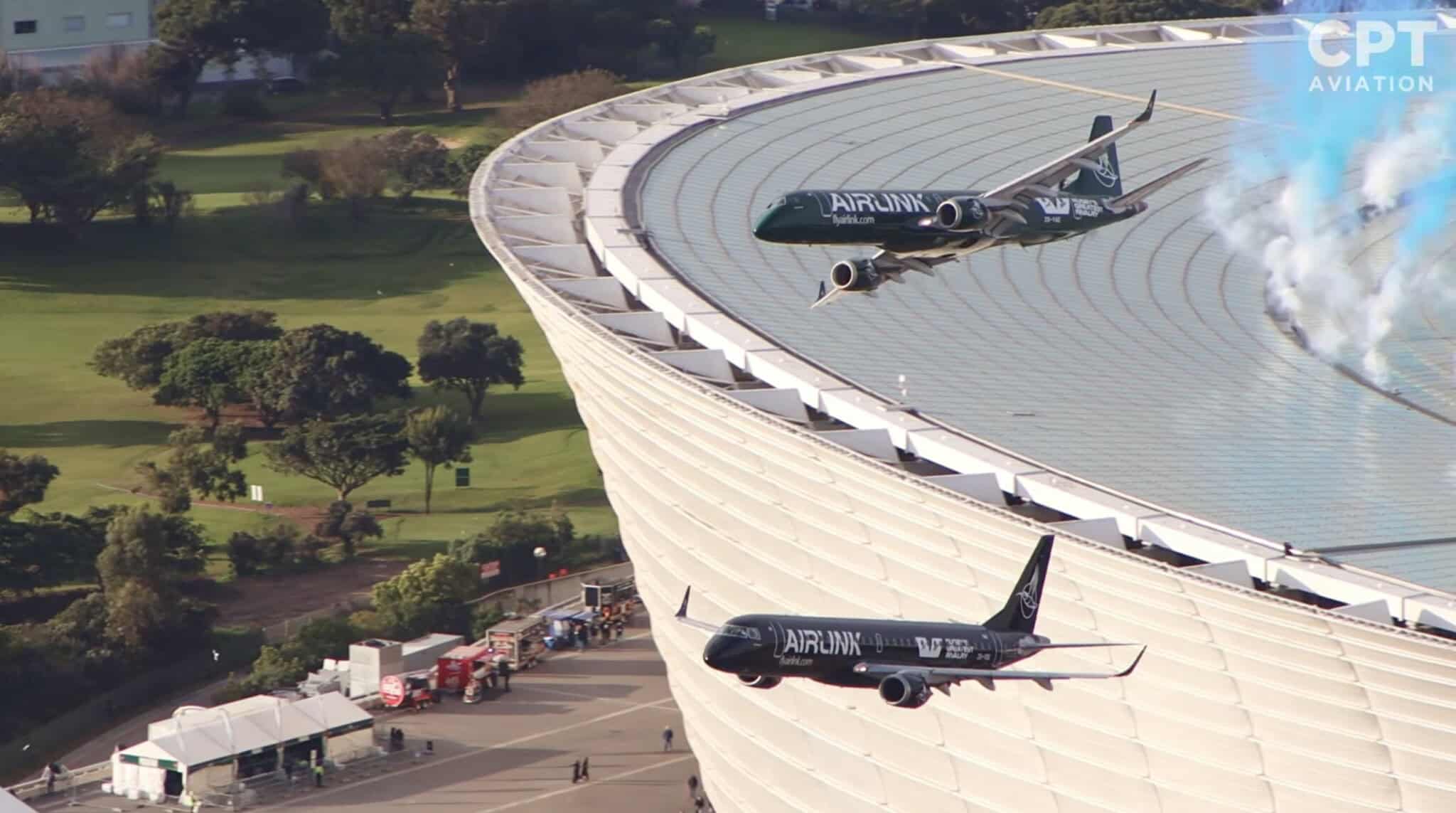
On September 1, 2026, Airlink told South Africa’s Civil Aviation Authority it was withdrawing its application for a third stadium flypast, planned for September 5. The regulator, which had already begun reviewing flight data from the airline’s low pass over Cape Town Stadium on August 29, confirmed the withdrawal in a statement the next day.
Airlink’s chief executive, de Villiers Engelbrecht, said the third pass was called off because the weather forecast was unsuitable for safe formation flying. The SACAA noted the withdrawal without tying it to its own review.
What the regulator is checking
The August 29 flypast sent two Airlink Embraer jets, an Embraer E195 in the lead and an E190 in trail, over a full DHL Stadium in Cape Town before the Springboks played the All Blacks. The formation crossed the stadium at about 150 knots, and the low altitude drew immediate criticism.
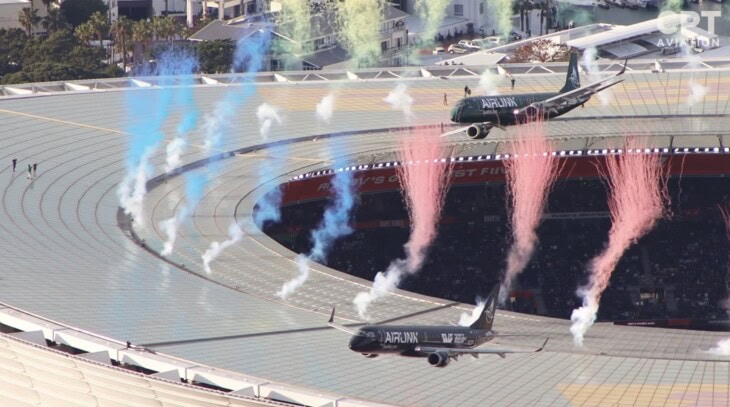
In its statement, the SACAA said the flight had been approved under Part 91.06.32, the rule covering flights that do not carry passengers or cargo, and prepared under the regulations for special air events. After the pass drew public attention, the regulator opened a compliance check, engaged Airlink, downloaded the flight data recordings from both aircraft and requested further information.
The core question is whether the crews stayed inside the approved altitude and speed limits. Airlink has said its recorded data shows the flight was flown within the rehearsed and approved parameters. The SACAA said it will share a full report with recommendations once its assessment is finished.
Reality check: the review is not finished
The SACAA has not said whether the Cape Town crews broke any rule. Its report and recommendations are still pending, and Airlink maintains its recorded data shows the pass stayed inside approved limits. Until the regulator publishes its findings, the safety question is open.
Why a stadium flypast is a hard case
A special air event approval sets a defined profile: a minimum height, a maximum speed, formation spacing, fixed entry and exit paths, and points at which the crew must break off. Airlink says it rehearsed the routine in a simulator and held a safety briefing beforehand, as the rules require.
A packed stadium is a demanding venue because the crowd cannot be moved, and a low, slow formation carries little spare energy and few options if an engine or a bird strike intervenes. Reporting by Daily Maverick cited aviation analyst Guy Leitch, who estimated the jets were 40 to 50 feet above the roof when a floor closer to 400 to 500 feet above ground would be more usual for this kind of pass.
This was the last of three flypasts Airlink had sought approval for this rugby season, after passes over Johannesburg on August 22 and Cape Town on August 29. The concern regulators tend to name in these cases is “normalisation of deviance,” where a maneuver that goes smoothly each time slowly drifts past the margins it started with.
August 22, 2026
First flypast. Airlink flies a formation pass over a stadium in Johannesburg, the first of three approved for the rugby season.
August 29, 2026
Cape Town pass. Two Airlink Embraer jets cross DHL Stadium at low altitude before the Springboks play the All Blacks, drawing public criticism.
September 1, 2026
Third application withdrawn. Airlink tells the SACAA it is pulling its request for a flypast over FNB Stadium on September 5, citing the weather forecast.
September 2, 2026
Regulator responds. The SACAA confirms it has downloaded both aircraft’s flight data recordings and will issue a report with recommendations.
Sources and references used for research and fact-checking.
Get the Newsletter
The latest aviation news and stories sent to your inbox.
About the Author

Tim is the owner and lead editor of AeroCorner since 2019, overseeing aviation content covering aircraft, airlines, airports, and the broader aviation industry. Through years of researching, writing, editing, and publishing aviation-focused content, he has developed extensive practical knowledge of commercial aviation and air travel. Based in Asia and a frequent traveler himself, Tim also brings firsthand passenger experience to AeroCorner’s coverage. Outside of publishing, he has also explored aviation firsthand through hands-on flight training in New Zealand.