

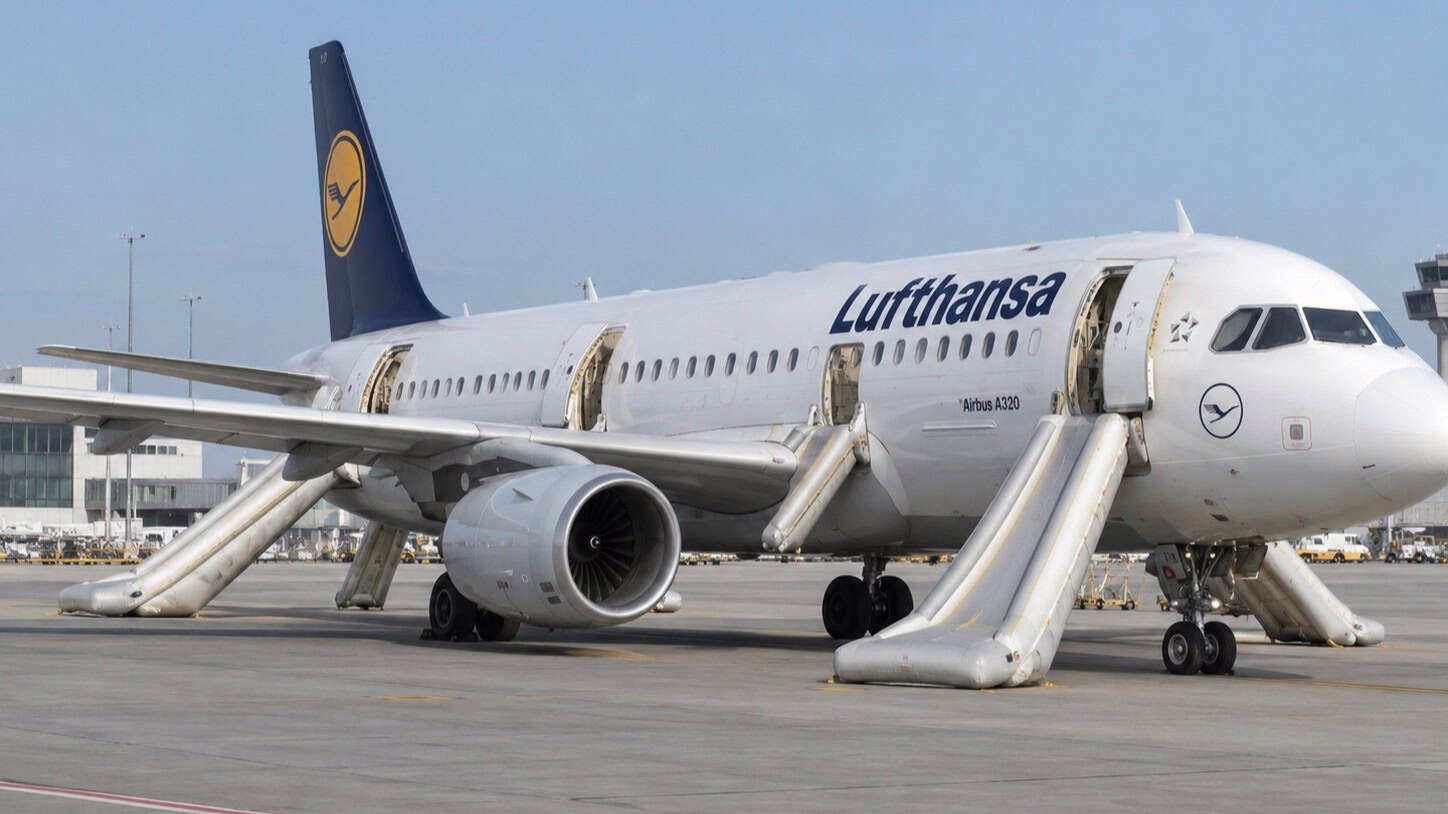
On October 15, 2026, the FAA proposed an airworthiness directive (AD) covering all FAA-certificated Airbus A318, A319, A320 and A321, after reports of door evacuation slides that failed to inflate during emergency evacuations. The agency traces the failures to a connector on the slide’s inflation hose, which fractured and separated.
The proposal would require operators to replace each affected slide with a serviceable one and would ban installing affected slides. The FAA counts 1,998 US-registered airplanes under the rule and is taking comments until November 30, 2026.
Which slides are affected
The FAA rule would incorporate European directive EASA AD 2026-0037R1 by reference, with a few exceptions. EASA issued that revision on May 4, 2026, updating an original directive dated February 25.
The European directive names two slide families, listed below, affected below set serial numbers. A slide of those part numbers outside the ranges is also caught if it was later refitted with an affected inflation hose, unless it has been inspected and re-identified under the Safran bulletin and no affected hose went back on.
| Part | Part number | Affected |
|---|---|---|
| Forward door evacuation slide | D31516-XXX | Serial numbers before M11767, C1745, L25862 or A17696 |
| Aft door evacuation slide | D31517-XXX | Serial numbers before M11772, C1745, L25862 or A17609 |
| Inflation hose assembly | 63667-101, 63667-103 | All serial numbers |
| Inflation hose assembly | 68906-101 | Serial numbers below 4407 |
The fix starts with the slide supplier. Safran Aerosystems Evacuation issued vendor service bulletin A320 004-25-130 in February 2024, and Airbus followed with service bulletins A320-25-1CML and A320-25-1CMM in October 2025.
Jets with no affected slide fitted face only the installation ban. EASA counts jets built or retrofitted with slide rafts (Airbus modification 20233 or service bulletin A320-25-1055) in that group, provided no affected slide went on afterward.
Why a hose connector stopped the slides
Neither the FAA proposal nor the EASA directive identifies the evacuations in which slides failed. The comment response document EASA published with its directive does explain the cause in more detail.
EASA called it mainly a design weakness. During folding and packing, a banding board can be placed incorrectly over the hose’s swivel fitting, and that leads the connector to fracture and separate.
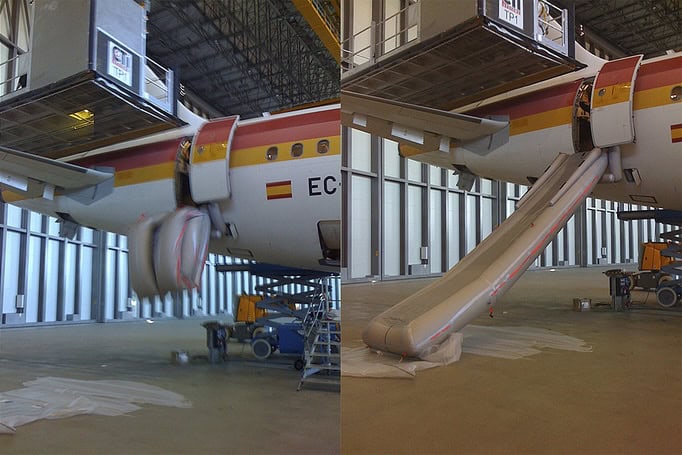

In its own comment, British Airways cited the Safran bulletin as saying an improved swivel fitting, designed to resist side loads, entered the 68906-101 hose at serial number 4407 in 2015. That is the cutoff the directive uses.
These slides have a history. In 2004, France’s civil aviation authority, acting for EASA, ordered a hose retainer fitted to forward and aft door slides in the same D31516 and D31517 families. The manufacturer had seen several incomplete inflations in test deployments at its facility, traced to the hose rupturing at its end fitting.
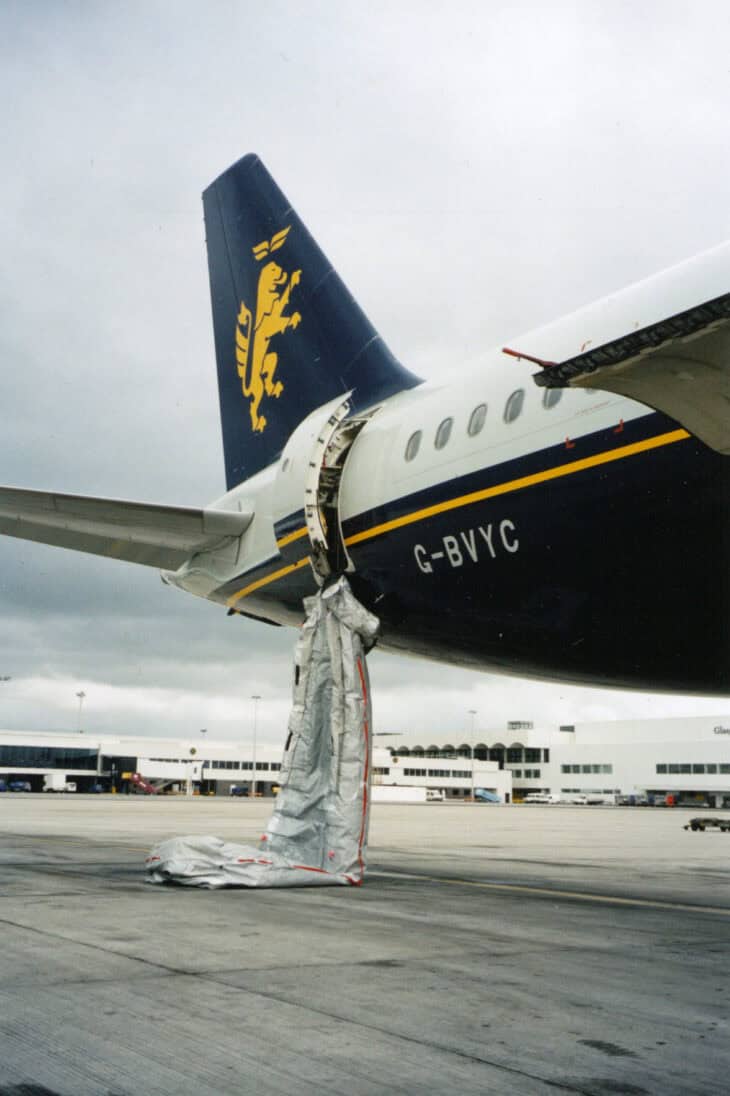
Airlines pushed back on the timeline
EASA gives operators 36 months from March 11, 2026, the original directive’s effective date. The FAA version would start that 36-month clock on the day its own final rule takes effect.
British Airways told EASA it had never met the problem in 30 years of slide overhauls, put its exposure at about 500 slides, and asked for the rule to be withdrawn or aimed at maintenance shops instead. EASA declined, pointing to the design weakness.
United Airlines’ engineering team called the work feasible but asked for 48 months, citing 109 affected aircraft carrying 436 slides and the 19-week lead time the Safran bulletin quotes for the 68906-101 hose. Lufthansa Technik said several thousand affected hoses are in service, a figure it said Safran confirmed.
EASA kept the 36-month deadline but changed the installation rule from its draft. A jet that still carries affected slides may keep receiving them, at any position, until all of its affected slides have been replaced.
The FAA estimates the job at 21 work hours, or $1,785 in labor at $85 an hour, plus $2,172 in parts. That is $3,957 per airplane and $7,906,086 across the US fleet.
It is the latest in a run of FAA actions on the family this year, after a landing gear rib AD in September.
Why one slide matters
FAA certification rules require a jet with more than 44 seats to show that a full load of passengers and crew can get out within 90 seconds under simulated emergency conditions. The demonstration uses only one exit from each pair.
A slide that stays packed takes a floor-level exit out of use. EASA says that could leave one evacuation path unusable and possibly injure occupants, at the moment crews have no time to spare.
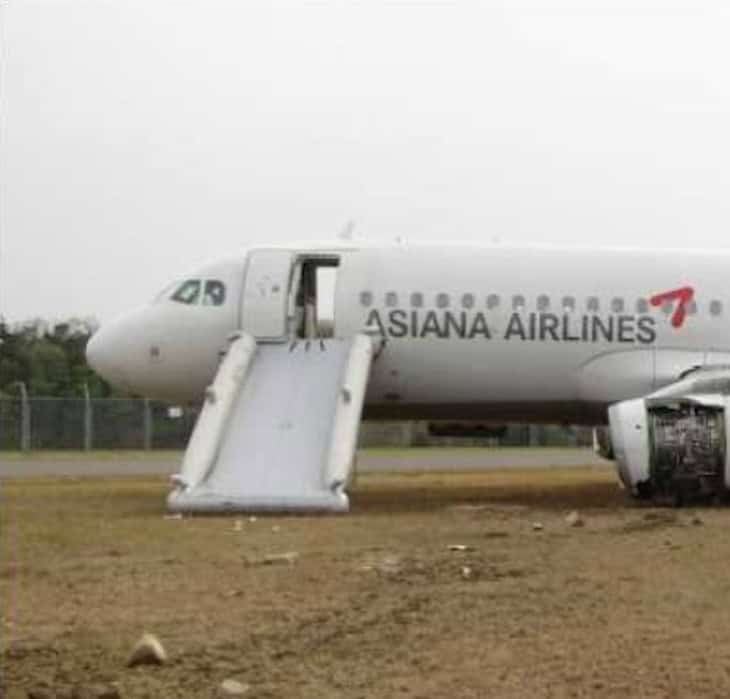
Real slide evacuations do happen, as in September, when ANA flight NH1502 evacuated by slide at Naha with 158 people on board.
Sources and references used for research and fact-checking.
- Federal Register (FAA), Airworthiness Directives; Airbus SAS Airplanes (NPRM, Docket FAA-2026-11810)
- EASA, AD 2026-0037R1: Equipment/Furnishings - Evacuation Slide/Inflation Hose Assemblies - Replacement
- EASA, Comment Response Document, PAD 26-002 (in the AD 2026-0037R1 attachment zip)
- DGAC France (for EASA), AD F-2004-072: Passenger door emergency escape slides (superseded)
- eCFR via Cornell LII, 14 CFR 25.803 Emergency evacuation
- eCFR via Cornell LII, 14 CFR Part 25 Appendix J
Get the Newsletter
The latest aviation news and stories sent to your inbox.
About the Author

AeroCorner News is the aviation news desk of AeroCorner.com. It covers accidents and incidents, safety rulings, airline and airport disruption, and new aircraft. It works from primary sources such as the NTSB, FAA, EASA and the manufacturers' own announcements.