

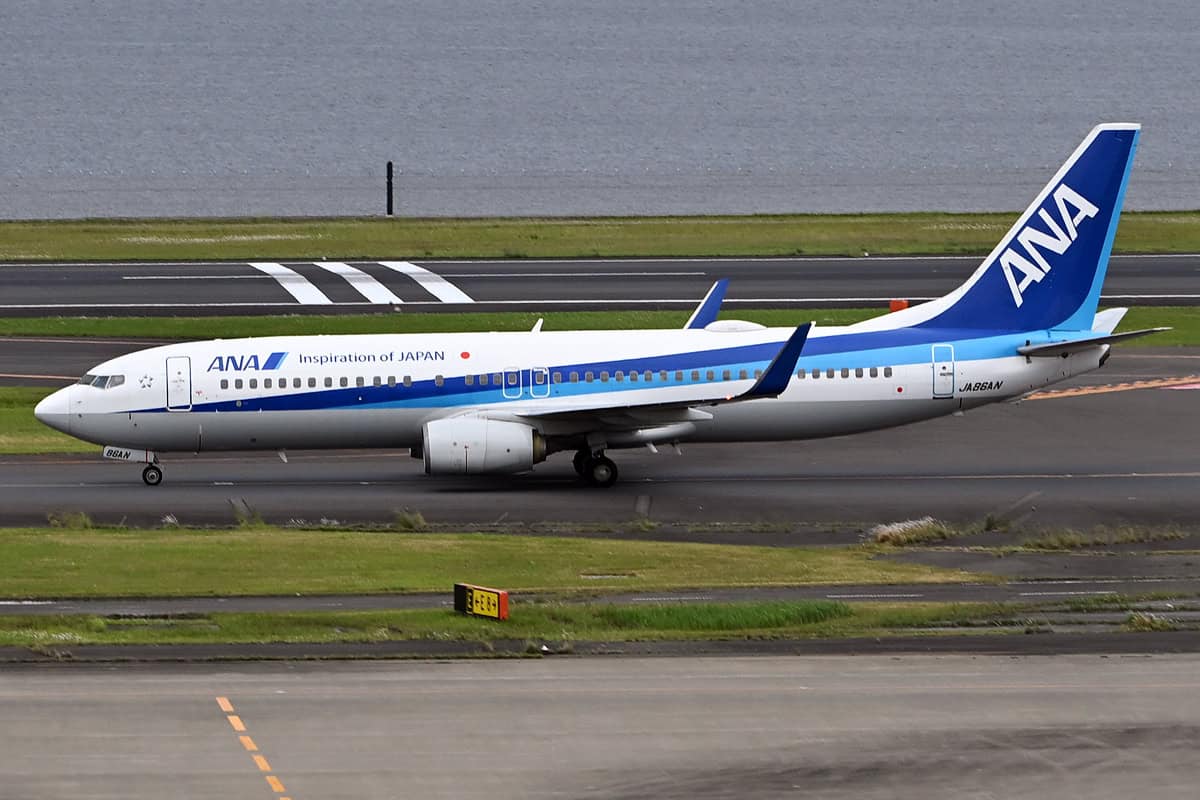
ANA flight NH1502 from Okinawa to Saga turned back to Naha Airport on the night of September 23, 2026, after its crew shut down the right engine during the climb. The Boeing 737-800 landed, stopped on a taxiway, and everyone on board left by the emergency slides.
There were 152 passengers, four of them infants, and six crew. Three passengers suffered minor injuries such as scraped knees during the evacuation.
Vibration and a High Oil Temperature Warning
At about 9:19 p.m. local time, as the jet passed over the area around Naha, one engine developed a problem, ANA said in a statement. The crew asked air traffic control for priority and flew back to Naha.
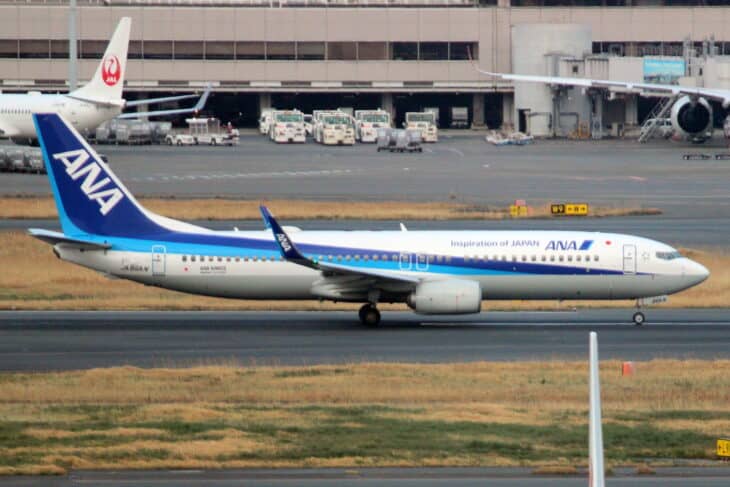
The cockpit displays showed airframe vibration and a high oil temperature in the right engine, Aviation Wire reported, and the pilots shut that engine down. The aircraft, registered JA86AN, was operated by group airline ANA Wings, with two pilots and four flight attendants.
It landed at about 10:05 p.m., according to the Okinawa Times. Fire vehicles stood by, and no fire or smoke was observed, Jiji Press reported.
Passengers who spoke to the Okinawa Times described the aircraft shaking in the air, and at least one described a burning smell. They reached hotels arranged by ANA after 1 a.m.
NH1502 was itself an extra flight. The newspaper reported that ANA added it after canceling a 7:10 p.m. departure to Fukuoka, and sent it to Saga because Fukuoka Airport closes at 10 p.m.
What is not yet known
ANA has not said what caused the vibration and high oil temperature, and it has not explained publicly why the crew evacuated on the taxiway rather than disembarking normally. The engine and the aircraft are now part of a government investigation, and no cause had been published at the time of writing.
Why the Slides, Not the Engine, Make This a Serious Incident
Japan’s transport ministry classified the event as a serious incident at 10:45 p.m., about 40 minutes after landing, ANA said. That label covers events judged to have had the potential to become an accident, and it hands the case to the Japan Transport Safety Board.
The qualifying events are set out in a fixed list in the aviation regulations. An emergency evacuation using the slides is on that list as an event in its own right.
A single engine shutdown on a twin-engine jet is not listed on its own. The list counts a sustained in-flight shutdown only when two or more engines on a multi-engine aircraft are affected, and engine damage only when fragments break through the engine case.
The ministry has not said which listed event it applied. On the facts published so far, though, the evacuation is the event on the list that clearly fits.
Under US certification rules, a twin-engine airliner must be able to keep climbing with one engine out. A slide evacuation carries its own risk, as the three injured passengers on NH1502 show.
The ministry’s guidance to passengers asks them to leave bags behind and take off high heels, which can puncture a slide. The Okinawa Times account of the evacuation quotes the call “Don’t bring baggage!”
The same pattern, a taxiway evacuation with no fire found, followed a Delta 757 return to Atlanta in August.
Safety board investigators questioned the captain and first officer at Haneda Airport on September 24, and a team reached Naha on September 25, Kyodo News reported. The lead investigator said the right engine would be examined in detail and the flight data analyzed.
ANA said it would cooperate fully with the investigation.
Sources and references used for research and fact-checking.
- All Nippon Airways, 【お詫び】2026年9月23日 ANA1502便の運航について (Apology: operation of ANA flight 1502 on September 23, 2026)
- Japan Transport Safety Board, JTSB Annual Report 2025, Chapter 3: Aircraft accident and incident investigations
- Japan Ministry of Land, Infrastructure, Transport and Tourism, 非常脱出時における適切な対応のお願い (Request for appropriate conduct during emergency evacuations)
- eCFR via Cornell LII, 14 CFR 25.121 Climb: one-engine-inoperative
Get the Newsletter
The latest aviation news and stories sent to your inbox.
About the Author
Tim is the owner and lead editor of AeroCorner since 2019, overseeing aviation content covering aircraft, airlines, airports, and the broader aviation industry. Through years of researching, writing, editing, and publishing aviation-focused content, he has developed extensive practical knowledge of commercial aviation and air travel. Based in Asia and a frequent traveler himself, Tim also brings firsthand passenger experience to AeroCorner’s coverage. Outside of publishing, he has also explored aviation firsthand through hands-on flight training in New Zealand.