

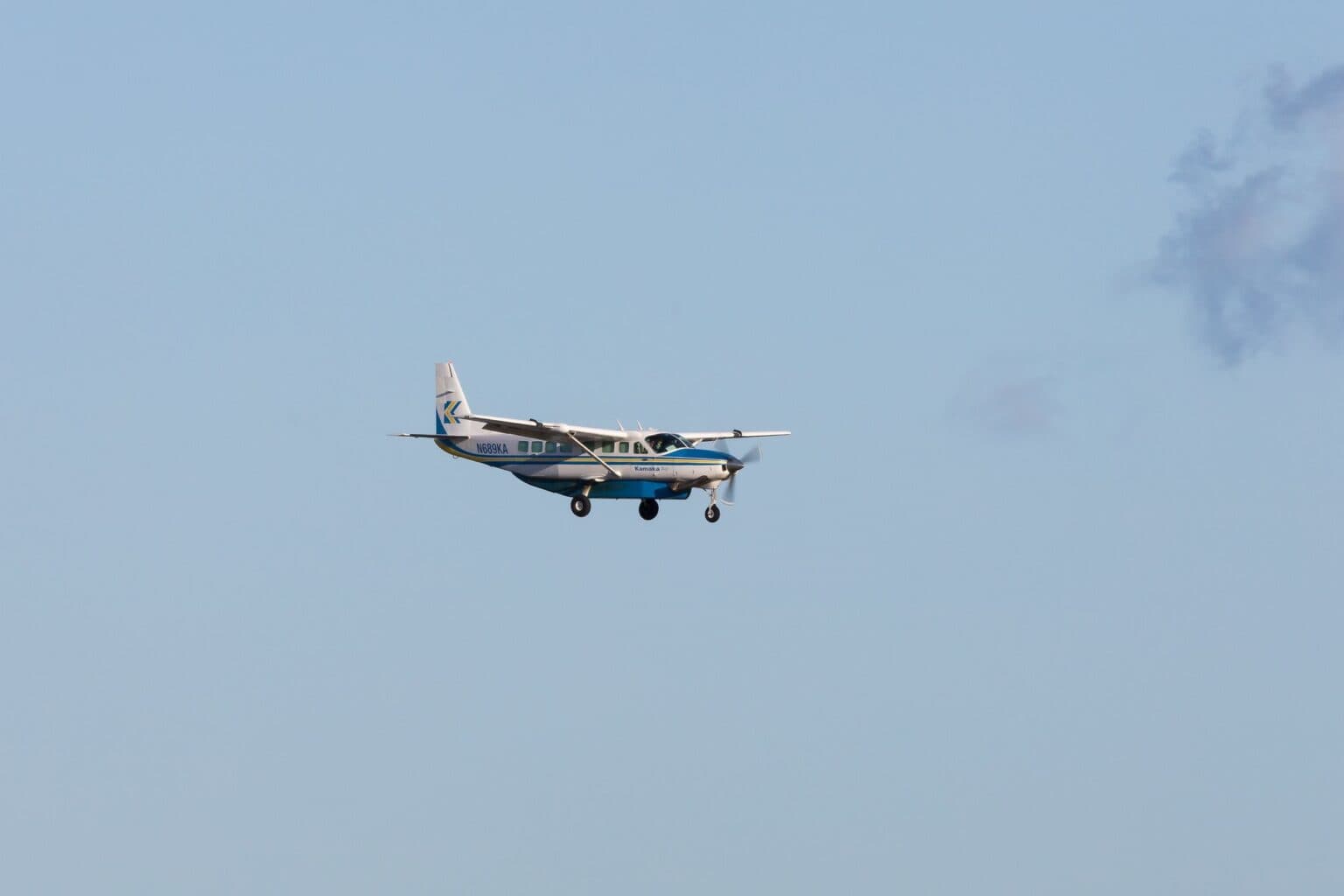
On November 20, 2026, the National Transportation Safety Board published its final report on the December 17, 2024 crash of Kamaka Air’s Cessna 208B N689KA in Honolulu, which killed both pilots. The board found that a rod in the left wing’s flap system broke in flight because of preload left by improper maintenance.
With the rod gone, the left flap floated up while the right stayed down. The airplane rolled left after climbing no higher than about 350 feet, too low to recover.
What the board concluded
The NTSB gave the probable cause as “the in-flight failure of the flap system’s left interconnect rod due to preload from improper maintenance, which resulted in an asymmetrical flap condition and an uncommanded left roll at an insufficient altitude for recovery.”
It named two contributing factors: Kamaka Air’s failure to follow its FAA-approved maintenance program, and inadequate training and supervision of its mechanics.
A training flight that lasted about a minute
The Cessna Grand Caravan was on a Part 91 instructional flight in the operator’s second-in-command training program, the report says, bound for Lanai for maneuvers and instrument practice.
The flight instructor, 26, sat in the left seat and the pilot receiving instruction, 24, in the right. Hawaii News Now named them as Preston Kaluhiwa and Hiram deFries-Saronitman.
The crew took off from runway 4L at Daniel K. Inouye International Airport at about 3:14 p.m. with the flaps at 20 degrees, consistent with the operator’s training manual.
Before reaching the end of the runway it began a shallow left turn instead of the expected right turn, and the tower queried the crew. The instructor replied, “we are out of control here.”
The left bank steepened and the Caravan descended nose-down into an abandoned concrete building about 1,975 feet beyond the departure end of the runway. The engine showed no sign of failure.
From two seconds of camera footage, the NTSB’s video study put the right flap at 20 degrees and the left near 5.
How one broken rod splits a Caravan’s flaps
On the 208B, as the report describes it, a single electric actuator in the right wing root drives both flaps through a chain of bellcranks, pushrods, interconnect rods and cables.
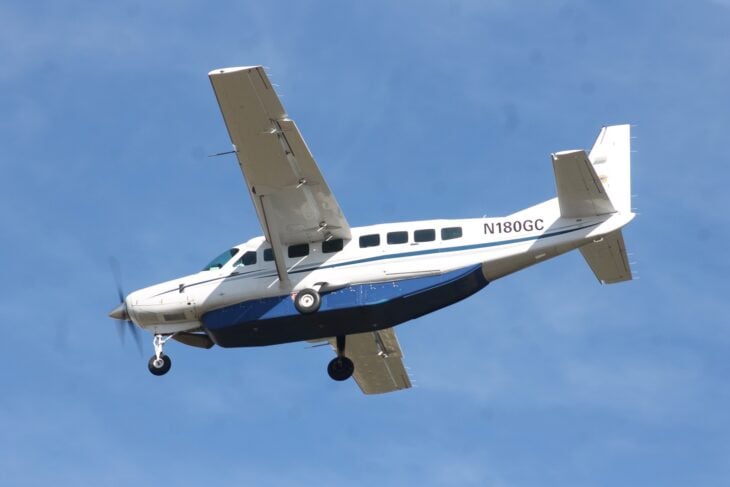

The wing flaps rely on that linkage to move together, and a misrigged system puts a standing load, or preload, on it. The left interconnect rod had bent under compression, then broke under tension.
Both flap cables had also rubbed against cutouts in the wing structure and frayed. The NTSB said neither the cable wear nor the bent rod would have been visible on a preflight inspection.
The pilot’s handbook has a procedure for a split flap: stop the roll with aileron and rudder, select flaps up and slow to 100 knots or less. The board said the pilots likely never realized the flaps were split, partly because they were so low, and high takeoff power likely worsened the roll.
The maintenance trail
The flap system’s last scheduled inspection, on June 25, 2024, was signed off as complete, including a cable tension check with a tensiometer. The records gave no readings or other detail of the work.
On October 4, 2024, after the flaps failed to retract following a landing at Molokai at about 3:50 a.m., the assistant director of maintenance flew out and replaced the primary flap motor. The pilot recalled the job taking at least an hour.
The Cessna maintenance manual has no procedure for replacing the primary motor on its own; its only motor replacement covers the whole actuator assembly and requires rigging the flaps afterward.
The NTSB said it was unlikely all the required checks were done that night, though it could not say when the misrigging began. Done as written, the checks would likely have caught it.
Kamaka Air had no formal training for its mechanics, who learned by shadowing colleagues, and one said he had never performed a flap cable tension check, only assisted with them.
After the crash, the operator checked its six remaining Caravans and found cable tension out of tolerance on four. Some readings were as low as 5 pounds (2 kg), against a required 35 pounds (16 kg), plus or minus 5.
Oversight, and a known failure mode
On the FAA side, three principal maintenance inspectors were assigned to Kamaka Air between 2022 and 2024, and the one in place at the time of the crash also oversaw 30 other operators, a load he called overwhelming.
The FAA had flagged recordkeeping deficiencies two to three months before the crash, and an evaluation requested in July 2025 found significant noncompliance. But unlike in the Bering Air Caravan crash, the board did not list FAA oversight in its probable cause.
The failure has happened before. Textron Aviation told investigators it received 16 reports of misrigged Caravan flap systems between June 2015 and September 2025. A 2016 interconnect rod failure in New Zealand, on a Caravan misrigged at the factory, showed similar fracture features.
Kamaka Air said it had cooperated fully and would review the report, and chief executive Peter Banfield called the two pilots the company’s “‘ohana,” according to Hawaii News Now. An attorney for the deFries-Saronitman family told the station the crash was not pilot error.
Sources and references used for research and fact-checking.
Get the Newsletter
The latest aviation news and stories sent to your inbox.
About the Author

AeroCorner News is the aviation news desk of AeroCorner.com. It covers accidents and incidents, safety rulings, airline and airport disruption, and new aircraft. It works from primary sources such as the NTSB, FAA, EASA and the manufacturers' own announcements.