

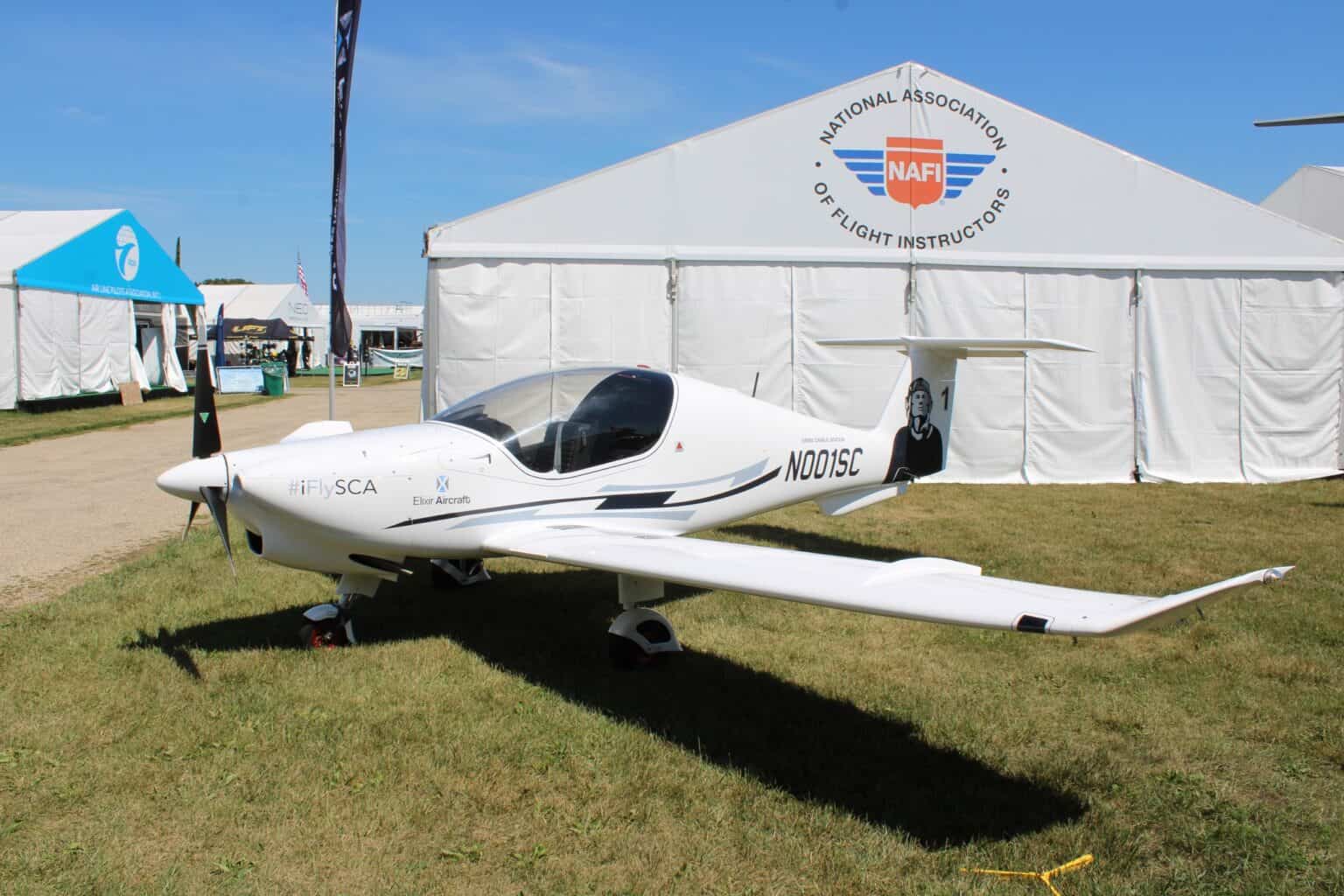
The left flap of Elixir F-WZAG separated from the aircraft in its final turn toward runway 12 at Rochefort, France, before the October 1, 2026 crash that killed both pilots on board, the BEA said in an update published on October 8.
The same week, the FAA filed its own airworthiness directive banning further flight of every Elixir. It takes the grounding EASA ordered in Europe to the three Elixirs on the US register.
What the BEA found
F-WZAG, serial number 065, was on a production test flight from La Rochelle-Île de Ré airfield to Rochefort, according to the BEA’s investigation page. After two circuits at Rochefort, one of the pilots announced a low-level circuit.
During the last turn for runway 12, the left flap detached. The pilot lost control, the aircraft’s emergency parachute was activated at low height, and the airplane struck the ground.
The BEA has classed the accident as the failure or malfunction of a system or component outside the powerplant, under file BEA2026-0441. That is a category, not a cause: the investigation is still open, and the BEA has not said why the flap came away.
Elixir Aircraft said the same thing in its own statement, reproduced by AvBrief: after three days of investigation, nothing had yet established why the left flap detached. The company named the two pilots only as Antoine and Edgar.
Why one flap is enough to lose control
Flaps add lift at low speed, which is why they are extended in the circuit. When both sides deploy together, the extra lift is balanced across the two wings.
Lose the flap on one side and the two wings no longer match. The wing without its flap makes less lift than the other, so the airplane tends to roll toward that side, and at low speed and low height there is little room to recover.
The Elixir does not use a simple hinged flap. As FLYER noted, it has electrically operated double-slotted flaps, a relatively elaborate high-lift design for a two-seat trainer, with two aerodynamic elements and controlled gaps between them.
Height mattered too. A whole-airframe parachute needs height to open and slow the descent, and the BEA says this one was activated low, during a circuit flown below normal pattern height. Our explainer covers which airplanes carry parachutes and how they work.
What is still unknown
The BEA has published a factual sequence, not findings. It has not said whether the flap failed at its attachment, in its mechanism or for another reason, and it has not said whether the low-level circuit or the test profile played a part.
The FAA follows EASA’s grounding
Elixir grounded its own fleet first. It issued Alert Service Bulletin ASB-633-005-R01 on October 2, and EASA followed the same day with Emergency AD 2026-0191-E, effective October 3, as AeroCorner reported on October 4. The company puts the grounded fleet at about 60 aircraft in five countries.
The FAA’s version, AD 2026-21-01, was signed on October 7 and filed with the Federal Register on October 8. It is set for publication on October 13 and takes effect one day later.
It prohibits further flight of every Elixir Aircraft Model Elixir, in any category, until corrective actions approved by the FAA’s International Validation Branch have been done. Special flight permits, the usual way to ferry a grounded airplane to a repair shop, are not allowed without that branch’s approval.
The FAA counts three Elixirs on the US register. It says that because the cause is unknown, no approved inspection or modification exists yet, so it cannot estimate what returning them to service will cost.
The agency adopted the rule without the usual comment period first. It cites “the severity of the consequences of not knowing what caused the fatal accident.” Comments are open for 45 days after publication, and the FAA calls the directive an interim action that may be followed by further rulemaking once a fix is defined.
For the three US-registered airplanes, the practical answer is now the same as in Europe. They stay parked until Elixir and the regulators define an approved inspection or fix.
Sources and references used for research and fact-checking.
Get the Newsletter
The latest aviation news and stories sent to your inbox.
About the Author
Tim is the owner and lead editor of AeroCorner since 2019, overseeing aviation content covering aircraft, airlines, airports, and the broader aviation industry. Through years of researching, writing, editing, and publishing aviation-focused content, he has developed extensive practical knowledge of commercial aviation and air travel. Based in Asia and a frequent traveler himself, Tim also brings firsthand passenger experience to AeroCorner’s coverage. Outside of publishing, he has also explored aviation firsthand through hands-on flight training in New Zealand.