

Table of Contents
There are four main types of aircraft flaps: plain, split, slotted and Fowler. The FAA lists them from the simplest to the most capable, and each design adds more lift than the one before it.
The slotted flap is the most popular design flying today, from a Cessna 172 to large jets. Large jets mostly use Fowler flaps that slide back and open two or three slots at once.
Beyond those four sit a handful of rarer designs, such as Junkers, Gouge and Zap flaps, plus the Krueger flap, which folds out from the front of the wing instead of the back. This guide covers all of them, then explains how pilots actually use flaps for takeoff and landing.
| Flap type | How it moves | What it does | Where you see it |
|---|---|---|---|
| Plain | Rear of the wing hinges down | More camber and lift, lots of drag, nose-down pitch | Simple designs; the first flaps ever flown |
| Split | Only the lower surface hinges down | Slightly more lift than plain, even more drag | 1930s and 1940s aircraft such as the Spitfire and DC-1 |
| Slotted | Hinges down and opens a gap to the wing | Much more maximum lift than plain or split | The most popular type; the Cessna 172 uses one |
| Fowler | Slides aft on tracks, then angles down | Adds wing area and camber; lift first, drag last | Airliners, often double- or triple-slotted |
| Krueger (leading edge) | Panel under the wing’s nose swings forward | More lift at low speed from the front of the wing | Swept-wing jets such as the Boeing 727 and 747 |
What Are Aircraft Flaps?
Flaps are movable panels on the trailing edge of the wing, and the FAA calls them the most common high-lift devices on aircraft. Extended, they increase both lift and drag at any given angle of attack.
Their job is to solve a design conflict. A wing shaped for a fast cruise is a poor wing for a slow landing, so flaps let one wing do both: they come out when needed and tuck back into the wing when not.
Most flaps work by adding camber, the curve of the wing’s cross-section. Some also add wing area by sliding backward, and the best ones open slots that feed fast air over the top of the flap so the airflow stays attached.

Flaps, slats, spoilers and ailerons do four different jobs
Flaps add lift and drag so the aircraft can fly slowly. Slats sit on the leading edge and delay airflow separation at high angles of attack. Spoilers do the opposite of flaps: they reduce lift and add drag. Ailerons, near the wingtips, roll the aircraft. They often sit side by side on the same wing, which is why they get confused.
For the roll controls next to the flaps, see how ailerons work. The panels that rise from the top of the wing to dump lift are covered in how airplane spoilers work.
The 4 Main Types of Flaps
The FAA’s Pilot’s Handbook of Aeronautical Knowledge names four common trailing-edge flaps. Its own diagram adds a fifth, the slotted Fowler flap, which combines the last two.

1. Plain Flaps
The plain flap is the simplest of the four. The rear section of the wing is hinged and pivots straight down, which increases the wing’s camber and gives a significant rise in lift at a given angle of attack.
The FAA notes the downside: a plain flap also greatly increases drag and moves the center of pressure aft, which pitches the nose down. At full deflection it adds a lot of drag and very little extra lift.
Plain flaps are also the oldest type. Fairey fitted its “Patent Camber Changing Gear” to a Sopwith Baby it was rebuilding, and the resulting Fairey Hamble Baby became the first aircraft to fly with flaps. Its flaps doubled as ailerons, making them the first flaperons too.
2. Split Flaps
On a split flap, only the lower surface of the wing’s trailing edge hinges down. The upper surface stays where it is, so the wing looks unchanged from above.

The FAA says a split flap gives slightly more lift than a plain flap, but more drag, because of the turbulent wake it leaves behind the wing. Fully extended, both plain and split flaps produce high drag with little additional lift.
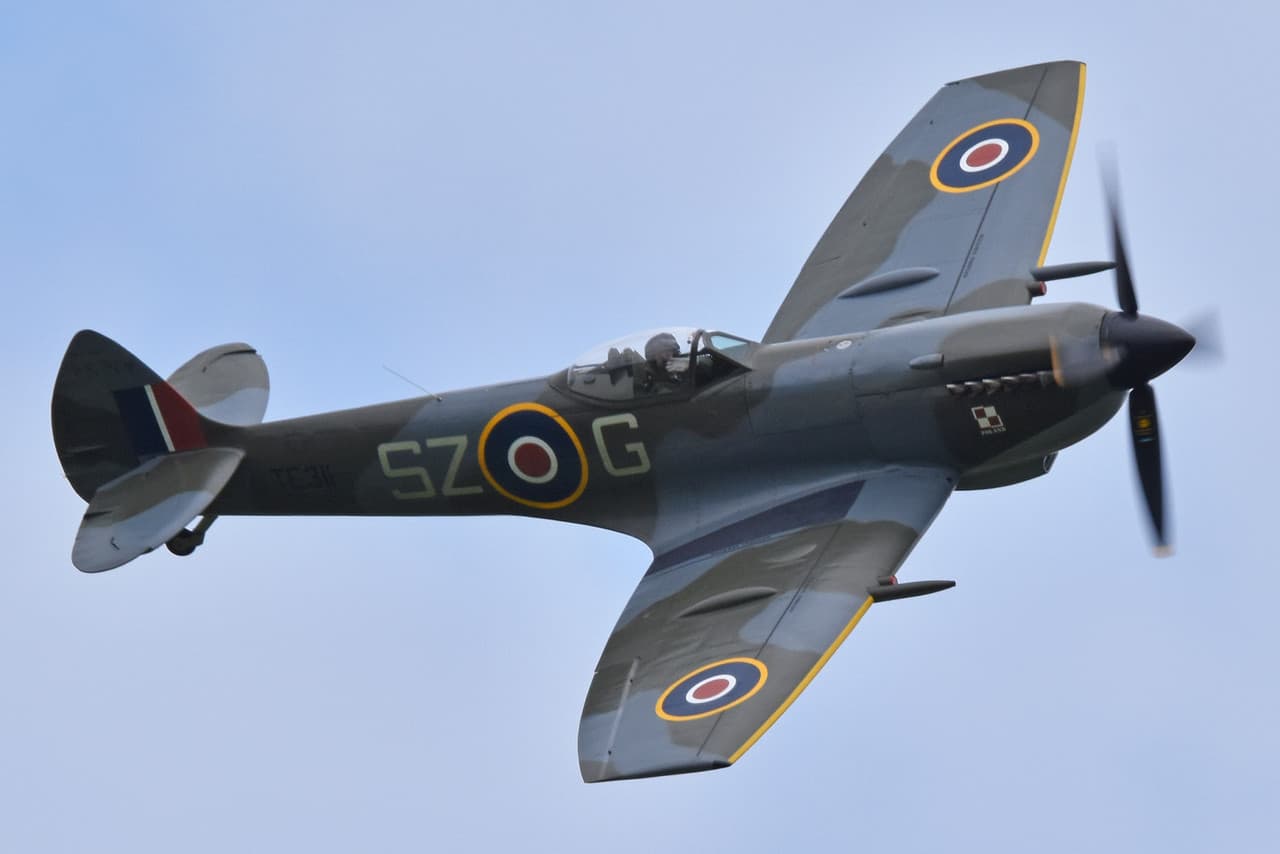
Orville Wright and James M. H. Jacobs invented the split flap in 1920, but it only became common in the 1930s. The Supermarine Spitfire and the Douglas DC-1 both used them. Today you mostly see split flaps on vintage warbirds.
3. Slotted Flaps
The FAA calls the slotted flap the most popular flap on aircraft today. As it lowers, a gap opens between the flap and the wing.
High-energy air from under the wing rushes through that slot and over the top of the flap. It re-energizes the boundary layer, the thin layer of air hugging the surface, and delays the point where the airflow separates.

The result is a much larger increase in maximum lift than a plain or split flap can give. Research at Handley Page produced the design in the 1920s, although it was not widely used until much later.
The Cessna 172 Skyhawk is the classic example. Cessna’s manual for the 172S describes “single-slot type” flaps, moved by an electric system with a cockpit switch that stops at 10, 20 and 30 degrees.
4. Fowler Flaps
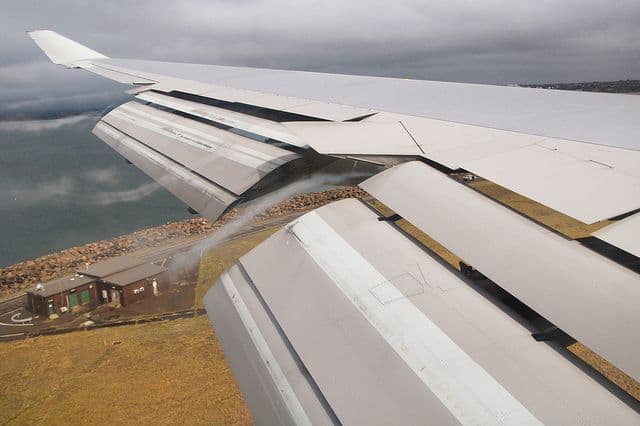
A Fowler flap is a type of slotted flap that does not simply hinge down. It rolls backward on tracks first, then angles down, so it adds wing area as well as camber.
That order matters. According to the FAA, the first part of a Fowler flap’s travel adds a lot of lift for very little drag, which suits takeoff. The last part adds drag with little extra lift, which suits landing.
Harlan D. Fowler invented it in 1924, and NACA tested it in 1932. It first flew on the Martin 146 prototype in 1935 and entered production on the 1937 Lockheed Super Electra.
Large aircraft often split the Fowler flap into two or three segments with a slot between each, called double- or triple-slotted flaps. These let the flap reach a very steep angle without the airflow breaking away from it.
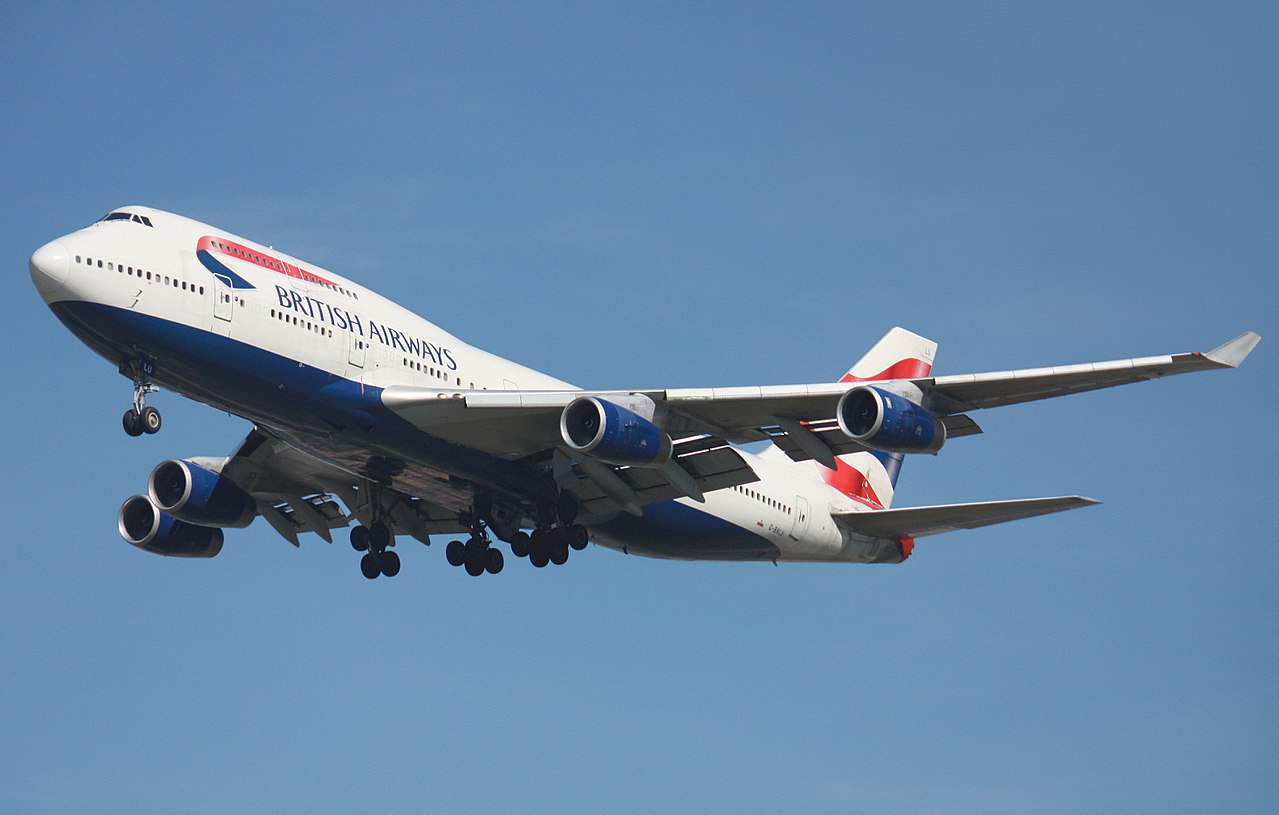
The original Boeing 747 is the famous case. Its triple-slotted flaps increased wing area by 21% and lift by 90% when fully deployed, letting the jumbo use standard-length runways.

Rare and Historic Flap Types
Designers tried plenty of other layouts before the slotted Fowler flap won. A few are still flying.

Junkers Flaps
A Junkers flap is a slotted plain flap mounted below the wing’s trailing edge, rotating about its own front edge.
Otto Mader invented it at Junkers in the late 1920s, and it was most often seen on the Junkers Ju 52 transport and the Ju 87 Stuka dive bomber. It lives on today in the Denney Kitfox and other ultralights.

Gouge Flaps
The Gouge flap is a split flap that slides backward along curved tracks, which force its trailing edge down as it moves.
Arthur Gouge designed it for Short Brothers in 1936, and it flew on the Short Empire and Sunderland flying boats.
Zap Flaps
A Zap flap’s front edge rides on a track, while an arm links a point halfway along the flap to a pivot just above that track. As the front edge moves aft, the geometry swings the flap down.
It was tested on a General Airplanes Corporation Aristocrat in 1932. Production use was rare, with the Northrop P-61 Black Widow night fighter the notable exception.
The Vought OS2U Kingfisher floatplane used a related idea: deflector plate flaps on the trailing edge, paired with drooping ailerons, to add camber for low-speed flight.

Fairey-Youngman, Blown and Gurney Flaps
The Fairey-Youngman flap first drops down, becoming a Junkers-style flap, then slides aft and can rotate up or down. Blown flaps use air bled from a jet engine’s compressor, blown through nozzles over the flaps to raise lift. The first production aircraft with blown flaps was the Lockheed T2V SeaStar, which entered service in 1957.
The Gurney flap is not a movable flap at all but a small tab on the trailing edge, typically 1% to 2% of the wing’s chord. It is named after racing driver Dan Gurney, who first applied it in 1971.
Krueger Flaps and Other Leading-Edge Devices
Flaps can also sit on the front of the wing. The FAA lists fixed slots, movable slats, leading-edge flaps and cuffs as the most common leading-edge devices.
Leading-edge flaps raise maximum lift and camber just as trailing-edge flaps do. They are often used together with trailing-edge flaps, and they can offset the nose-down pitch the rear flaps produce.
The Krueger flap is the best-known version. A panel from the lower surface of the wing swings out and forward, in front of the leading edge to add lift for low-speed flight.

Werner Krüger invented it in 1943, and it was evaluated in wind tunnels at Göttingen. It is now found on many swept-wing airliners.
The Boeing 727 used Krueger flaps on the inboard wing and slats outboard. The 747 went further, with Krueger flaps running almost the entire length of its leading edge.

Slats work differently from a Krueger flap: they slide forward on tracks and open a slot at the leading edge. They get their own explainer in how leading-edge slats work.
How Pilots Use Flaps for Takeoff and Landing
For landing, the FAA’s Airplane Flying Handbook lists four gains from flaps. They allow lower approach and landing speeds, a steeper descent angle, better forward visibility thanks to a lower nose, and a shorter landing roll.
The same handbook gives a rule of thumb for light aircraft. Flap deflection up to about 15 degrees mainly adds lift with little drag, while anything beyond 15 degrees adds a large amount of drag.
That is why takeoff uses little or no flap and landing uses a lot. Pilots also extend flaps in stages, typically on the downwind, base and final legs of the landing pattern, because one big change in flap setting makes a big change in lift and pitch.
The Cessna 172S shows the numbers in practice. Its manual approves no more than 10 degrees of flap for takeoff, and using those 10 degrees cuts the ground roll and the distance to clear an obstacle by about 10%.

For a short-field landing, the same manual calls for full flaps and 61 knots until the flare. If the pilot has to abort the landing, the flaps come back up in steps, first to 20 degrees and then to 10 degrees until obstacles are cleared.
Changing the flaps also changes the aircraft’s pitch. Depending on the design, extending them can push the nose up or down, so the pilot re-trims after every change. The FAA notes that in certain high-wing airplanes, flap deflection beyond 15 degrees produces a significant nose-up pitch.
Why the flap lever has its own shape
After a series of runway crashes involving the Boeing B-17, human factors pioneer Alphonse Chapanis found that crews were confusing the landing gear and flap controls, which sat close together and looked alike. He proposed putting a wheel on the gear lever and a triangle on the flap lever so pilots could tell them apart by touch. After the change, B-17 crews stopped raising the landing gear by mistake on the ground. FAA rules for transport-category aircraft now require cockpit control knobs to follow standard shapes.
Can a Plane Land Without Flaps?
Yes. Flaps make a landing slower and shorter, but the wing still flies without them.
The trade-off is speed and runway. Without the extra lift, the aircraft has to fly its approach faster, and without the extra drag it floats farther and needs a longer landing roll. The nose also sits noticeably higher on a no-flap approach than on a full-flap one.
The Cessna 172S manual puts a number on it for an engine-out landing: 70 knots with flaps up, against 65 knots with 10 degrees or more of flap. A faster touchdown also puts more work on the wheel brakes during the rollout.
Flaps are only one of the ways a wing adapts to its job. For the wing shapes they are attached to, see types of aircraft wings.
FAQ
Sources and references used for research and fact-checking.
- Federal Aviation Administration, Pilot's Handbook of Aeronautical Knowledge, Chapter 6: Flight Controls
- Federal Aviation Administration, Airplane Flying Handbook, Chapter 9: Approaches and Landings
- Cessna Aircraft Company, Model 172S Nav III Information Manual
- Wikipedia, Flap (aeronautics)
- Wikipedia, Krueger flap
- Wikipedia, Boeing 747
- Wikipedia, Vought OS2U Kingfisher
- AVweb, Used Aircraft Guide: Cessna 185 Skywagon
- Wikipedia, Alphonse Chapanis
- Legal Information Institute, Cornell Law School, 14 CFR 25.781: Cockpit control knob shape
- Boldmethod, How The 4 Types Of Aircraft Flaps Work
Get the Newsletter
The latest aviation news and stories sent to your inbox.
About the Author

Tim is the owner and lead editor of AeroCorner since 2019, overseeing aviation content covering aircraft, airlines, airports, and the broader aviation industry. Through years of researching, writing, editing, and publishing aviation-focused content, he has developed extensive practical knowledge of commercial aviation and air travel. Based in Asia and a frequent traveler himself, Tim also brings firsthand passenger experience to AeroCorner’s coverage. Outside of publishing, he has also explored aviation firsthand through hands-on flight training in New Zealand.