

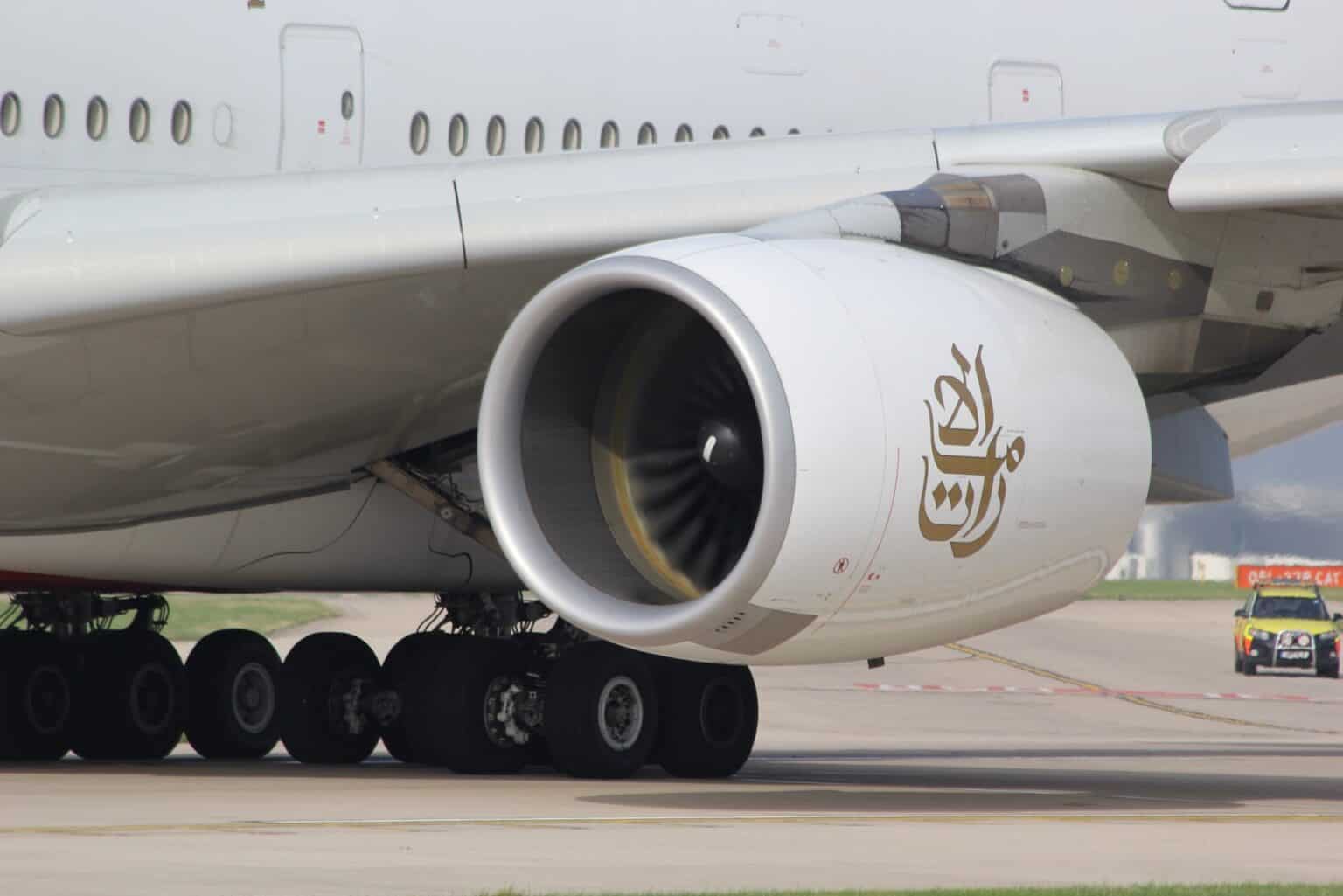
The FAA has ordered 15 high-pressure turbine (HPT) interstage seals pulled from Engine Alliance GP7200 engines after one of the seals failed and forced an Airbus A380 to abort its takeoff. Airworthiness directive (AD) 2026-20-12 was published in the Federal Register on October 8, 2026, and takes effect on October 23.
The agency adopted it as a final rule without the usual comment period first, saying the risk to the flying public justified acting immediately. Comments are still open until November 23.
What failed
According to the FAA, an Airbus A380 with GP7270 engines suffered an uncontained failure of an HPT interstage seal, which led to an engine shutdown and an aborted takeoff. The directive does not name the airline, the airport or the date.
An uncontained failure is one in which debris escapes the engine instead of being held inside its casing. The FAA warns that this one, if not addressed, could result in an engine fire and damage to the airplane.
A manufacturer investigation found that cracking most likely started at the clocking keys between the interstage seal and the aft shaft of the HPT stage 1 disk. The root cause is still under investigation, and the FAA calls the AD an interim action.
The FAA does name a contributing factor: clocking of the HPT interstage mid-seal. The manufacturer found that clocking is greater on seals that were taken apart and reassembled at overhaul, which is why the AD targets the 15 seals with the highest cycles since overhaul.
What the AD requires
The AD covers GP7270, GP7272 and GP7277 engines fitted with an HPT interstage seal of part number 2047M99P02 and a serial number listed in Engine Alliance Alert Service Bulletin EAGP7-A72-479. Engine Alliance issued that bulletin on September 4, and the AD makes it mandatory.
Each listed seal must be removed and replaced with one that is not on the list. The deadline depends on which of the bulletin’s three tables a seal appears in, counted from October 23, whichever limit comes first:
| Seal listed in | Flight cycles | Calendar days |
|---|---|---|
| Table 1 | 50 | 30 |
| Table 2 | 100 | 60 |
| Table 3 | 150 | 90 |
The part is expensive. The FAA puts the replacement seal at $527,300, plus 10 work-hours of labor at $85 an hour, for $528,150 per engine.
The bulletin asks operators to report certain information to Engine Alliance, but the AD does not make that reporting mandatory.
Who it affects
The FAA estimates that the AD affects no engines on US-registered aircraft, so its cost to US operators is zero. The work lands on airlines abroad.
Engine Alliance is a joint venture of General Electric and Pratt & Whitney, and the GP7200 was one of two engine choices for the A380, alongside the Rolls-Royce Trent 900. The GP7270 powers the A380s of Etihad Airways, Korean Air and Qatar Airways, and about 90 of the 123 that Emirates ordered.
Emirates is the largest A380 operator, but the AD names no airline. The serial numbers of the 15 seals are listed only in the bulletin’s appendix, which the FAA has placed in the rulemaking docket.
The second directive on this seal in three years
The same part has been the subject of an AD before. In June 2023, the FAA ordered certain HPT interstage seals on the same three engine models replaced because they were made from material suspected to contain iron inclusion.
That earlier problem was in the metal itself: a manufacturing flaw that could lower a seal’s fatigue life and lead to an uncontained failure. This time the suspect is how the seal is fitted and reassembled, a different cause on the same part.
The GP7270’s best-known failure involved a different part entirely. In September 2017, Air France Flight 66 lost the fan and inlet of one GP7270 over Greenland and diverted safely to Goose Bay, Canada. France’s BEA later traced it to a crack in the titanium fan hub caused by a phenomenon known as cold dwell fatigue.
Sources and references used for research and fact-checking.
- FAA (Federal Register), Airworthiness Directives; Engine Alliance Engines (AD 2026-20-12)
- FAA (Federal Register), Airworthiness Directives; Engine Alliance Engines (2023)
- BEA, Accident to the Airbus A380-861 equipped with Engine Alliance GP7270 engines registered F-HPJE operated by Air France on 30 September 2017
Get the Newsletter
The latest aviation news and stories sent to your inbox.
About the Author

Tim is the owner and lead editor of AeroCorner since 2019, overseeing aviation content covering aircraft, airlines, airports, and the broader aviation industry. Through years of researching, writing, editing, and publishing aviation-focused content, he has developed extensive practical knowledge of commercial aviation and air travel. Based in Asia and a frequent traveler himself, Tim also brings firsthand passenger experience to AeroCorner’s coverage. Outside of publishing, he has also explored aviation firsthand through hands-on flight training in New Zealand.