

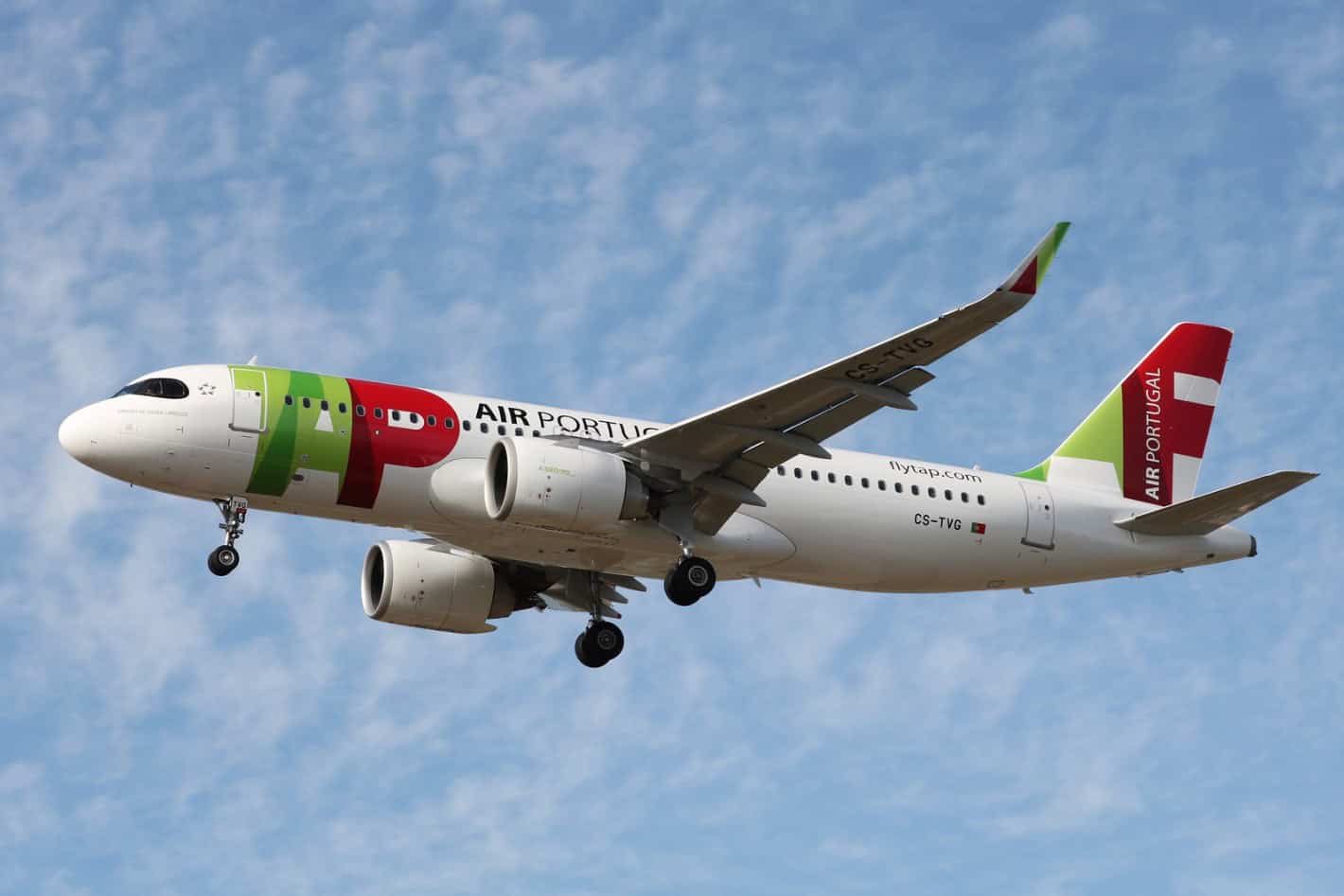
On July 30, 2026, a TAP Air Portugal Airbus A320neo climbing out of Lisbon shut down its left engine and returned to the airport it had just departed. Flight TP1477, bound for Bissau, Guinea-Bissau, landed safely about 20 minutes after takeoff with no injuries among the 103 people on board.
What happened
The aircraft, registration CS-TVF, departed Humberto Delgado Airport’s runway 02 and was still climbing through roughly 4,000 feet when the crew noticed a problem with the left CFM LEAP-1A engine, consistent with low oil pressure and a possible leak, according to Aviation Herald. The crew shut the engine down, declared PAN PAN, and asked air traffic control for an immediate return.
The jet landed back on runway 02 without further incident. CNN Portugal reported that Lisbon airport paused operations for several minutes afterward so ground crews could inspect the runway for possible oil spillage before other traffic resumed using it.
PAN PAN, not Mayday
PAN PAN signals a serious problem that does not put the aircraft in immediate danger. It sits one step below a Mayday call, which declares a grave and imminent threat requiring priority handling above everything else in the airspace.
The distinction matters for how controllers and other traffic respond. A Mayday call commands the airspace; a PAN PAN asks for priority handling while leaving room for a calmer, more deliberate response, which is what TP1477’s return looked like in practice.
Why one engine is enough
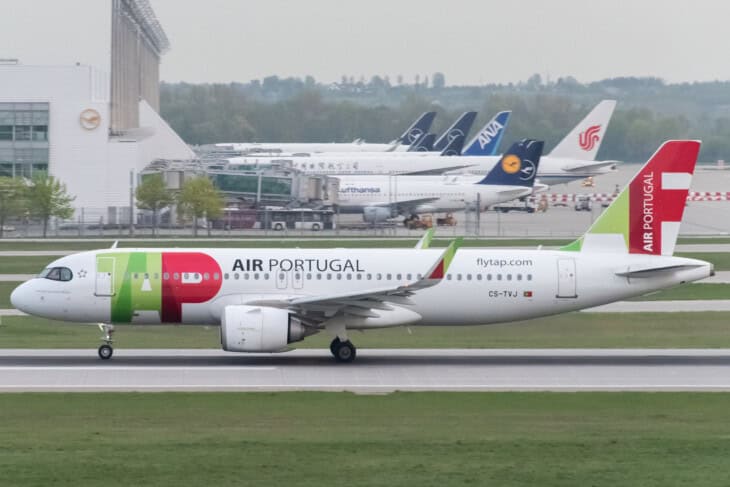
An airliner losing an engine sounds alarming, but twin-engine jets like the A320neo are certified to fly, maneuver, and land safely on a single engine. José Correia Guedes, a former TAP captain, told CNN Portugal that pilots retrain for single-engine approaches every six months.
Correia Guedes added that the A320neo can keep flying for an extended period on one engine, though at reduced capability, which is why the crew had time to plan a normal approach rather than treat the shutdown as a crisis.
That is exactly why the crew’s response looked routine from the outside: shut the affected engine down cleanly, declare the appropriate urgency level for controllers, and fly a normal single-engine approach back to the nearest suitable runway, which in this case was the one they had just left.
July 30, 2026
TP1477 turns back. The A320neo shuts down its left engine climbing out of Lisbon and lands back on runway 02 about 20 minutes after departure.
July 30, 2026
Passengers rebooked. A substitute Airbus A321neo, registration CS-TJO, carries the passengers onward, reaching Bissau roughly five hours behind schedule.
August 1, 2026
Normal schedule resumes. TP1477 departs Lisbon at 9:30am as scheduled, arriving in Bissau at 12:55pm.
The occurrence aircraft remained grounded in Lisbon for about 27 hours following the diversion, per Aviation Herald’s tracking of the airframe. Rather than wait for CS-TVF to clear inspection, TAP moved the passengers onto a different tail entirely, the standard playbook whenever a post-incident check is likely to run long.
The left engine on CS-TVF is a CFM International LEAP-1A, the standard powerplant option on the A320neo family alongside Pratt & Whitney’s geared turbofan.
A single reported oil pressure drop on one engine of a two-engine aircraft is exactly the kind of fault the twin-engine safety margin exists to absorb, which is why the flight ended as a diversion rather than a more urgent emergency.
Cause not yet confirmed
Neither TAP nor Portugal’s civil aviation authority has issued a public statement identifying the root cause of the engine problem. The low oil pressure and possible leak reported by secondary sources are the working explanation, not a confirmed finding.
Get the Newsletter
The latest aviation news and stories sent to your inbox.
About the Author

Tim is the owner and lead editor of AeroCorner since 2019, overseeing aviation content covering aircraft, airlines, airports, and the broader aviation industry. Through years of researching, writing, editing, and publishing aviation-focused content, he has developed extensive practical knowledge of commercial aviation and air travel. Based in Asia and a frequent traveler himself, Tim also brings firsthand passenger experience to AeroCorner’s coverage. Outside of publishing, he has also explored aviation firsthand through hands-on flight training in New Zealand.