


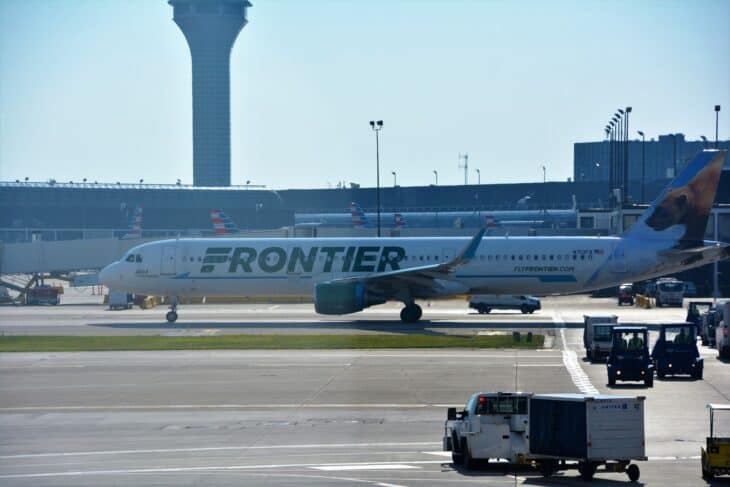
Frontier Airlines flight F93566 from Denver to Detroit diverted to Chicago O’Hare on November 11, 2026, after a faucet in the forward lavatory began leaking and sent water along part of the cabin floor. The pilots declared a mayday, telling air traffic control they were worried about the aircraft’s electronics.
The Airbus A321neo landed safely at O’Hare. Frontier said no injuries were reported among passengers or crew.
What happened on the flight
Flight tracking data from FlightAware shows the jet taking off from Denver at 11:03 a.m. Mountain time. It was cruising at about 33,000 feet over eastern Iowa and began its descent toward Chicago near the Iowa-Illinois border, shortly before 1:30 p.m. Central time.
On the air traffic control recording, as transcribed by View from the Wing, the crew called “Mayday, Mayday, Mayday” and said the forward lavatory sink had sprung a leak. The pilot added: “We’re worried about electronics. We’d like to divert to Chicago O’Hare.”
Controllers cleared the flight directly to O’Hare and down to 24,000 feet as the crew prepared for the arrival. FlightAware recorded the landing at 1:53 p.m. Central time, about 1 hour 50 minutes after takeoff.
Frontier said in a statement quoted by ABC7 Chicago that “the faucet in the forward lavatory sprung a leak, which caused water to flow along part of the aircraft floor.” Video from the cabin obtained by ABC News showed a floor that appeared soaked.

One passenger told CBS News Chicago that a plumber traveling on the flight managed to shut the water off, but by then too much had already escaped. CBS reported that the plane was parked at gate M40 at O’Hare for maintenance.
The aircraft and the onward flight
Flightradar24 and FlightAware both show the flight was operated by N688FR, an Airbus A321neo. The FAA aircraft registry lists it as an A321-271NX built in 2026, with its US registration certificate issued on September 4, 2026, so the jet was only about two months into its registered life.
Frontier said the flight would continue to Detroit later on Wednesday on a replacement aircraft. At the time of writing, Flightradar24 listed the Chicago to Detroit leg under the same flight number on a different A321neo, N655FR, with an estimated departure of about 5:50 p.m. Central time.
The diversion to Chicago O’Hare left passengers, who had been scheduled into Detroit at about 3:30 p.m. Eastern time, waiting on the ground in Chicago for the rest of the afternoon.
Why a leaking sink becomes a mayday
A leaking tap sounds like a cabin nuisance. The AA37 diversion to JFK in October, by contrast, came down to having too few working toilets for the people on board.
Water is a different matter because of where it can go. On most airliners the main electronics bay, which holds many of the computers the aircraft depends on, is in the lower fuselage under the cockpit, and water that gets beneath the floor at the front of the cabin can drain toward it.
Airbus and regulators have dealt with that on the A320 family before. In 1999, the FAA adopted an airworthiness directive for certain A320s that required drip pans, extra drain gutters on the avionics racks and a better seal on the avionics compartment access door, “to prevent the trickling of water into the avionics compartment.”
The FAA said the risk was avionics computer and equipment malfunctions. A separate FAA proposal the same year, covering A319, A320 and A321 jets, cited French authority reports of “water dripping into the avionics bay” and an Airbus analysis finding the computers there might not be adequately protected.
Those fixes were written for jets built in the 1990s, and nothing published so far points to any fault in N688FR’s electronics. What the old rulemaking does show is why a crew treats a flooding floor near the front of an A320-family jet as more than a mess to mop up.
A mayday call also gives the crew priority over other traffic. F93566 received a direct routing to O’Hare and a descent clearance within moments of the call.
Frontier’s statement did not say what caused the faucet to fail, or whether the aircraft’s electronics were inspected for water once it was on the ground.
Sources and references used for research and fact-checking.
Get the Newsletter
The latest aviation news and stories sent to your inbox.
About the Author

AeroCorner News is the aviation news desk of AeroCorner.com. It covers accidents and incidents, safety rulings, airline and airport disruption, and new aircraft. It works from primary sources such as the NTSB, FAA, EASA and the manufacturers' own announcements.