

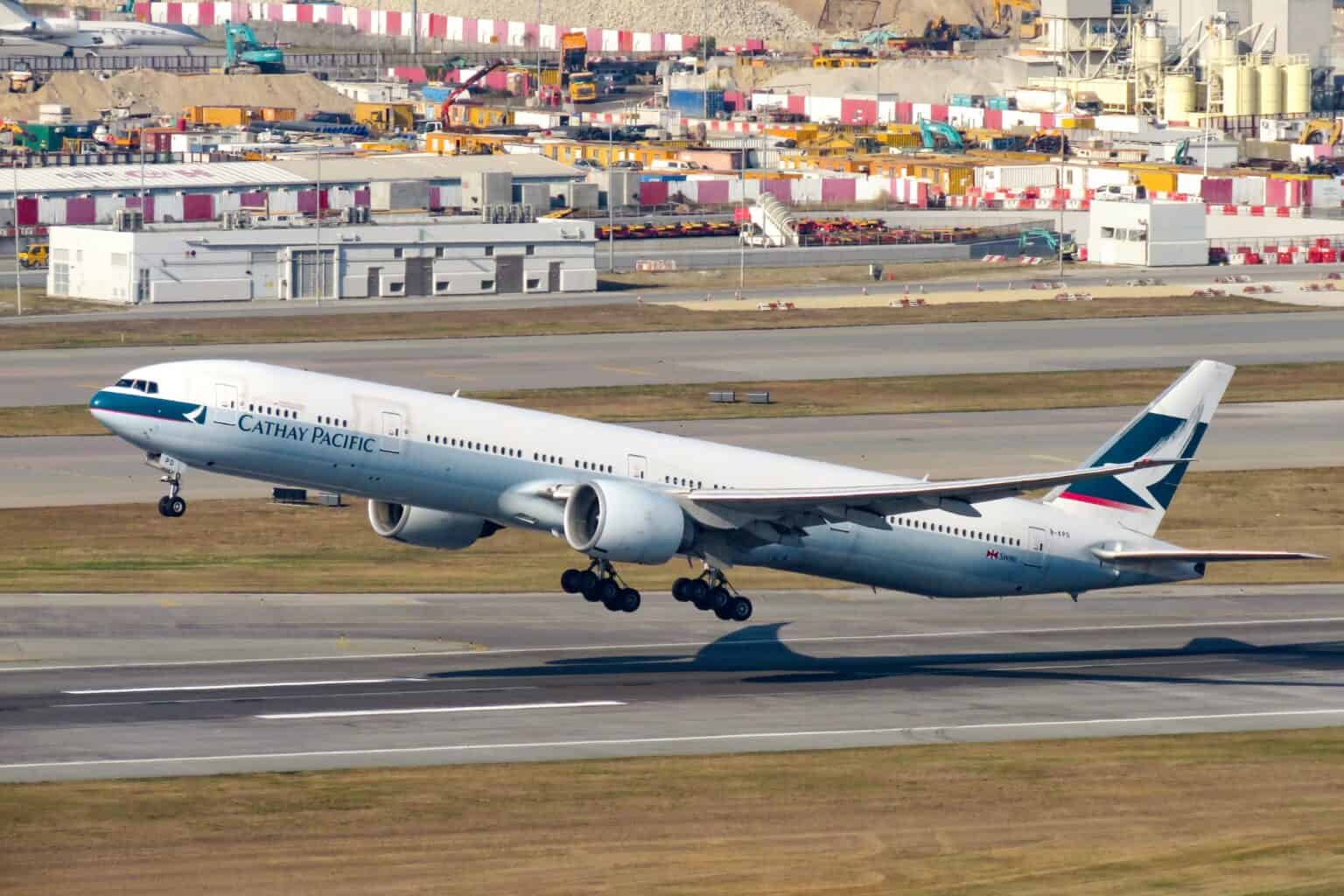
Cathay Pacific flight CX252 from London Heathrow to Hong Kong returned to Heathrow on Tuesday, November 10, 2026, about three hours after a bird struck one of its engines on takeoff. The Boeing 777, registration B-KPD, had already crossed into southern Germany when the crew turned around.
The flight was cancelled after the return, The Aviation Herald reported. Cathay Pacific had not published a statement on the incident at the time of writing.
A bang at rotation, then three hours in the air
According to The Aviation Herald, the bird hit the right-hand engine, a GE90, as the jet left runway 09R. A passenger told the outlet there was a loud bang just as the nose lifted, and a large streak of flame came from the right engine.
The passenger said the nose briefly came back down before the aircraft rotated again and climbed away. The captain later told the cabin the aircraft had suffered a bird strike, the same report said.
The crew kept going and climbed to 31,000 feet. Near Nuremberg, as the jet was about to enter Czech airspace, they decided to return to Heathrow because of vibration in the right engine.
Nuremberg lies more than 500 miles (800 km) from Heathrow in a straight line. The jet was over Bavaria when it turned around.
Tracking data from FlightAware shows the flight took off at 11:25 a.m. GMT and landed back at Heathrow at 2:23 p.m., after 2 hours and 57 minutes in the air. The Aviation Herald said the jet held 31,000 feet on the way back and landed on runway 09L.
Why the crew kept flying at first
The Aviation Herald said ACARS messages, the data link between the aircraft and the airline, showed the right engine running with higher than normal vibration and exhaust gas temperature. Both readings were still within normal limits, the outlet said.
Vibration and exhaust gas temperature are both shown on the engine instruments in the cockpit. A bang and a flash of flame on takeoff can look alarming from the cabin, but the reported readings indicate the engine was still running inside its limits.
According to the same report, the captain planned to continue and make a final decision on reaching Turkey, unless the airline’s operations team advised otherwise. In the end the crew turned back over Germany, well short of Turkey.
Jet engines are certified to keep running after swallowing medium-size birds. The FAA’s bird ingestion standard, 14 CFR 33.76, requires that a simulated flock of medium-size birds fired into an engine at takeoff power cause no sustained thrust loss of more than 25% and no shutdown.
After the ingestion, the test engine must then run a roughly 20-minute power schedule with no throttle movement for the first two minutes. A single large bird of up to about 8 pounds (3.65 kg) is held to a different bar: the engine may shut down, but it must not fail in any of the hazardous ways the rules list.
The jet and its GE90 engines
The Aviation Herald lists B-KPD as a 777-300, but registration records give it as a 777-367ER, built in 2007 with serial number 36155. That makes it a Boeing 777-300ER, and FlightAware also logged the flight as a 777-300ER.
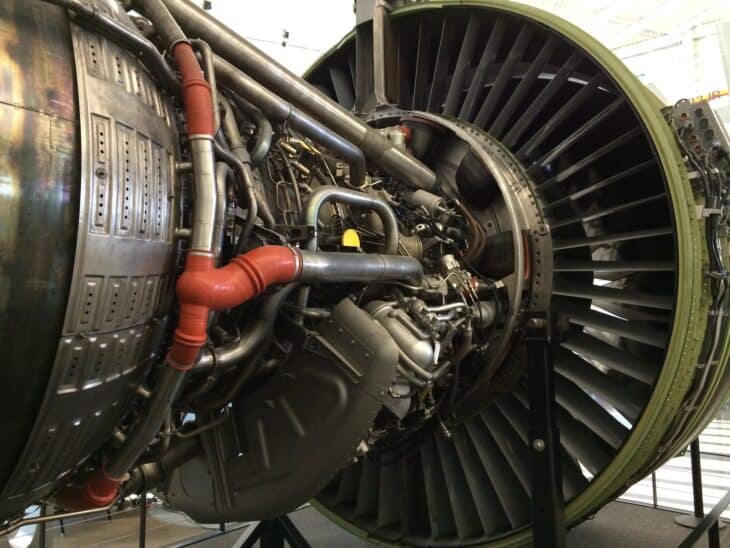
GE Aerospace says the GE90-115B powers the 777-300ER, along with the 777-200LR and the 777 Freighter. GE calls the GE90 its first engine in the 100,000-pound thrust class, which puts it among the largest commercial jet engines, with composite fan blades GE says are twice as strong as titanium at a third of the weight.
It is not the jet’s first turnback this year. AeroInside reported that B-KPD returned to Hong Kong on May 11, 2026, as flight CX253 to London, after the crew stopped the climb at about 11,000 feet over GE90 vibration.
That report did not say which engine was involved, so any link between the two events would be speculation.
How often a bird strike ends a flight
Most bird strikes cause no damage. The FAA’s latest wildlife strike report, which covers U.S. civil aviation, counted 24,447 reported strikes in 2025 and found that 4% of them caused damage that year.
For commercial transport aircraft, about 71% of bird strikes from 1990 to 2025 happened at or below 500 feet above the ground. A precautionary or emergency landing was the most often reported effect on a flight, at 9,797 incidents over the same period.
Many strike turnbacks end within minutes. On November 7, a Turkish Cargo 777 freighter stopped its climb at 5,000 feet and landed back at Maastricht about 25 minutes after departure, The Aviation Herald reported. CX252’s crew instead flew on toward Germany before turning back.
Sources and references used for research and fact-checking.
Get the Newsletter
The latest aviation news and stories sent to your inbox.
About the Author

AeroCorner News is the aviation news desk of AeroCorner.com. It covers accidents and incidents, safety rulings, airline and airport disruption, and new aircraft. It works from primary sources such as the NTSB, FAA, EASA and the manufacturers' own announcements.