

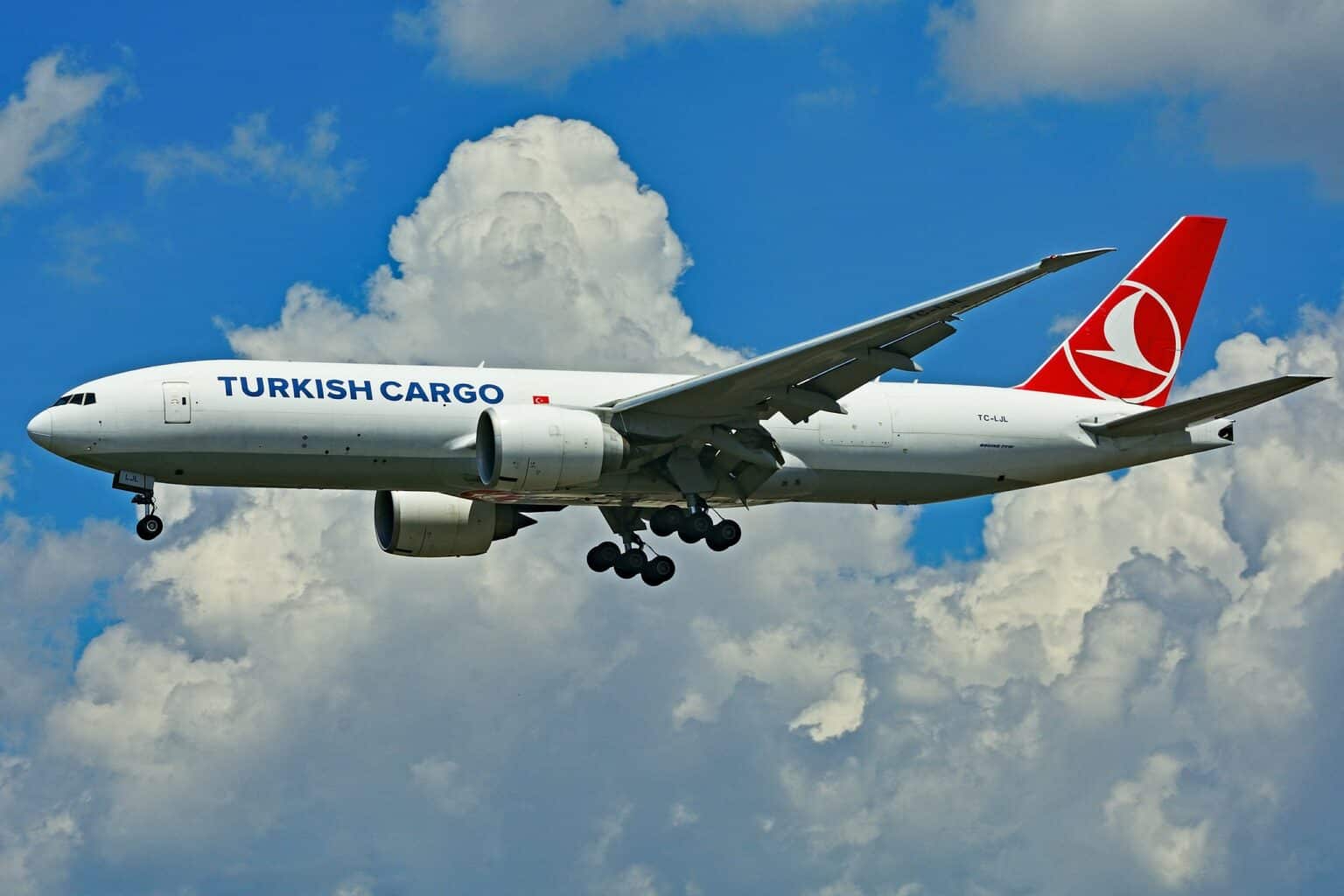
Turkish Cargo flight TK6040, a Boeing 777 freighter bound for Istanbul, turned back to Maastricht Aachen Airport on the evening of Saturday, November 7, 2026, after hitting birds on departure. The aircraft, registration TC-LJL, was still on the ground in the Netherlands on Monday afternoon, November 9.
An airport spokesperson told regional broadcaster L1 that the jet came into contact with birds in the air and that the damage forced the pilot to return. The freighter is waiting at the airport for possible repairs, the spokesperson said.
What happened on the climb out
According to The Aviation Herald, the crew heard an impact from an unknown object as the nose came up for rotation on runway 21. They stopped the climb at 5,000 feet, reported unusual noises and brought the freighter back to land on the same runway.
The two published accounts differ on how long the flight lasted. The Aviation Herald put the landing about 25 minutes after departure, while L1 reported a touchdown at around 9:55 p.m. local time, after 45 minutes in the air.
A spokesperson for LVNL, the Dutch air navigation service, told L1 the aircraft had to dump fuel before landing because it was too heavy to land safely. LVNL kept a runway clear and guided the crew in, and the amount of fuel released is not known.
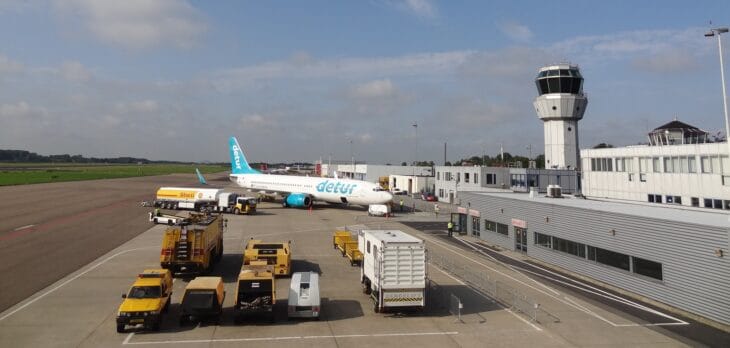

Neither the airport nor LVNL has said where the birds struck the aircraft or how serious the damage is. The type of bird has not been reported either.
Why a loaded 777 freighter cannot simply land again
The Boeing 777 Freighter is certified to take off much heavier than it may land. Atlas Air’s specification sheet for the type gives a maximum takeoff weight of 766,800 pounds (347,814 kg) and a maximum landing weight of 575,000 pounds (260,815 kg).
That is a gap of almost 192,000 pounds (87,000 kg) at the limits. TK6040’s actual takeoff weight has not been published, but LVNL’s account indicates the jet was above its landing limit when it turned back.
Crews in that position can circle to burn fuel, land overweight, or jettison fuel in flight. LVNL’s account says the TK6040 crew took the last of those options.
How common bird strikes like this are
Bird strikes are routine but seldom damaging. The FAA’s latest wildlife strike report, covering U.S. civil aviation, counted 24,447 reported strikes in 2025 and found that only 4% of them caused damage that year.
Height matters most. About 71% of bird strikes on commercial transport aircraft from 1990 to 2025 happened at or below 500 feet above the ground, and TK6040’s crew heard the impact at rotation, right at the start of that band.
A precautionary or emergency landing is the most common knock-on effect in the FAA data. In 422 of those cases the pilot dumped fuel, landed overweight or circled to burn fuel first, the same choice the TK6040 crew faced.
It is not the first bird strike on a Turkish Airlines flight this autumn. In October, a pigeon strike on TK726 shut Kathmandu’s airport.
Where the freighter stands now
Flight-tracking data from Flightradar24 shows TC-LJL had flown TK6040 from Quito to Miami and on to Maastricht earlier the same day before the Istanbul leg. The same history logs no flight by the jet after its return, and shortly after 2 p.m. UTC on Monday it listed the aircraft against a TK6040 departure to Istanbul estimated for that evening.
The Aviation Herald reported the freighter was still on the ground about 22 hours after landing. Whether it can leave depends on the strike damage, which the airport has not detailed beyond saying it forced the return.
Sources and references used for research and fact-checking.
Get the Newsletter
The latest aviation news and stories sent to your inbox.
About the Author

AeroCorner News is the aviation news desk of AeroCorner.com. It covers accidents and incidents, safety rulings, airline and airport disruption, and new aircraft. It works from primary sources such as the NTSB, FAA, EASA and the manufacturers' own announcements.