

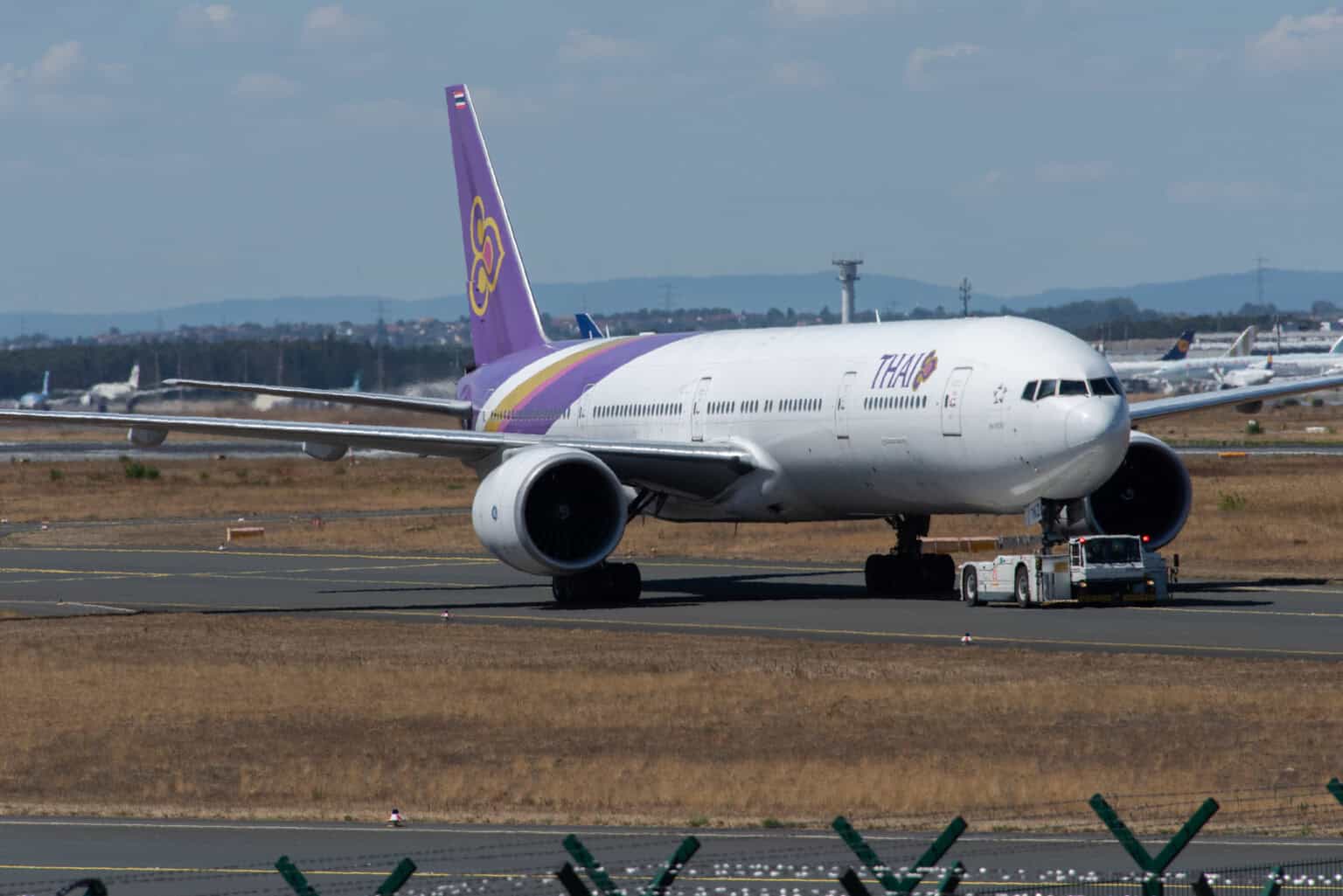
On August 21, 2026, a Thai Airways Boeing 777-300ER bound for Bangkok turned back to Frankfurt Airport after its left main landing gear failed to retract shortly after takeoff, forcing the crew to dump fuel before landing.
What Happened After Takeoff
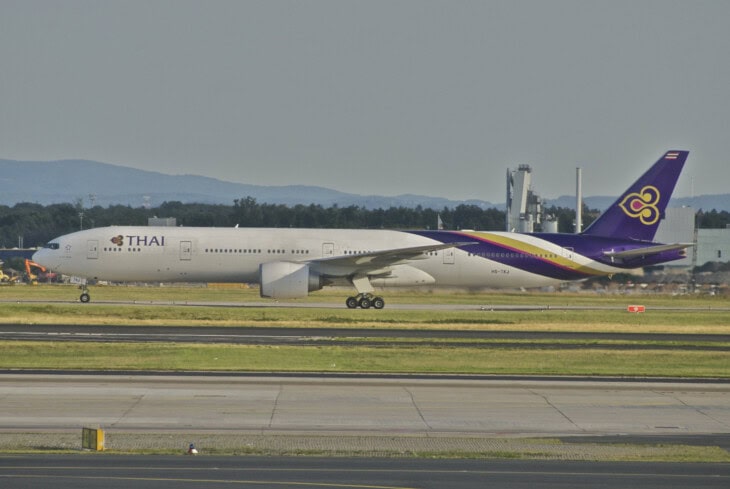
Flight TG921, operated by a Boeing 777-300ER registered HS-TKK, departed Frankfurt Airport on schedule at 14:45 local time from runway 18, according to AIRLIVE.
Shortly into the climb, the crew found the left main landing gear had not retracted. They leveled off at 13,000 feet and declared an emergency to air traffic control rather than continuing toward Bangkok.
The 777 then held near Frankfurt for about 25 minutes, dumping fuel to bring its weight down to a safe level for landing. It touched down on runway 25C roughly 80 minutes after departure and taxied under its own power to a remote stand.
Passengers disembarked normally and no injuries were reported among passengers or crew. Frankfurt is one of Lufthansa’s home hubs and a major diversion point in central Europe, with fire crews and maintenance support already on hand, part of why an out-of-position long-haul crew turns back to a large airport rather than press on.
Why Crews Dump Fuel Instead of Just Landing
Modern jets flag a landing gear problem to the flight deck through position sensors on each gear leg. When a sensor still shows a gear extended instead of retracted, pilots treat that as confirmed rather than guess, which is likely why TG921’s crew stopped climbing as soon as the indication appeared.
A 777-300ER can weigh up to 775,000 pounds (351,500 kg) at takeoff, but its structure is only certified to land at around 554,000 pounds (251,300 kg). Landing that heavy so soon after departure risks overstressing the airframe and brakes, which is why some jets dump fuel before an early return.
A landing gear that will not retract is one of the more common triggers for that decision, since it also adds drag and fuel burn the crew did not plan for. An Alaska Airlines 787 did the same thing over the UK earlier this year after turning back toward Rome.
Declaring an emergency does not necessarily mean the crew believed the aircraft was in serious danger. It is a formal step that gives a flight priority handling from air traffic control and puts airport fire and rescue crews on standby before the aircraft lands, exactly as happened at Frankfurt.
Key fact
Landing gear that fails to retract does not typically strand a jet in the air. Crews simply treat the flight as a heavier, higher-drag return and land at a weight the aircraft is built to handle.
Developing story
Thai Airways had not issued a public statement on the cause of the gear malfunction or HS-TKK’s return to service at the time of writing. The details above come from flight-tracking and incident reporting, not an airline or manufacturer statement.
Get the Newsletter
The latest aviation news and stories sent to your inbox.
About the Author

Tim is the owner and lead editor of AeroCorner since 2019, overseeing aviation content covering aircraft, airlines, airports, and the broader aviation industry. Through years of researching, writing, editing, and publishing aviation-focused content, he has developed extensive practical knowledge of commercial aviation and air travel. Based in Asia and a frequent traveler himself, Tim also brings firsthand passenger experience to AeroCorner’s coverage. Outside of publishing, he has also explored aviation firsthand through hands-on flight training in New Zealand.