

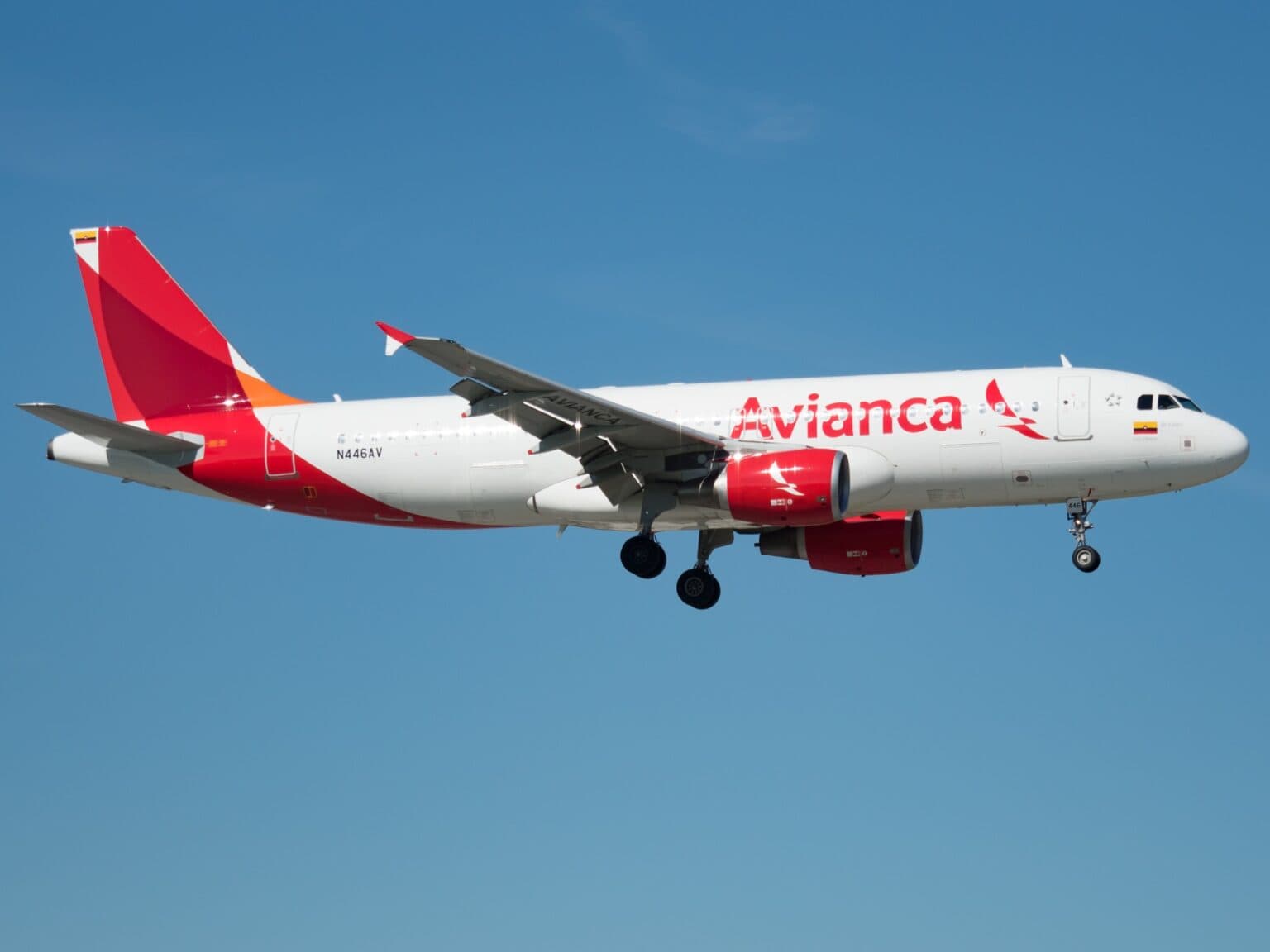
Avianca flight AV42 from Medellín, Colombia, to New York JFK diverted to Miami International Airport early on Friday, October 9, 2026, after severe turbulence left people on board injured. Miami-Dade Fire Rescue said it responded to multiple patients hurt by turbulence and took eight people to the hospital by ambulance.
The Airbus A320 landed at about 3:30 a.m., airport officials said in a statement to Local 10 News, adding that “some passengers were transported to a nearby hospital.”
What the flight data and first responders show
The red-eye took off from Medellín’s José María Córdova airport at 11:23 p.m. local time on Thursday, FlightAware tracking data shows. The A320 was cruising at about 36,000 feet over the Bahamas when the diversion was logged at 2:46 a.m. Eastern time, roughly 156 miles (251 km) southeast of Miami.
It touched down at Miami International Airport at 3:26 a.m. and reached the gate eight minutes later. New York was still more than 1,000 miles (1,600 km) to the north when the jet turned toward Miami.
A Local 10 crew at Jackson Memorial Hospital’s Ryder Trauma Center saw several people who may have been passengers or crew being treated, one of whom appeared to be an Avianca flight attendant. NBC6 reported that stretcher patients appeared to include a flight attendant still in uniform and a woman in a neck brace.
One passenger was taken to the hospital as a trauma alert, Telemundo 51 reported. Cellphone video from the cabin, described by both NBC6 and Telemundo 51, appears to show people holding ice packs to their heads while they are told to keep their seat belts fastened.
Passenger Maria Paula Jimenez told CBS News Miami that more than five or six ambulances were waiting near where passengers were to get off, seven of them with their lights on. She said it “wasn’t normal.”
What has not been confirmed
When and where in the flight the turbulence struck has not been made public, and neither has its cause. ABC7 New York reported that there was weather in the area at the time, but officials had not said whether weather caused the turbulence.
The extent of the injuries is unknown, as is the number of people on board. Some outlets describe all eight people taken to the hospital as passengers, but Local 10 and NBC6 crews saw what appeared to be at least one Avianca flight attendant among those treated.
The aircraft’s registration has not been published, and none of the reports out by Friday morning carried a statement from Avianca. FlightAware listed an onward AV42 leg from Miami to JFK later on Friday morning, estimated to depart at 8:25 a.m.
One early report, posted on iHeart stations, gave the flight number as 252 and said federal officials had opened an investigation. The airport, the fire rescue service and the tracking data all point to flight 042, and none of the official statements reported so far mentions an investigation.
When turbulence becomes an accident
Turbulence rarely harms the aircraft; it hurts whoever is not strapped in when the jolt comes. Our explainer on what causes turbulence covers the weather behind it.
In US rules, an encounter becomes an aircraft accident when anyone suffers a serious injury, even if the jet is undamaged. Under 49 CFR 830.2, that means a hospital stay of more than 48 hours starting within seven days, a broken bone other than a simple fracture of a finger, toe or nose, severe bleeding, nerve, muscle or tendon damage, any internal organ injury, or certain burns.
Under that definition, eight hospital transports do not by themselves make AV42 an accident. That turns on how badly each person was hurt, which officials have not disclosed.
FAA figures show who usually bears the injuries. From 2009 through 2024, US airlines flying under Part 121 recorded 207 serious turbulence injuries, and 166 of them were crew members against 40 passengers, according to the FAA’s turbulence data.
The last three years in the table climbed from 18 to 20 to 23 serious injuries, and 2024 was the highest year, with 20 of its 23 injuries to crew. A Colombian airline like Avianca is not counted in those US figures.
Two days earlier it was a cabin crew member who was hurt when British Airways flight BA559 hit turbulence near Heathrow and a flight attendant hurt her ankle.
For passengers, the FAA’s advice is simple: keep the seat belt “buckled at all times,” not only when the sign is on. Federal rules require it whenever the seat belt sign is lit.
Sources and references used for research and fact-checking.
Get the Newsletter
The latest aviation news and stories sent to your inbox.
About the Author

Tim is the owner and lead editor of AeroCorner since 2019, overseeing aviation content covering aircraft, airlines, airports, and the broader aviation industry. Through years of researching, writing, editing, and publishing aviation-focused content, he has developed extensive practical knowledge of commercial aviation and air travel. Based in Asia and a frequent traveler himself, Tim also brings firsthand passenger experience to AeroCorner’s coverage. Outside of publishing, he has also explored aviation firsthand through hands-on flight training in New Zealand.