

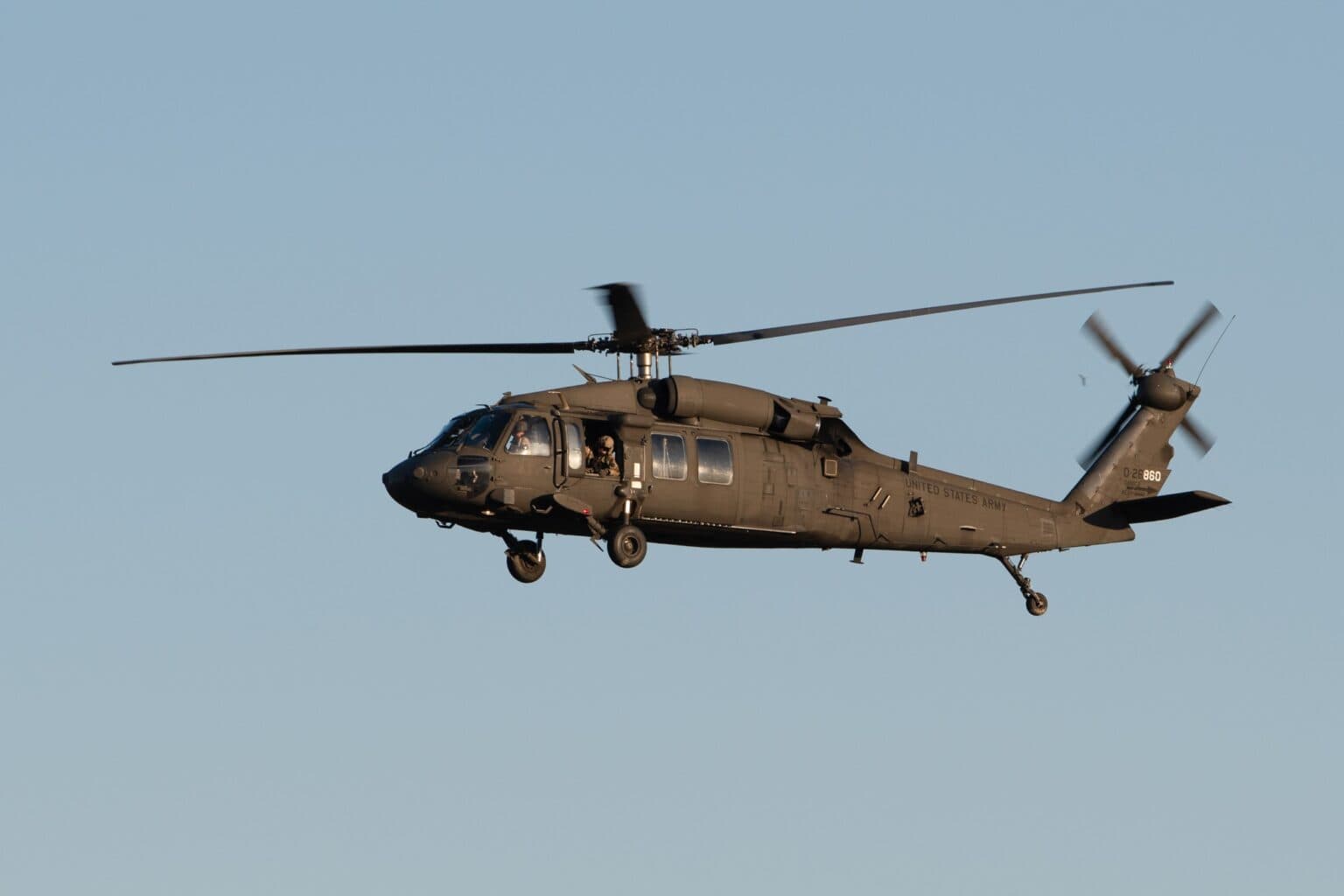
The US Army’s internal investigation into the January 29, 2025 collision between one of its Black Hawks and American Airlines Flight 5342 became public on October 8, 2026. It concludes that “breakdowns across all layers of conflict management” caused the crash, which killed 67 people over the Potomac River.
The Army gave the findings to the victims’ families, and The Washington Post reviewed them before their public release. Stars and Stripes also obtained the 50-page report, written by Lt. Gen. Michael McCurry and completed in May.
What the Army Investigation Found
McCurry named two broken radio transmissions as “the most salient contributing factor,” according to Stars and Stripes. They kept the helicopter crew, flying under the callsign PAT25, from picking out the PSA Airlines Bombardier CRJ700 as it circled to land at Reagan National Airport.
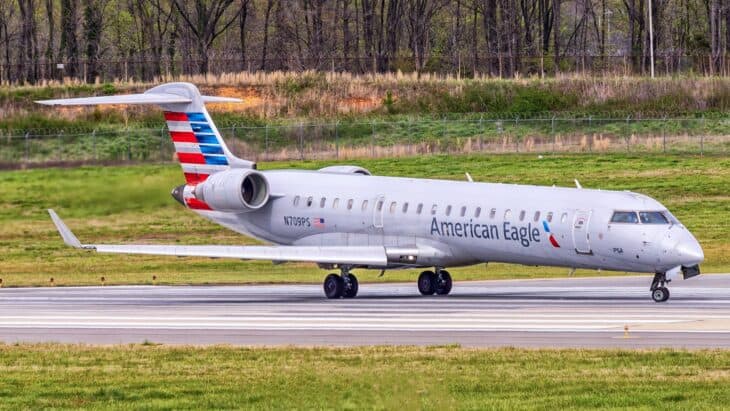

The report also lists instrument inaccuracies, intense city lighting seen through night vision goggles, and gusty winds. The Post reports that the goggles probably could not separate the jet’s lights from the lights of Maryland behind it, and that the crew likely fixed on a different, more distant aircraft.
The sharpest findings are about the Army itself. It never resolved known accuracy problems with the barometric altimeters on older Black Hawks, or made sure pilots knew about them, according to the Post’s reading of the report.
Those readings can be off by as much as 140 feet and still sit within allowable limits, and extra fuel tanks, which the accident helicopter carried, can also affect them. A service-wide notice is in place, but a fuller update will not reach operator manuals until 2027.
The report says the Army “lacks a formal near miss definition and reporting system,” and that leaders for years did not collect near-miss data or train pilots on Washington’s crowded airspace. It also says the Army’s representative on an interagency helicopter working group was “not of the appropriate rank to affect change.”
The Army also faulted the tower controller, saying the collision may have been prevented had the crew been given the incoming jet’s direction and distance. Dozens of pages are fully redacted, including interview transcripts and the specific altimeter findings, the Post reported.
How It Compares With the NTSB’s Findings
The National Transportation Safety Board determined the probable cause at a board meeting on January 27, 2026. It said systemic failures in airspace design, safety oversight and risk management by both the Federal Aviation Administration and the Army contributed to the crash.
The board put the heaviest weight on the FAA, whose helicopter routes let helicopters fly directly beneath an active approach corridor with no procedural separation. In its March 2025 urgent report, the NTSB showed that a helicopter at the 200-foot route ceiling over the river’s eastern shore would have about 75 feet of vertical separation from a jet approaching runway 33.
The Army report echoes that 75-foot figure and largely agrees with the board. What is new is the source: the near-miss blind spot, the altimeter tolerances and the working-group seat are now the Army’s own account of its gaps, not only an outside agency’s.
The NTSB had already found that the Army lacked a flight data monitoring program for helicopters near major airports, so routine climbs above the route ceiling went unnoticed. It issued eight of its 50 recommendations to the Army.
Both investigations point to the same technology. The NTSB found that an airborne collision avoidance system using ADS-B In could have given the airline crew a first alert 59 seconds before impact, because altitude limits stopped the jet’s TCAS collision avoidance from issuing its stronger resolution alerts. The Army cites its own lack of ADS-B use.
What the report does not do
The Army’s findings describe no disciplinary action against any leader. The families’ group says the report does not assign individual leadership accountability, and the redacted pages mean parts of the altimeter analysis remain unseen.
Families Want an Independent Audit
The Families of Flight 5342 group again asked the Army Inspector General for an independent audit, a request 24 senators made more than a year ago, Stars and Stripes reported. Tim Lilley, whose son Sam was the jet’s first officer, said the Army “owes the families and the American public a full accounting of how these risks were allowed to persist.”
Carrie Eaves, widow of the Black Hawk’s pilot, Chief Warrant Officer 2 Andrew Eaves, said she was satisfied that officials did their “due diligence.” The NTSB has meanwhile said the FAA’s answers to 11 of its 33 recommendations are unacceptable, led by the refusal to require ADS-B In.
The House and Senate have each passed aviation safety bills addressing ADS-B in congested airspace, and lawmakers are still negotiating a single version, according to the Post.
Sources and references used for research and fact-checking.
Get the Newsletter
The latest aviation news and stories sent to your inbox.
About the Author

Tim is the owner and lead editor of AeroCorner since 2019, overseeing aviation content covering aircraft, airlines, airports, and the broader aviation industry. Through years of researching, writing, editing, and publishing aviation-focused content, he has developed extensive practical knowledge of commercial aviation and air travel. Based in Asia and a frequent traveler himself, Tim also brings firsthand passenger experience to AeroCorner’s coverage. Outside of publishing, he has also explored aviation firsthand through hands-on flight training in New Zealand.