

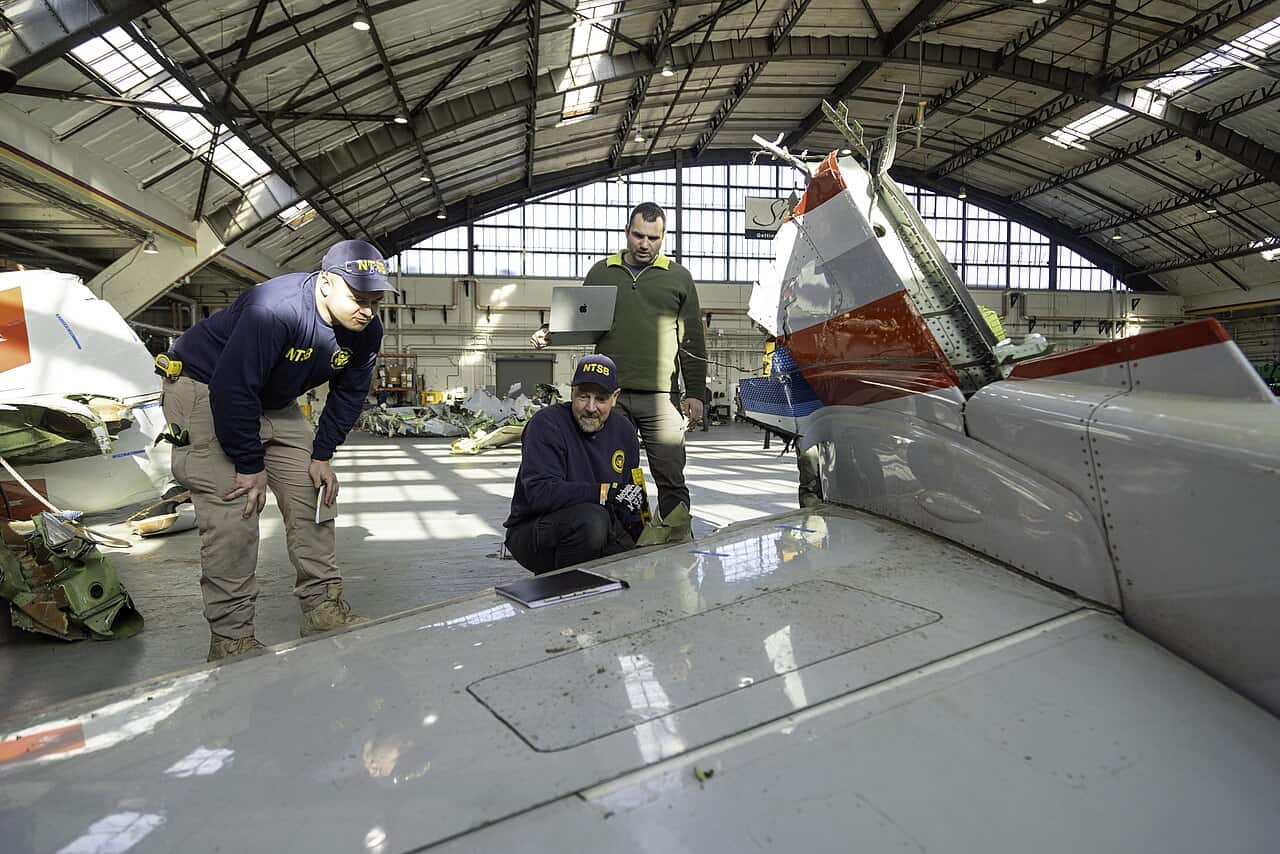
On September 14, 2026, the National Transportation Safety Board said the Federal Aviation Administration’s responses to 11 of the 33 recommendations it made to the agency after the January 2025 midair collision near Reagan National Airport are “unacceptable,” Reuters reported.
The collision between an American Airlines regional flight, operated by PSA Airlines with a Bombardier CRJ700, and a US Army Black Hawk helicopter killed 67 people. It was the deadliest US aviation disaster in more than two decades.
At the top of the board’s list is ADS-B In, a traffic-alerting system the FAA has not agreed to require. NTSB Chair Jennifer Homendy said it could have alerted the jet’s pilots 59 seconds before the collision and the helicopter crew 48 seconds before it.
“How many more decades have to go by before we again and again and again have to recommend it after terrible tragedy?” Homendy told Reuters.
What the NTSB Is Grading
The NTSB’s final report, released in January 2026, made 50 recommendations. Thirty-three went to the FAA, eight to the Army, and nine to other bodies, including the Department of Transportation and the standards group RTCA.
The board cannot force anyone to act on them. Instead it tracks each response and grades it, labelling one unacceptable when the agency disagrees, offers an alternative the board thinks misses the problem, or fails to act in a timely way. Reuters did not report how the board rated the FAA’s other 22 answers.
What the FAA Says It Has Done
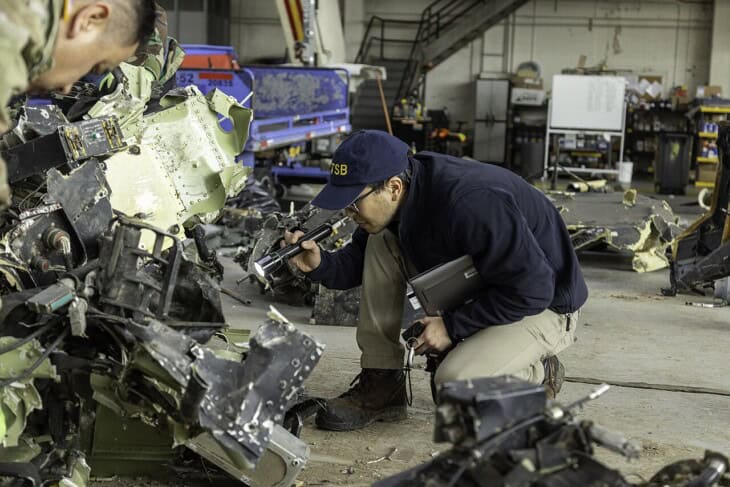
In its letter to the board, the FAA said it is reviewing helicopter routes in six major cities, has finished reviews in four, and has issued a directive to keep airplanes and helicopters apart, according to Reuters.
That directive is a nationwide notice the FAA described in May. It suspends visual separation between airplanes and helicopters near busy airports, so controllers must keep them apart on radar by set lateral or vertical distances. The agency said that step “exceeded what the NTSB recommended.”
The FAA has also made its helicopter restrictions around Reagan National permanent, except for essential missions. In the same May statement, it said some of the remaining recommendations would require rulemaking or new technology standards.
On ADS-B In, the NTSB said the FAA did not say whether it intends to write a rule at all. FAA Administrator Bryan Bedford told Reuters in July that the agency could act without Congress but would prefer direction from lawmakers.
ADS-B Out Is Already Required. ADS-B In Is Not.
Since January 1, 2020, federal rules have required ADS-B Out in most controlled airspace, including Class A, B and C and Class E above 10,000 feet. It makes an aircraft broadcast its position and identity, and after the crash the FAA extended the requirement to military helicopters flying around Reagan National.
ADS-B In is the receiving half. It lets a cockpit pick up those broadcasts and, paired with alerting software, warn the crew about a specific nearby aircraft. The same rule that mandates ADS-B Out says nothing about ADS-B In.
That gap matters close to the ground. Airliners already carry TCAS collision avoidance, but its warnings are inhibited at low altitude, a limit the NTSB flagged to Congress in December 2025, as AVweb reported. The CRJ700 was on approach to Runway 33 when the two aircraft collided.
The Fight Moves Back to Congress
Legislation has stalled for most of a year. The Senate passed the ROTOR Act unanimously in December 2025, but it fell one vote short of the two-thirds majority it needed in the House. The House then passed its own aviation safety bill, 396 to 10, in April.
Homendy already pressed Congress in July to enact all 50 recommendations. She and relatives of the victims were set to make that case to lawmakers again on Tuesday, according to Reuters.
Reality check
An unacceptable rating is a public verdict, not a penalty. The NTSB can investigate, recommend and grade, but only the FAA or Congress can make ADS-B In mandatory.
Sources and references used for research and fact-checking.
Get the Newsletter
The latest aviation news and stories sent to your inbox.
About the Author

Tim is the owner and lead editor of AeroCorner since 2019, overseeing aviation content covering aircraft, airlines, airports, and the broader aviation industry. Through years of researching, writing, editing, and publishing aviation-focused content, he has developed extensive practical knowledge of commercial aviation and air travel. Based in Asia and a frequent traveler himself, Tim also brings firsthand passenger experience to AeroCorner’s coverage. Outside of publishing, he has also explored aviation firsthand through hands-on flight training in New Zealand.