

Table of Contents
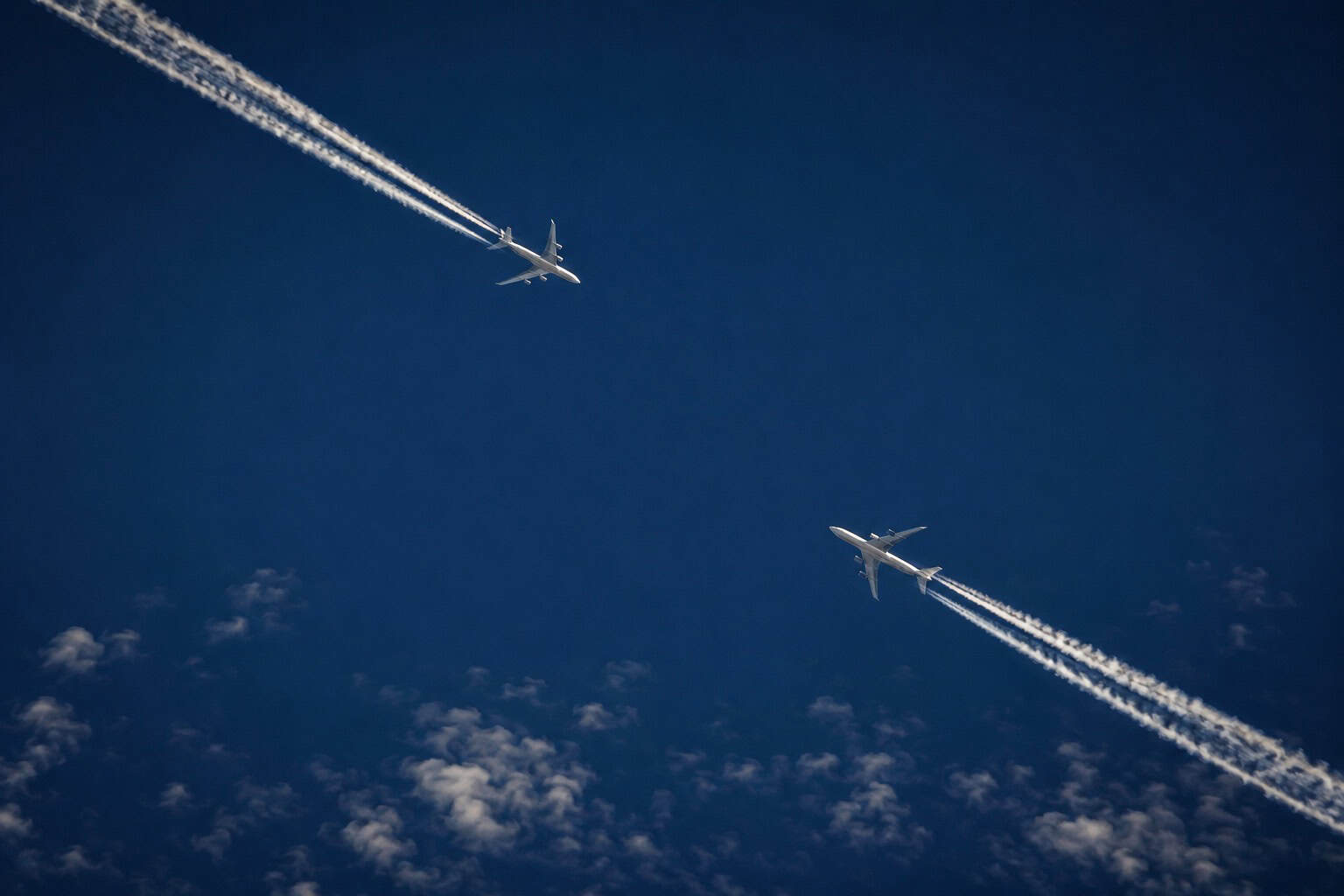
If you have watched enough aviation documentaries, you have probably heard it: a sharp, synthetic voice cutting through cockpit audio saying “TCAS, climb, climb now.” It sounds alarming because it is. The Traffic Collision Avoidance System, known universally as TCAS, is the last automated safety net between two aircraft that are on a collision course. It operates independently of air traffic control. It does not ask for permission. And when it gives an instruction, pilots are required by regulation to follow it, even if a controller on the radio is telling them to do the opposite.
Mid-air collisions between commercial aircraft are extraordinarily rare, and TCAS is one of the primary reasons why. The system has been mandatory on large commercial aircraft in the United States since the early 1990s and across Europe since shortly after. Understanding how it works, and why its rules are absolute, explains not just a piece of cockpit technology but one of the more consequential lessons in aviation safety history.
How TCAS sees other aircraft
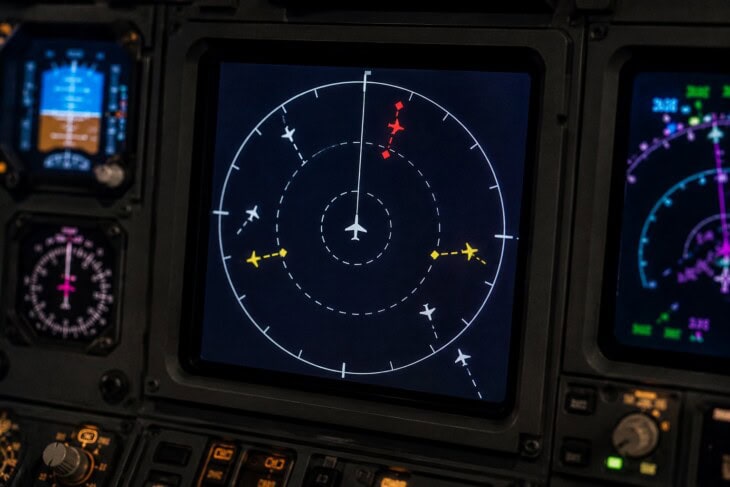
TCAS works by communicating directly with the transponders of other aircraft. Every aircraft flying in controlled airspace carries a transponder, a radio device that broadcasts the aircraft’s identity, altitude, and position in response to interrogation signals. TCAS continuously sends out interrogation pulses and listens for replies. When it detects another transponder-equipped aircraft nearby, it begins tracking that aircraft’s position, altitude, and the rate at which the distance between the two is closing.
The system issues two categories of alert. The first is a Traffic Advisory, or TA, triggered when another aircraft is roughly 35 to 40 seconds from the closest point of approach. A TA does not tell the crew what to do. It plays the phrase “Traffic, traffic” and highlights the intruder on the cockpit display, giving the crew situational awareness that a conflict may be developing. The second and more urgent alert is a Resolution Advisory, or RA, issued at approximately 20 to 30 seconds from potential collision. An RA gives an explicit vertical maneuver instruction: climb, descend, increase climb, reduce descent. It specifies not just the direction but the required vertical speed, displayed as a green arc on the vertical speed indicator showing where the pilot needs to fly.
The critical capability of TCAS II, the version required on large commercial aircraft, is aircraft-to-aircraft coordination. When two TCAS-equipped aircraft are both detecting the same conflict, their systems communicate directly through Mode S transponder signals to negotiate complementary RAs. If the system on one aircraft issues a “climb” RA, the system on the other aircraft knows this and issues a “descend” RA, ensuring both aircraft move in opposite directions away from each other. This coordination happens automatically, in fractions of a second, without any involvement from controllers or crew.
TCAS I versus TCAS II
TCAS I provides Traffic Advisories only, alerting crews to nearby traffic without specifying a maneuver. It is required for smaller commercial aircraft with 10 to 30 passenger seats. TCAS II adds Resolution Advisories with specific vertical maneuver instructions and aircraft-to-aircraft coordination. It has been required in the United States on all aircraft with more than 30 passenger seats operating under Part 121 since the mid-1990s, and by EASA for all turbine-powered aircraft above 5,700 kilograms maximum takeoff weight operating in European airspace.
The rule that overrides ATC
The most counterintuitive thing about TCAS is what pilots are required to do when it fires an RA. The rule is clear: follow the RA immediately and completely, regardless of what air traffic control has told you to do. If a controller has just instructed a crew to descend and TCAS then issues a “climb” RA, the crew must climb. They are required to inform ATC that they are responding to a TCAS RA, which alerts the controller that the aircraft is departing its cleared altitude, but they do not wait for clearance and they do not negotiate. The RA takes absolute precedence.
This rule exists because TCAS has information that the controller does not, at least not fast enough to act on. The system is tracking both aircraft simultaneously in real time, computing closing rates and projecting trajectories second by second. A controller monitoring a busy sector, handling multiple frequencies, and looking at a radar picture that may be several seconds old cannot react with the same speed or geometric precision. TCAS is specifically designed for this window of time when the conflict has progressed beyond what procedural separation can resolve and a collision is seconds away if no one acts.
The requirement to follow RAs regardless of ATC instructions was not always as unambiguous as it is today. For years, the procedures left some room for interpretation, and crews trained in environments where controller authority was paramount sometimes hesitated, or chose to follow ATC. That ambiguity contributed to one of the worst aviation disasters of the modern era, and its resolution made the current rule non-negotiable.
The night over Lake Constance
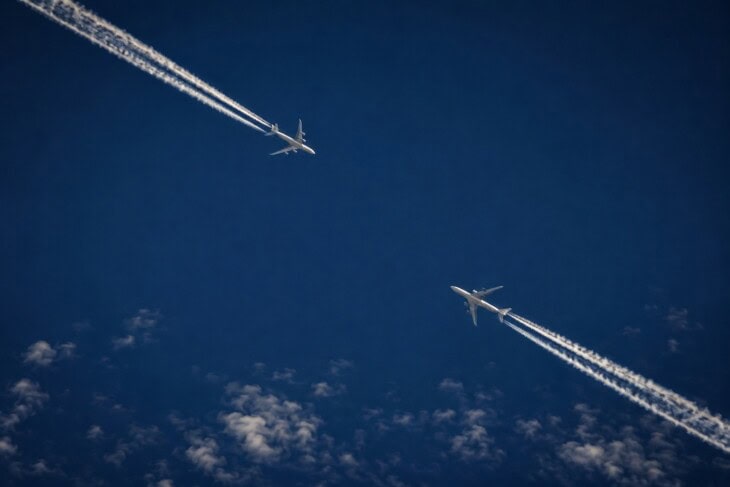
At 23:35 on the night of 1 July 2002, Bashkirian Airlines Flight 2937, a Tupolev Tu-154 carrying 69 passengers and crew, and DHL Aviation Flight 611, a Boeing 757 freighter with two crew members aboard, were both cruising at flight level 360, approximately 36,000 feet, over southern Germany near the town of Überlingen on Lake Constance. They were flying at the same altitude on intersecting paths. The single air traffic controller responsible for both aircraft, working alone at the Skyguide facility in Zurich, did not detect the conflict until it was critical. With less than a minute to go, he instructed the Bashkirian crew to descend.
Überlingen, 1 July 2002: when the two systems gave opposite instructions
As the Zurich controller issued a descent instruction to the Bashkirian crew, the TCAS systems on both aircraft were simultaneously coordinating their own response. TCAS told the Bashkirian Tu-154 to climb. It told the DHL 757 to descend. The DHL crew followed their TCAS RA and began descending. The Bashkirian crew, faced with a controller telling them to descend and a TCAS system telling them to climb, followed the controller. Both aircraft descended. They collided at 10,630 metres at 23:35:32, killing all 71 people aboard both flights, including 52 children who were travelling to a summer camp in Spain. The German accident investigation authority concluded that the ambiguity in procedures around TCAS compliance was a contributing factor. ICAO amended its regulations in November 2003 to make explicit that TCAS RAs take absolute precedence over ATC instructions. The rule has been unambiguous ever since.
The Überlingen accident did not reveal a flaw in TCAS. It revealed what happens when the system’s logic is not fully followed. The DHL crew did exactly what the system required and survived only because physics denied them the option: both aircraft were already committed. The Bashkirian crew faced a genuine conflict between two authorities they had been trained to respect, and made a choice that the accident investigation, and ICAO’s subsequent rule change, confirmed was the wrong one. Since November 2003, there is no ambiguity. An RA is not a suggestion to weigh against ATC. It is an instruction to execute immediately.
What comes next
TCAS II Version 7.1, the current standard, has been in use for years and has a strong safety record. The mid-air collision rate between commercial aircraft in controlled airspace is vanishingly low, and TCAS has been a significant factor in keeping it there. But the system has known limitations. Its alerting logic can generate nuisance advisories in dense traffic environments, and it was designed for a world of conventional manned aircraft flying predictable profiles.
The FAA and Lincoln Laboratory at MIT have developed a next-generation replacement called ACAS X, a family of systems based on probabilistic threat modeling rather than the fixed geometric logic of TCAS II. ACAS Xa is designed to replace TCAS II on large transport aircraft, offering roughly 16 to 24 percent greater safety improvement and reducing the total number of resolution advisories by around 60 percent by filtering out situations that do not pose a genuine collision risk. Separate variants are being developed for unmanned aircraft (ACAS Xu), closely spaced parallel approaches (ACAS Xo), and general aviation (ACAS Xp). The transition is underway, and ACAS Xa is fully compatible with existing TCAS II systems, meaning the two can operate together during the changeover period without loss of coordination capability.
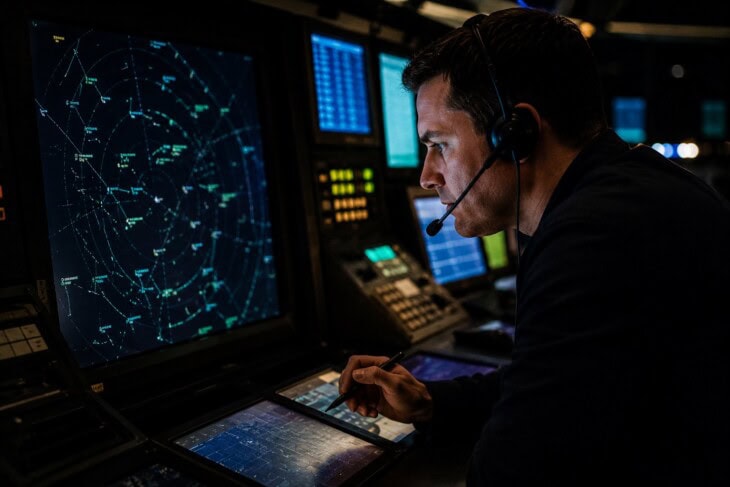
The next time you hear “TCAS, traffic” mentioned in a documentary, or notice a brief unexplained altitude change on a flight and wonder what prompted it, you are looking at a system that operates in the gap between ATC procedures and physics. Controllers manage the space between aircraft across millions of square miles of airspace every day and get it right almost without exception. TCAS exists for the rare moments when separation is lost and seconds are the only resource left. Its authority is absolute for exactly that reason.
For context on how emergency situations more broadly are managed by controllers and crews, the article on emergency declarations covers what happens when a 7700 squawk appears on a radar scope and what the system does in response. The controller role in maintaining separation before any of these systems need to activate is covered in The People Watching Every Flight. Both are part of the How Air Traffic Control Actually Works series.
FAQ
Sources and references used for research and fact-checking.
- Traffic Collision Avoidance System - Wikipedia
- Introduction to TCAS II Version 7.1 - Federal Aviation Administration
- Advisory Circular AC 20-151C: Airworthiness Approval of Traffic Alert and Collision Avoidance Systems (TCAS II) - Federal Aviation Administration
- 2002 Überlingen Mid-Air Collision - Wikipedia
- T154 / B752, en-route, Uberlingen Germany, 2002 - SKYbrary
- Tupolev TU154M and Boeing 757-200 Accident Summary - Federal Aviation Administration — Lessons Learned
- TCAS Technology and Requirements - NBAA — National Business Aviation Association
- ACAS X - SKYbrary
- What is TCAS? - Pilot Institute
Get the Newsletter
The latest aviation news and stories sent to your inbox.
About the Author

Tim is the owner and lead editor of AeroCorner since 2019, overseeing aviation content covering aircraft, airlines, airports, and the broader aviation industry. Through years of researching, writing, editing, and publishing aviation-focused content, he has developed extensive practical knowledge of commercial aviation and air travel. Based in Asia and a frequent traveler himself, Tim also brings firsthand passenger experience to AeroCorner’s coverage. Outside of publishing, he has also explored aviation firsthand through hands-on flight training in New Zealand.