

Senate and House negotiators have reached an “agreement in principle” to require ADS-B In traffic displays on aircraft that already broadcast their position, nearly two years after American Airlines Flight 5342 collided with an Army Black Hawk near Reagan National Airport. Sens. Ted Cruz (R-Texas) and Maria Cantwell (D-Wash.), the chair and ranking member of the Senate Commerce Committee, announced it on November 17, 2026, at a Capitol event organized by the victims’ families.
The deal is not yet a bill. Rules for military aircraft are still unsettled, and Cruz said he wants the package passed before this Congress ends.
What Was Agreed, and What Was Not
According to The Washington Sun, the agreement covers the civil side: any aircraft already required to carry ADS-B Out would also have to carry ADS-B In. Cruz said the agreement had “taken the better part of a year to reach.”
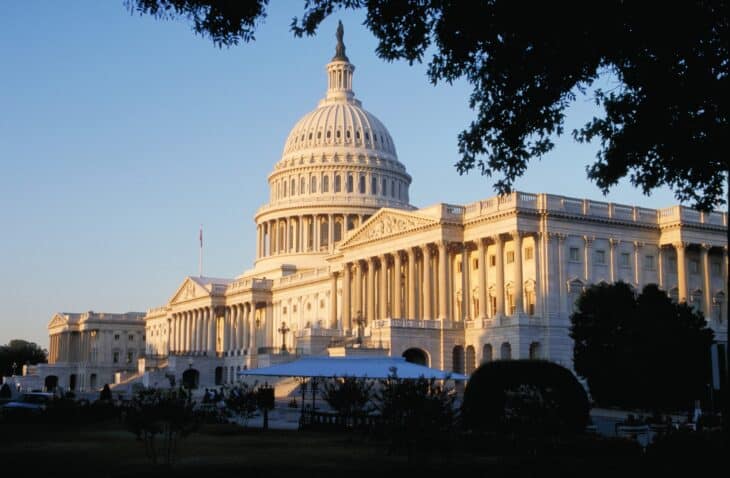

The military piece is the gap. Cruz told reporters, as quoted by CBS News, that “we still have a couple of details to negotiate with the House Armed Services Committee,” and that his “objective is to get it done this year, with this Congress.”
Cantwell drew the line on that point. “When military aircraft fly in the same airspace, they must meet the same standards as everyone else,” she said, in remarks carried by The Associated Press.
No legislative text for the compromise has been published. So it is not yet confirmed whether the deal keeps the deadline and small-aircraft carve-outs of the Senate’s earlier bill, described below.
Sen. Tammy Duckworth (D-Ill.), the top Democrat on the Senate aviation subcommittee, spoke at the same event alongside Transportation Secretary Sean Duffy and FAA Administrator Bryan Bedford, her office said. She called for a final package that mandates ADS-B In and keeps military ADS-B Out switched on “unless there is an actual national security reason and not because it was standard practice.”
How the House and Senate Got Stuck
The Senate passed the ROTOR Act (S. 2503) by unanimous consent in December 2025. In the House it went to a fast-track vote that needs a two-thirds majority, and it fell one vote short at 264 to 133, according to the Commerce Committee.
The Washington Sun reports that the Pentagon had withdrawn its earlier endorsement before that February vote, citing budget burdens and operational security. House Armed Services Chair Mike Rogers (R-Ala.) opposed the bill.
The House then passed its own package, the ALERT Act, in April. In a March statement, Cruz and Cantwell said it “falls short on a strong and clear requirement” for the traffic-awareness technology the NTSB had recommended, a view the Air Line Pilots Association and the Families of Flight 5342 shared.
The ROTOR Act’s text is the template the families want kept. It requires aircraft already obliged to carry ADS-B Out to be equipped with ADS-B In by December 31, 2031, and has the FAA set standards for traffic alerts in the air and on the airport surface.
For aircraft under 12,500 pounds (5,670 kg) flying under Part 91, the private-flying rules, the text tells the FAA to accept lower-cost options, including portable ADS-B In receivers and displays on an electronic flight bag.
Both bills follow the NTSB’s investigation, which we covered when the board said a third of the FAA’s answers to its fixes were unacceptable.
Why ADS-B In Is the Sticking Point
ADS-B Out is the transmitting half: it broadcasts an aircraft’s GPS position to controllers and other aircraft. Since 2020 the FAA has required it in Class B and C airspace, within 30 nautical miles of the busiest airports, and in most airspace above 10,000 feet.
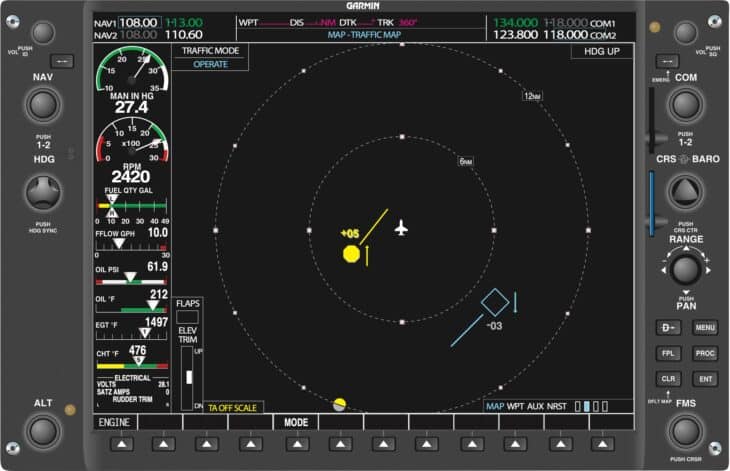
ADS-B In is the receiving half, which puts those broadcasts on a cockpit display with alerts. No rule requires it. Airliners instead rely on TCAS collision avoidance, which the NTSB found was held back by altitude limits on Flight 5342.

That limit mattered on January 29, 2025, when the PSA Airlines CRJ700 flying as Flight 5342 struck the Black Hawk on approach to Reagan National, killing all 67 people on both aircraft.
The NTSB found that an ADS-B In alerting system could have given the jet’s crew a first warning about the helicopter 59 seconds before the collision. Its final report in January 2026 carried 50 recommendations, 33 to the FAA and eight to the Army.
The military side is the harder fight because the Black Hawk was not broadcasting its own position, a lapse the Army’s own report also examined. An ADS-B In mandate can only help if every aircraft nearby is transmitting.
What Happens Next
Negotiators still have to settle the military provisions, write the compromise into a bill and pass it in both chambers before the session ends. Sen. Jerry Moran (R-Kan.) said the goal is to see that “an agreement in principle is in fact the law of the land,” according to KWCH.
Even once a law passes, the FAA would still have to write the rule. If the Senate’s deadline survives, operators would then have until the end of 2031 to equip, so a deal now starts a multi-year retrofit rather than ending one.
Sources and references used for research and fact-checking.
- Office of Sen. Tammy Duckworth, Duckworth, Families of Flight 5342 Renew Call for Congress to Pass Strongest Aviation Safety Bill Possible
- U.S. Senate Commerce Committee, Cruz, Cantwell Joint Statement on ALERT Act Markups
- U.S. Senate Commerce Committee, ROTOR Act substitute amendment text (S. 2503)
- U.S. Senate Commerce Committee, Cantwell, Cruz Bipartisan Aviation Safety Agreement Requires Full Implementation of ADS-B Technology
- NTSB, Systemic Failures Led to Midair Collision Over Potomac River in Washington
- Cornell Law School LII, 14 CFR 91.225, ADS-B Out equipment and use
Get the Newsletter
The latest aviation news and stories sent to your inbox.
About the Author

AeroCorner News is the aviation news desk of AeroCorner.com. It covers accidents and incidents, safety rulings, airline and airport disruption, and new aircraft. It works from primary sources such as the NTSB, FAA, EASA and the manufacturers' own announcements.