

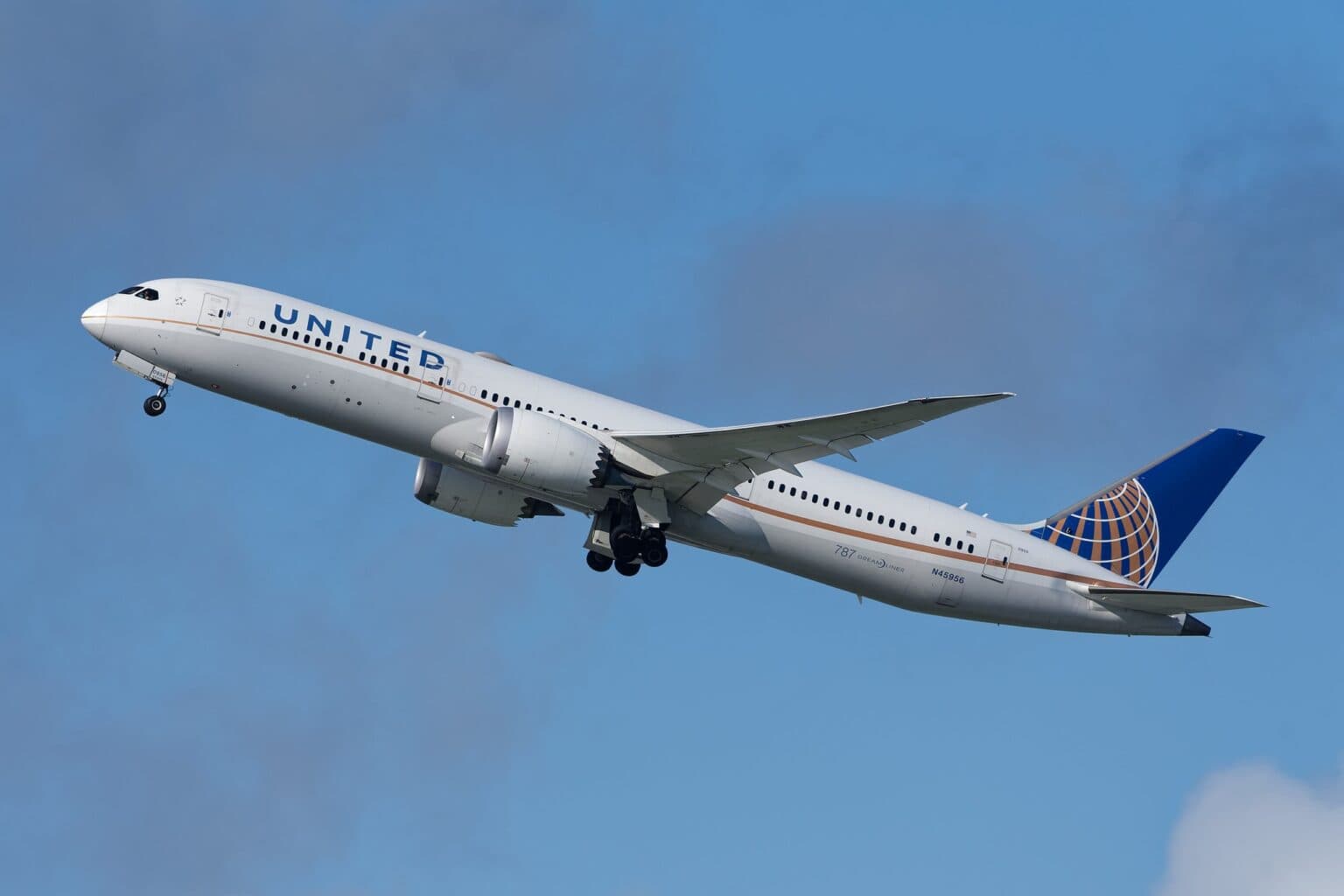
A tower controller at San Francisco International Airport asked the crew of United flight UA505 on November 6, 2026, to pass a message to the airline: its UA505 and UA805 call signs sound too alike to be scheduled about 15 minutes apart. Both jets were sitting on runways at the time, waiting to depart a few minutes after midnight.
The exchange comes from the tower frequency recorded by LiveATC.net, which the YouTube channel You Can See ATC published on November 12. Aviation A2Z later reported it with a full transcript.
What the controller said
UA505 is United’s overnight flight from San Francisco to Houston Bush Intercontinental. Flight-tracking data cited in the video puts a Boeing 787-9, registration N61115, on that night’s departure.
UA805 is United’s overnight flight to Seoul Incheon, which Flightradar24 shows flown by Boeing 777-200s this week. On the recording, the tower first puts “United 805 Heavy” in position on Runway 28R and tells the crew to use caution, because “company 505 Heavy” is about to depart from Runway 1.
The controller then lines up United 505 Heavy on Runway 1L and asks the crew to grab a pen. According to the published transcript, the controller explains that a “similar-sounding call sign 805” is in position to their right and that the two flights are “only scheduled like 15 minutes apart.”
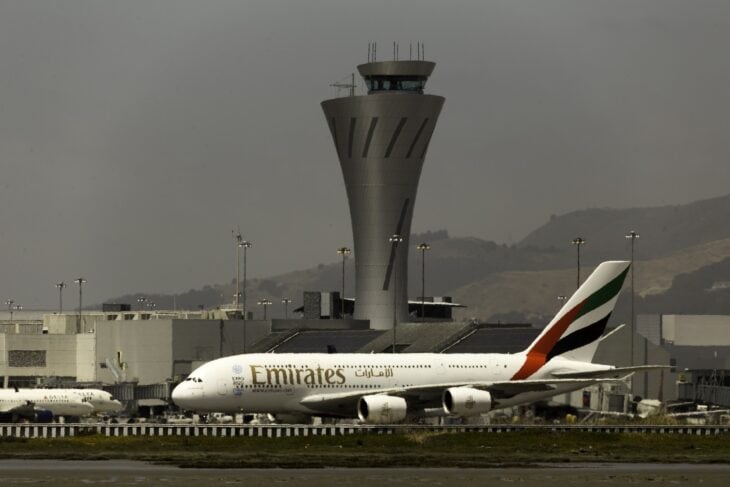

“Can you let your company know that they need to either change call signs or put them more than an hour apart? Because that’s pretty dangerous for us,” the controller says. The UA505 crew agrees to “put a request in,” and the controller adds that this seemed “the faster way to go.”
Both jets then left normally: UA505 from Runway 1L, and UA805 from Runway 28R moments later. In the published exchange each crew reads back its own clearance, and nothing suggests an instruction reached the wrong aircraft.
Why “five-oh-five” and “eight-oh-five” worry a controller
On the radio the two call signs differ by a single spoken digit. Both begin with “United,” both end in “oh-five Heavy,” and both crews were listening on the same tower frequency at the same moment.
The risk is a crew accepting a clearance meant for the other jet, for example a takeoff clearance. At SFO that matters more than at many airports, because the north-south runways UA505 was using and the east-west runways UA805 was using cross each other.
The FAA’s air traffic control handbook, Order JO 7110.65, already gives controllers tools for this. They emphasize the digits that differ, may restate the airline name after the number (“United Thirty-one United”), warn each crew that a similar call sign is on frequency, and tell their supervisor.
Those steps are a workaround performed live on every flight, though. The lasting fix belongs to the airline, which chooses its flight numbers, and that is what the controller was asking United for.
The formal route, and the shortcut
The FAA does have an official channel. Its facility management order, JO 7210.3, tells facility managers to log duplicate and similar-sounding call signs in a Similar Sounding Call Sign Submission Tool.
When scheduled flights with such call signs operate within 30 minutes of each other at the same airport and cause a recurring identification problem, the facility asks the airline to change the flight numbers. The order defines recurring as three or more times a week, in at least two of four consecutive weeks.
These two flights meet the order’s timing test. Flightradar24 lists UA805 at 11:45 pm and UA505 at 11:59 pm Pacific time every night, 14 minutes apart, and shows the same times scheduled through November 22.
The controller’s request went further than the order’s 30-minute threshold, asking for more than an hour between them. Passing it through the crew sidestepped that process, or in the controller’s words, it was “the faster way to go.”
Radio wording keeps surfacing in runway safety findings. The NTSB traced a 2024 runway incursion at JFK involving Swiss flight LX17 to two controllers’ “one at each” shorthand.
What is not known yet
No public statement from United or the FAA about the exchange could be found at the time of writing, and it is not known whether the crew’s request or any FAA submission has reached United’s scheduling team. The quotes here come from a published transcript of the LiveATC recording.
Sources and references used for research and fact-checking.
Get the Newsletter
The latest aviation news and stories sent to your inbox.
About the Author

AeroCorner News is the aviation news desk of AeroCorner.com. It covers accidents and incidents, safety rulings, airline and airport disruption, and new aircraft. It works from primary sources such as the NTSB, FAA, EASA and the manufacturers' own announcements.