

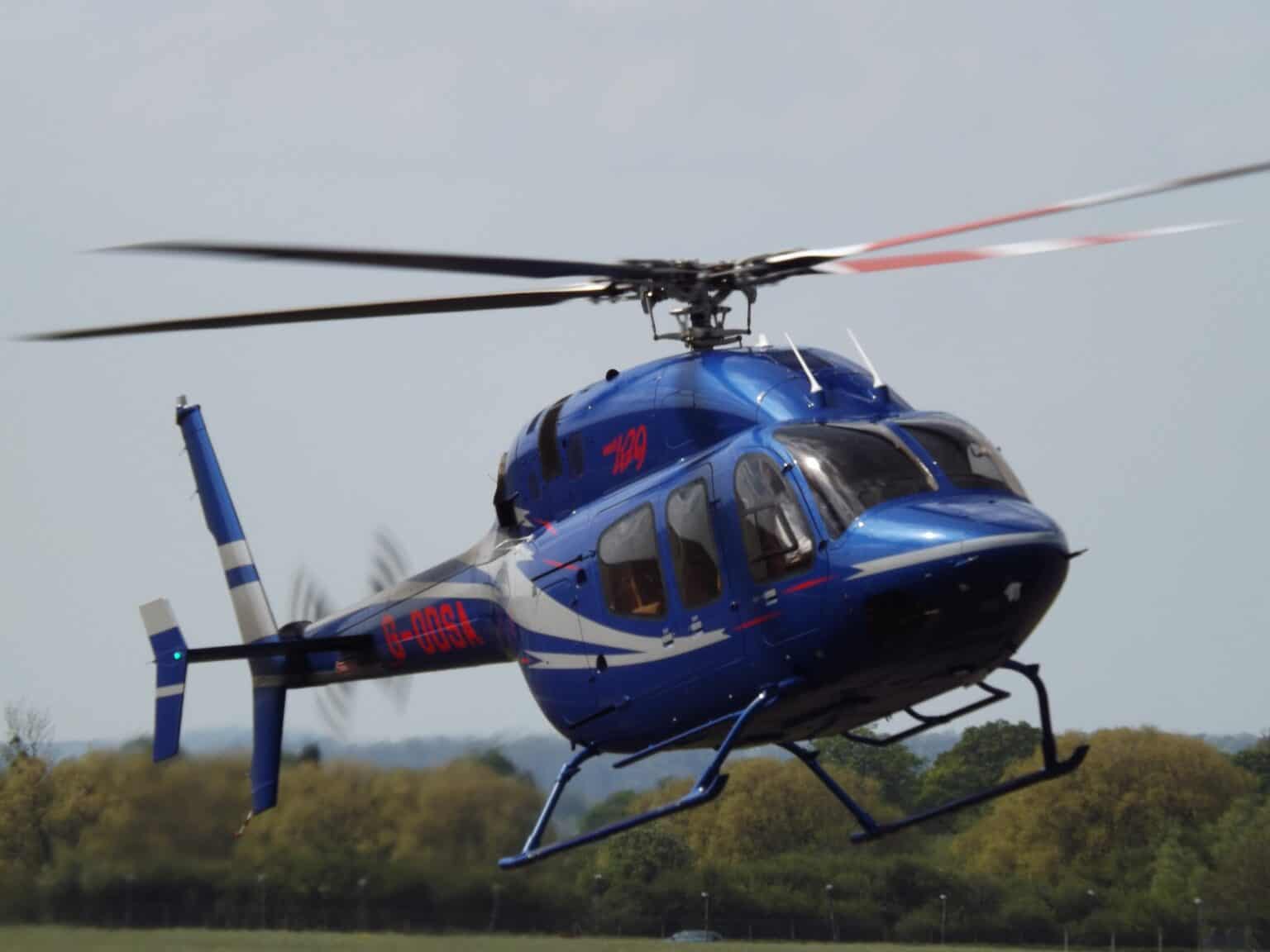
The FAA has ordered owners of Bell 429 helicopters to inspect the rivets holding the tail rotor gearbox support assembly to the tail boom far more often. Airworthiness Directive 2026-22-12, published in the November 12, 2026 Federal Register, takes effect on December 17 and covers an estimated 147 US-registered helicopters.
The rule supersedes AD 2022-20-11, which already required the same inspections. What changes is how often they come around: the old directive allowed 400 hours time-in-service or 12 months between checks, and the new one adopts Transport Canada’s schedule of every 100 hours or 3 months, whichever comes first.
Why the interval came down
Transport Canada, which certifies the 429 as the state of design, issued its new directive after reports of numerous failed rivets that were found within the existing repetitive inspection interval. In other words, rivets were failing between one check and the next, so the 400-hour window was not catching them in time.
Bell responded by revising its Alert Service Bulletin 429-19-47 to Revision C on May 6, 2025, according to the Canadian directive. Transport Canada then made the shorter interval mandatory in AD CF-2025-60, issued November 24, 2025, and revised it as CF-2025-60R1, dated January 28, 2026, which is the version the FAA has now adopted.
The FAA rule states the unsafe condition plainly. Failed rivets, or rivets with inadequate grip length, at the joint between the tail boom skin and the tail rotor gearbox support assembly could lead to deterioration of the joint’s structural integrity, detachment of the support assembly and loss of control of the helicopter.
What owners have to do
The inspection itself is unchanged from 2022. Mechanics look at the outside of the gearbox support assembly for rivet heads separated from their tails, then use a borescope, or a light and mirror, to check inside the tail boom for missing tail pieces or tails lying at the bottom of the boom.
A tactile check follows, pulling on the rivet tails by hand or with pliers to see whether any come out. Gaps between the support assembly and the tail boom skin larger than 0.005 inch (0.127 mm) must be repaired using a method approved by the FAA, Transport Canada or Bell’s Transport Canada design approval organization.
Helicopters do not all start the new cycle at once. Under the Canadian schedule the FAA incorporates, the first inspection is due no later than one month after the effective date, or sooner depending on hours flown since the last check, and the 100-hour or 3-month repeat applies after that.
| Item | AD 2022-20-11 | AD 2026-22-12 |
|---|---|---|
| Repeat inspection interval | 400 hours or 12 months | 100 hours or 3 months |
| US-registered helicopters affected (FAA estimate) | 120 | 147 |
| Effective date | November 28, 2022 | December 17, 2026 |
| Based on Transport Canada AD | CF-2021-15 | CF-2025-60R1 |
The cost of checking four times as often
The FAA puts each of the three inspections, visual, borescope and tactile, at one work-hour, or $85 per helicopter. Across the US fleet that is $12,495 per inspection type each time the checks come due, and both the hour and calendar limits are now a quarter of what they were.
Replacing a bad rivet is estimated at one work-hour plus up to $22 in parts per rivet, for up to $9,416 per helicopter. The FAA says it cannot estimate how many helicopters will need repairs, or what an approved gap repair will cost.
Why a parked helicopter is on a calendar clock
The 3-month limit matters as much as the 100 hours. When the FAA wrote the 2022 rule, it added calendar limits after Bell told it that thermal cycling, which can happen while a helicopter sits on the ground, is a significant contributor to the rivet problem and is independent of flight hours.
That makes the new schedule bite hardest on low-utilization owners. A helicopter that flies 100 hours a year would previously have been inspected about once a year, and now needs a check every quarter.
The 429 is a twin-engine, single-pilot IFR helicopter that Bell markets for air medical, public safety, corporate, energy and utility work. The tail rotor gearbox sits at the end of the boom and drives the tail rotor, which counters main rotor torque and gives the pilot yaw control, so the structure holding it is not a part that can be allowed to work loose.


Still an interim fix
Both regulators call the directive an interim action, and Transport Canada said in its November 2025 AD that investigations to find the root cause of the failed rivets were ongoing. The tighter interval is meant to hold until a terminating action is introduced.
The FAA received one comment on its July 23, 2026 proposal, from an anonymous commenter who asked it to make operators send their inspection findings to Bell. The FAA declined, saying Transport Canada had not mandated reporting, although Bell’s bulletin still asks operators to record whether the rivets they find failed or were the wrong length.
Bell’s 407 drew its own directive in July, when the FAA ordered Bell 407 cyclic stick inspections over fatigue cracking in the control tube.
Sources and references used for research and fact-checking.
- FAA / Federal Register, Airworthiness Directives; Bell Textron Canada Limited Helicopters (AD 2026-22-12, FR Doc 2026-23007)
- FAA / Federal Register, Airworthiness Directives; Bell Textron Canada Limited Helicopters (AD 2022-20-11, FR Doc 2022-22593)
- FAA / Federal Register, Airworthiness Directives; Bell Textron Canada Limited Helicopters (NPRM, FR Doc 2026-14881)
- Transport Canada, Airworthiness Directive CF-2025-60 (Bell 429, tail rotor gearbox support assembly to tailboom rivets)
- Bell, Bell 429 product page
Get the Newsletter
The latest aviation news and stories sent to your inbox.
About the Author

AeroCorner News is the aviation news desk of AeroCorner.com. It covers accidents and incidents, safety rulings, airline and airport disruption, and new aircraft. It works from primary sources such as the NTSB, FAA, EASA and the manufacturers' own announcements.