

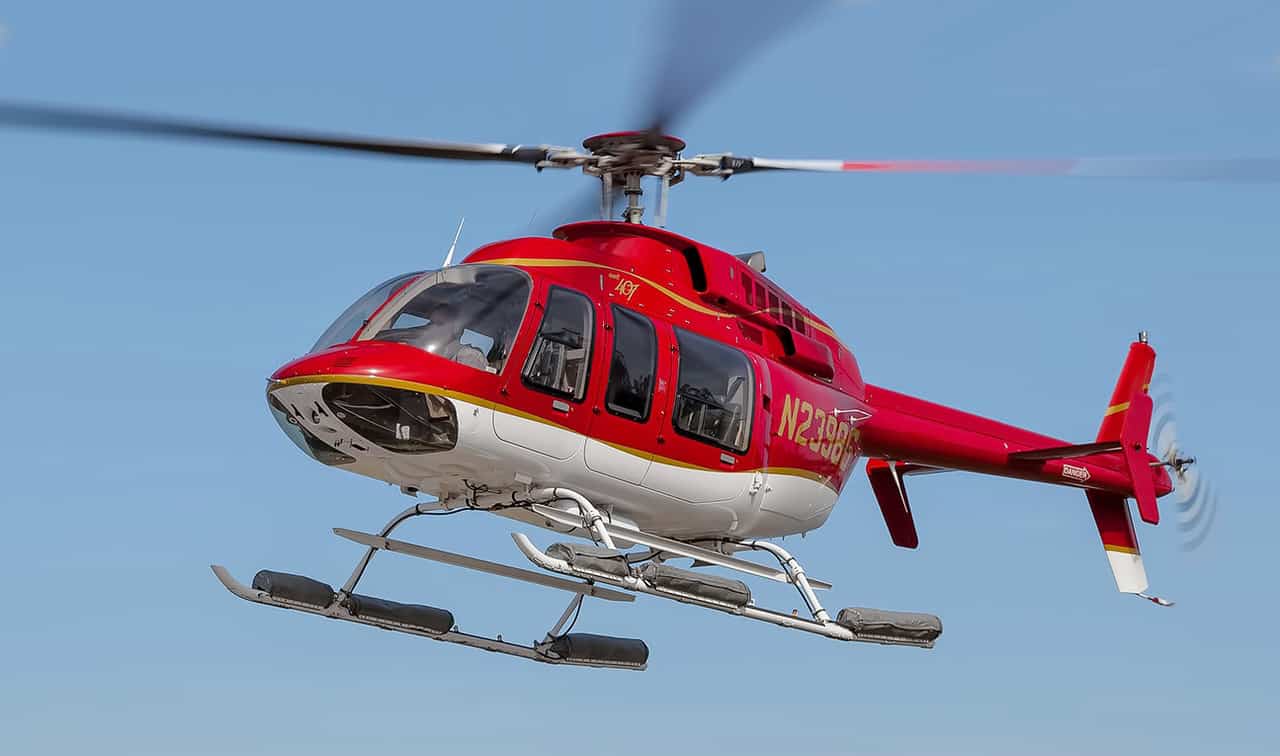
The FAA has ordered repeat inspections of the pilot’s cyclic stick on nearly 1,000 US-registered Bell 407 helicopters after one tube fractured and inspectors found fatigue cracking in others. The directive, AD 2026-14-07, took effect August 21, 2026.
Bell first learned of the problem when a pilot cyclic stick tube was found fractured during a routine prestart check, according to the FAA. The aircraft was on the ground at the time. Follow-up inspections across the fleet then turned up additional tubes with cracks in the same location.
Why the Tube Cracks
The Bell 407‘s cyclic stick is what the pilot pushes and pulls to control pitch and roll, tilting the main rotor disc in the direction of flight. The FAA traced the cracking to excessive force applied during a routine prestart check, the “freedom of movement” and cyclic centering light test that pilots run before every flight. That force concentrates stress at a slotted section near the base of the tube, and repeated over years, it can progress into a fatigue fracture.
A cracked tube that fails in flight would leave a pilot with only partial or no control over the aircraft’s attitude, a risk the FAA lists explicitly in the directive. Transport Canada issued its own airworthiness directive on the same tubes in 2024, ahead of the FAA, after Bell reported the first fracture to Canadian regulators.
Key fact
972 Bell 407 helicopters on the US registry are covered by the directive. About 651 of them are expected to reach the 3,600-hour inspection threshold within two years.
What Operators Have to Do
Every affected helicopter with the named tube part number needs an initial inspection. Once a tube passes 3,600 hours in service, operators must recheck it every 300 flight hours or six months, whichever comes first. A cracked tube must be repaired or replaced, and any repaired tube has to be swapped out entirely within 24 months.
The FAA estimates an initial inspection costs about $340 per aircraft, a repair about $510, and a full replacement around $1,714 including parts. None of those figures are large by helicopter maintenance standards, but the recurring inspection schedule adds a permanent line item to operating costs for the life of the fleet.
The Bell 407 is one of the most common light single-engine helicopters flying in the United States, used heavily for air ambulance work, police patrol, and utility and corporate transport. Its civilian roles put it over cities and highways on tight schedules far more often than most helicopter types, which is part of why the FAA moved on the fix once Bell’s own fleet data confirmed the crack wasn’t an isolated part.
No incidents reported
The fracture that triggered this directive was found on the ground during a prestart check, not during flight. The FAA has not linked the issue to any in-flight failure or injury.
This is at least the third rotorcraft-specific directive AeroCorner has covered in recent months, following the FAA’s updated tail rotor rules for the AS350 AStar family. Fatigue cracking in flight-control hardware is one of the most closely watched failure modes in rotorcraft maintenance, precisely because a single part carries no backup.
Sources and references used for research and fact-checking.
Get the Newsletter
The latest aviation news and stories sent to your inbox.
About the Author

Tim is the owner and lead editor of AeroCorner since 2019, overseeing aviation content covering aircraft, airlines, airports, and the broader aviation industry. Through years of researching, writing, editing, and publishing aviation-focused content, he has developed extensive practical knowledge of commercial aviation and air travel. Based in Asia and a frequent traveler himself, Tim also brings firsthand passenger experience to AeroCorner’s coverage. Outside of publishing, he has also explored aviation firsthand through hands-on flight training in New Zealand.