

The Federal Aviation Administration issued a Notice to Airmen (NOTAM) on Sunday, October 11, 2026, telling US airlines to exercise caution when flying to or over Saudi Arabia, Reuters reported. The notice runs until December 10 and also covers operators of US-registered aircraft.
It followed strikes on Saturday and Sunday on King Khalid International Airport in Riyadh. Saturday’s attack killed 13 people and wounded more than 300, according to Reuters.
What the FAA notice says
The FAA cited “safety-of-flight risks associated with ongoing military activities and GNSS interference,” ABC News reported. GNSS interference is the jamming or spoofing of GPS and other satellite navigation signals.
“Threats could pose a potential risk to aircraft at all altitudes, including overflight, the arrival, and departure phases of flight,” the FAA said, according to Reuters. It described the situation as “potentially hazardous.”
That wording reaches beyond Riyadh. It covers US aircraft crossing Saudi airspace at cruise altitude as well as those landing at or departing from a Saudi airport.
When AeroCorner checked on October 12, the notice had not yet appeared on the FAA’s public list of international flight restrictions, so its full text and boundaries could not be read here.
Who it affects, and the Delta question
No US passenger airline flies to Riyadh today, although major US carriers sell seats there through codeshare partners, Reuters reported. FedEx is the exception: since September 2025 it has run a Boeing 777 freighter into Riyadh six times a week.
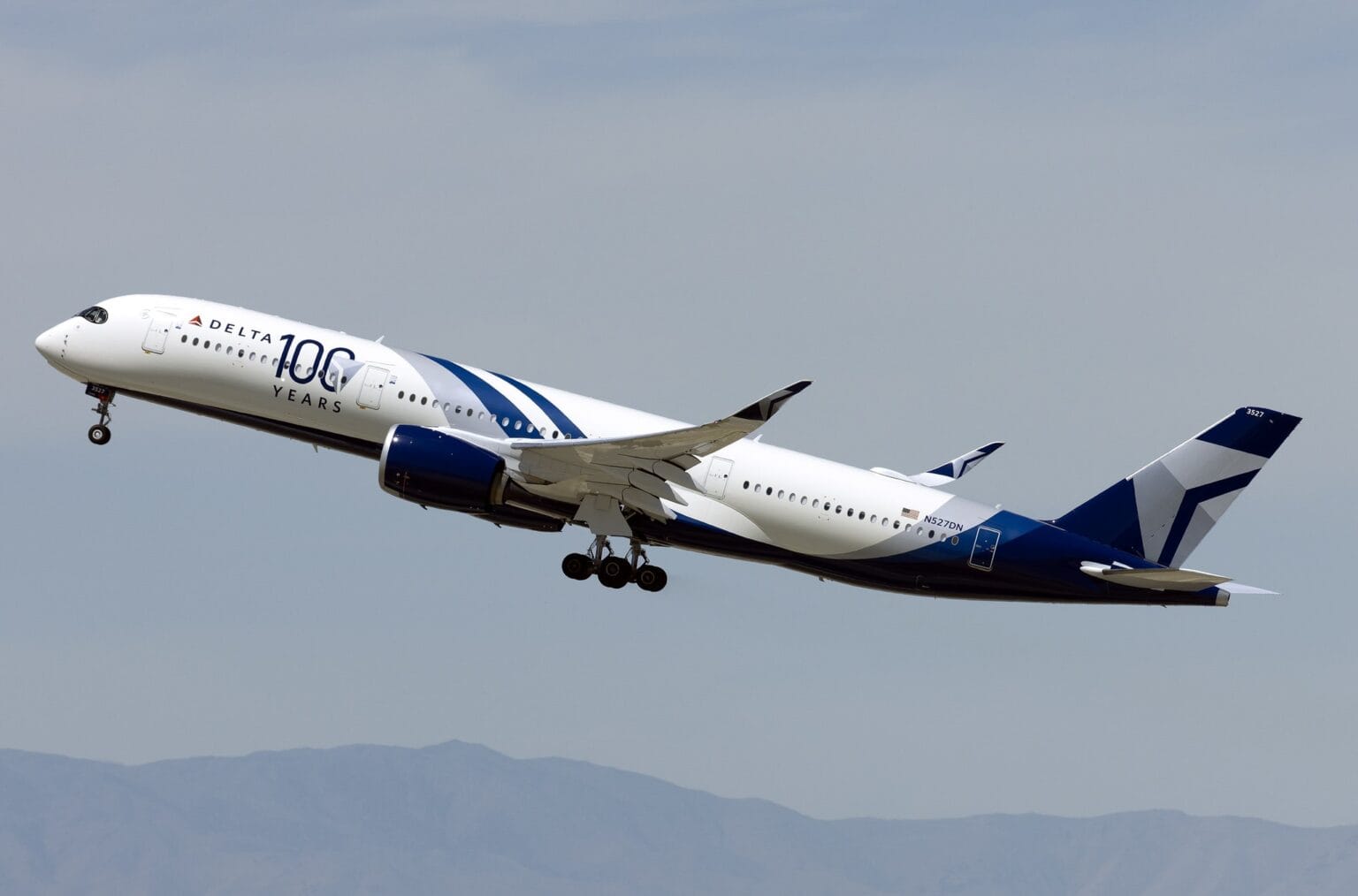
That is due to change on October 23, when Delta Air Lines plans to open an Atlanta to Riyadh nonstop. The airline announced in August that the route would run daily through October 30 and three times a week after that on the Airbus A350-900.
Delta calls it the first nonstop between the US and Riyadh by a US airline. CEO Ed Bastian told CNBC on October 9 that “safety is going to make the call” on whether it goes ahead.
Delta did not respond to Reuters on Sunday, and it had not announced a decision when this article was written on October 12. Riyadh’s airport itself was to stay closed until at least 5 p.m. EDT on Monday, according to Reuters.
Caution, not a ban
The FAA has two levels of warning for foreign airspace. An advisory NOTAM, like this one, tells US operators to take the risk into account but leaves the decision to fly with them.
A prohibition bars US operators outright. The FAA’s restrictions page lists prohibitory NOTAMs for all of Ukraine’s airspace, three Russian flight information regions and Belarus’ Minsk region, for example.
Europe has gone further on Saudi Arabia. The European Union Aviation Safety Agency’s conflict zone bulletin, revised on October 9 and valid until November 16, tells EU operators not to fly at any altitude in two parts of the Jeddah flight information region, one in the southeast and one in the northwest.
For the rest of Saudi airspace, EASA advises caution, the same level the FAA has now set for all of it. EASA’s bulletin also noted that recent attacks focused more on aviation infrastructure, raising the risk to aircraft on the ground and during takeoff and landing.
Canada’s warning is stricter still. A Canadian NOTAM issued on October 8 recommends that Canadian operators not enter the Jeddah region at all, according to the text compiled by Safe Airspace, which tracks these notices.
On Safe Airspace’s list, which had not added the new notice when checked on October 12, the only earlier FAA guidance specific to Saudi Arabia is a March 2022 information note about drone attacks. The Houthis had already warned airlines Saudi airspace was unsafe in early October.
What to watch
The near-term test is Delta’s launch date. Under a caution notice the choice is Delta’s own, and Bastian told CNBC the airline would let customers know its decision soon.
The notice can also be revised before December 10 if the threat changes. For the latest on the airport itself, see our report on Saturday’s deadly attack.
Sources and references used for research and fact-checking.
Get the Newsletter
The latest aviation news and stories sent to your inbox.
About the Author

Tim is the owner and lead editor of AeroCorner since 2019, overseeing aviation content covering aircraft, airlines, airports, and the broader aviation industry. Through years of researching, writing, editing, and publishing aviation-focused content, he has developed extensive practical knowledge of commercial aviation and air travel. Based in Asia and a frequent traveler himself, Tim also brings firsthand passenger experience to AeroCorner’s coverage. Outside of publishing, he has also explored aviation firsthand through hands-on flight training in New Zealand.