

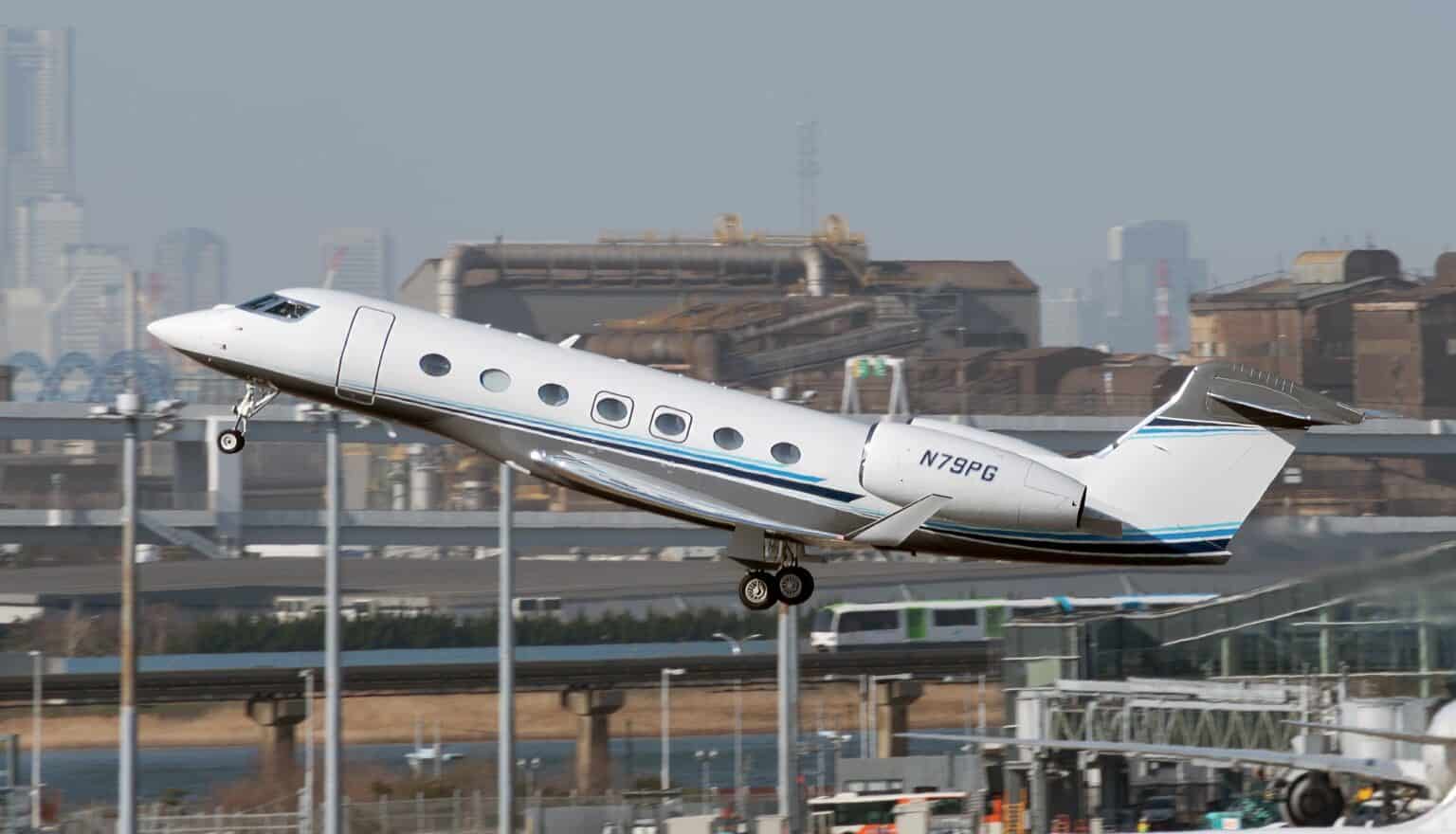
On November 10, 2026, the FAA published final special conditions for the Gulfstream G400, covering a flight control function that protects the business jet against over-rotation and rapid rotation on takeoff. The conditions took effect for Gulfstream on publication, and the agency is taking comments until December 28, 2026.
The FAA skipped the usual proposal stage. Its notice says the substance of these conditions has gone out for public comment several times before without drawing substantive comments, so it judged a new round of advance notice unnecessary (Docket No. FAA-2026-9408, Special Conditions No. 25-897-SC).
What takeoff stall protection does
The function lives inside the G400’s electronic flight control system and limits pitch rate and pitch attitude during the takeoff. According to the FAA, a normal takeoff, including a “performance” takeoff, should feel conventional to the pilot.
On the ground, stick input commands a pitch rate in proportion to how far the side stick is moved, with a cap on pitch attitude. Capping the attitude indirectly caps the angle of attack, which is how the function guards against a stall as the jet leaves the runway.
The FAA says the change touches only the on-ground control law. Normal rotations should behave like those of other side-stick Gulfstreams, while a rapid or excessive rotation is where the protection steps in.
Special conditions exist for exactly this kind of feature. The agency says the flight rules in Subpart B of Part 25 do not address envelope protection in electronic flight controls, so it writes extra standards for the design, as it did in a separate proposal for Embraer’s automatic takeoff system in October.
What the FAA requires
The six conditions are about making sure the protection never gets in the pilot’s way. It must not unduly limit the maneuvers needed in normal and emergency operations, and the way it kicks in has to suit the phase of flight without fighting the pilot’s control of flight path, speed or attitude.
If dynamic maneuvering, system tolerances or gusty air push a protected parameter past its design limit, the result must not be unsafe. The function also must not degrade control in expected turbulence or get in the way of a windshear recovery.
Where several protections act at once, they must not couple or compete in a harmful way. And if the jet ends up in an abnormal attitude outside the protected boundaries, the protection must not hinder the recovery.
The FAA adds two aims in its discussion: the airplane’s structural limits must not be exceeded, and a failure of the function must not create hazardous flight conditions.
Where the G400 stands
Gulfstream introduced the G400 in October 2021 alongside the G800, pitching it as the first new large-cabin jet in more than a decade. It first flew from Savannah on August 15, 2024, and the company quotes a range of 4,200 nautical miles at Mach 0.85 on two Pratt & Whitney Canada PW812GA engines, with seating for up to 12 passengers.
On paper the G400 belongs to the Gulfstream G500 family, not the G700 and G800. The FAA notice says Gulfstream applied on December 1, 2022, to add the GVII-G400 to the G500’s type certificate as a derivative, with a maximum takeoff weight of 73,500 pounds (33,340 kg).
The jet is still in flight test. Gulfstream’s first fully outfitted G400 flew on October 14 from Dallas Love Field, AVweb reported, and the company has not announced a firm certification date.
The same protection as the G700 and G800
The G400 is not the first Gulfstream to get these rules. The FAA proposed takeoff stall protection special conditions for the Gulfstream G700 and G800 in January 2024 and finalized them on March 15, 2024, with the same six requirements.
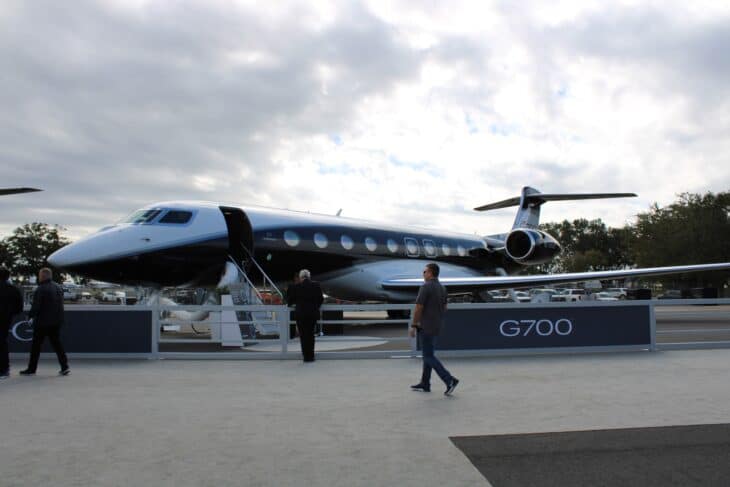

The only comment on that proposal came from Gulfstream, which asked the FAA to align the wording with an industry Flight Test Harmonization Working Group report. The FAA agreed, and made those conditions effective on publication because G700 and G800 certification was imminent.
Why takeoff stalls matter at Gulfstream
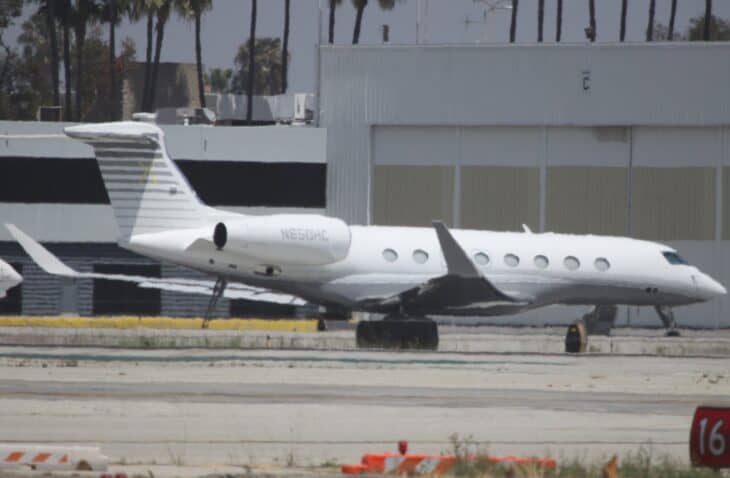
Gulfstream knows the cost of a stall near the runway. On April 2, 2011, a Gulfstream G650 test aircraft, N652GD, crashed on takeoff at Roswell, New Mexico, during a one-engine-inoperative takeoff test, killing its two pilots and two flight test engineers.

The NTSB found the probable cause was an aerodynamic stall and an uncommanded roll. It tied them to erroneously low takeoff safety speeds (V2) that Gulfstream had failed to properly develop and validate for the tests, and to its inadequate investigation of earlier uncommanded roll events that showed the company’s estimate of the stall angle of attack in ground effect was too high.
One of the board’s recommendations asked the FAA to warn manufacturers that a wing’s maximum lift in ground effect could be lower than in free air.
The G400 notice does not mention Roswell, and the two are different things: the crash was rooted in flight-test speeds and program management, while takeoff stall protection is a limit built into production flight controls. Still, both turn on the same narrow margin between a clean rotation and a wing that stops flying a few feet off the runway.
Sources and references used for research and fact-checking.
- Federal Register (FAA), Special Conditions: Gulfstream Aerospace Corporation, Model GVII-G400 Airplane; Flight Envelope Protection: Takeoff Stall Protection (2026-22951)
- Federal Register (FAA), Special Conditions: Gulfstream Model GVIII-G700 and GVIII-G800 Series Airplanes; Flight Envelope Protection: Takeoff Stall Protection (final, 2024-05661)
- NTSB, Crash During Experimental Test Flight, Gulfstream GVI (G650), N652GD (DCA11MA076)
- General Dynamics / Gulfstream, All-New Gulfstream G400 Completes First Flight
- General Dynamics / Gulfstream, Gulfstream Introduces Two All-New Business Jets
Get the Newsletter
The latest aviation news and stories sent to your inbox.
About the Author

AeroCorner News is the aviation news desk of AeroCorner.com. It covers accidents and incidents, safety rulings, airline and airport disruption, and new aircraft. It works from primary sources such as the NTSB, FAA, EASA and the manufacturers' own announcements.