

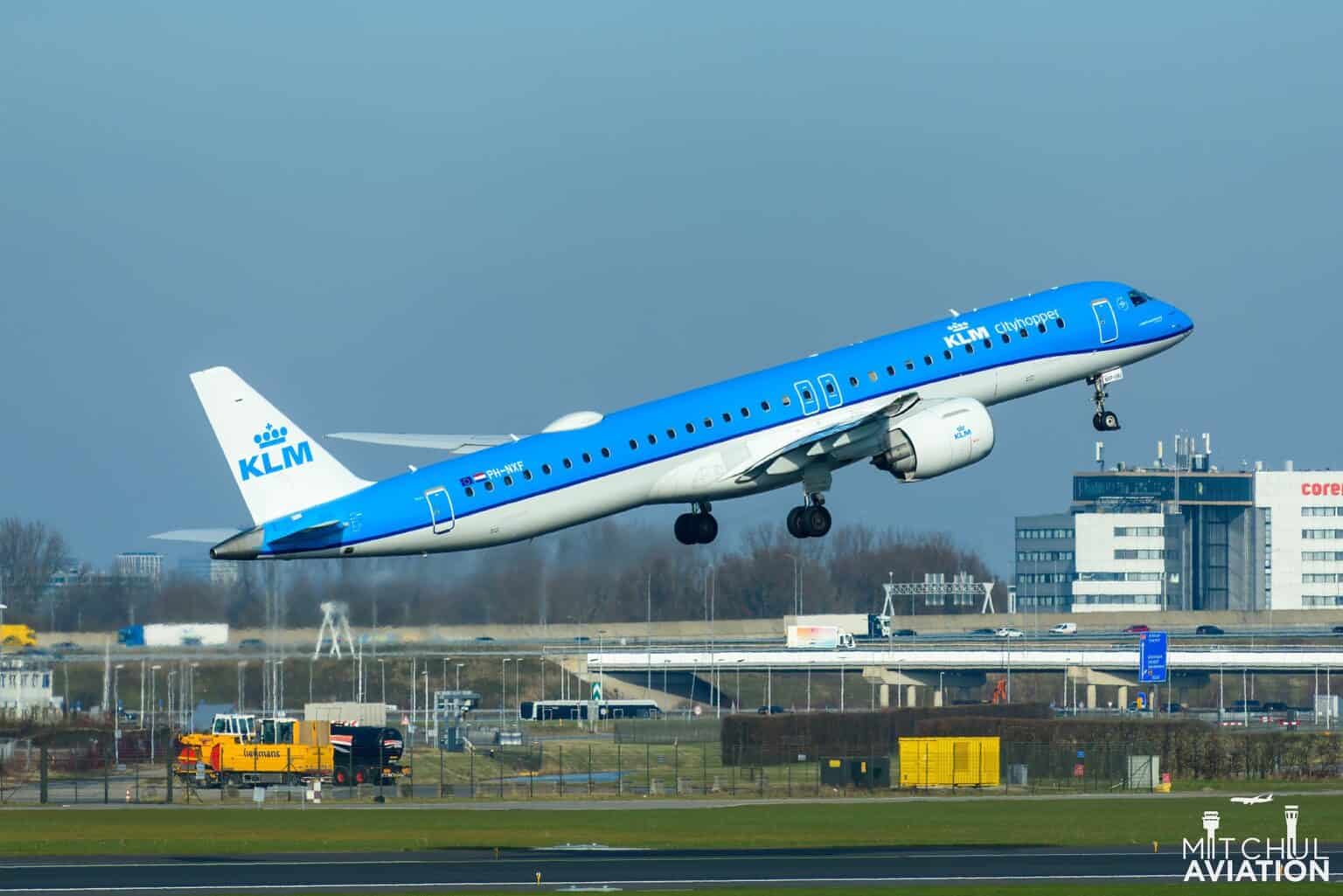
On October 27, 2026, the FAA published proposed special conditions for the Embraer Enhanced Takeoff System, or E2TS, on the Embraer E195-E2, which certification paperwork calls the ERJ 190-400. The system lifts the nose and flies the initial climb by itself, something the existing airworthiness rules were never written for.
This is a proposal, not an approval. The notice is open for public comment until November 27, 2026, under Docket No. FAA-2026-10627 (Notice No. 25-898-SC).
What the system does
According to the FAA, E2TS engages at the start of the takeoff roll, when the thrust levers are advanced to the takeoff/go-around (TOGA) detent. From there, the rotation and the initial climb-out are flown automatically, without pilot intervention.
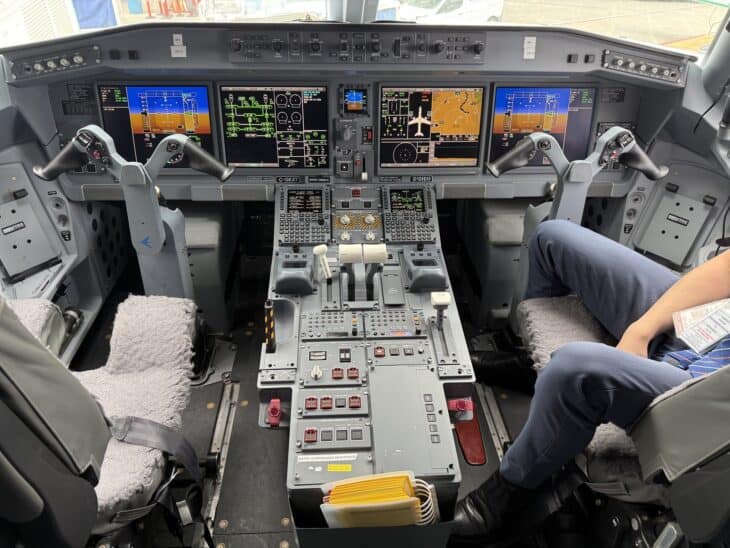
The pilots still steer down the runway centerline by hand during the ground run, with E2TS augmenting their inputs to minimize heading deviations. It also holds the wings level on the ground and, once airborne, tracks direction using sideslip as its reference: zero sideslip with both engines running, and a “best beta” target if one engine fails.
Any rudder pedal input from the crew is summed with the system’s own rudder commands. The FAA also notes that the rotation speed, VR, becomes the speed at which the system rotates the jet and the speed the pilot uses to monitor that automatic rotation.
Embraer unveiled E2TS at the Farnborough Airshow in July 2024. Its announcement said a more precise rotation and flight path would cut the runway length needed and the pilots’ workload, giving more payload and range from demanding airports such as London City, Florence and Rio de Janeiro’s Santos Dumont.
Embraer’s own example was an extra 350 nautical miles of range from London City Airport. The gain comes where runway performance limits takeoff weight, letting the jet carry more payload or fuel.
Why the existing rules do not fit
The FAA says the Part 25 takeoff performance rules “presuppose manual flying with a human pilot onboard making certain decisions and taking action.” Its own guidance defines VR as the speed at which the pilot starts to raise the nose wheel off the ground.
Two of those rules, once known as the “takeoff abuse tests,” exist to cover human error. Section 25.107(e)(3) requires that rotating 5 knots below VR with one engine out does not lengthen the takeoff distance, and 25.107(e)(4) requires that expected slips in service, such as over-rotation or an out-of-trim jet, do not cause unsafe handling or markedly longer takeoffs.
With software flying the rotation, the question changes. The FAA expects automation to remove pilot-to-pilot variability, but sensor errors and system tolerances remain, so the proposal swaps “reasonably expected variations” for the “maximum expected deviation” of VR the system allows.
Under that yardstick, the one-engine-out takeoff distance must stay within the flight manual figure. The all-engines distance, including out-of-trim cases, may exceed it by no more than 1%, and E2TS must not produce unsafe flight characteristics.
Deviations in pitch angle or pitch rate also have to be counted unless their effect on takeoff distance is shown to be negligible. The FAA adds that performance tests should be flown in limited wind, and gusts need not be considered.
Where certification stands
Embraer applied to the FAA on December 5, 2021, to add E2TS to the type certificate covering the E195-E2. The notice describes the jet as a twin-engine airliner with up to 146 passengers and a maximum takeoff weight of 135,584 pounds (61,500 kg).
The FAA says it will weigh the comments and may change the conditions in response. Even in final form, special conditions only set the bar: Embraer still has to show the E195-E2 meets them before the type certificate change is approved.
Brazil’s regulator is further along. In August, AVweb reported that ANAC president Tiago Chagas Faierstein said its certification process was in its final stage, with approval expected by October; AeroCorner found no announcement of an ANAC approval at the time of writing.
Automatic takeoffs have flown before. Airbus completed vision-based automatic taxi, takeoff and landing tests on a commercial aircraft in its ATTOL research project in June 2020, but that was research, while E2TS is being certified for airline service.
It also extends Embraer’s push to add safety automation to the E2 family. In July, EASA certified the jet’s runway overrun alerting system, software that warns the crew on landing when the stopping margin is running out.
Sources and references used for research and fact-checking.
- Federal Register / FAA, Special Conditions: Embraer S.A. Model ERJ 190-400 Airplane; Embraer Enhanced Takeoff System (Docket FAA-2026-10627, Notice 25-898-SC)
- eCFR / Cornell LII, 14 CFR 25.107 Takeoff speeds
- Embraer, Embraer Reveals Upgrades Across its Commercial E-Jet Range (press release, July 23, 2024, syndicated by AviationPros)
- Airbus, Airbus concludes ATTOL with fully autonomous flight tests (June 29, 2020)
Get the Newsletter
The latest aviation news and stories sent to your inbox.
About the Author

AeroCorner News is the aviation news desk of AeroCorner.com. It covers accidents and incidents, safety rulings, airline and airport disruption, and new aircraft. It works from primary sources such as the NTSB, FAA, EASA and the manufacturers' own announcements.