

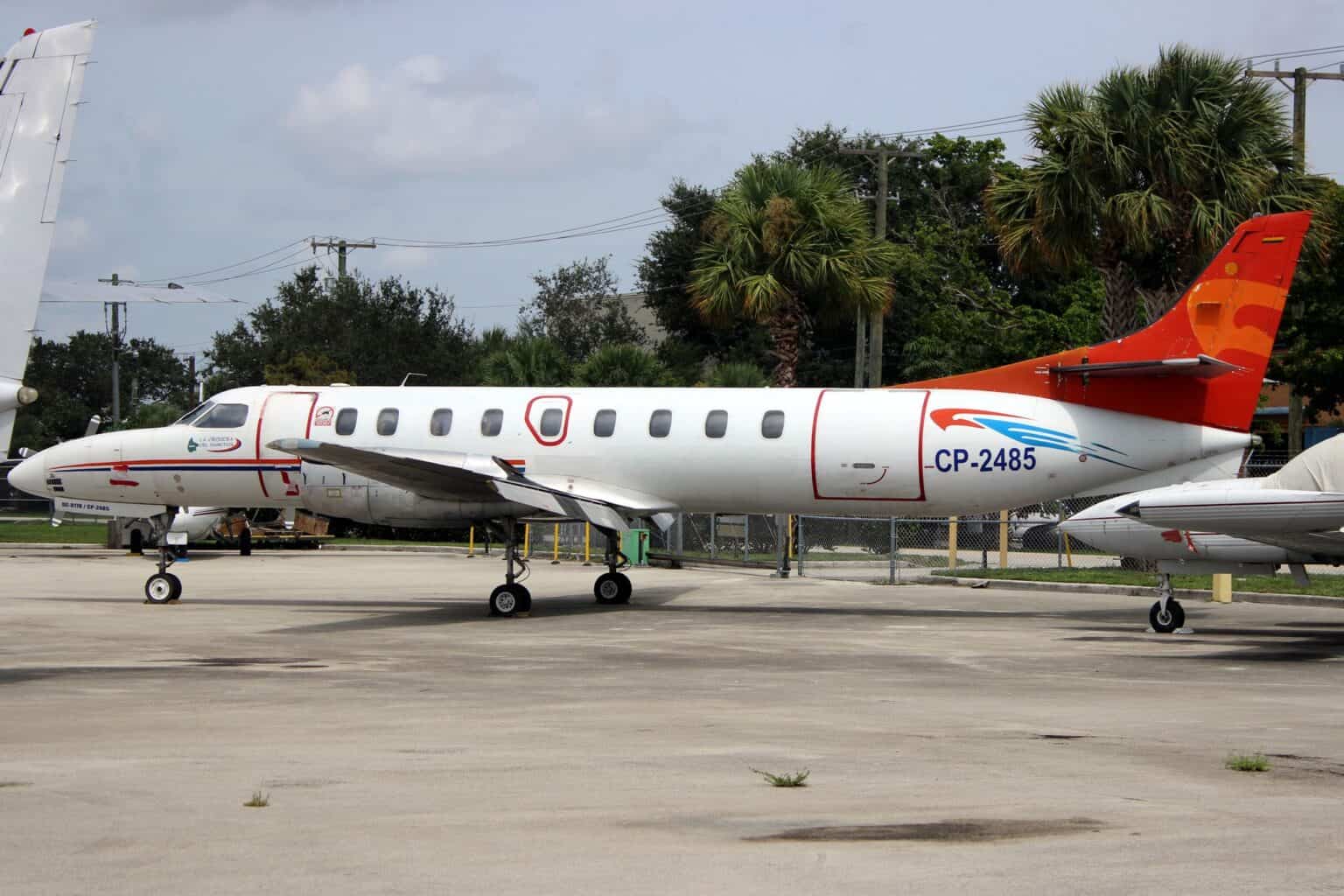
The Federal Aviation Administration published a final airworthiness directive on October 27, 2026, ordering repeat inspections and tests of the pitch trim actuator on Swearingen and Fairchild-built Metro and Merlin turboprops. The rule, AD 2026-21-13, follows reports of in-flight actuator failures that the agency traced to corrosion.
It takes effect on December 1, 2026, and applies to SA226 and SA227 series airplanes fitted with Simmonds-Precision actuators, part numbers DL5040M5, DL5040M6 or DL5040M8. The FAA estimates that 198 airplanes on the US register are affected.
Why the actuators are failing
In its April 2 proposal, the FAA said it had received six reports of in-flight pitch trim actuator failures on SA226 and SA227 airplanes, all caused by corrosion. The piston rod in these actuators is drilled through, and that lets moisture into the actuator body through the rod end keyway and the piston.
Left unaddressed, the FAA says, the condition could cause the actuator to fail and reduce control of the airplane. The fix rests on two checks: the sealant at the actuator’s rod ends, and a timed measurement of how long the actuator takes to run through its travel.
What owners and operators must do
The first sealant inspection and travel-time measurement fall due at the later of two points. One is 30 days after the December 1 effective date; the other is 1,000 flight hours or six months after the actuator entered service, whichever of those comes first.
If the sealant is cracked, missing or compromised, the actuator’s age decides the outcome. A unit with at least 1,000 flight hours or six months in service must be replaced with a new or overhauled actuator before further flight, while a younger one can be inspected and resealed.
After that, the inspect-and-seal task repeats every 1,000 flight hours or 12 months, whichever comes first. The travel-time measurement repeats every 250 or 300 flight hours, or every six months, depending on the actuator part number and whether its nut tube assemblies have been replaced.
Any actuator that fails the travel-time criteria must be replaced before further flight. From December 1, a pitch trim actuator may only be installed if the return-to-service steps in the manufacturer’s service bulletins are followed, which include sealing the rod ends once the actuator is rigged on the airplane.
The directive also rules out special flight permits, the one-off authorizations that normally let an airplane with an open AD be flown to a repair base. Unlike the service bulletins, it does not require operators to report findings to the manufacturer.
| Task | Repeat interval | FAA cost estimate |
|---|---|---|
| Measure actuator travel time | 250 or 300 flight hours, or 6 months | $255 per check (3 work-hours) |
| Inspect rod-end sealant | 1,000 flight hours or 12 months | $255 per check (3 work-hours) |
| Seal rod ends (on condition) | As needed | $319 |
| Replace actuator (on condition) | As needed | $20,425, of which $20,000 is parts |
Across the US fleet, the FAA puts each round of travel-time checks at $50,490, and each round of sealant inspections at the same figure. It says it has no way to estimate how many airplanes will need a new actuator.
An old trouble spot with a new cause
On these airplanes the pitch trim actuator drives the horizontal stabilizer, which is why its failure is treated as a control problem. A 2007 directive, AD 2007-16-03, followed reports of mechanical failures that sent the stabilizer to full nose-up, and it imposed life limits and a switch to an improved actuator design.
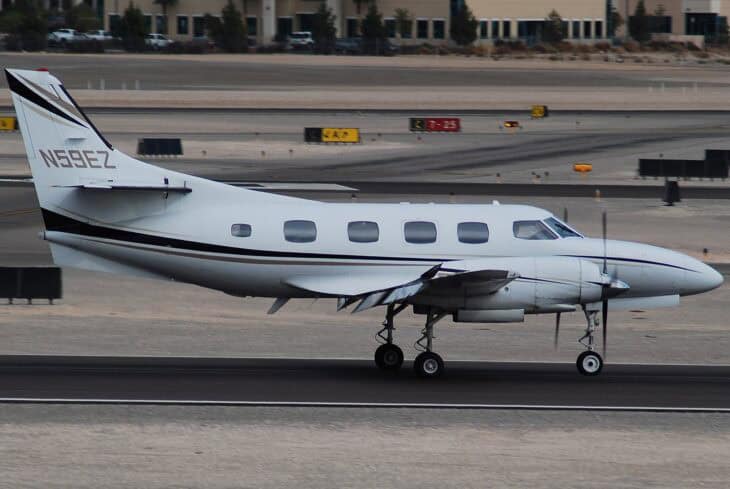

That rule estimated 307 affected airplanes on the US register, against 198 for the new one, though the two directives do not cover the same set of actuators. The FAA says corrosion has since been found on the DL5040M5, DL5040M6 and DL5040M8 units, and the new AD adds to the 2007 rule rather than replacing it.
Two parties commented on the proposal: Ontic Engineering and Manufacturing, which now holds the type certificate, and World Class Accessory. The FAA adopted Ontic’s request to use the latest service bulletin revisions and kept the 250-hour interval for original DL5040M5 actuators, saying it matches inspections operators should already be doing under the 2007 rule.
It turned down World Class Accessory’s request to limit the inspection to repair stations, saying a qualified, licensed mechanic can do it. The final rule also adds a DL5040M8 row that was missing from the proposal’s interval table.
Which airplanes are covered
The directive splits the fleet into two groups. Group 1 covers the SA226-T, SA226-AT, SA226-T(B), SA226-TC, SA227-AC, SA227-AT, SA227-BC, SA227-PC and SA227-TT, a line that runs from the short-fuselage Swearingen Merlin business turboprops to the 19-seat Metro II and Metro III.
Group 2 is the SA227-CC and SA227-DC, the later Metro 23. The rule’s model list also names the C-26A and C-26B, the military versions of the Fairchild Swearingen Metroliner.
Metro production ended in 1998, and the type certificate has passed from Swearingen to Fairchild, M7 Aerospace and now Ontic. On its Metro Merlin support site, Ontic describes customers that run Metroliner fleets carrying passengers and cargo, which is why repeat checks with no ferry-permit exception matter to operators who keep these airplanes flying.
The FAA used a similar repeat-inspection approach earlier this year when it ordered checks of the Diamond DA42 fleet over a rudder-control risk.
Sources and references used for research and fact-checking.
- FAA / Federal Register, Airworthiness Directives; Ontic Engineering and Manufacturing, Inc. (Type Certificate Previously Held by Swearingen, Fairchild Aircraft, and M7 Aerospace) Airplanes, final rule, AD 2026-21-13, 91 FR 67435
- FAA / Federal Register, Airworthiness Directives; Ontic Engineering and Manufacturing, Inc. Airplanes, notice of proposed rulemaking, April 2, 2026, 91 FR 16595
- FAA / Federal Register, Airworthiness Directives; M7 Aerospace LP SA226 and SA227 Series Airplanes, AD 2007-16-03, August 3, 2007
- Ontic (Metro Merlin), Metro Merlin home page
Get the Newsletter
The latest aviation news and stories sent to your inbox.
About the Author

AeroCorner News is the aviation news desk of AeroCorner.com. It covers accidents and incidents, safety rulings, airline and airport disruption, and new aircraft. It works from primary sources such as the NTSB, FAA, EASA and the manufacturers' own announcements.