Passenger Turbo Props
Vultee V-1
ICAO: V1
The pressurized 19-seat commuter that became a cargo workhorse
Updated: by Tim de Vries
The latest aviation news and stories sent to your inbox.
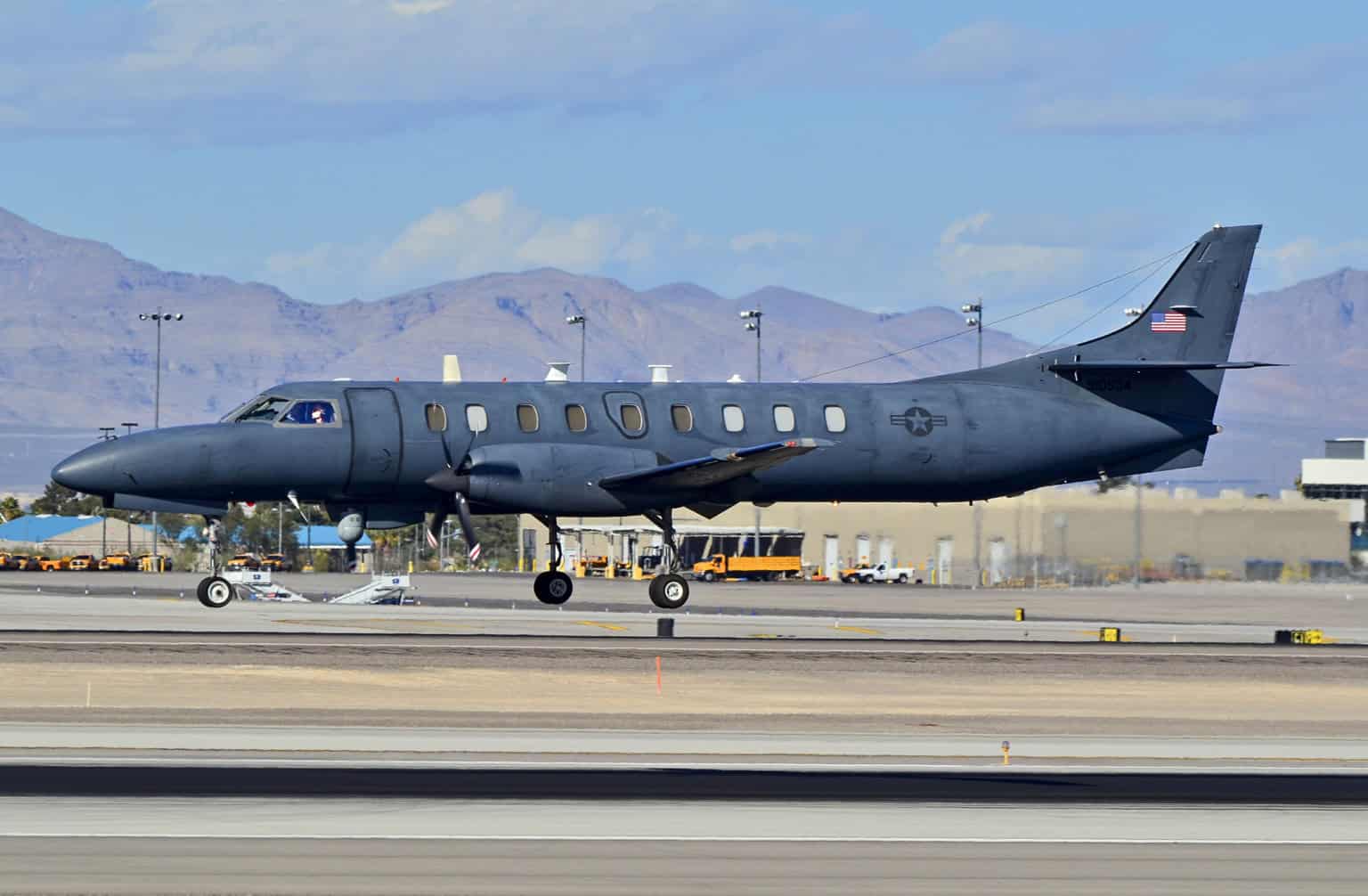
The Fairchild Swearingen Metroliner is a 19-seat, pressurized twin-turboprop built in Texas and first flown in 1969. It became a commuter airline workhorse in the 1970s and 1980s and still flies freight and government missions today.
Live Fleet Activity (SW4)
Fetching live data…
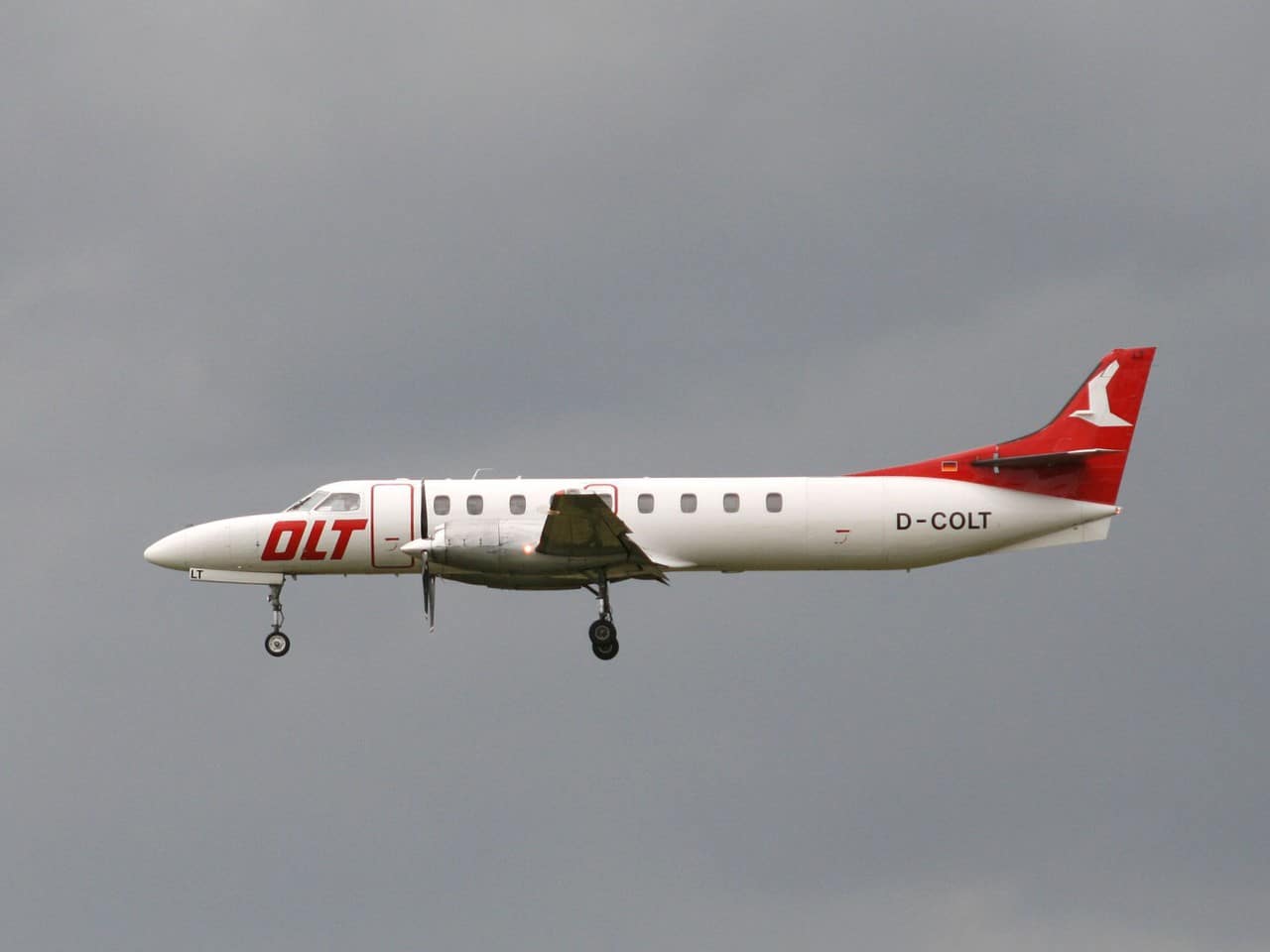

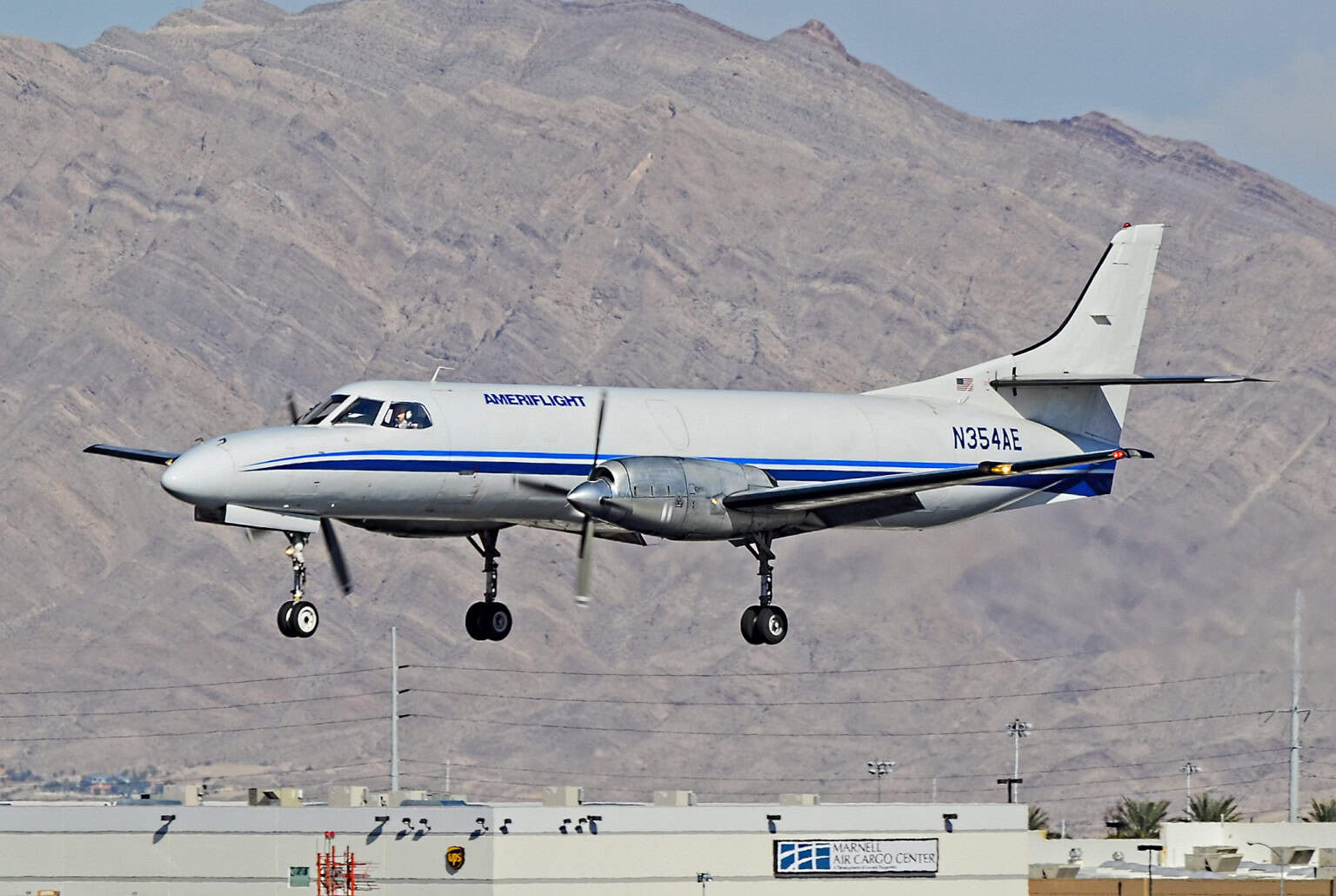
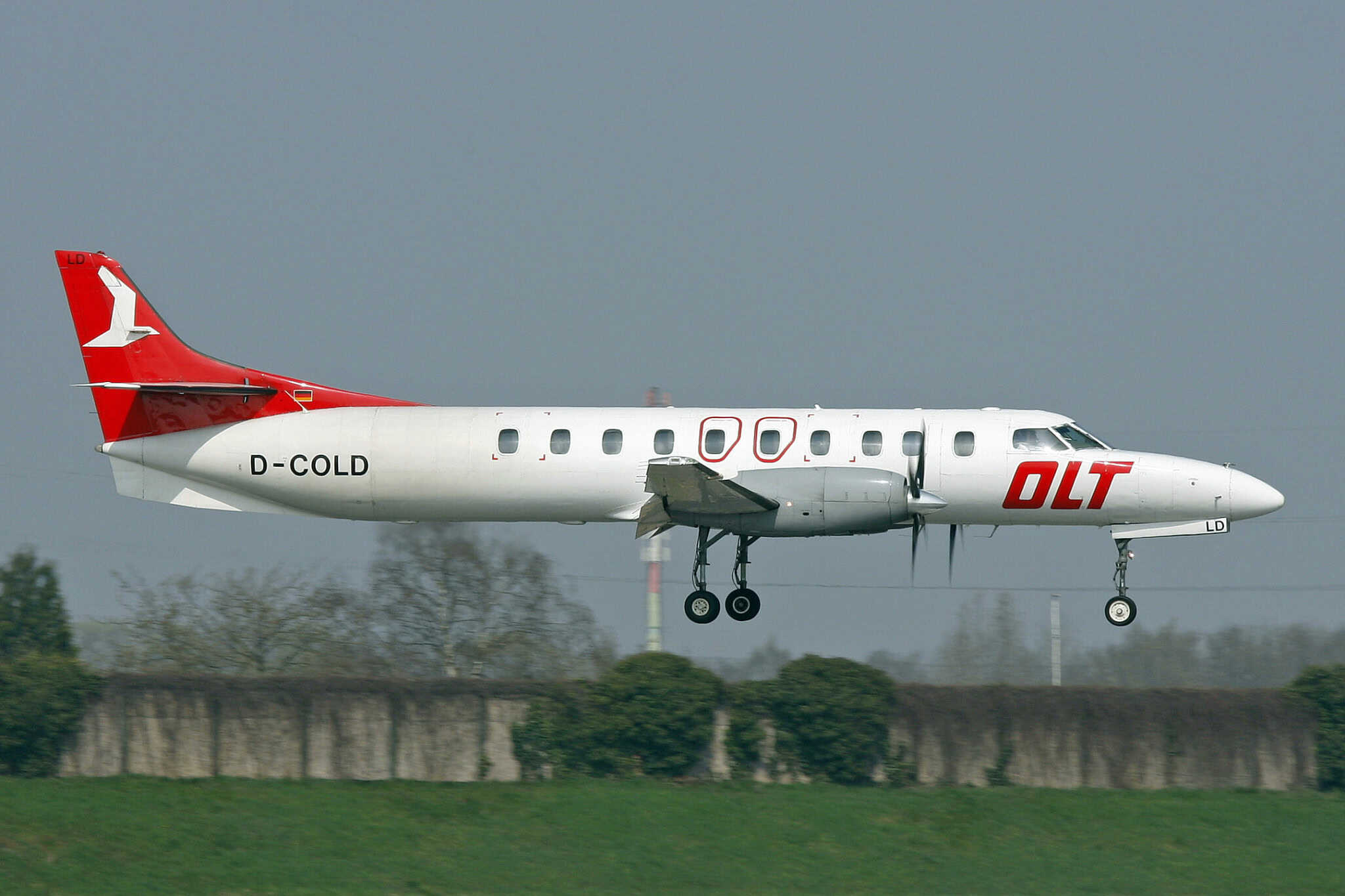
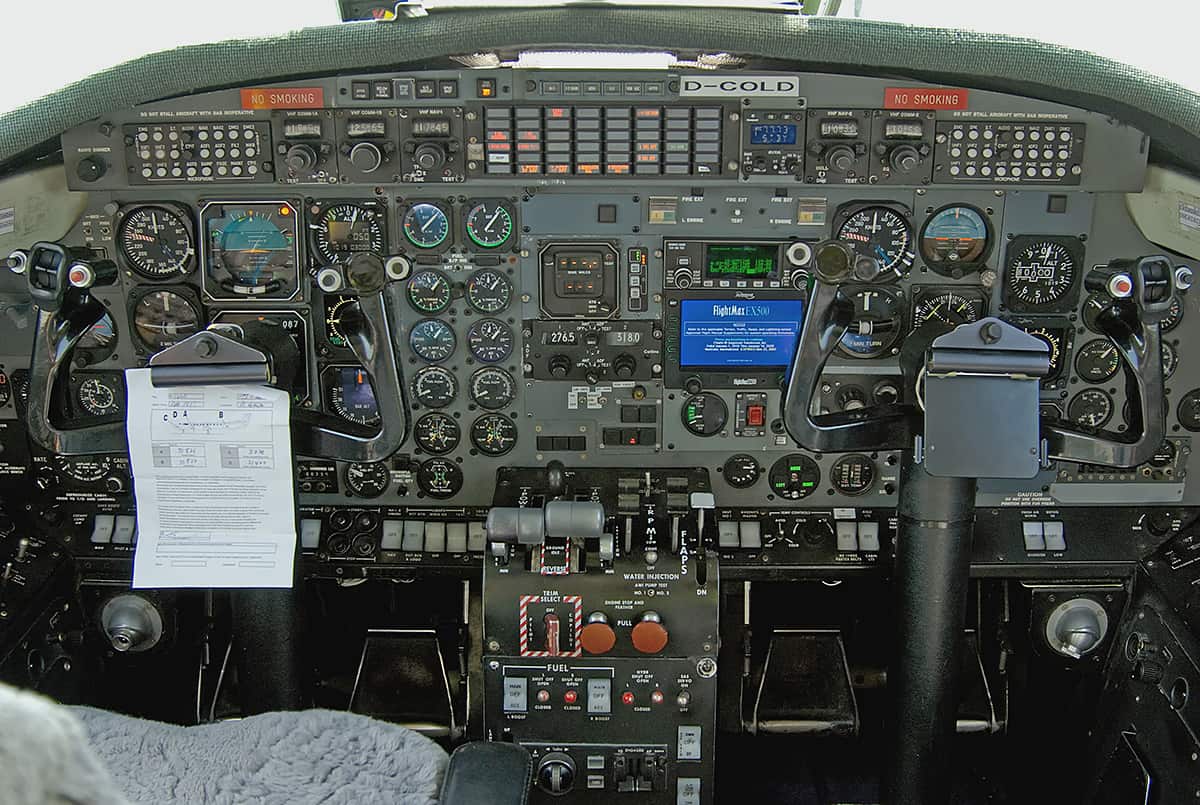
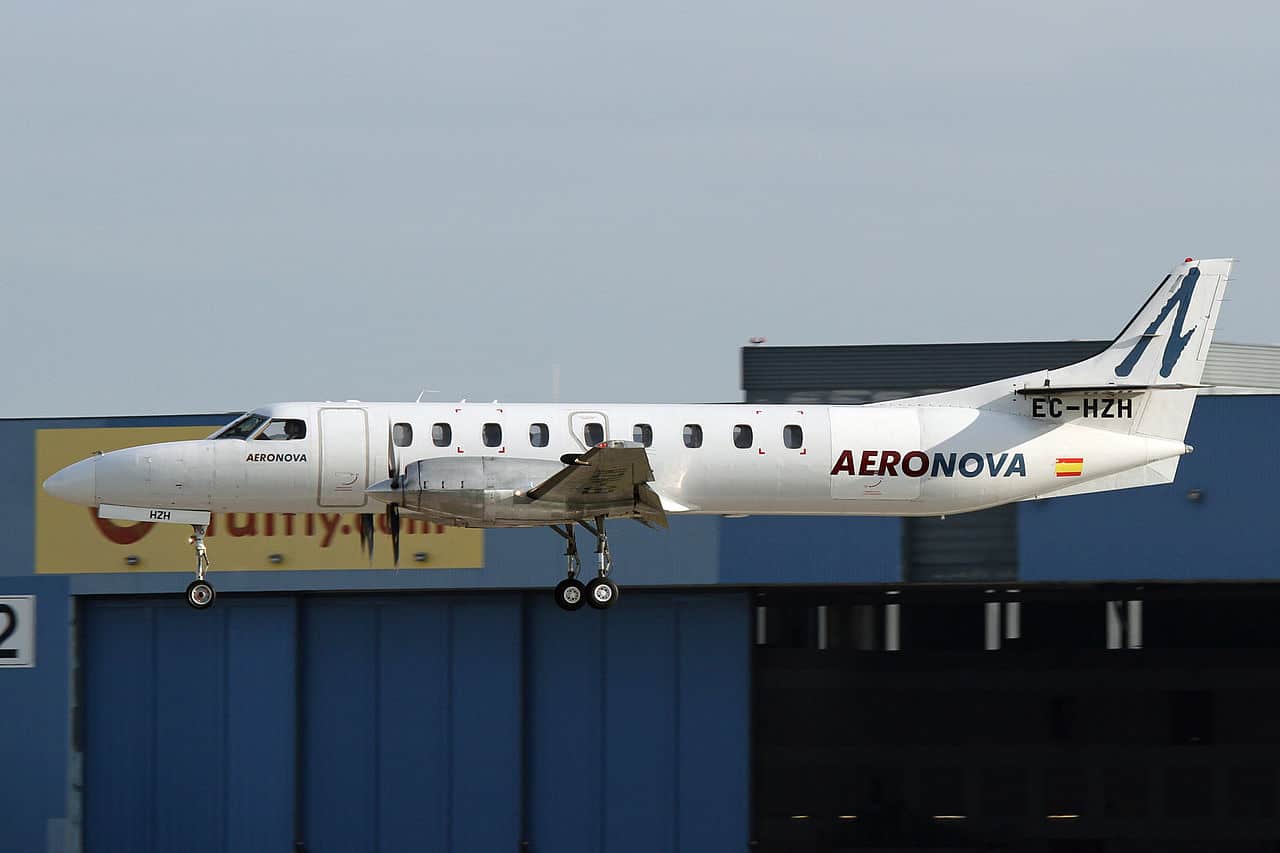


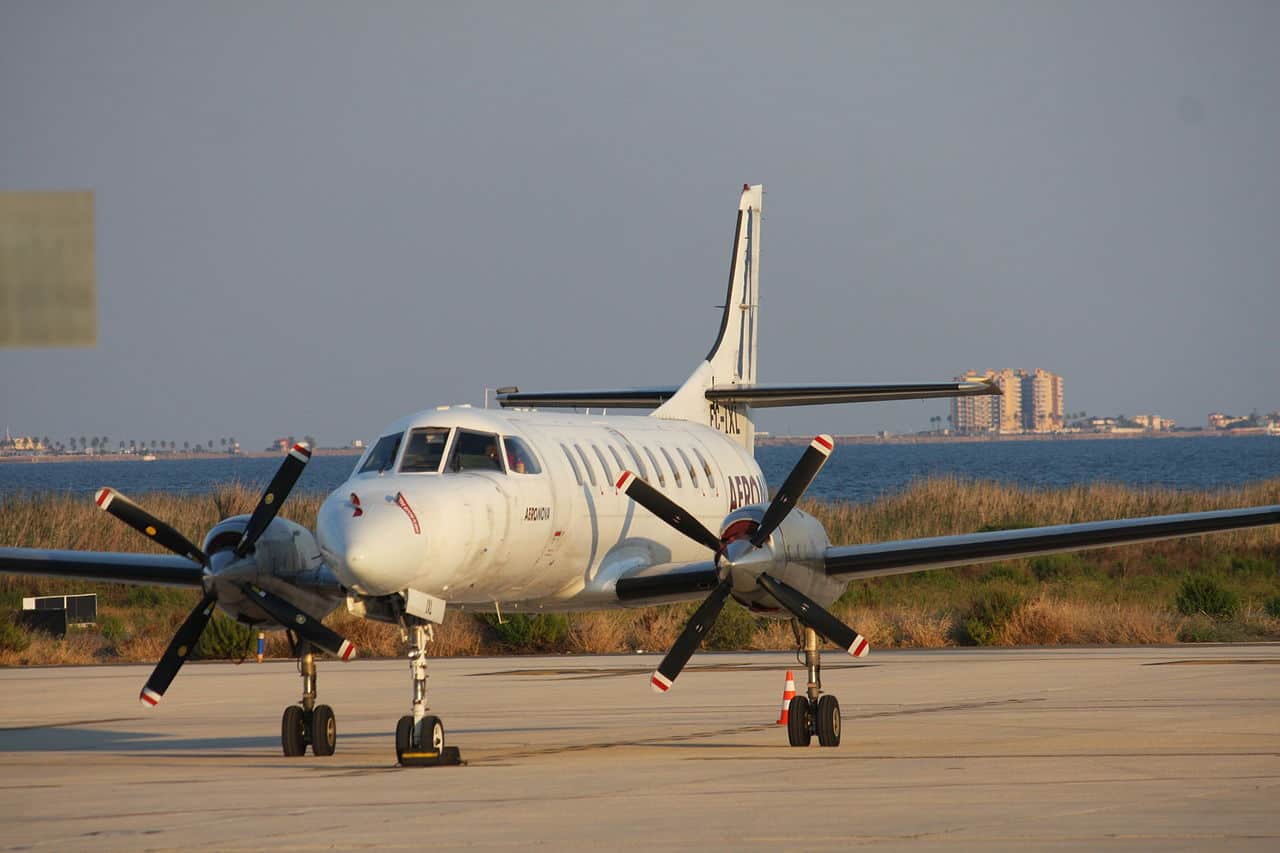
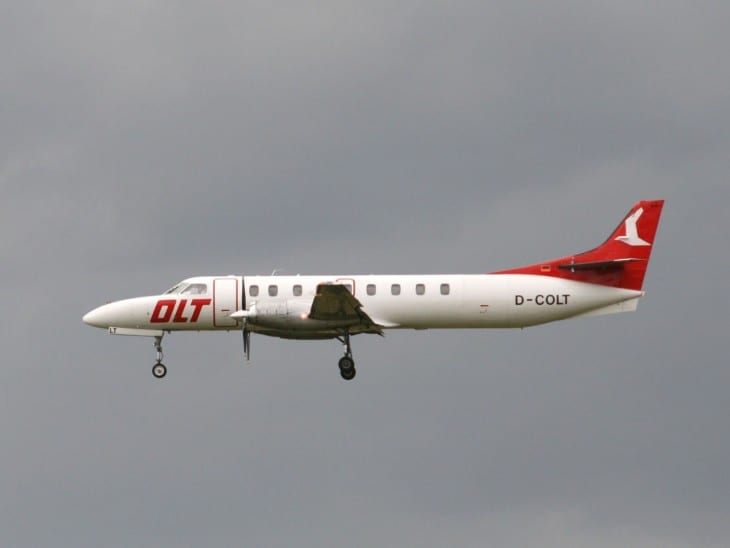
The Fairchild Swearingen Metroliner is a pressurized, twin-turboprop commuter airliner that first flew on August 26, 1969. It was built to seat 19 passengers, and it carried that load into small airports across the United States for decades.
Production ended with a final delivery in 2001. Many aircraft still fly today in cargo, charter and government roles.
The Metroliner grew out of the Swearingen Merlin, a pressurized turboprop business aircraft. Ed Swearingen, a Texas fixed-base operator, had earlier rebuilt Beechcraft Twin Bonanzas and Queen Airs and sold them as the Excalibur, which led to the pressurized SA26 Merlin.
The Merlin III was an all-new design with a cruciform tail and inverted-inlet Garrett engines. Stretched into the SA226-TC Metro, it was sized for 22 seats but limited to 19, because FAA rules required a flight attendant above that number.
Construction of the prototype began in 1968. Swearingen ran short of money, and in late 1971 Fairchild bought 90 percent of the company, which let the Metro go into production.
The first deliveries came in 1972. Commuter Airlines was the first to put the type into airline service, in January 1973.
The family grew in steps, and the model names matter when you read specifications, because figures differ by variant.
The original Metro gave way in 1974 to the Metro II, which brought larger windows and an optional rocket-assisted takeoff provision for hot-and-high airfields after an engine failure. Both were limited to 12,500 lb (5,700 kg) in the United States.
The Metro IIA was recertified in 1980 at 13,100 lb (5,900 kg) with more powerful TPE331-10 engines. The Metro III (SA227-AC) followed with four-bladed propellers, gear doors that close after the gear extends, and a longer wing.
The FAA approved the Metro 23 (SA227-DC) on September 29, 1990, in the commuter category under FAR Part 23. Fairchild built 115 of them, and the last aircraft, a Metro 23, was delivered in 2001. A Metro 25 demonstrator that carried 25 passengers flew in October 1989.
Wikipedia counts 703 Metro, Expediter, Merlin IV and C-26 aircraft in total, with 291 of them Metro IIIs. The separate short-fuselage Merlin III line adds another 158.

The Metroliner is a low-wing, cruciform-tail aircraft with retractable tricycle gear and a pressurized cabin. That pressurization let commuter airlines fly above weather that grounded unpressurized twins.
Wikipedia lists a crew of two, or one in a cargo-only configuration. The FAA data sheet sets the minimum crew at one pilot unless the flight manual requires more, and approval for single-pilot flying depends on the instrument and avionics fit.

The full specification table for the aircraft is on this page. It describes the Metro 23, so older Metros and Metro IIs will differ.
Published performance figures also differ between sources, because a Metro III and a Metro 23 are not the same aircraft. Check which variant a number belongs to before quoting it.
The FAA data sheet for the Metro 23 sets a maximum operating altitude of 25,000 ft (7,600 m). Fuel is carried in two wing tanks, 650 gal (2,500 L) in total.
The maximum landing weight is 15,700 lb (7,100 kg). A heavy departure has to burn fuel before it can land again.
The Metroliner was a commuter airliner first. U.S. regional carriers flew it under major airline brands in the 1970s and 1980s.
Today it is widely used for freight. Wikipedia’s July 2019 count had 196 aircraft in airline service, and the biggest operators were Ameriflight with 45 and Perimeter Aviation with 32.

Governments use it too. Wikipedia lists counternarcotics reconnaissance flights with Colombia, Peru and Trinidad and Tobago, and the Swedish Air Force flew two Metro III VIP transports as the TP 88.
U.S. forces bought the type as the C-26. The C-26A is the SA227-AC, and 11 were delivered.
The C-26B covers 3 SA227-BC and 37 SA227-DC aircraft. An RC-26B version carries surveillance equipment.

Pilot accounts describe it as demanding. Pilot and journalist Mark Huber called it an “unforgiving” airplane, fast with a high workload.
He added that flying it single-pilot is probably a bad idea unless the captain has a lot of experience on type. An Aeroxplorer article on Key Lime Air says the Metroliner has no autopilot and cannot fly GPS approaches, which it argues makes flying in cloud and low visibility more dangerous.
The Metro’s long service life includes a number of fatal accidents. Wikipedia lists more than a dozen.
Air Wisconsin Flight 965 went down on June 12, 1980, after water ingestion in a thunderstorm, and 13 people died. Nürnberger Flugdienst Flight 108 lost a wing to a lightning strike on February 8, 1988, and all 21 on board were killed.
On February 1, 1991, SkyWest Flight 5569 was struck on the runway at Los Angeles by USAir Flight 1493, and 12 people were killed. A later accident on November 10, 2013 involved Bearskin Airlines Flight 311, which suffered a left engine failure on approach and killed five.
Nothing replaced it one for one. Wikipedia attributes the end of production to the shift toward regional jets, which displaced turboprops on commuter routes.
Fairchild’s last delivery was in 2001. The type certificate is now held by M7 Aerospace.
It began as a 19-seat commuter airliner and now serves freight, charter and government operators, with Ameriflight and Perimeter Aviation the largest in a 2019 count. Government agencies also use it for surveillance, VIP transport and, in the U.S., as the C-26.
Pilots and investigators describe it as a high-workload aircraft. Mark Huber called it “unforgiving,” and advised against single-pilot flying without deep experience on the type.
No single aircraft replaced it. The shift toward regional jets ended Metroliner production, and the surviving Metros kept flying cargo, charter and government missions.
The prototype first flew on August 26, 1969. Deliveries began in 1972.
Wikipedia counts 703 Metro, Expediter, Merlin IV and C-26 aircraft, plus 158 short-fuselage Merlin IIIs. That includes 291 Metro IIIs and 115 Metro 23s.
Sources and references used for research and fact-checking.