Passenger Turbo Props
Vultee V-1
ICAO: V1
The turboprop airliner built for long-range transcontinental service.
The latest aviation news and stories sent to your inbox.
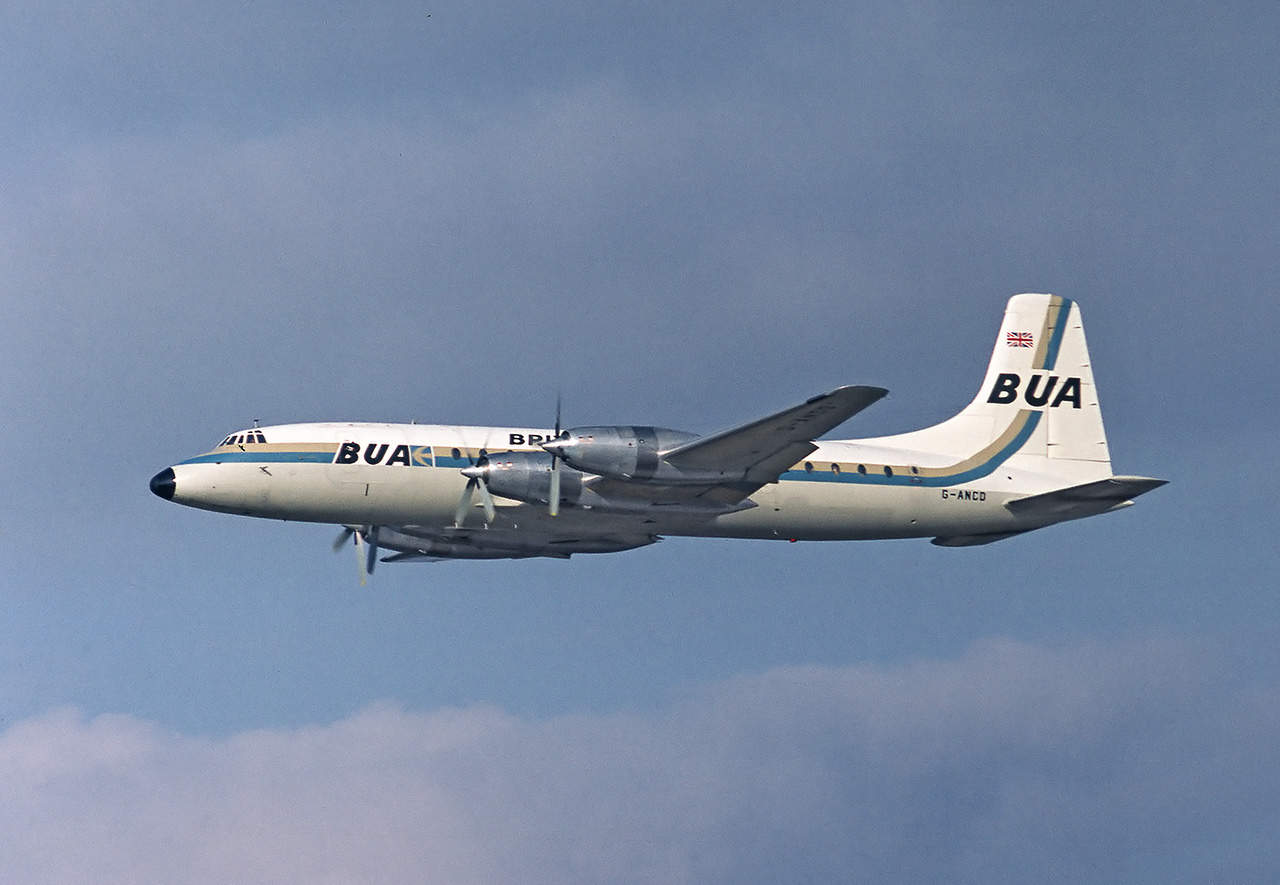
The Bristol Britannia was a British long-range turboprop airliner introduced in the 1950s. Designed for quiet and efficient transatlantic service, it became known as the Whispering Giant. The aircraft entered airline service during the transition from piston to jet transport.


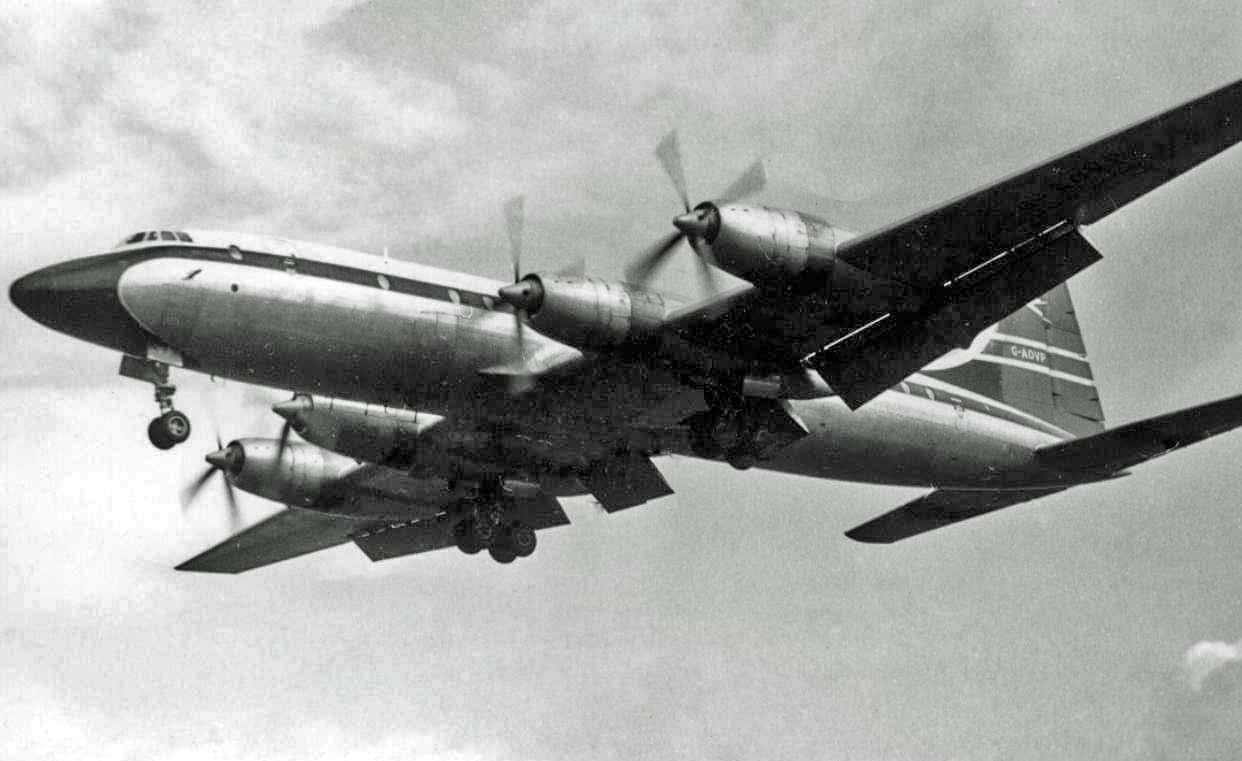


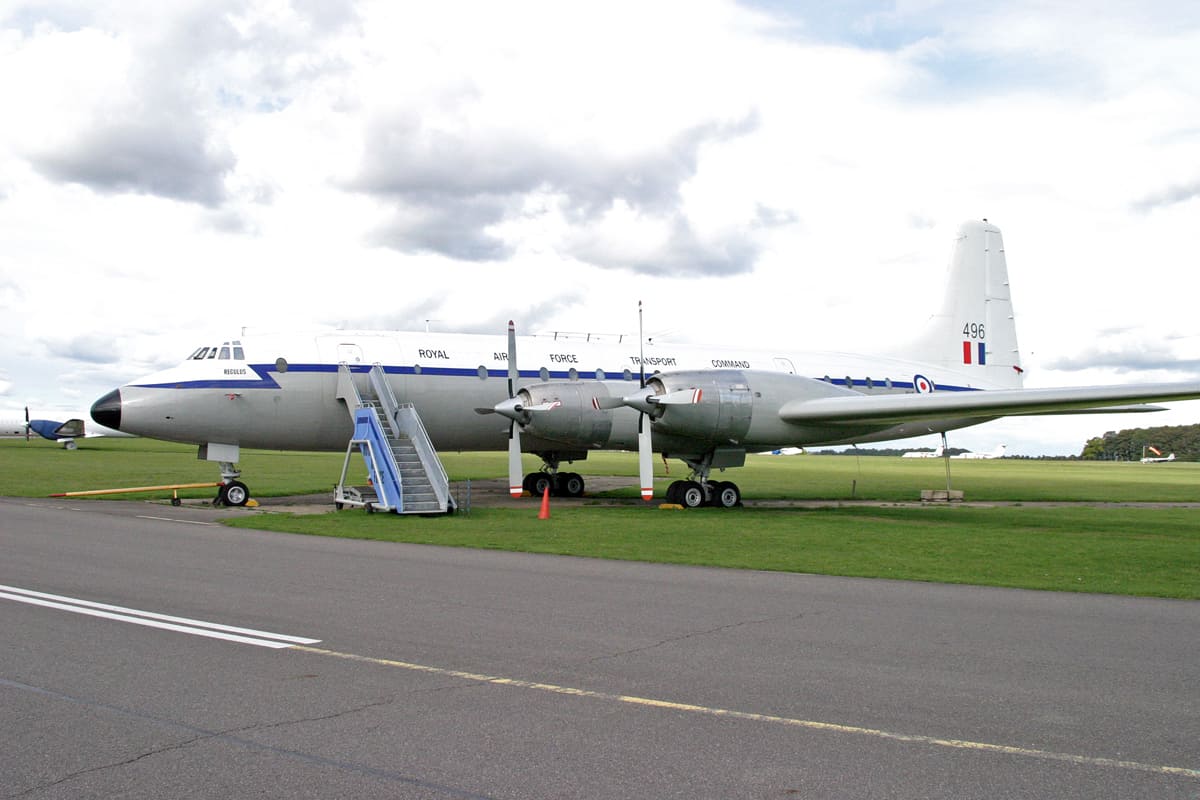


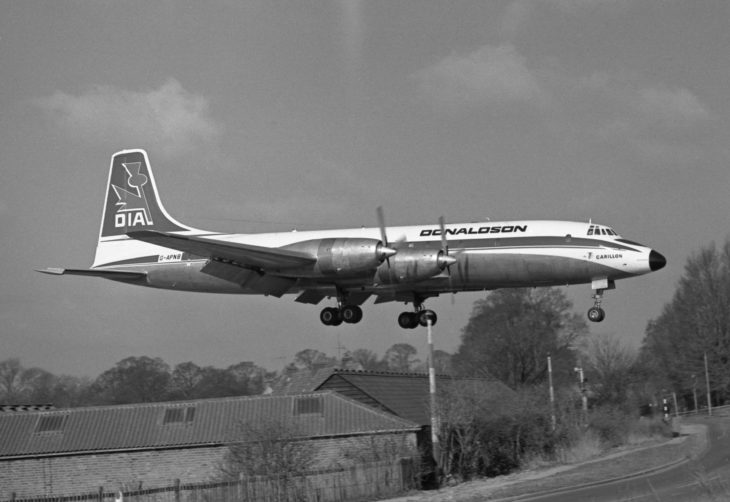
The Britannia first flew in 1952 and entered service in 1957 after development delays. It featured a high wing and four turboprop engines driving large propellers. The aircraft was designed to operate transatlantic routes with improved comfort and lower noise.
Powered by four Bristol Proteus turboprop engines producing approximately 4,000 shaft horsepower each, the Britannia cruised at around 300 knots (555 km/h). Maximum takeoff weight exceeded 180,000 pounds (81,650 kg). Passenger capacity typically ranged from 90 to 130 depending on configuration.
The Britannia served airlines in the United Kingdom and abroad. However, the rapid introduction of pure jet airliners limited its long-term market success. It remains one of the final large British turboprop airliners built for long-range service.
Like others in the British Airline Collection, the Bristol Britannia was designed in response to the Brabazon Committee specification. In that case, it was the Type III that matched with the BOAC requirement called Medium-Range Empire.
The first production aircraft, the Series 100, was bought by BOAC, which ran fifteen aircraft. Different developments culminated in the 300 series, with higher fuel capacity for a long-range operation that allowed them to run non-stop flights in both directions over the Atlantic.
In addition, BOAC ordered eighteen of the long-range aircraft, selected Series 312s, and started services between New York and London in December 1957.
Later on, eighty-five aircraft of all models were sold. The final and last recorded Bristol Britannia flight was in 1997. The fundamental design was licensed to Canadair, who created twelve CL-44 Yukon Freighter aircraft, thirty-three CL-28 Argus Aircraft for the Canadian military, as well as twenty-seven CL-44-D4 civil freighter and civil passenger aircraft.
Eighty-five Bristol 175 Britannia aircraft were designed, which involves those sub-contracted by Short Bros. and Harland LTD in Belfast. In addition, Canadair created thirty-three Argus and an overall 39 Yukon and CL-44D. Even though it had experienced problems in its engine icing, the aircraft, later on, proved itself to be robust and safe in service.
The aircraft’s limited production mirrors the emergence and success of jet engine airliners throughout the 1950s, most particularly the Boeing 707 that ruled long-distance passenger routes.
The Bristol Britannia was initially designed to have Centaurus piston engines, range, and economy considerations resulted in the redesign of the aircraft with turboprops. The very first flight was made by prototype 101 G-ALBO in August 1952.
Nonetheless, technical issues, especially with the engine air’s ice intakes, resulted in delays in the launch of Bristol Britannia into airline service until February 1957.
The design of the Argus maritime patrol as well as the anti-submarine warfare aircraft was optimized for endurance on long-range patrol and utilized four Wright R-3350-32W Turbo-Compound engines which utilized less fuel at very low altitude.
In service, the stunning Bristol Britannia was marketed as The Whispering Giant. Extended developments were provided for all passenger-cargo (Bristol Britannia 250), cargo (Bristol Britannia 200), and all passengers operations (Bristol Britannia 300).
BOAC retired its fourteen early Bristol 175 Britannia and Bristol Britannia 100 aircraft in November 1962, after five years of service.
The Bristol Britannia Series 253. C.Mk1 XM496 Regulus is now located in the heart of Gloucestershire at Costworld Airport close to Kemble and can be visited on the public open days. It was the last Bristol Britannia to fly. The restoration of The Whispering Giant has been a labor of love for all the people who’ve taken XM496 from being strapped to a restored, even though unflyable aircraft.
Sources and references used for research and fact-checking.