Cargo Airplanes
Airbus A380 Cargo
ICAO: A388
British cargo aircraft introduced in the late 1940s
The latest aviation news and stories sent to your inbox.
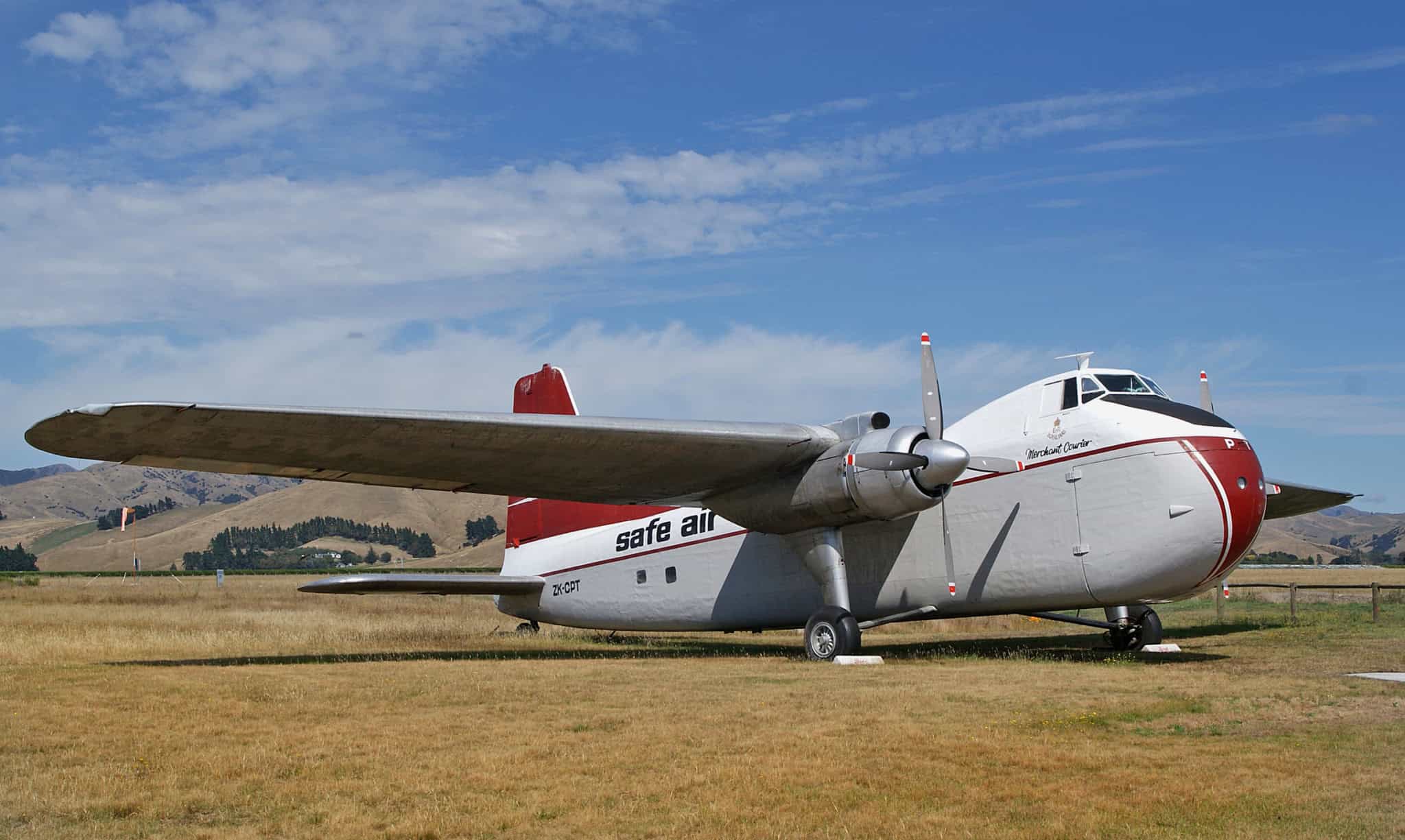
The Bristol Type 170 Freighter was a twin-engine aircraft manufactured by the British Bristol Aeroplane Company. It was designed as a freighter and an airliner and was well-known as an air ferry to transport cars and their passengers on fairly short ranges.
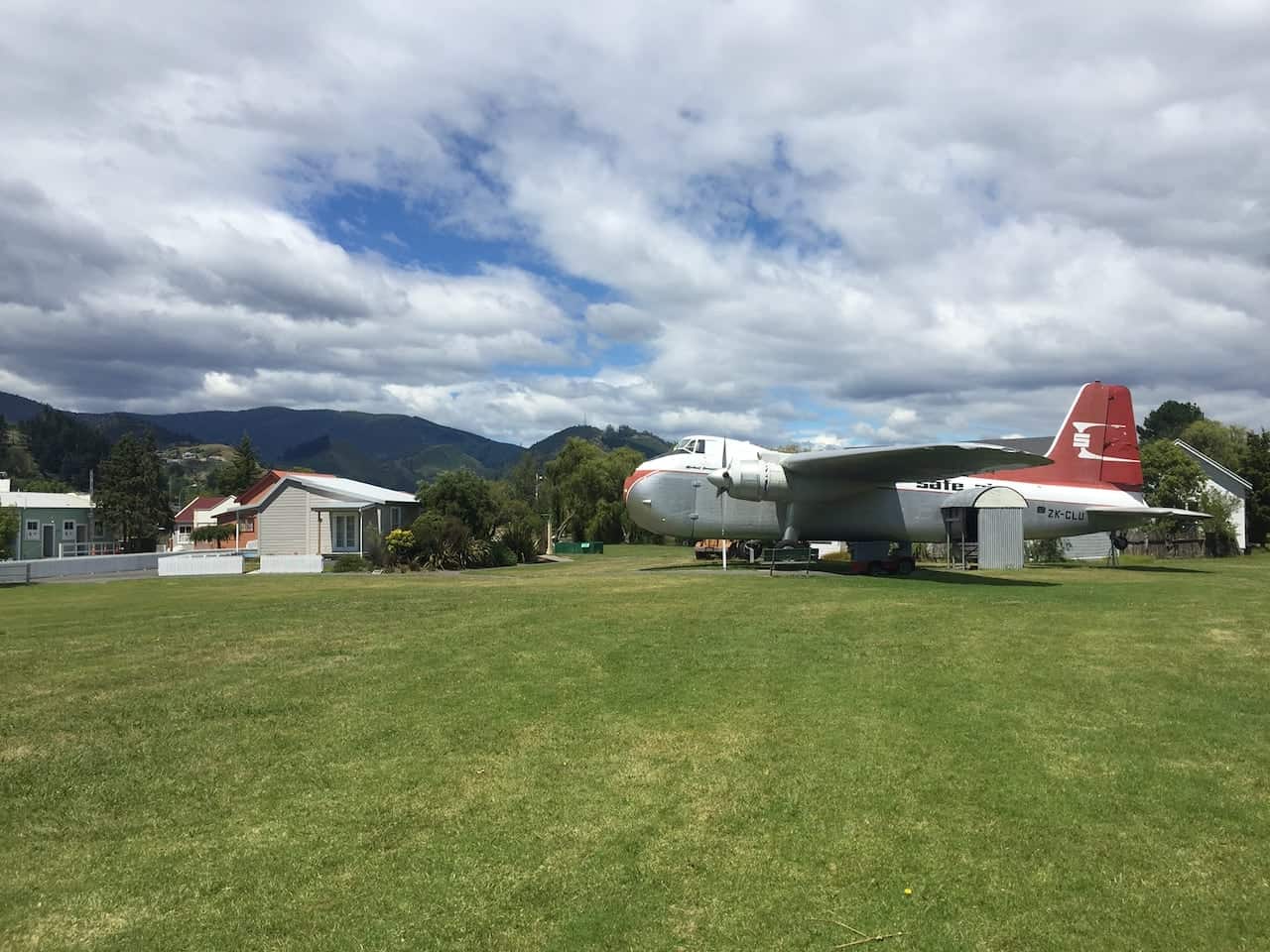


The Bristol Type 170 Freighter was a high mounted-wing monoplane built particularly for the economic transport of freight by air. The Type 170 Freighter was a well-defined aircraft, designed with a box-shaped fuselage with an external length of 20.83 meters, a diameter of 2.9 meters, and a height of 6.6 meters. It also has a circular nose and a high-set flight deck.
So as to achieve the best economical performance, adjustments were made on the performance which resulted in a comparatively low cruising speed, which was not seen as an important factor in a freighter’s role and as well as not a vital diminishing element. The Freighter also featured two big clamshell doors to easily enter the main hold, and because of this layout, the unpressurized fuselage was a bit airy in flight.
The aircraft was proposed to be operated on low speeds and high-frequency short-distance routes. The high-mounted wing and fixed landing gear were thought to be unusual at that time and developed in higher drag compared to a low-mounted wing. The main gear legs were equipped with shock absorbers manufactured by Dowty Group and were strengthened by a configuration of reinforced vertical struts situated further down the engines and underneath the edge of the fuselage. The aircraft has a wheelbase of 14 meters, a wingspan of 32.92 meters, and a wing area of 138.1 square meters
The Bristol Fighter was powered by two Bristol Hercules 734 piston engines with a maximum thrust of 2,000 horsepower each. It was a 14-cylinder, two-row, supercharged, air-cooled radial engine with gear-driven sleeve valves, single-speed centrifugal-type supercharger, Claudel-Hobson carburetor, and a Farman epicyclic gearing. The aircraft was also equipped with four-bladed constant-speed fully-feathering metal propellers built by de Havilland.
The aircraft has a maximum speed of 196 knots at 3,000 feet and a travel range of 710 nautical miles with 5,400 kg of payload. It has a maximum takeoff weight of 19,958 kg.
Sources and references used for research and fact-checking.