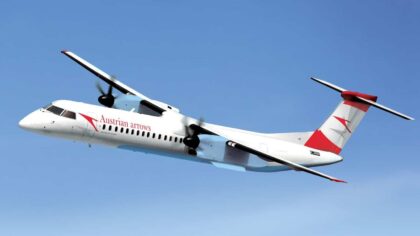
The Bombardier Q400, now the De Havilland Dash 8-400, is the largest Dash 8. Its history, how fast it flies, why production stopped and who still operates it.
The Douglas DC-4 was a four-engine piston airliner built from 1942 to 1947. See how it became the C-54 Skymaster, flew the Berlin Airlift and is still flying.
The Douglas DC-6 entered service in the late 1940s as a four-engine piston airliner. Developed from earlier wartime transports, it became a mainstay of international airline fleets. The aircraft supported long-range passenger and cargo operations.
The Douglas DC-7 was the last big piston airliner Douglas built, with a top speed of 410 mph. See its history, DC-7B and DC-7C variants, crashes and where survivors are.
The Swearingen Metroliner is a 19-seat pressurized twin turboprop first flown in 1969. See its Metro variants, C-26 military use, cargo role and record.
The Lockheed L-188 Electra was America's first big turboprop airliner. See why two crashes nearly ended it, how it became the P-3 Orion, and which still fly.
The Martin 2-0-2 was introduced in the late 1940s as a twin-engine regional airliner. Designed to serve short-haul routes, it aimed to modernize domestic airline fleets after World War II. The aircraft faced structural challenges early in its service life.
The Vickers Viscount entered service in the early 1950s as one of the first successful turboprop airliners. Designed for short- to medium-haul routes, it offered smoother and quieter flight compared with piston airliners. The aircraft became widely exported.