Passenger Turbo Props
Martin 4-0-4
ICAO: M404
The Martin 2-0-2 was introduced in the late 1940s as a twin-engine regional airliner. Designed to serve short-haul routes, it aimed to modernize domestic airline fleets after World War II. The aircraft faced structural challenges early in its service life.
The latest aviation news and stories sent to your inbox.
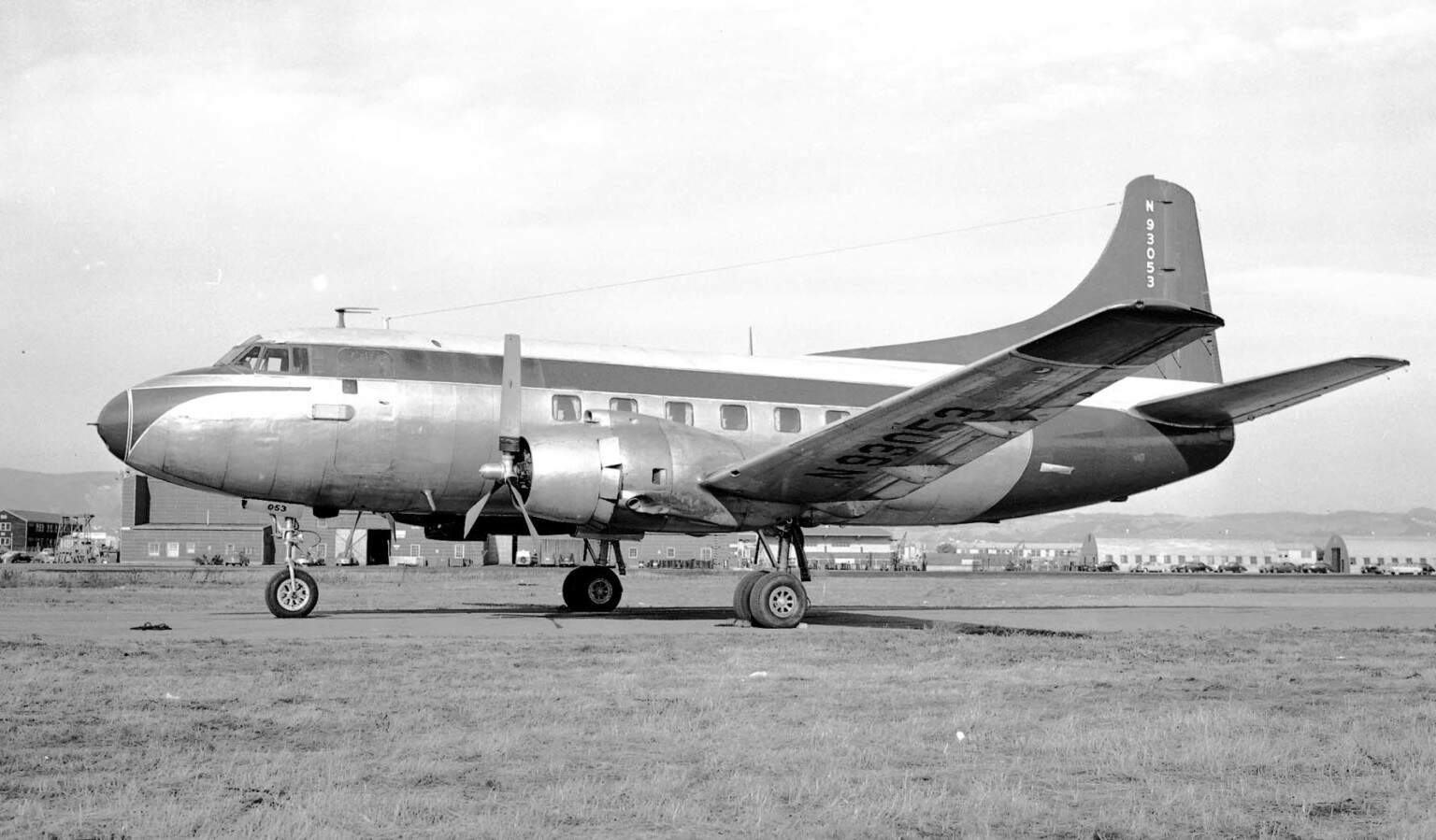
Martin 2-0-2 — twin-engine regional airlinerThe 2-0-2 first flew in 1946 and entered service in 1947. It featured a low-wing configuration and tricycle landing gear, typical of postwar airliner design. Structural issues required reinforcement and temporarily grounded the fleet.Two radial piston engines, each producing approximately 2,400 horsepower, powered the aircraft. Cruise speed was near 240 knots (444 km/h). Maximum takeoff weight exceeded 45,000 pounds (20,412 kg), allowing seating for around 40 passengers.Although only modest numbers were produced, the 2-0-2 paved the way for the improved Martin 4-0-4. Its service history reflects the challenges faced by manufacturers during the transition to postwar commercial aviation.


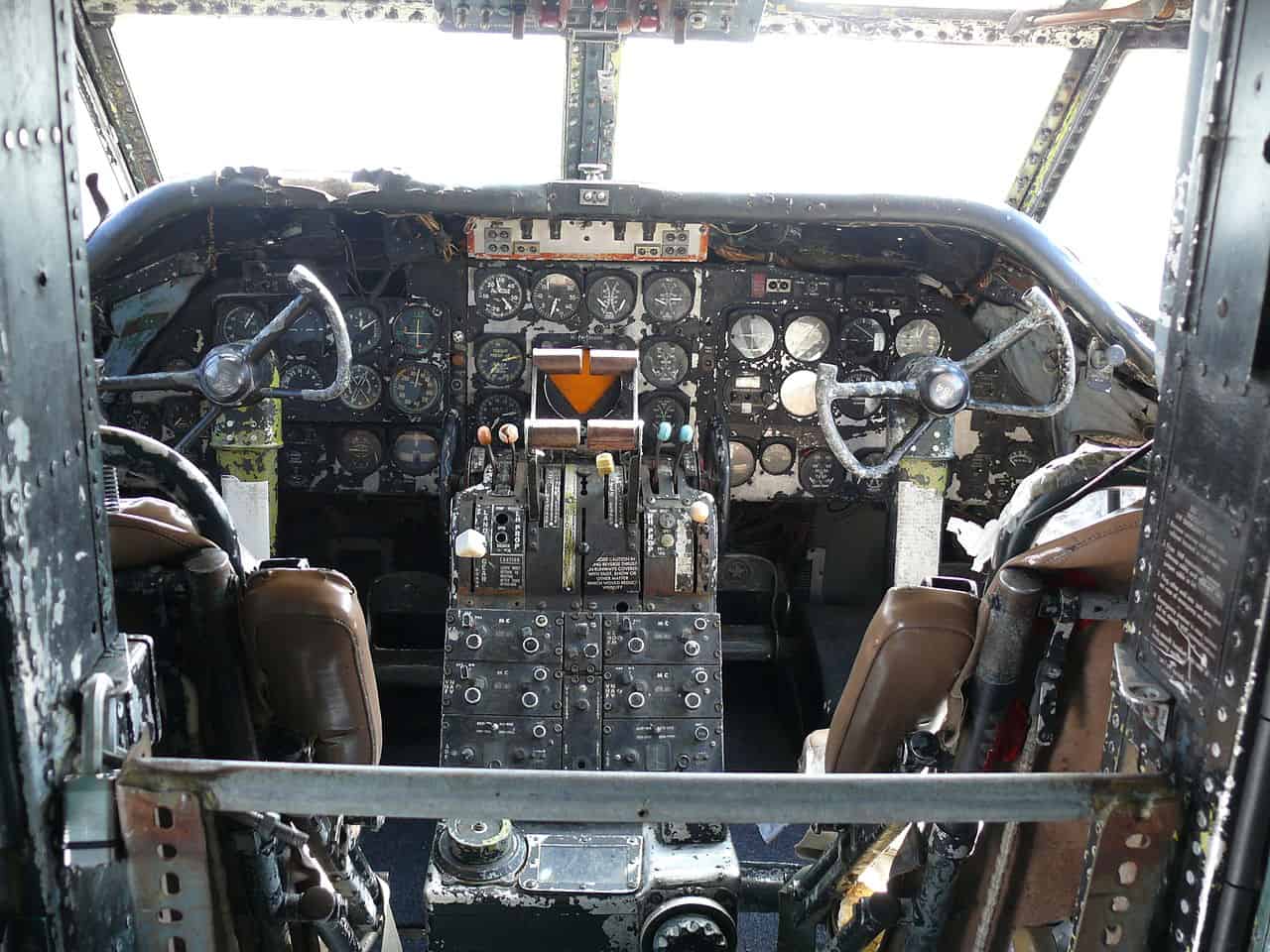
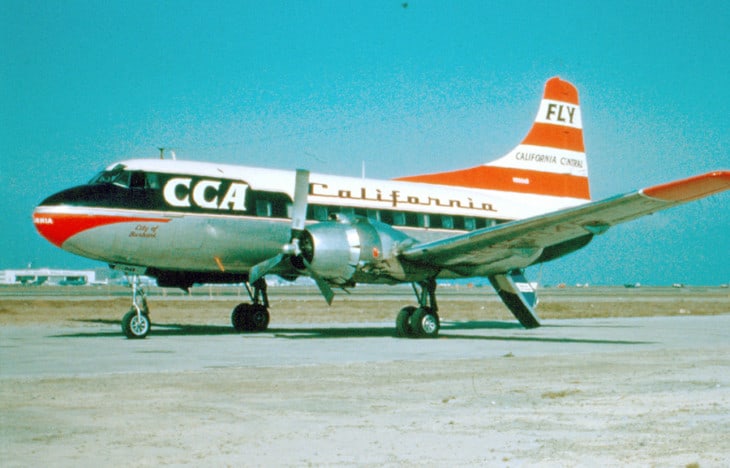
The Martin 2-0-2, also known as the “Martin Executive” was developed by the Glenn L. Martin Company to replace the Douglas DC-3 propeller-driven airliner. On November 22, 1946, the aircraft took to the air for the first time. In August 1947, it was awarded its full civilian certificate. The aircraft was produced for a year from 1947 to 1948 with a total of forty-seven Martin 2-0-2s and 2-0-2As built.
On November 13, 1945, Pennsylvania Central Airlines bought thirty-five 2-0-2s costing $7,000,000. Trans World Airlines (TWA) and Northwest Orient Airlines are the launch customers of the Martin 2-0-2 before California Central Airlines and Pioneer Airlines bought their aircraft. Afterward, Allegheny Airlines bought several 2-0-2s and in due course, obtained eighteen aircraft in total. The Martin 2-02 was retired in 1975.
The unpressurized but long-range airliner Martin 2-0-2 has an external length of 21.74 meters, an external height of 4.4 meters, a tail height of 8.66 meters, and a fuselage diameter of 2.8 meters. It can accommodate two crew members and up to forty passengers or 4,200 kg of maximum payload.
The original design showed a critical structural wing problem which led to redesigning the wings. The aircraft has a wingspan of 28.42 meters and a wing area of 80.3 square meters. It has an empty weight of 11,379 kg and a maximum takeoff weight of 18,098 kg. The maximum fuel capacity is 1,740 US gallons.
The Martin 2-0-2 is powered by a twin Pratt and Whitney R-2800 CA-18 Double Wasp radial engines. It is an eighteen-cylinder, air-cooled, twin-row radial with water injection, two poppet valves per cylinder, variable-speed single-stage single-speed centrifugal-type supercharger, one Stromberg injection carburetor fuel system, and an air cooling system.
Each engine produces a 1,800 horsepower of normal power and 2,400 horsepower take-off thrust with water injection and drives a three-bladed Hamilton Standard 2H17K3-48R propeller with a diameter of 3.99 meters. The aircraft has a maximum speed of 270 knots at 14,000 feet, a cruise speed of 255 knots at 12,000 feet, and a stall speed of 66 knots.
Sources and references used for research and fact-checking.