

Table of Contents
In the middle of 2025, a brand new Boeing 737 MAX 8 was worth about $55 million to the airline taking delivery of it. A new 787-9 Dreamliner was worth roughly $151 million. Those are appraiser valuations, not catalogue prices.
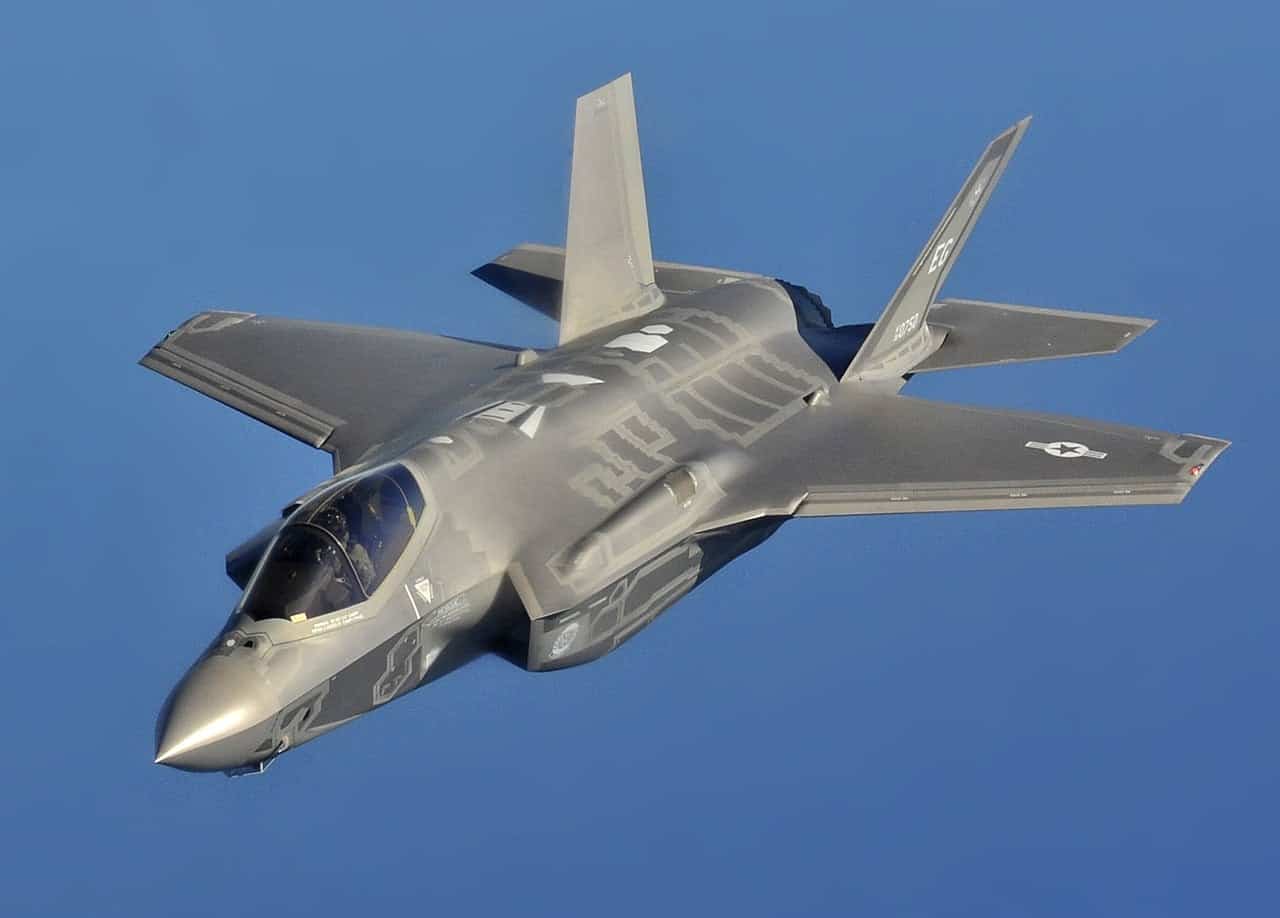
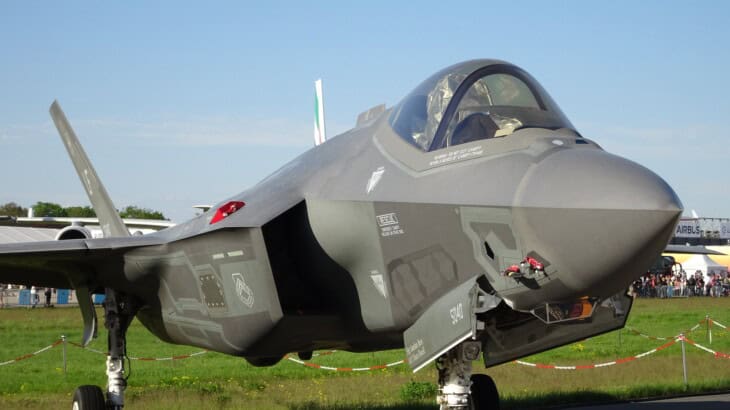
An F-35A airframe costs the US government around $82 million, and its engine is bought separately for about $20 million more. Put the two numbers side by side and a stealth fighter looks like a slightly cheap widebody.
That comparison is where almost every argument about fighter jet prices falls apart. The two aircraft are not the same amount of airplane, and the number printed on the contract is not the number the taxpayer eventually pays.
How Much Does a Fighter Jet Cost?
A current-production Western fighter costs roughly $80 million to $110 million per aircraft as delivered. That figure is the flyaway cost: the airframe, its installed systems and its engine, ready to leave the factory ramp.
In September 2025 the Pentagon finalised the largest fighter production deal ever signed, covering 296 F-35s across production Lots 18 and 19 for $24.29 billion. That averages $82.4 million per jet across all three variants and every customer, with the short-takeoff F-35B and carrier-capable F-35C pulling the average above what an Air Force F-35A costs.
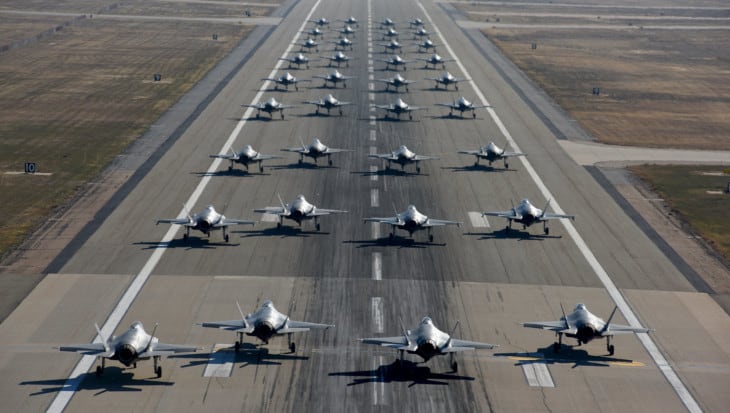
The engine is not in that number. Pratt and Whitney’s F135 is contracted separately and handed to Lockheed Martin as government-furnished equipment, and recent lots have run near $20 million each. An F-35A that can actually take off therefore lands close to $100 million.
What a fighter jet actually costs
Roughly $100 million buys one F-35A airframe with its engine fitted. Spread the program’s development, testing and support costs across all 2,470 aircraft and the acquisition cost per jet rises to $162.4 million. Add a lifetime of operating and sustaining the fleet and the F-35 program passes $2 trillion.
| Aircraft | Cost measure | Figure |
|---|---|---|
| Boeing 737 MAX 8 | Market value, new, mid-2025 | ~$55 million |
| Boeing 787-9 Dreamliner | Market value, new, mid-2025 | ~$151 million |
| F-35 Lightning II | Airframe flyaway, Lots 18 and 19 average | ~$82.4 million |
| F-35 Lightning II | Program acquisition unit cost, Dec 2023 | $162.4 million |
| Northrop Grumman B-2 Spirit | Program cost per aircraft, 21 built | ~$2.1 billion |
The Sticker Price Only Buys Part of the Aircraft
Defense budgeting uses at least four different per-aircraft numbers, and whoever is talking quotes whichever one suits the argument. Unit recurring flyaway cost is the smallest: hardware only, with no development, no spares and no ground equipment.
Weapon system cost adds the things that make the jet usable, including support equipment, technical data and initial spare parts. Average procurement unit cost divides the entire procurement budget by the number of aircraft bought with it.
Program acquisition unit cost is the least flattering and the most honest. It divides total acquisition cost, development included, by every aircraft the program will ever produce.
For the F-35 as of the December 2023 acquisition report, that came to $162.4 million per jet across 2,470 aircraft. So the same fighter is an $82 million aircraft or a $162 million aircraft depending on which line of the budget you read, and both numbers are true.
Nobody Builds Enough Fighters to Make Them Cheap
Airliners are affordable because they are built in absurd quantities. Airbus passed 12,260 A320-family deliveries in October 2025, overtaking the Boeing 737’s 12,214 to become the most-delivered jetliner in history.
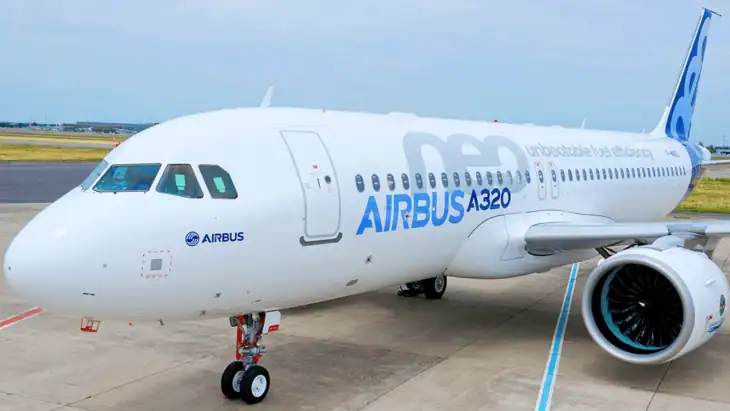
The F-35 is the most-produced Western stealth fighter ever built, and it had delivered 1,344 aircraft by the middle of 2026. Its record year, 2025, produced 191 jets. Airbus builds that many A320s in roughly three months.
Every engineering hour, every assembly jig, every wind tunnel run and every flight-test airframe has to be repaid out of that much shorter production run. Divide a fixed development bill across 1,300 aircraft instead of 12,000 and each one carries roughly ten times the share.
Volume also drives the price down over time, and the F-35 is the clearest illustration of it. The first two aircraft off the line cost more than $200 million each.
By the tenth production lot, Lockheed Martin’s published contract price for an F-35A had fallen to $94.6 million, a reduction of more than 60 percent. Nothing about the aircraft got simpler. The workforce got faster and the supplier orders got bigger.
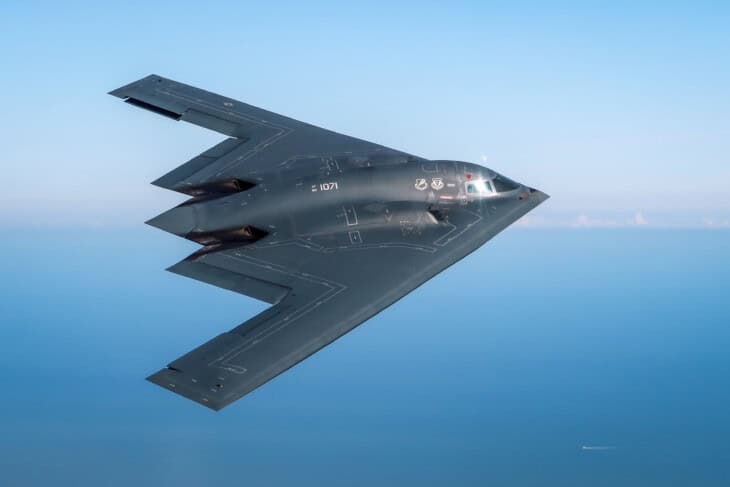
The B-2 Spirit is the extreme version of this arithmetic. The Air Force planned 132 of them, the buy was cut to 21, and a flyaway cost of about $737 million per aircraft became roughly $2.1 billion each once development was shared among the survivors.
The B-2 got three times more expensive without changing a bolt
Cutting the order from 132 bombers to 21 altered nothing about the aircraft itself. It simply left the same fixed development bill to be divided among a sixth as many airframes, turning a $737 million bomber into a $2.1 billion one on paper. It still tops most rankings of the costliest military aircraft ever flown.
That is why the most expensive fighter planes are rarely the ones with the most exotic technology. They are usually the ones nobody ordered enough of.
Most of the Money Is Sensors and Software
The airframe is the least interesting part of the bill. A modern fighter’s value sits in its radar, its electro-optical targeting system, its electronic warfare suite, and the software that fuses all of it into a single picture for the pilot.
Public estimates put the F-35’s onboard flight and mission software at around 8 million lines of code, and near 24 million once its ground-based logistics system is counted. A fighter of the 1960s ran on a few tens of thousands.
Software is also where the money escapes. The F-35’s Block 4 upgrade has grown by more than $6 billion above its original estimate and will not be complete before 2031, at least five years late, according to the Government Accountability Office.
The Technology Refresh 3 hardware and software package that Block 4 depends on cost $1.9 billion by itself. Its problems were the main reason all 110 F-35s delivered in 2024 arrived late, by an average of 238 days.
Part of the reason a software release costs billions is that it is not one release. Every change has to be integrated, tested and cleared across three physically different variants and a long list of national configurations, each with its own weapons and security rules.
Stealth Is a Recurring Bill, Not a One-Time Purchase
A stealth aircraft is not just a shape. Its radar-absorbent surfaces are inspected and repaired by hand, built back layer by layer, then sanded and refinished to a specification. That is slow, skilled, expensive work, and it happens continually.
It is also work most operators cannot simply do themselves. Restoring a low-observable surface to specification needs particular materials, facilities and training, which keeps the manufacturer inside the maintenance chain for decades after delivery.
All of that shows up in the running costs. The Air Force spends about $6.6 million a year to operate and sustain each F-35A, against an original affordability target of $4.1 million.
Across the fleet, the GAO’s estimate of F-35 sustainment costs rose 44 percent in five years, from $1.1 trillion in 2018 to $1.58 trillion in 2023. That is what pushes the program past $2 trillion, not the purchase price.
Per hour, the gap is starker still. The program office cut the F-35A’s cost per flying hour from $86,800 to $33,600 between 2014 and 2022, measured in 2012 dollars, and even the improved figure buys one seat and one pilot.
The Myth: Fighters Are the Most Expensive Aircraft in the Sky
The myth
Fighter jets are the most expensive aircraft flying. Measured per aircraft, that is simply not true. A new 787-9 Dreamliner is worth more than the flyaway price of an F-35A, and more than the flyaway price of almost every fighter in service.
A 787-9 at $151 million costs more per aircraft than an F-35A does at the factory gate. The fighter only overtakes it once you fold in the development bill spread across the whole program.
Change the measure and the picture flips entirely. An F-35A weighs 29,300 pounds (13,290 kg) empty and costs about $100 million, which is roughly $3,400 per pound of aircraft.
A 787-9 weighs about 284,000 pounds (128,850 kg) empty and costs about $530 per pound. Pound for pound, the fighter costs more than six times as much.
That is the honest answer to why fighters are expensive. Not because any single one costs more than an airliner, but because you get so much less airplane for the money.
The same holds in the air. A 787-9’s direct operating cost works out at roughly $26 per seat per hour. The F-35A’s official figure is $33,600 an hour, and it has one seat.
Next time a headline puts a price on a fighter jet, the first question worth asking is which price. Flyaway, weapon system, procurement and program acquisition cost can differ by a factor of two for the same aircraft on the same day.
And the number that matters least is the one on the contract. A fighter is bought once and paid for every year it flies, which is why the sixth-generation fighters now in development are being pitched on their running costs almost as hard as on their capability.
Sources and references used for research and fact-checking.
- U.S. Government Accountability Office, F-35 Joint Strike Fighter: Actions Needed to Address Late Deliveries and Improve Future Development (GAO-25-107632)
- U.S. Government Accountability Office, F-35 Sustainment: Costs Continue to Rise While Planned Use and Availability Have Decreased (GAO-24-106703)
- Air & Space Forces Magazine, F-35 Deal for Lots 18 and 19 Covers 296 Fighters at $24.3 Billion
- Congressional Research Service, F-35 Lightning II: Background and Issues for Congress (R48304)
- U.S. Air Force, 33rd Fighter Wing, F-35A Lightning II Conventional Takeoff and Landing Variant
- AirAdvisor, Boeing Aircraft Prices: List vs Real Values
Get the Newsletter
The latest aviation news and stories sent to your inbox.
About the Author

Tim is the owner and lead editor of AeroCorner since 2019, overseeing aviation content covering aircraft, airlines, airports, and the broader aviation industry. Through years of researching, writing, editing, and publishing aviation-focused content, he has developed extensive practical knowledge of commercial aviation and air travel. Based in Asia and a frequent traveler himself, Tim also brings firsthand passenger experience to AeroCorner’s coverage. Outside of publishing, he has also explored aviation firsthand through hands-on flight training in New Zealand.