

Table of Contents
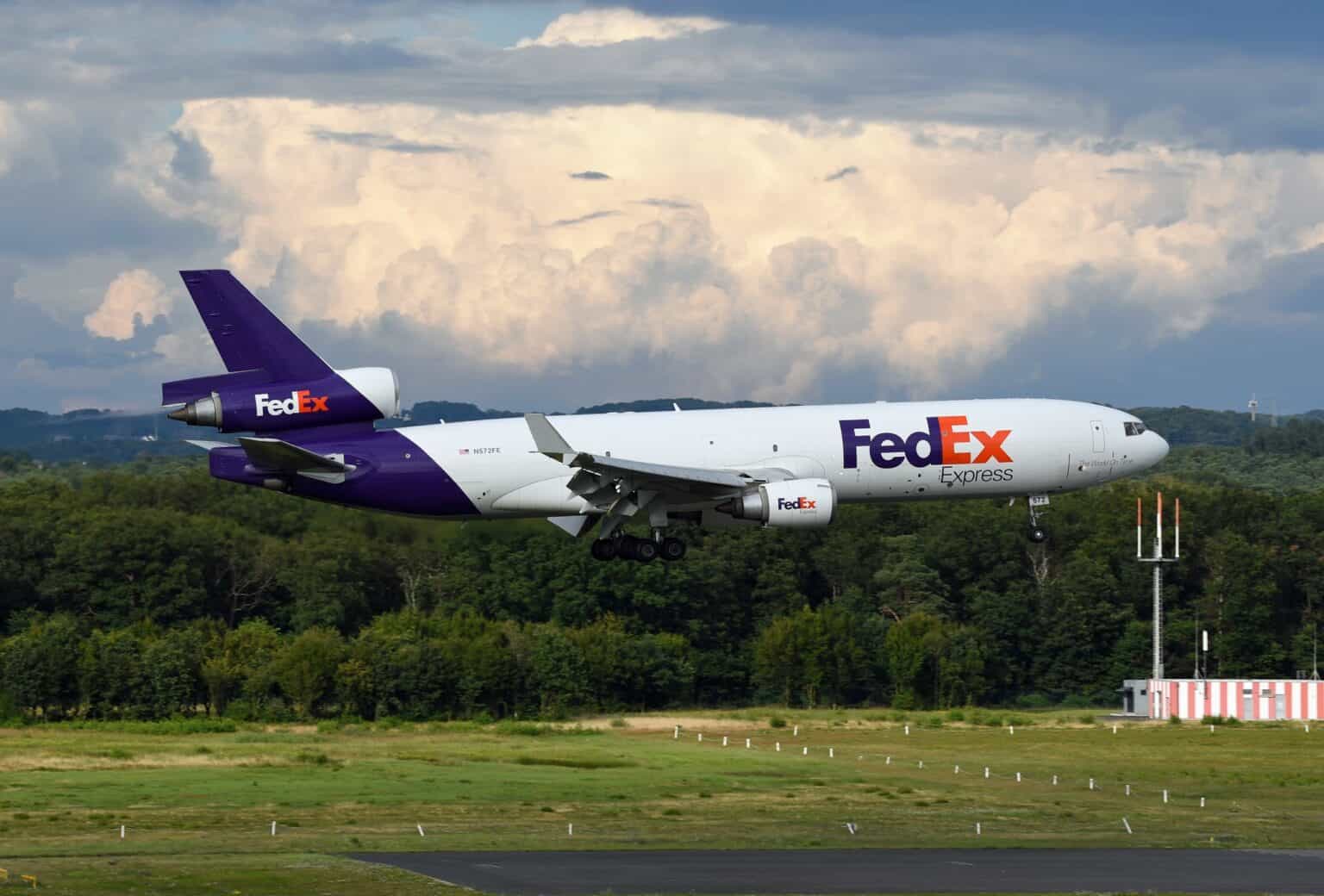
UPS walked away from the trijet for good. FedEx did the opposite, and spent the summer of 2026 putting its MD-11s back in the air.
The McDonnell Douglas MD-11 is down to two operators: FedEx Express and Western Global Airlines. In mid-September 2026, Flightradar24 data showed 20 of FedEx’s MD-11Fs and at least three of Western Global’s had flown in the previous week, according to Air Cargo News.
That is roughly two dozen active aircraft out of 200 built. UPS retired its whole fleet after UPS Flight 2976 crashed on takeoff at Louisville on November 4, 2025, killing 15 people.
Why McDonnell Douglas Sold 200 MD-11s Instead of 300
The MD-11 was meant to be the quick, cheap answer to the long-haul market. McDonnell Douglas launched it at the end of 1986 as a development of the DC-10 trijet, and FlightGlobal reported in 1998 that the company was confident it could sell more than 300 by 2000.
It first flew on January 10, 1990, and Finnair put it into service that December. Then it missed its own range and fuel-burn targets, and the airlines noticed.
The turning point came in August 1991. Singapore Airlines dropped plans to order 20 MD-11s, citing the performance shortfall, and bought Airbus A340s instead. FlightGlobal wrote that McDonnell Douglas did not land another new flag-carrier customer until Lufthansa Cargo in 1996, and that order was for freighters at discount prices.
Twin-engine widebodies, the 767, 777 and A330, took many of the orders that were left. In April 1995, American Airlines confirmed plans to sell its entire MD-11 fleet to FedEx.
Boeing absorbed McDonnell Douglas in 1997, limited the MD-11 to freighters so it would not compete with Boeing’s own twins, and announced the end of production in 1998. The last two aircraft went to Lufthansa Cargo in early 2001.
The MD-11 Fleet by the Numbers
The production run was short and mostly passenger jets. Of the 200 built between 1988 and 2000, 131 were standard passenger aircraft and only 53 left the factory as freighters, with the rest split between combi, convertible and extended-range versions.
They were not cheap. The MD-11 cost between $132 million and $147.5 million apiece in 1999 dollars.
The passenger career ended first. KLM flew the last scheduled MD-11 passenger service on October 26, 2014, from Montreal to Amsterdam. After that the type lived almost entirely as a converted freighter, and many of the cargo MD-11s flying today began life in an airline cabin.

| Operator | MD-11s | Measure and date |
|---|---|---|
| FedEx Express | 29 | In the fleet, owned, May 31, 2026 (FedEx 10-K) |
| FedEx Express | 20 | Flew in the previous seven days, mid-September 2026 (Flightradar24) |
| Western Global Airlines | 3 or more | Flying regularly, mid-September 2026 (Air Cargo News) |
| UPS Airlines | 0 | Entire fleet retired, announced January 27, 2026 |
| Built | 200 | Total production, 1988 to 2000, last delivered 2001 |
Even FedEx’s count is shrinking. The company permanently retired three MD-11s in fiscal 2025 and five more in fiscal 2026, and Flightradar24 now lists 28 in its fleet.
What the Louisville Crash Changed
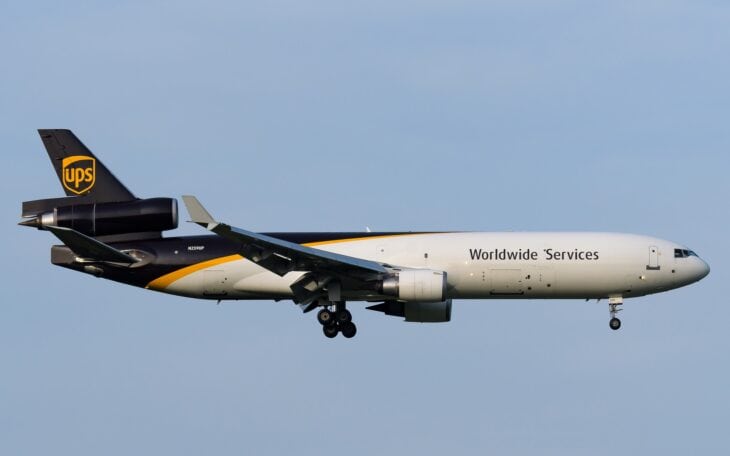
UPS Flight 2976 was an MD-11F bound for Honolulu. The NTSB says the left engine and pylon separated from the wing shortly after rotation on runway 17R, and the airplane climbed no higher than about 30 feet (9 m) before striking buildings.
The three crew members and 11 people on the ground were killed, and a seriously injured person on the ground died 51 days later. The aircraft, N259UP, had been delivered to Thai Airways as a passenger jet in 1991 and joined UPS as a converted freighter in 2006.
_United_Parcel_Service_-_UPS.jpg)
The NTSB’s investigative update found fatigue cracking across about 75% of the fracture surface of the spherical bearing race in the left pylon’s aft mount. It also surfaced a Boeing service letter from February 7, 2011, which told operators of four earlier race failures on three airplanes.
According to that letter, Boeing had concluded the failure would not create a safety-of-flight condition. The NTSB is still reviewing how the letter was carried into Boeing’s maintenance documents and into UPS’s maintenance program, and it has not issued a probable cause.
The FAA grounded every MD-11 with an emergency airworthiness directive in November 2025. On January 27, 2026, UPS said it would retire all of them, took a $137 million after-tax charge, and said 18 new Boeing 767s would arrive over about 15 months to replace the capacity.
The MD-11s had made up about 9% of the UPS fleet. The 767 freighter taking their place carries less, but it has two engines and is still in production.
Why FedEx Put Its MD-11s Back in the Air
FedEx’s own filing explains the choice in a single table. It lists each MD-11 with a maximum gross structural payload of 192,600 pounds (87,400 kg), against 127,100 pounds (57,700 kg) for its 767F.
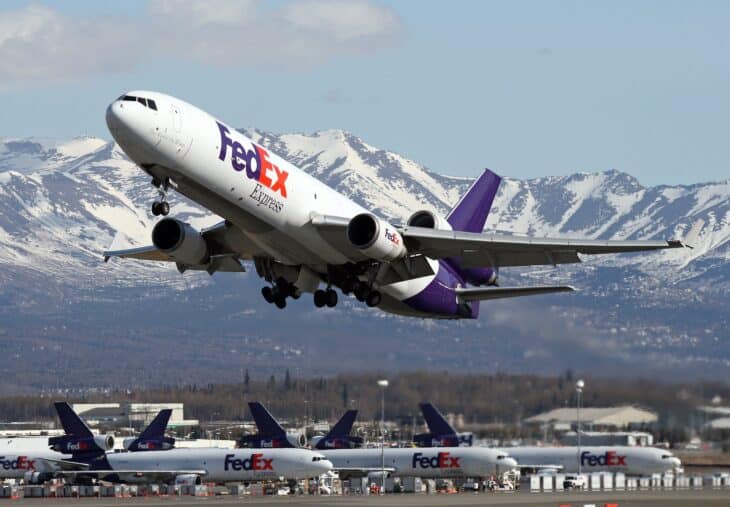
Only the 777F, at 233,300 pounds (105,800 kg), lifts more. FedEx owns all 29 of its MD-11s outright. The grounding forced it onto commercial airlift partners through the 2025 peak season, and then-finance chief John Dietrich told analysts in March that it caused a $120 million headwind.
The FAA cleared the type to return in May 2026, after approving a Boeing inspection and return-to-service program. The AP reported that the work includes replacing a key spherical bearing and adding inspections of the engine mounting parts.
FedEx pulled pylons off grounded jets and sent them to heavy maintenance in Memphis and Indianapolis, then flew each aircraft on a test flight before it carried freight again. Four were back by late June, and 20 were flying by mid-September.
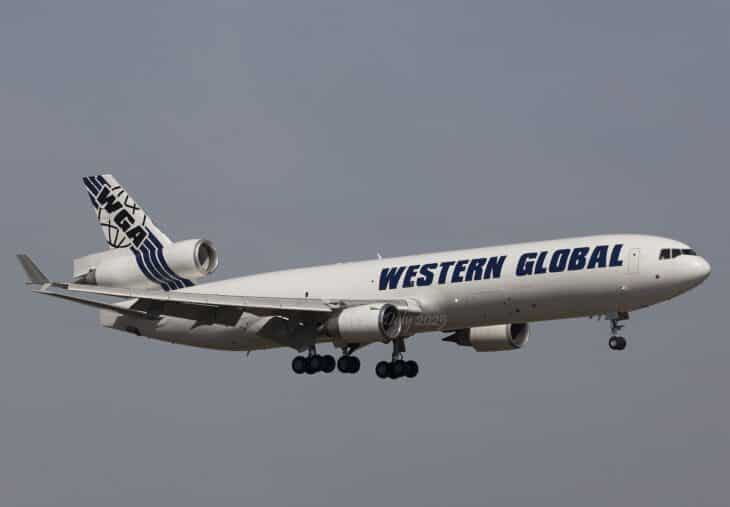
Western Global, the only other MD-11 operator, had N781SN flying again by May 21, on a two-hour hop from Fort Myers to Columbus.
How Long the MD-11 Has Left
FedEx expects its whole MD-11 fleet to be back in service by the end of 2026. It had planned to retire the type by the end of 2028, then in fiscal 2025, before the crash, pushed that date to the end of 2032.
That makes FedEx the last big home of a trijet that passenger airlines stopped ordering in the 1990s. It is the same arc as the 747, where most of the survivors are now freighters.
The NTSB’s final report, with a probable cause, is still to come. Until then, roughly two dozen MD-11s keep flying freight, the last working examples of the three-engine widebody era.
Sources and references used for research and fact-checking.
- FedEx Corporation (SEC), Form 10-K for the fiscal year ended May 31, 2026
- National Transportation Safety Board, Aircraft Accident Investigative Update, UPS Flight 2976 (DCA26MA024)
- AVweb, NTSB Releases UPS MD-11 Preliminary Report
- PBS NewsHour (AP), UPS retires its fleet of MD-11 cargo aircraft involved in deadly Kentucky crash
- Air Cargo News, Majority of FedEx's MD-11Fs now back in action
- Air Cargo News, Western Global MD-11F back in the skies
- FreightWaves, More FedEx MD-11 cargo jets return to service, others are retired
- AvGeekery, MD-11 Return To Service: The Tri-Jet Is Back, But Under New Scrutiny
- Supply Chain Dive, FedEx to return full MD-11 capacity ahead of peak season
- FlightGlobal, Life after death
- Wikipedia, McDonnell Douglas MD-11
- Wikipedia, UPS Airlines Flight 2976
- Wikipedia, List of McDonnell Douglas MD-11 operators
Get the Newsletter
The latest aviation news and stories sent to your inbox.
About the Author

Tim is the owner and lead editor of AeroCorner since 2019, overseeing aviation content covering aircraft, airlines, airports, and the broader aviation industry. Through years of researching, writing, editing, and publishing aviation-focused content, he has developed extensive practical knowledge of commercial aviation and air travel. Based in Asia and a frequent traveler himself, Tim also brings firsthand passenger experience to AeroCorner’s coverage. Outside of publishing, he has also explored aviation firsthand through hands-on flight training in New Zealand.