Jumbo Passenger Jets
McDonnell Douglas DC-10
ICAO: DC10
The McDonnell Douglas MD-11 was the stretched, glass-cockpit successor to the DC-10, a trijet that missed its range promise, lost the passenger market to twinjets, and found a second life as a freighter.
Updated: by Tim de Vries

The latest aviation news and stories sent to your inbox.
The McDonnell Douglas MD-11 is a three-engine widebody that grew out of the DC-10. It added a longer fuselage, winglets, a smaller tailplane and a two-pilot glass cockpit. Airlines bought about 200 of them, and roughly a quarter were built as freighters. Passenger service ended in 2014, but cargo carriers kept flying the type until the November 2025 UPS crash led to a worldwide grounding.
Live Fleet Activity (MD11)
Fetching live data…
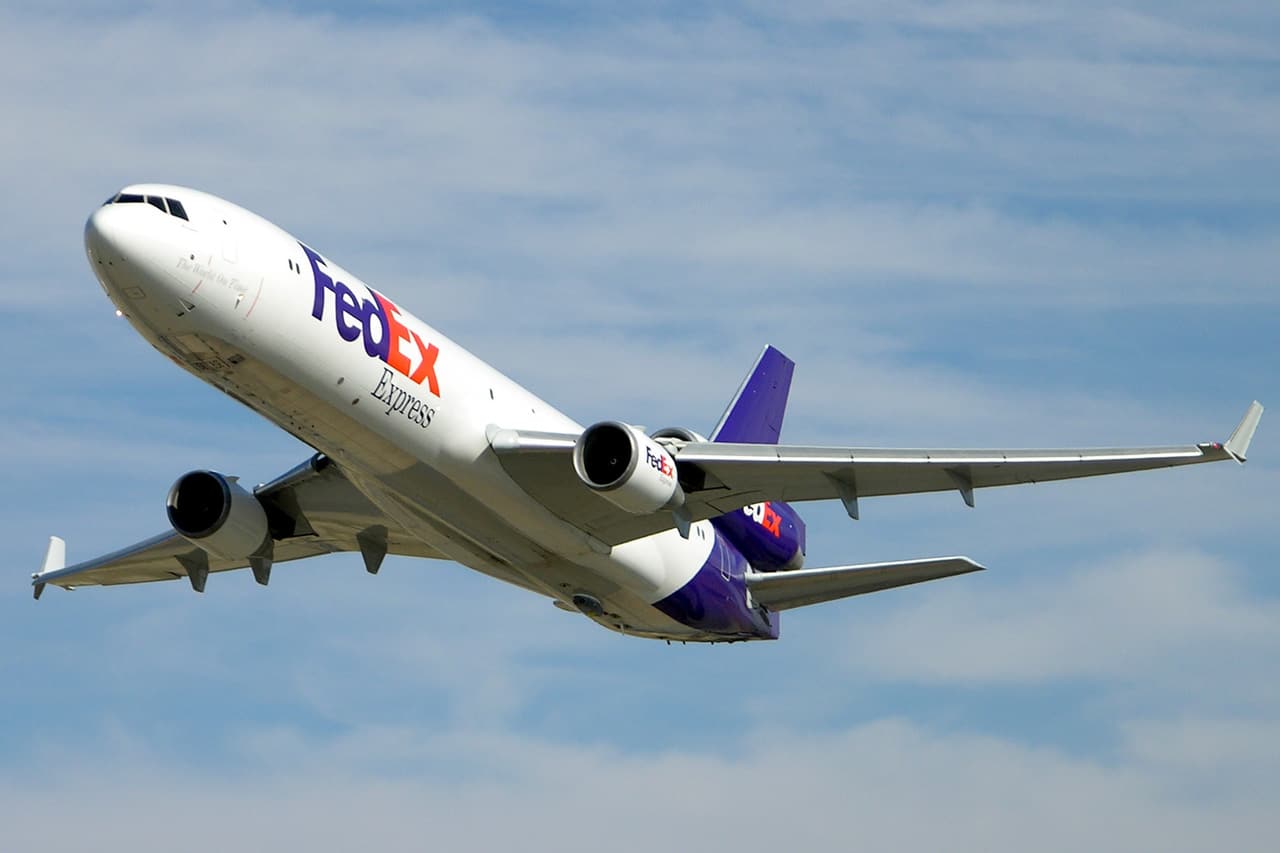


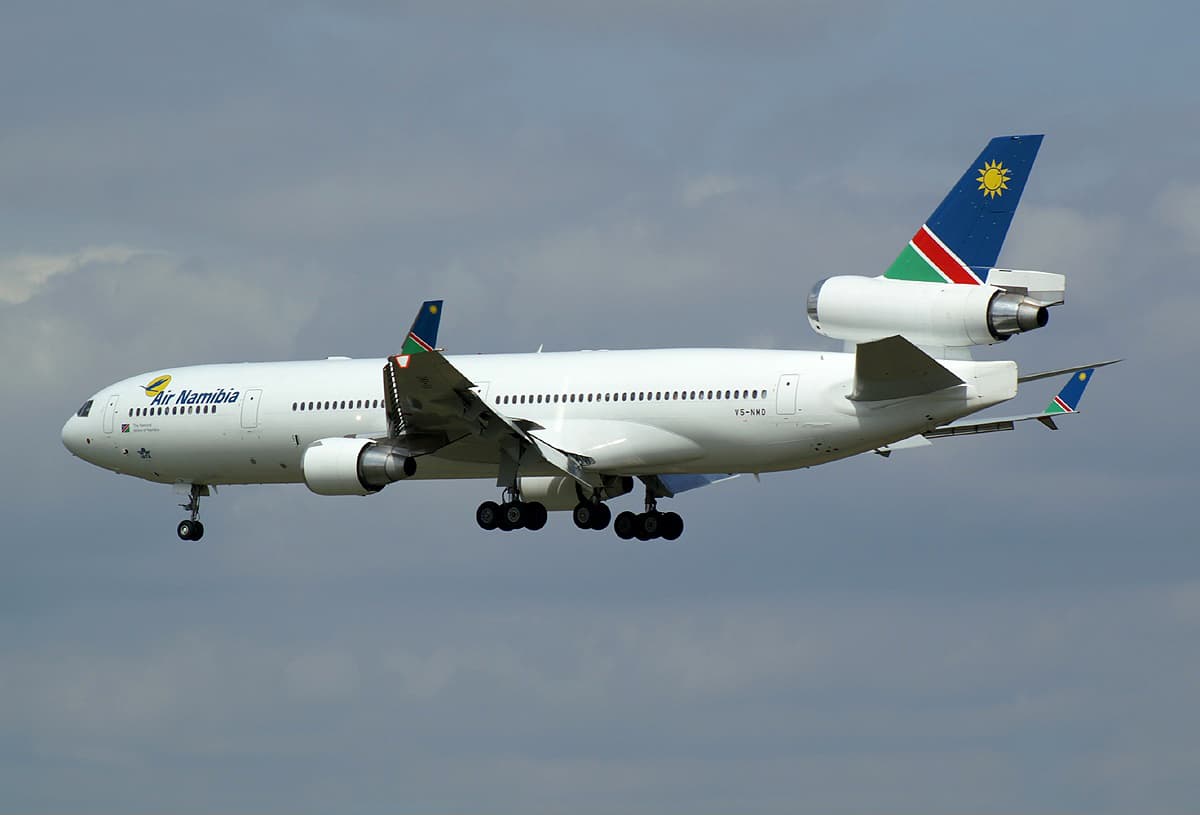
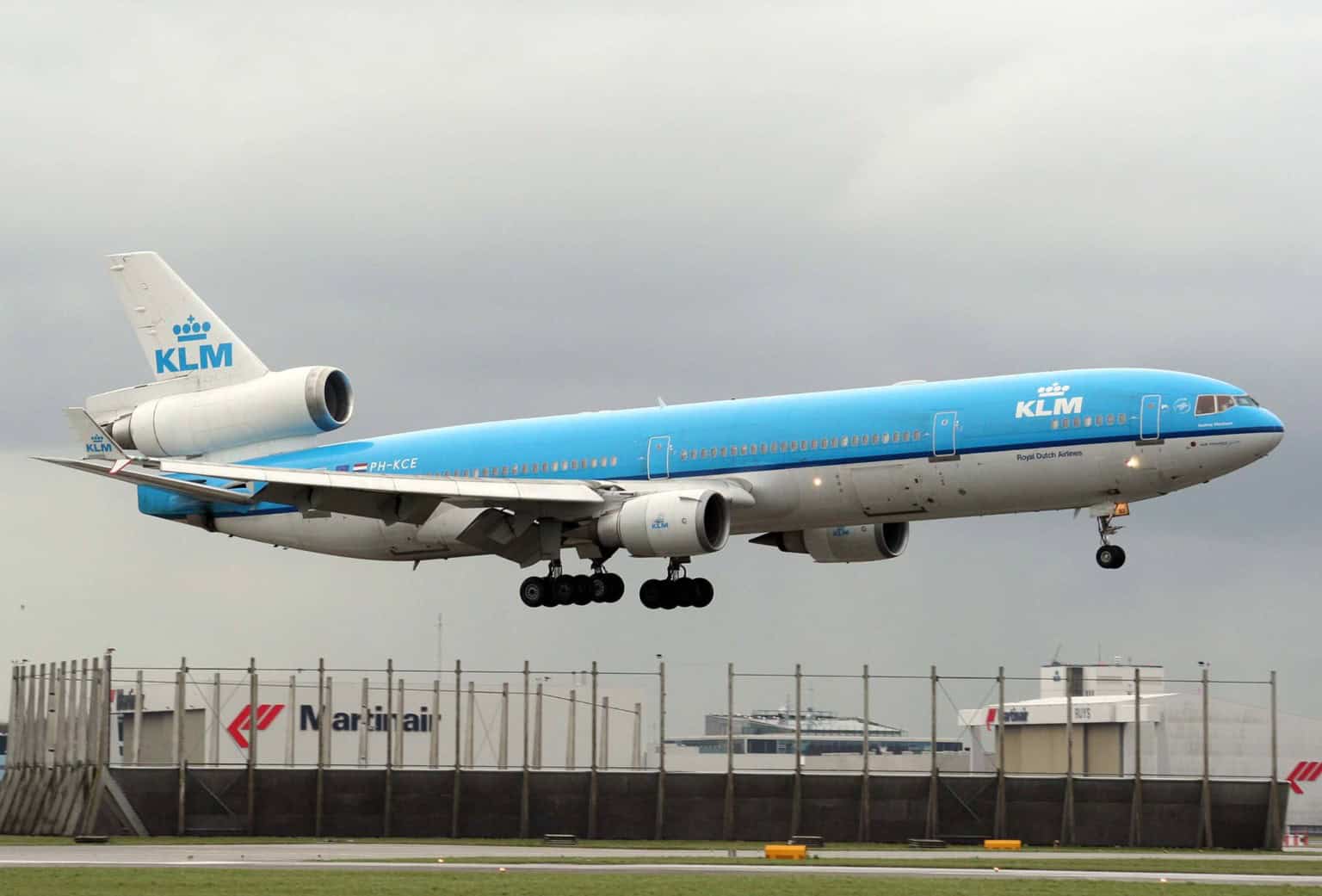


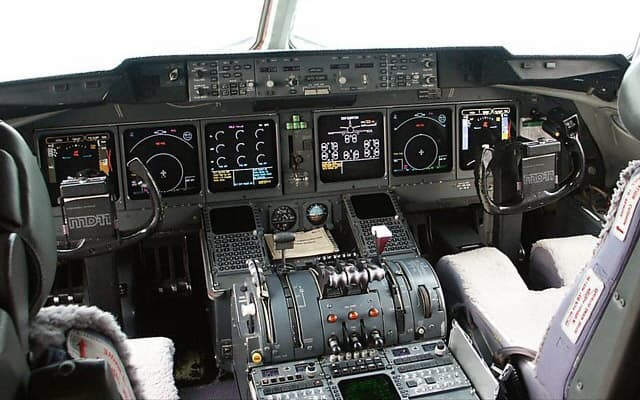
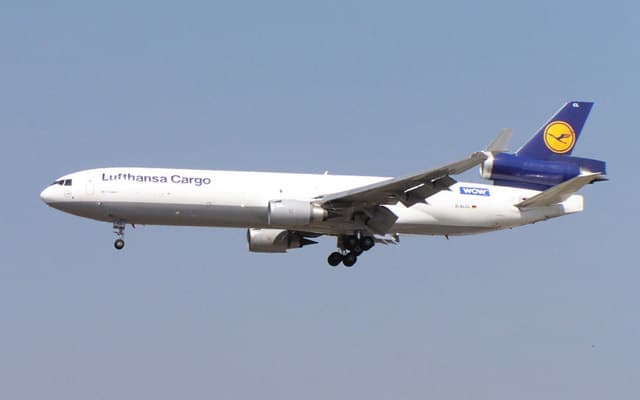
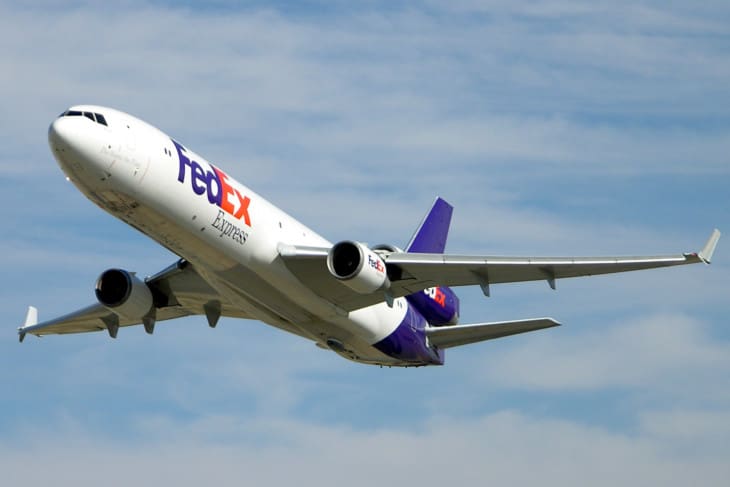
McDonnell Douglas launched the MD-11 on December 30, 1986, as a stretched and modernized DC-10. The first order book held 52 firm orders from ten airlines and two leasing companies.
The plan was simple. Keep the three-engine layout airlines already knew, add a longer fuselage, and cut fuel burn with new engines and winglets.
The first MD-11 flew on January 10, 1990. The FAA certified it that November, and Finnair, the launch customer, put it into service on December 20, 1990.
The MD-11 swapped the DC-10’s flight engineer for a two-pilot glass cockpit. Six CRT displays and Honeywell VIA 2000 computers did the work, on a flight deck shared with the Boeing 717.
The horizontal tail is about 30% smaller than the DC-10-30’s. A fuel tank in the tailplane shifts weight to keep the aircraft balanced, which is how the design gets away with less tail.
Engines came from either General Electric (CF6-80C2) or Pratt & Whitney (PW4000). Wikipedia credits the winglets with about 2.5% better fuel efficiency.
The MD-11 fell short of its advertised range and fuel-burn targets. American Airlines and Singapore Airlines were among the critics, and Singapore Airlines cancelled an order for 20 aircraft.
A Performance Improvement Program between 1990 and 1995 recovered some of the range, but not all of it.
Meanwhile the 767, 777 and A330 gained extended-range twinjet versions. Two engines cost less to run than three, so the MD-11 lost the argument it was built to win.
McDonnell Douglas took a pre-tax charge of $1.838 billion in 1995 related to the program. About 200 aircraft were built, and Boeing wound the program down after its 1997 merger with McDonnell Douglas.
By variant, Wikipedia counts 131 passenger MD-11s, 53 MD-11F freighters, 6 convertibles, 5 combis and 5 MD-11ERs.
The full specification table for the aircraft is on this page. Two items need context.
Range figures for the MD-11 vary by source. Published numbers differ between the standard aircraft and the extended-range MD-11ER, so quote the variant, not just the type.
The seat counts in the panel describe different cabin layouts, not one aircraft. An airline chose a single configuration for its fleet.
Finnair, Delta and KLM were among the passenger operators. KLM flew the last scheduled passenger MD-11 flight on October 26, 2014, from Montreal to Amsterdam.

Cargo airlines took over. The final aircraft were delivered to Lufthansa Cargo in early 2001, and Lufthansa Cargo retired its last MD-11 on October 17, 2021.
FedEx and UPS became the two big users, with a small number flown by Western Global.
The MD-11 lands faster than comparable widebodies, with approach speeds 10 to 20 knots higher, and pilot-induced oscillation on landing has been documented. Boeing revised the flight control software in the early 2000s at the FAA’s urging.

Wikipedia lists about 50 incidents including 11 hull losses as of November 2025. Four stand out:
FedEx Flight 14 burned after a hard landing at Newark on July 31, 1997. All five aboard survived.
Swissair Flight 111 crashed off Nova Scotia on September 2, 1998, killing all 229 aboard. The cause was an in-flight fire started by entertainment-system wiring, not a flaw in the MD-11’s flying qualities.
FedEx Flight 80 crashed on landing at Narita on March 23, 2009, killing both pilots.
UPS Flight 2976 is the one that reshaped the fleet.
On November 4, 2025, a UPS MD-11F lost its left engine and pylon during takeoff rotation at Louisville. The three crew and 12 people on the ground died, a toll that reached 15 when an injured man died on December 25, 2025.
The NTSB found fatigue cracks in the left pylon’s aft mount. Its January 2026 update described a fractured spherical bearing in that assembly.
The FAA issued an emergency airworthiness directive on November 8, 2025 that grounded MD-11s worldwide until they were inspected. UPS retired its entire MD-11 fleet. Reports put the grounding’s cost to FedEx at up to $175 million.
Yes. On May 11, 2026, the FAA lifted the grounding after approving Boeing’s return-to-service protocol, which requires operators to replace a structural component before the aircraft flies again.
FedEx flew its first MD-11 flights after the grounding on Sunday, May 10, 2026, from Memphis to Los Angeles and Memphis to Miami. FedEx has said it plans to keep the type until 2032.
UPS has retired its aircraft for good, and no airline operates the MD-11 on scheduled passenger service. This status reflects reports through May 2026, so check current news before relying on it.
Yes, as freighters. FedEx resumed MD-11 flights in May 2026 after the FAA lifted its grounding, and says it plans to fly the type until 2032. UPS retired its fleet.
Wikipedia counts about 50 incidents, including 11 hull losses, through November 2025. The most recent was UPS Flight 2976 at Louisville on November 4, 2025.
It was a capable long-range freighter but a commercial disappointment. It missed its range and fuel-burn targets, and twinjets took the passenger market.
FedEx and Western Global operate the freighter version. Reports through May 2026 show FedEx flying them again after the grounding.
KLM flew the last scheduled passenger flight on October 26, 2014, from Montreal to Amsterdam, with special flights on November 11, 2014.
Sources and references used for research and fact-checking.