Passenger Turbo Props
Bombardier Q300
ICAO: DH8C
The latest aviation news and stories sent to your inbox.
The Bombardier Q400, formerly Dash 8-400, was introduced in the late 1990s as a larger and faster turboprop. Designed to compete with regional jets on short routes, it combines speed with fuel efficiency. The aircraft remains in production under De Havilland Canada.
Live Fleet Activity (DH8D)
Fetching live data…
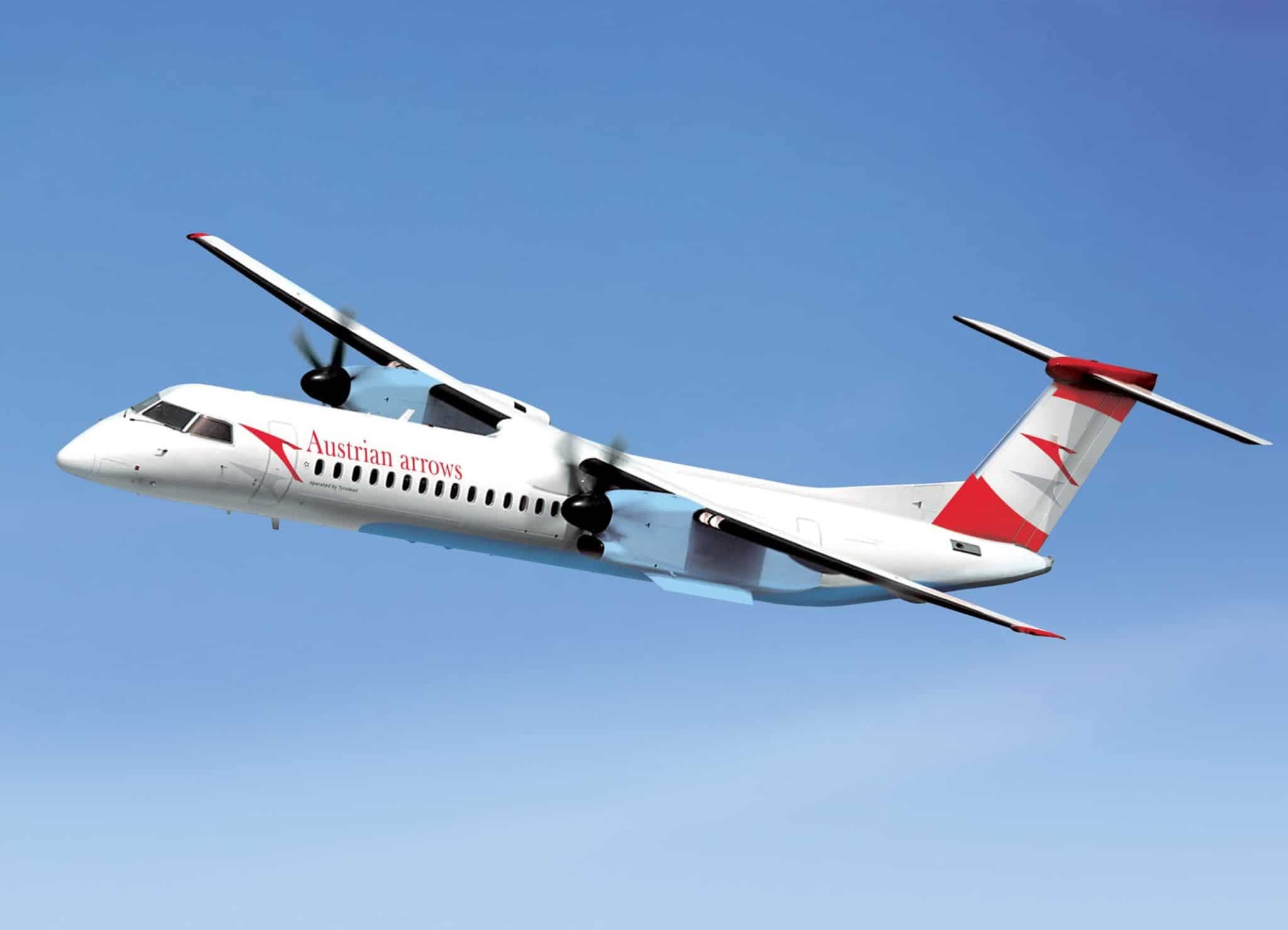

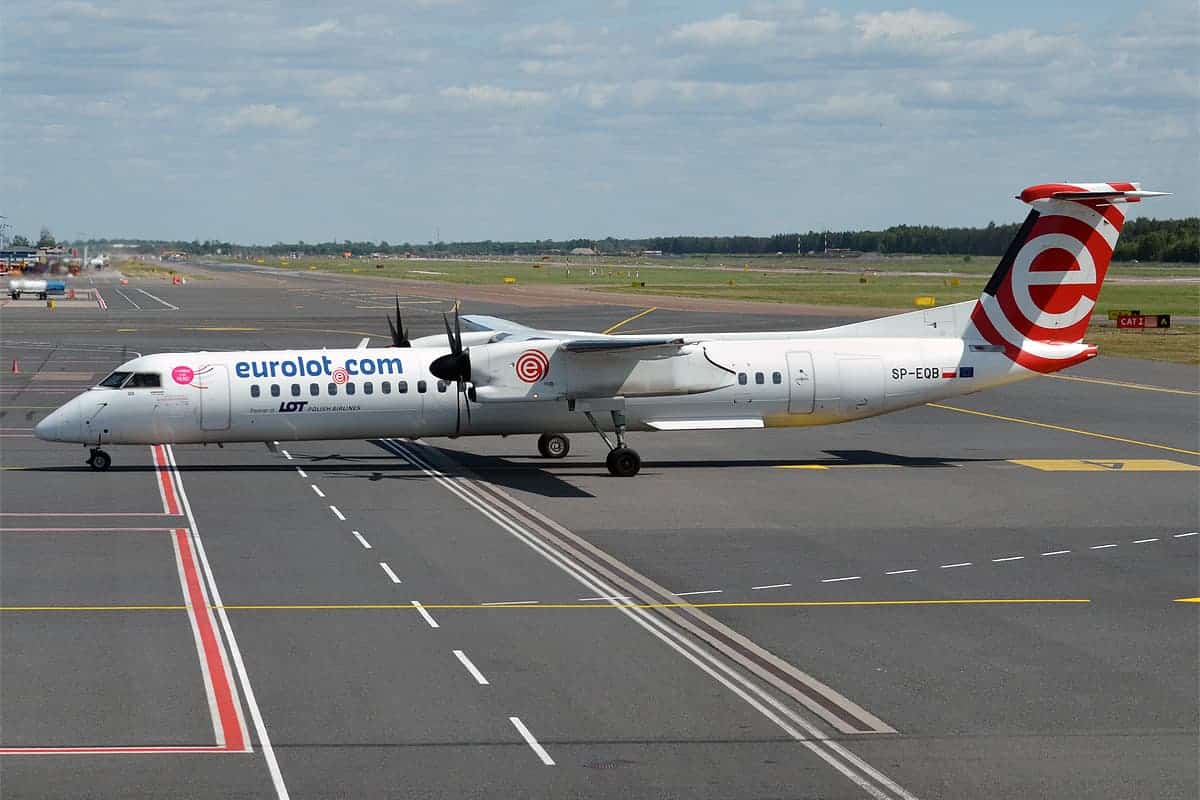
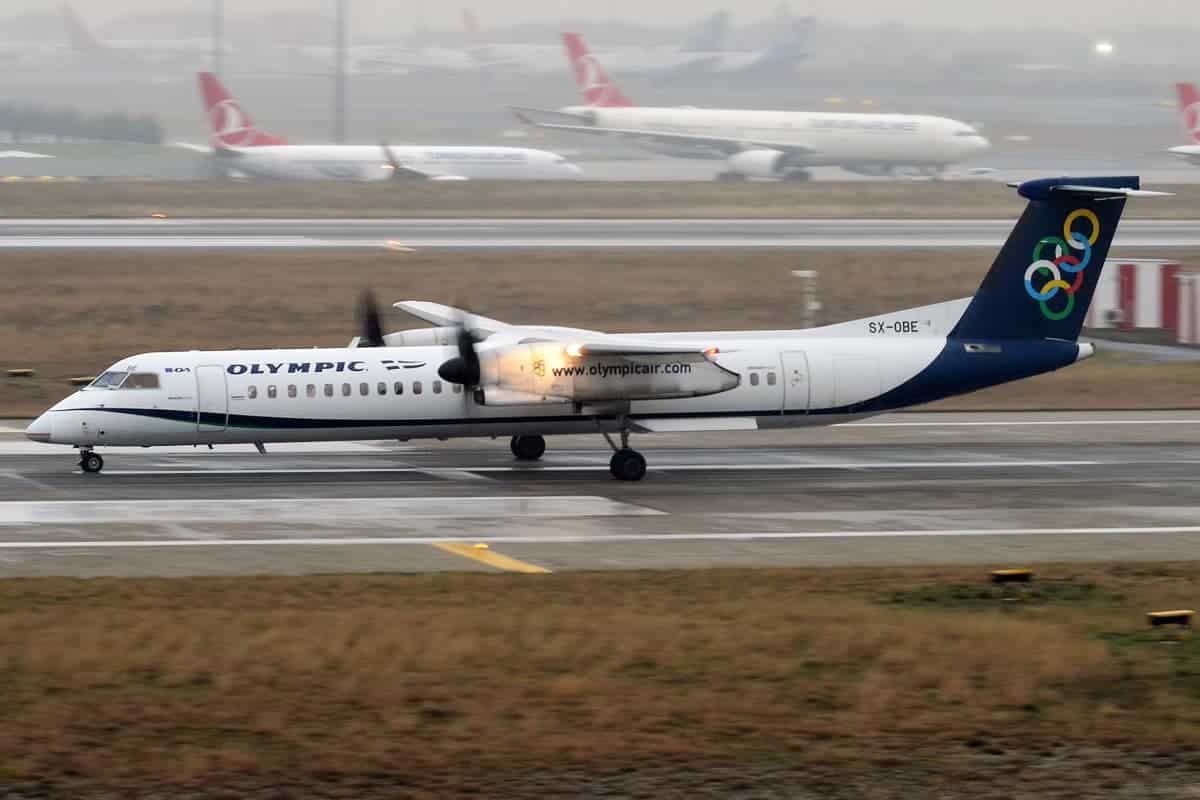


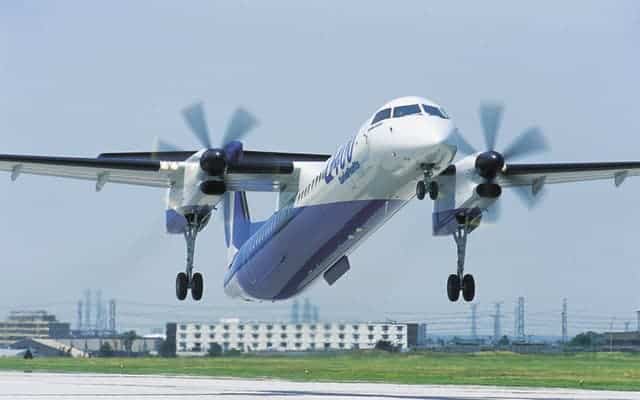
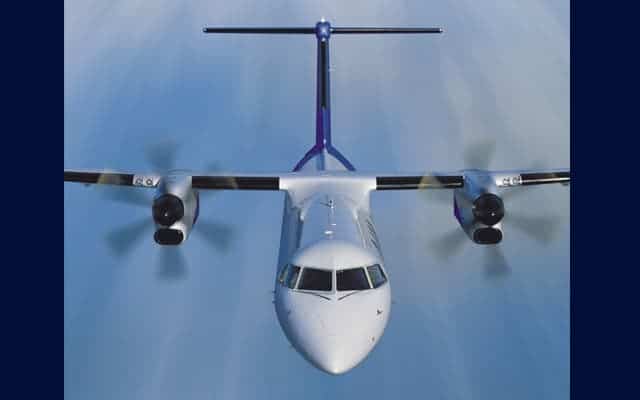
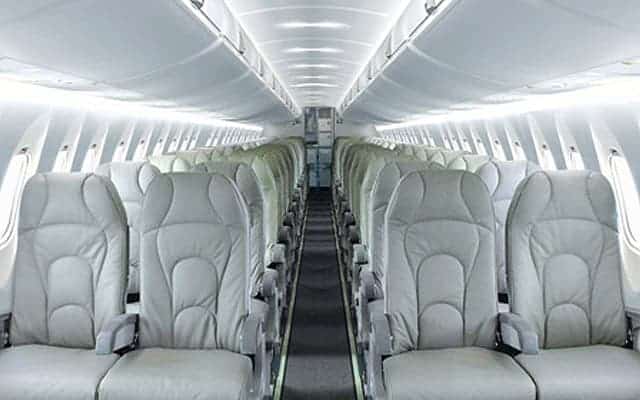

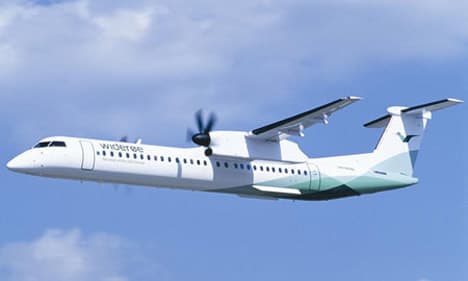
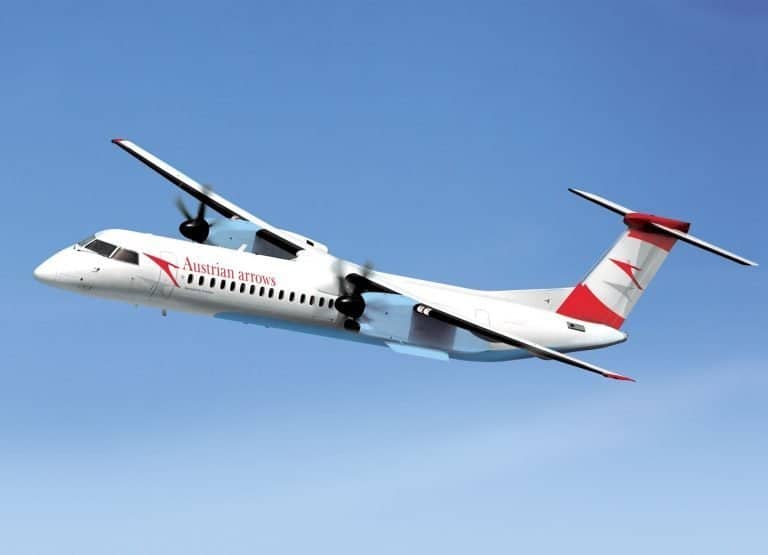
The Bombardier Q400, developed by de Havilland Canada and marketed for a time by Bombardier, emerged as the largest member of the Dash 8 family. The type was designed in the 1990s to offer higher speed and capacity than earlier Dash 8 variants while retaining turboprop efficiency on short regional routes. The prototype performed its first flight in 1998 and the type entered commercial service shortly thereafter. Production continued through a period of corporate transitions and the airliner has been produced under different corporate banners, including a return to the de Havilland Canada name in later years.
Design emphasized a high-speed turboprop configuration with a stretched fuselage, a high wing for ground clearance and efficient lift, and a pressurized cabin to match regional jet cabin comfort. The Q400 is powered by twin Pratt & Whitney Canada PW150A turboprop engines paired with six-blade composite propellers. Typical cruise speed is in the high 300s knots. The airframe was sized to carry a typical passenger complement in the high 60s to mid 70s depending on interior configuration. Maximum takeoff weight was increased over earlier Dash 8 variants to support the greater payload and higher cruise speeds while retaining short-field performance common to the Dash 8 line.
In service the Q400 served airlines seeking lower operating cost per seat on short routes where jet fuel burn and runway requirements are critical factors. Its combination of speed, capacity and turboprop efficiency positioned it as an alternative to small regional jets for many operators. Over time the type influenced regional fleet planning by reinforcing the viability of high-performance turboprops and by extending the operational life of the Dash 8 family. The Q400 remains notable for its role in sustaining turboprop usage in commercial regional aviation and for its continued production under de Havilland Canada.
The Q400 originated from a program to scale the established Dash 8 family toward higher capacity and greater trip speeds while retaining the fuel advantages of turboprop propulsion. Program managers sought to address market demand for regional equipment that could operate at jet-like block times on short sectors and provide increased seat counts without substantially larger airframes.
Prototype work advanced through aerodynamic refinement of a new wing and empennage and integration of higher-power turboprop engines. Flight test emphasized handling with the new propeller system and verification of noise and vibration mitigation measures intended to improve passenger comfort. Certification trials included extended structural and systems evaluation to validate the stretched airframe under regional airline usage profiles.
Production was organized to support multiple role adaptations, with assembly practices reflecting a mix of bonded composites and conventional aluminum structures. Supplier selection emphasized components with established service records to reduce fleet entry risk. Early production planning also incorporated maintenance access considerations to align with regional airline ground turnaround demands.
As the program moved into series manufacture the manufacturer planned service support networks and spares pools consistent with global regional operations. The production context included competition from small regional jets and incumbent turboprops, requiring cost targets for acquisition and maintenance to be competitive for airline customers seeking high utilization on short sectors.
The Q400 employs a cantilever high wing that places the engines and propellers well clear of ground obstacles, simplifying ramp operations. The wing uses a modern airfoil section optimized for cruise at higher turboprop speeds and for maintaining lift at lower approach speeds typical of short field operations. High-lift devices are integrated to preserve runway performance with heavier payloads.
Structurally the airframe combines conventional aluminum primary structure with selective composite fairings and control surfaces where weight and corrosion resistance provide benefit. The fuselage cross section supports a single-aisle cabin with ease of boarding for regional terminal facilities. Access panels and system runs are arranged to minimize line maintenance time and to facilitate component replacement in remote stations.
Noise and vibration control is a clear design focus. The aircraft incorporates an active noise and vibration suppression system that reduces cabin noise generated by the propellers and engines. Propeller design paired with nacelle acoustic treatment further reduces external and internal sound levels compared with older-generation turboprops.
The flightdeck integrates modern avionics to support commercial regional operations and to reduce pilot workload on short sectors. Cockpit ergonomics prioritize rapid turnaround and crew change. Systems architecture allows for modular avionics upgrades and line fit options to meet varied airline standards without major structural modification.
The Q400 is optimized for regional missions characterized by frequent cycles and short stage lengths. Its propulsion and aerodynamic design aim to deliver relatively rapid cruise segments and steep climb capability to meet airline schedules and to reduce sector times. Fuel economy per seat is a central performance metric guiding operational employment.
Short-field takeoff and landing capability is an important operational attribute. The combination of wing design and high-power turboprops enables operations from shorter runways than many regional jets while carrying a comparable number of passengers. This capability opens regional airports with limited infrastructure to scheduled service at commercial trip times.
Payload flexibility supports mixed mission profiles. Operators can configure the cabin for higher-density commuter seating or for a more comfortable layout with fewer seats and greater baggage capacity. Range and endurance allow typical regional routings with minimal intermediate stops, while payload-range tradeoffs are used to tailor performance to particular network requirements.
Operational limitations include sensitivity of propeller-driven aircraft to certain weather regimes and the need to manage propeller noise restrictions at some airports. Maintenance of the propeller and gearbox systems is a distinct element of the type rating and fleet logistics, and airlines plan dispatch reliability and spares provisioning accordingly.
The basic Q400 airframe forms the basis for multiple role adaptations produced to meet airline and special mission needs. Passenger configurations range from standard commuter layouts to premium regional arrangements. A combi configuration was developed to carry mixed passenger and freight loads on a single main deck.
Freighter conversions and factory freighter versions allow operators to exploit the type for express cargo markets that require frequent flights between regional airports. Specialized mission conversions exist for government and utility tasks where the platform supports observational equipment or mission-specific systems without major structural change.
A corporate or executive interior variant has been applied to the basic airframe for use as a business transport. These adaptations retain the core performance characteristics while substituting luxury fittings and modified cabin systems to meet corporate transport requirements.
Airlines operating the Q400 typically use it for short-haul trunk routes, high-frequency commuter links, and thin long regional sectors where jet economics are unfavorable. The type has been selected by a range of carrier models, including regional affiliates of larger airlines, independent regional operators, and low cost carriers that deploy turboprops for specific network advantages.
Deployment patterns emphasize high daily utilization with multiple sectors per aircraft. Turnaround efficiencies and reliable short sector performance allow operators to schedule intensive rotations. Fleet support arrangements commonly include regional maintenance bases and exchangeable component pools to maintain high dispatch reliability.
Operators have reported that cabin noise reduction systems materially affect passenger perception relative to earlier turboprops, supporting broader acceptance among travelers on routes where block times approach those of small regional jets. Airlines adapt cabin layouts and service concepts to suit market expectations and to differentiate offerings on similar short-haul routes.
Commercial adoption in varied climates demonstrates the aircraft’s operational adaptability. The airframe platform supports operations into austere fields, island networks, and densely scheduled metropolitan routes where runway access and ground slot constraints shape fleet deployment decisions.
The Q400 exemplifies an approach to regional transport that balances higher cruise performance with turboprop efficiency and shorter field capability. Its engineering emphasis on cabin noise suppression influenced operator expectations for passenger comfort on turboprop types. Program experience informed later maintenance and support practices for high-cycle commuter aircraft.
The aircraft’s role in network planning validated use cases where greater speed without jet fuel penalties improves route economics. Lessons from integrating higher-power turboprops into a stretched regional airframe contributed to industry understanding of tradeoffs between speed, capacity, and lifecycle maintenance.
Technology elements such as active vibration suppression and modular systems architecture became reference points for subsequent regional platform development and retrofit programs. The operational record provided a data set for airlines to evaluate long term costs and deployment strategies for modern turboprops versus small regional jets.