

Table of Contents
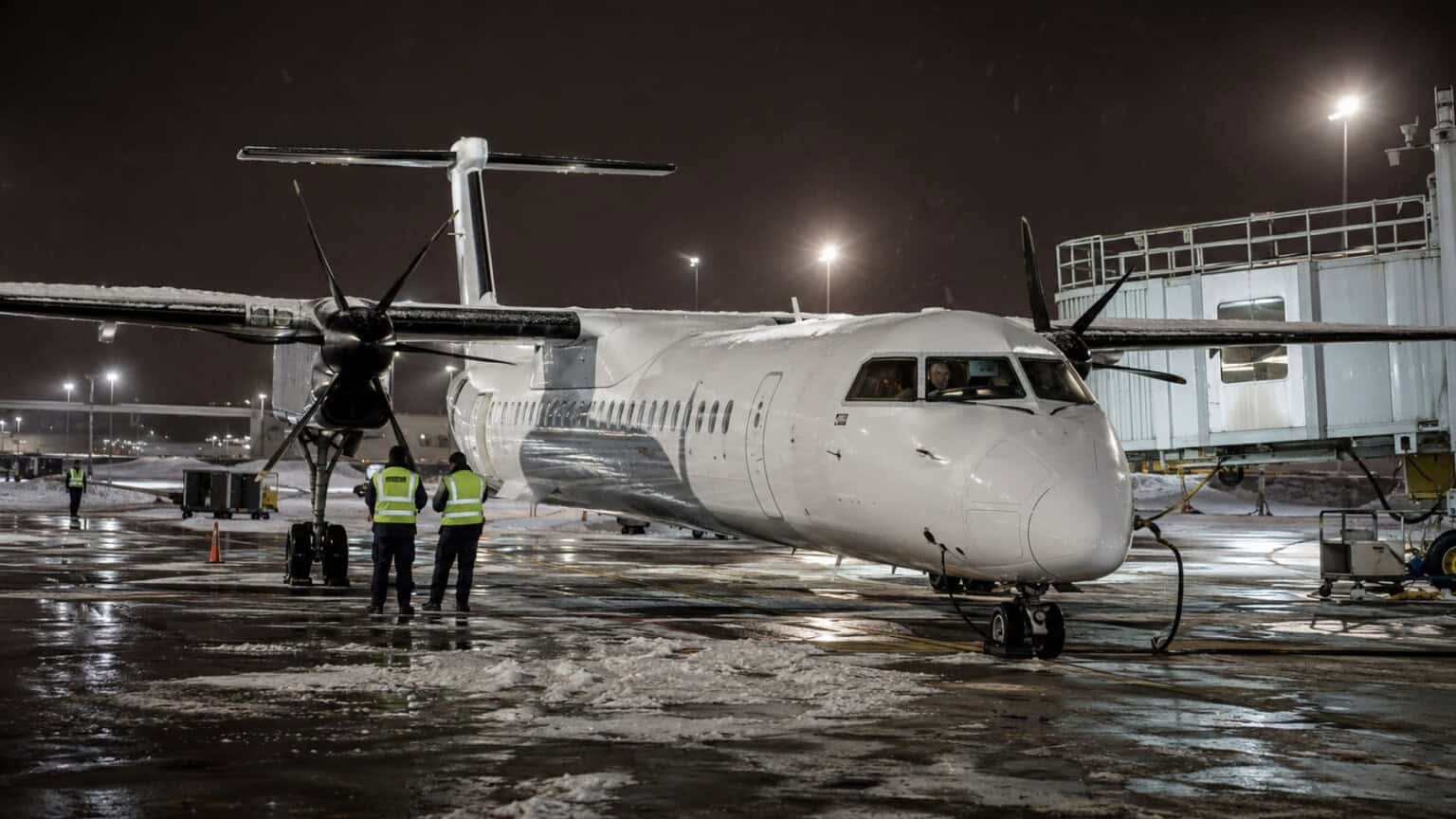
Continental Connection Flight 3407 departed Newark Liberty International Airport late on the evening of February 12, 2009, already two hours behind schedule. The Bombardier Q400 turboprop, operated by Colgan Air on behalf of Continental Airlines, carried 45 passengers and 4 crew members on a routine 53-minute flight to Buffalo Niagara International Airport. At the controls were Captain Marvin Renslow and First Officer Rebecca Shaw. Neither had slept in a conventional bed the night before. Renslow had flown in from his home in Tampa, Florida, and spent the night in the crew lounge at Newark. Shaw had taken an overnight cargo flight from Seattle, arriving at Newark just in time for her shift. Both pilots were fatigued before the aircraft left the gate.
The approach to Buffalo was flown in darkness and icing conditions. As the Q400 descended toward the instrument landing system approach for Runway 23, the crew slowed the aircraft using the landing gear and reduced thrust. Neither pilot noticed the airspeed continuing to decay below the reference speed required in icing. At 10:16 PM local time, with the aircraft at approximately 2,300 feet, the stick shaker activated: the forceful, rattling warning on the control column that signals an impending aerodynamic stall. On the Q400, the correct recovery is immediate and specific: push forward on the control column to lower the nose, and advance the power levers to maximum. Captain Renslow did the opposite. He pulled back on the control column, raising the nose further into the stall. The autopilot had already disconnected. First Officer Shaw mirrored the captain’s input briefly before pushing forward, but the combined effect was catastrophic. The stick pusher activated automatically, forcing the nose down, but Renslow overcame it with back pressure. Twenty-seven seconds after the stick shaker first sounded, the Q400 rolled inverted and struck a house at 6038 Long Street in Clarence Center, New York, approximately 5 nautical miles northeast of the runway.
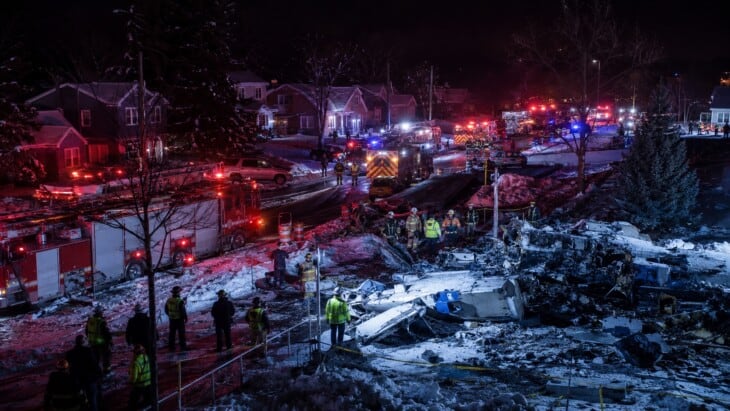
All 49 people on board were killed. One person inside the house also died. The crash was the deadliest aviation accident on U.S. soil since 2001, and it destroyed a house and ignited a fire that burned through the night. Flight 3407 was a regional commuter flight, the kind that departs from hundreds of airports across the country every evening. What the NTSB investigation uncovered about the crew behind the controls, and the regional airline system that put them there, would produce the most significant overhaul of U.S. airline pilot qualifications in a generation.
What the NTSB found: training failures, fatigue, and 27 seconds
The NTSB investigation, documented in report NTSB/AAR-10/01 and adopted on February 2, 2010, revealed a crew whose qualifications and readiness fell far short of what passengers had any reason to expect. Captain Renslow had accumulated 3,379 total flight hours, with just 111 hours as a captain on the Q400. Before joining Colgan Air, he had failed multiple FAA practical examinations at other operators, including at least three check rides in previous type training programs. Colgan Air never discovered this history because it did not access his full federal record: Renslow had disclosed only one failure on his employment application, and the airline accepted it at face value. Even after joining Colgan, his training records showed continued weaknesses in basic aircraft control and instrument flying during annual proficiency checks. The NTSB found his training history to be a contributing factor in the accident.
First Officer Shaw had 2,244 total flight hours and a clean training record. But she had flown overnight from Seattle to Newark on a cargo flight, arriving just in time for her shift. She mentioned feeling unwell during the approach. By the time Flight 3407 departed, both pilots had been awake for a significant portion of the preceding 24 hours. Colgan Air’s scheduling policies permitted pilots based in Newark to commute from distant home cities using non-revenue travel before reporting for duty, and the company had no effective mechanism for verifying whether crew members had obtained adequate rest. The NTSB found that fatigue was present in both pilots and likely affected their performance during the approach, even though the board did not include fatigue in its formal probable cause finding.
What the flight data recorder showed
The flight data recorder captured the complete 27-second accident sequence. As the aircraft descended toward Buffalo on the instrument approach, the airspeed decayed unnoticed to 131 knots, below the icing reference speed. At 10:16:27 PM, the stick shaker activated. Captain Renslow responded by pulling back on the control column, raising the nose further. Eight seconds later, the stick pusher fired automatically in an attempt to force the nose down and recover the stall. Renslow overpowered it. The aircraft struck the ground at 10:16:54 PM. Source: NTSB/AAR-10/01.
The NTSB identified the probable cause of the accident as “the captain’s inappropriate response to the activation of the stick shaker, which led to an aerodynamic stall from which the airplane did not recover.” Contributing factors included the crew’s failure to monitor airspeed in relation to the rising low-speed cue during the approach, their failure to maintain sterile cockpit procedures (both pilots had been discussing personal matters during the descent, violating the federal rule requiring minimal non-essential communication below 10,000 feet), the captain’s failure to effectively manage the flight, and Colgan Air’s inadequate procedures for airspeed selection and management during approaches in icing conditions.
The investigation also exposed a systemic problem in how stall recovery training was conducted across the U.S. regional airline industry. Until 2008, FAA evaluation guidelines graded pilots on minimal altitude loss during stall recovery maneuvers in the simulator. This created a counterproductive outcome: pilots learned to avoid pushing the nose down firmly, because doing so cost them altitude and, under the old standard, could cost them a passing grade. The result was that many airline pilots had been trained to instinctively resist the primary technique for recovering from a real stall. The FAA had revised its guidance to “minimal altitude loss” in 2008, several months before Renslow completed his Q400 upgrade training, but the NTSB found that some Colgan Air instructors were still applying the old standard. Renslow may have been trained to do exactly the wrong thing in exactly the situation he faced.
Feb 2009
Flight 3407 crashes in Clarence Center, New York. All 49 on board and one person on the ground are killed. The crash is the deadliest U.S. commercial aviation accident since 2001.
Feb 2010
NTSB final report adopted. NTSB/AAR-10/01 identifies the probable cause and issues 25 safety recommendations targeting pilot qualifications, stall training, fatigue rules, and pilot records.
Aug 2010
Airline Safety and FAA Extension Act signed into law. Congress mandates new pilot qualification standards, science-based fatigue regulations, and a strengthened national pilot records system.
Aug 2013
1,500-hour ATP rule takes effect. First officers at U.S. Part 121 airlines must now hold an Airline Transport Pilot certificate, requiring a minimum of 1,500 flight hours under 14 CFR 61.160.
Jan 2014
FAR Part 117 rest rules take effect. Science-based fatigue regulations replace decades-old scheduling rules, mandating a 10-hour minimum rest period between duty periods and a minimum 8-hour sleep opportunity within that period.
How Flight 3407 produced the 1,500-hour rule and FAR Part 117
The Airline Safety and Federal Aviation Administration Extension Act of 2010, signed by President Obama on August 1, 2010, was the direct legislative response to Flight 3407. Families of the victims advocated for the legislation, testifying before Congress and working with safety advocates to ensure the specific failures identified by the NTSB were addressed in law. The act mandated three categories of change: stricter pilot qualification standards, science-based fatigue rules, and a national pilot records system that airlines would be required to use before hiring any pilot.
The most consequential change was the 1,500-hour rule. Before 2013, a first officer at a U.S. regional airline was required to hold only a commercial pilot certificate, obtainable with as few as 250 flight hours. That was the minimum Shaw held when she sat in the right seat of Flight 3407. The 2010 act directed the FAA to require all first officers at Part 121 air carriers to hold an Airline Transport Pilot certificate, the highest pilot credential the FAA issues. The implementing rule, codified in 14 CFR Section 61.160 and effective August 1, 2013, requires a minimum of 1,500 flight hours to qualify for an unrestricted ATP certificate. Reduced pathways exist for graduates of aviation degree programs (1,000 or 1,250 hours) and military pilots (750 hours). For a first officer on a regional airline today, the minimum flight experience requirement is six times what it was the night Flight 3407 departed Newark.
The fatigue rules that followed were equally significant. Before 2014, pilot rest requirements at U.S. airlines were governed by regulations that dated largely from the 1950s, written before modern sleep science existed and before overnight commuting by low-paid regional pilots became common practice. The new Part 117 regulations, effective January 4, 2014, established science-based requirements for the first time. They mandate a minimum 10-hour rest period between duty periods (up from 8 hours), a minimum 8-hour sleep opportunity within that rest period, and cumulative limits on flight hours over rolling 28-day periods. They also establish the concept of fitness for duty: pilots are required to report unfit for a flight if they have not obtained adequate rest, and airlines are required to maintain a fatigue risk management system. The overnight commutes that left both Renslow and Shaw exhausted before their final flight would not comply with these requirements.
The act also targeted the training failures the NTSB had identified. New stall recognition and recovery training requirements were phased in for Part 121 crews, including a requirement for upset prevention and recovery training in simulators capable of representing actual stall behavior, not just the approach-to-stall maneuvers that had reinforced the wrong instinct in Renslow’s training. The act also directed the FAA to create a comprehensive Pilot Records Database, requiring airlines to query a pilot’s full training history, check ride failures, and employment record before hiring. The old Pilot Records Improvement Act system had relied on voluntary reporting and had gaps that allowed Renslow’s check ride failures to remain hidden from Colgan Air. The new Pilot Records Database, made mandatory for all Part 121 operators, became fully operational in 2021.
What changed because of this accident
The Airline Safety and FAA Extension Act of 2010 required first officers at U.S. Part 121 airlines to hold an Airline Transport Pilot certificate, raising the minimum qualification from 250 hours (commercial certificate) to 1,500 flight hours (14 CFR 61.160, effective August 2013). FAR Part 117, effective January 2014, replaced decades-old rest rules with science-based fatigue regulations, including mandatory 10-hour rest periods and fitness-for-duty requirements. New stall recognition and recovery training standards for Part 121 crews were introduced in stages through 2019. The FAA’s Pilot Records Database, requiring airlines to check a pilot’s full training and employment history before hiring, became fully operational in 2021.
Colgan Air Flight 3407 exposed not a single point of failure but a system of accumulated deficiencies: a captain whose check ride history was invisible to his employer, a first officer reporting for duty after a cross-country overnight commute, stall training that had reinforced the wrong instinct for years, scheduling rules that treated a pilot’s rest as the pilot’s own problem, and an industry culture in regional aviation where low pay and high costs pushed crews to commute from distant cities and report for duty without adequate sleep. Each of these failures had a direct, named remedy in the regulations that followed. The accident prompted more legislative action than any U.S. aviation accident since ValuJet 592, and the rules it generated remain in force today.
Aviation improves by naming what went wrong and making it impossible to repeat. The crew of United Airlines Flight 232 demonstrated what a fully qualified, well-rested crew could achieve under conditions with no precedent and no checklist. Flight 3407 showed what could happen when undetected deficiencies were allowed to accumulate in the cockpit. Together with the story of Tenerife 1977, which first established that the power gap between a captain and a first officer could be fatal, Flight 3407 forms part of aviation’s ongoing effort to understand who belongs in the cockpit and what it takes to perform reliably under pressure. This series continues at The Flights That Changed Aviation.
FAQ
Sources and references used for research and fact-checking.
- Loss of Control on Approach, Colgan Air, Inc., Operating as Continental Connection Flight 3407, NTSB/AAR-10/01 - National Transportation Safety Board
- Airline Safety and Federal Aviation Administration Extension Act of 2010 - U.S. Congress
- 14 CFR Part 117: Flight and Duty Limitations and Rest Requirements: Flightcrew Members - Federal Aviation Administration
- 14 CFR Section 61.160: Aeronautical experience, airplane category restricted privileges - Federal Aviation Administration
- How the 1500-Hour Rule Transformed Airline Safety - Air Line Pilots Association (ALPA)
- FAA Boosts Aviation Safety with New Pilot Qualification Standards - ATC Network
- Colgan Air Flight 3407 - Wikipedia
Get the Newsletter
The latest aviation news and stories sent to your inbox.
About the Author

Tim is the owner and lead editor of AeroCorner since 2019, overseeing aviation content covering aircraft, airlines, airports, and the broader aviation industry. Through years of researching, writing, editing, and publishing aviation-focused content, he has developed extensive practical knowledge of commercial aviation and air travel. Based in Asia and a frequent traveler himself, Tim also brings firsthand passenger experience to AeroCorner’s coverage. Outside of publishing, he has also explored aviation firsthand through hands-on flight training in New Zealand.