

Table of Contents
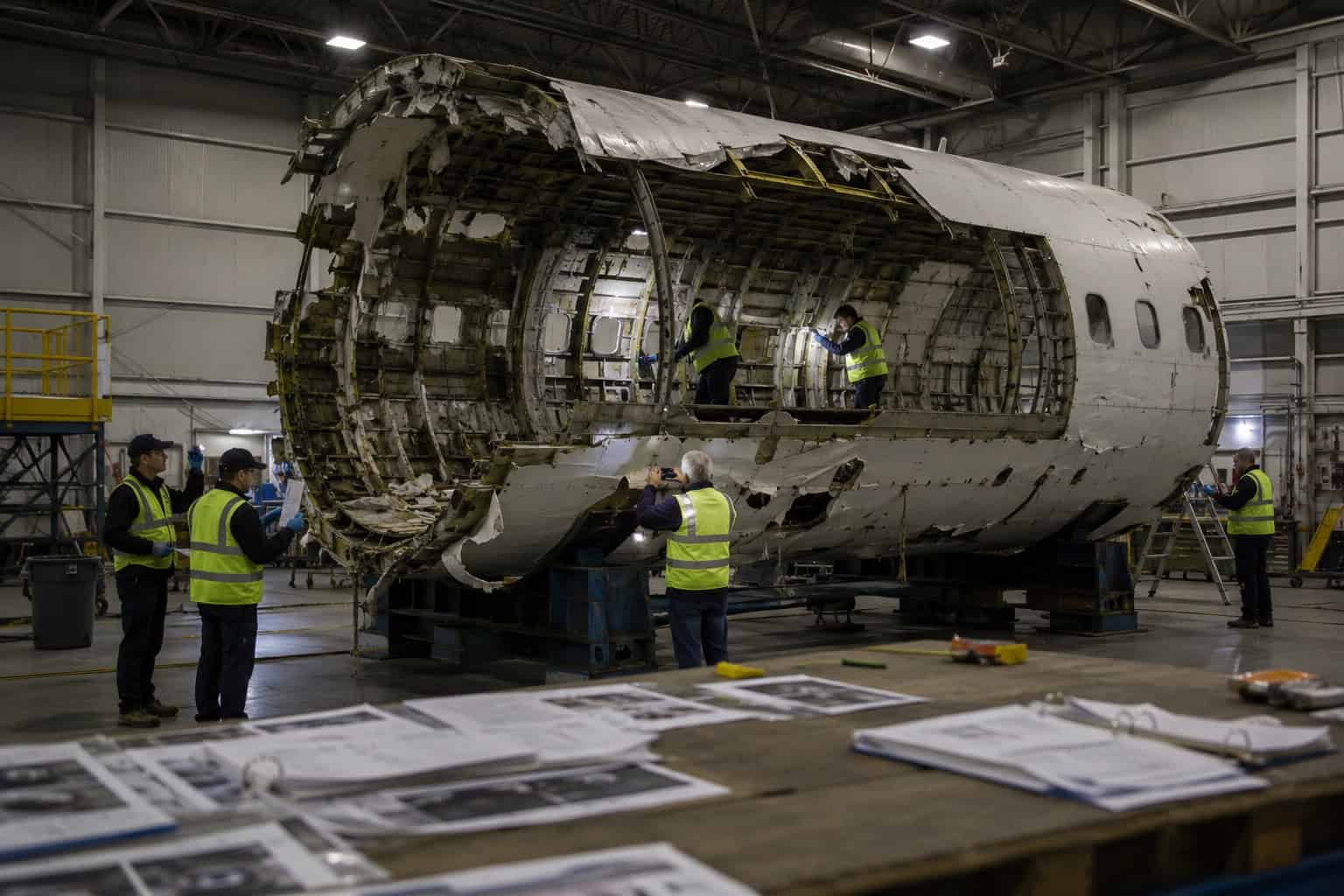
Commercial aviation is the safest form of long-distance travel in the history of transportation. That fact is not inevitable, and it is not accidental. It is the result of generations of accident investigators, engineers, and regulators who examined failures with methodical precision and then changed the rules. Every time something went wrong and people died, the system looked at why, documented what it found, and made flying safer. The rules that protect every passenger on every flight today are not abstract: they came from somewhere specific.
Most passengers know the statistics. The odds of dying in a commercial airline accident are extraordinarily small, and they have been declining steadily for decades. What fewer people know is where any particular rule originated. The requirement that all airline pilots now practice high-altitude stall recovery in a simulator exists because an Air France A330 fell into the Atlantic and 228 people died.
The mandate that a Boeing 737 MAX pilot must complete full simulator training before flying the type exists because a software system called MCAS was involved in two crashes that killed 346 people. The inspection standard that defines when a jetliner is too old to fly regardless of what its maintenance record shows exists because the roof of a Boeing 737 tore away over Hawaii in 1988. The rules are not bureaucratic abstractions. They are answers to specific questions that specific accidents forced aviation to ask. This series is about where those answers came from.
What this series covers
Five landmark accidents and incidents, each chosen because it produced a specific, traceable change to aviation safety. Written for curious passengers and aviation enthusiasts, not accident investigators.
Why accidents made aviation safe
Aviation safety is built around a system that is painful in its origins and remarkably effective in its results. When a commercial flight crashes, one or more national accident investigation agencies open a formal investigation. In the United States, that agency is the National Transportation Safety Board. In France, it is the BEA. In Indonesia, the KNKT. These investigators are not prosecutors: their purpose is to determine the cause of an accident, not to assign blame. Their findings are published in final reports that include safety recommendations, specific written requests to regulators, manufacturers, airlines, and training organizations to change what they do.
Those recommendations become Airworthiness Directives, changes to the Federal Aviation Regulations, amendments to ICAO standards, or new requirements in airline training programs. The feedback loop is slow: a major investigation can take two years or more to produce a final report, and regulatory rulemaking can take years beyond that. But the loop closes. The changes are specific and verifiable. For almost every rule, technology, or training requirement in commercial aviation today, there is an event in the safety record that prompted it. This series covers five of the most significant.
This is not a series about tragedies or disasters. It is a series about learning. Every accident on this list made flying safer. The investigations produced rules that protect passengers who have never heard of the accidents that created them. Understanding those rules, and the failures they came from, is the best argument that aviation has made for its own safety record: the system does not repeat its worst mistakes, because it has spent decades building a method for making sure it cannot.
What this series covers
In April 1988, the roof of an Aloha Airlines Boeing 737 tore away at 24,000 feet over Hawaii, exposing the passenger cabin and killing one flight attendant. The aircraft had made nearly 90,000 pressurization cycles and had been considered airworthy. The investigation produced the concept of widespread fatigue damage, established the limits of the inspection methods then in use, and eventually produced a binding rule that defines a Limit of Validity for structural inspections, a point beyond which an aircraft cannot legally fly regardless of what its maintenance record shows. The full story is in The Roof Tore Off at 24,000 Feet: Aloha Airlines 243 and the Aging Aircraft Crisis.
In July 1989, United Airlines Flight 232 lost all hydraulic flight control over Iowa after an engine fan disk disintegrated and severed all three hydraulic lines. The crew, with the help of a DC-10 instructor who happened to be riding in the cabin, flew the aircraft using differential engine thrust and made an emergency landing at Sioux City. It cartwheeled on touchdown; 112 of the 296 people on board died and 184 survived, a survival rate the NTSB described as remarkable given total hydraulic failure. The investigation made Flight 232 the foundational case study in crew resource management training, and directly shaped the 1995 FAA mandate requiring CRM training for all Part 121 airline crews. The full story is in No Hydraulics, No Manual: How United 232 Rewrote Crew Training.
In June 2009, Air France Flight 447 disappeared over the equatorial Atlantic, killing all 228 people on board. The pitot tubes iced over at cruise altitude, causing the autopilot to disconnect. The crew, left to fly the aircraft manually in a situation they had not been trained to handle, placed the aircraft in a stall they did not identify. The investigation produced mandatory Upset Prevention and Recovery Training: a requirement, now embedded in both ICAO standards and FAA regulations, that all commercial airline pilots practice manual high-altitude flight and stall recovery in a simulator. The full story is in When the Pilots Stopped Flying the Plane: Air France 447 and the Automation Problem.
In January 2009, US Airways Flight 1549 struck a flock of Canada geese on departure from LaGuardia Airport and lost thrust in both engines. Captain Chesley Sullenberger ditched the Airbus A320 on the Hudson River in 208 seconds. All 155 people on board survived. The investigation found that the geese significantly exceeded the aircraft’s engine bird ingestion certification standard and that wildlife management at the airport had gaps the existing regulations did not address. The accident produced strengthened airport wildlife management requirements under Part 139 and, eventually, updated engine bird ingestion certification standards. The full story is in Miracle on the Hudson: What Sully’s Landing Actually Changed.
Between October 2018 and March 2019, two Boeing 737 MAX 8 aircraft crashed under nearly identical circumstances, killing 346 people in total. Both crashes were caused by MCAS, a flight control software system that activated based on a single faulty sensor and repeatedly pushed the nose down against the crew’s efforts. Investigations found that Boeing had understated the severity of a single-sensor failure in its safety analysis, had not disclosed MCAS to pilots in training materials, and that the FAA’s delegation of certification authority to Boeing engineers had been systematically abused. The crashes produced a redesigned MCAS, a mandatory reversal of the iPad-only training agreement, reforms to the FAA’s certification delegation program, and a shift in how international aviation regulators validate each other’s aircraft approvals. The full story is in 346 Lives and a Grounded Fleet: How the 737 MAX Crisis Remade Aircraft Certification.
Where to start
If you are new to this series, the Aloha Airlines 243 article is a natural starting point. The accident is vivid, the investigation findings are accessible without technical background, and the regulatory response is one of the clearest examples in the series of a specific, named rule that exists in aviation today because of what investigators found on that aircraft. It requires no prior knowledge of aviation to follow, and it sets up the series’ central argument: the rules exist because something went wrong, and the investigation refused to let it stay that way.
Every article in this series is the reason aviation has the safety record it does. The rules were not written in advance. They were written after the fact, by people who looked at what had happened and decided it could not be allowed to happen again. If you want to understand why flying is as safe as it is, this is the explanation. And if you want to understand how the airline system works before anything goes wrong, the How Airlines Actually Work series is a companion: it covers the operations, the planning, and the decisions that take place on every normal flight.
Get the Newsletter
The latest aviation news and stories sent to your inbox.
About the Author
Tim is the owner and lead editor of AeroCorner since 2019, overseeing aviation content covering aircraft, airlines, airports, and the broader aviation industry. Through years of researching, writing, editing, and publishing aviation-focused content, he has developed extensive practical knowledge of commercial aviation and air travel. Based in Asia and a frequent traveler himself, Tim also brings firsthand passenger experience to AeroCorner’s coverage. Outside of publishing, he has also explored aviation firsthand through hands-on flight training in New Zealand.