

Table of Contents
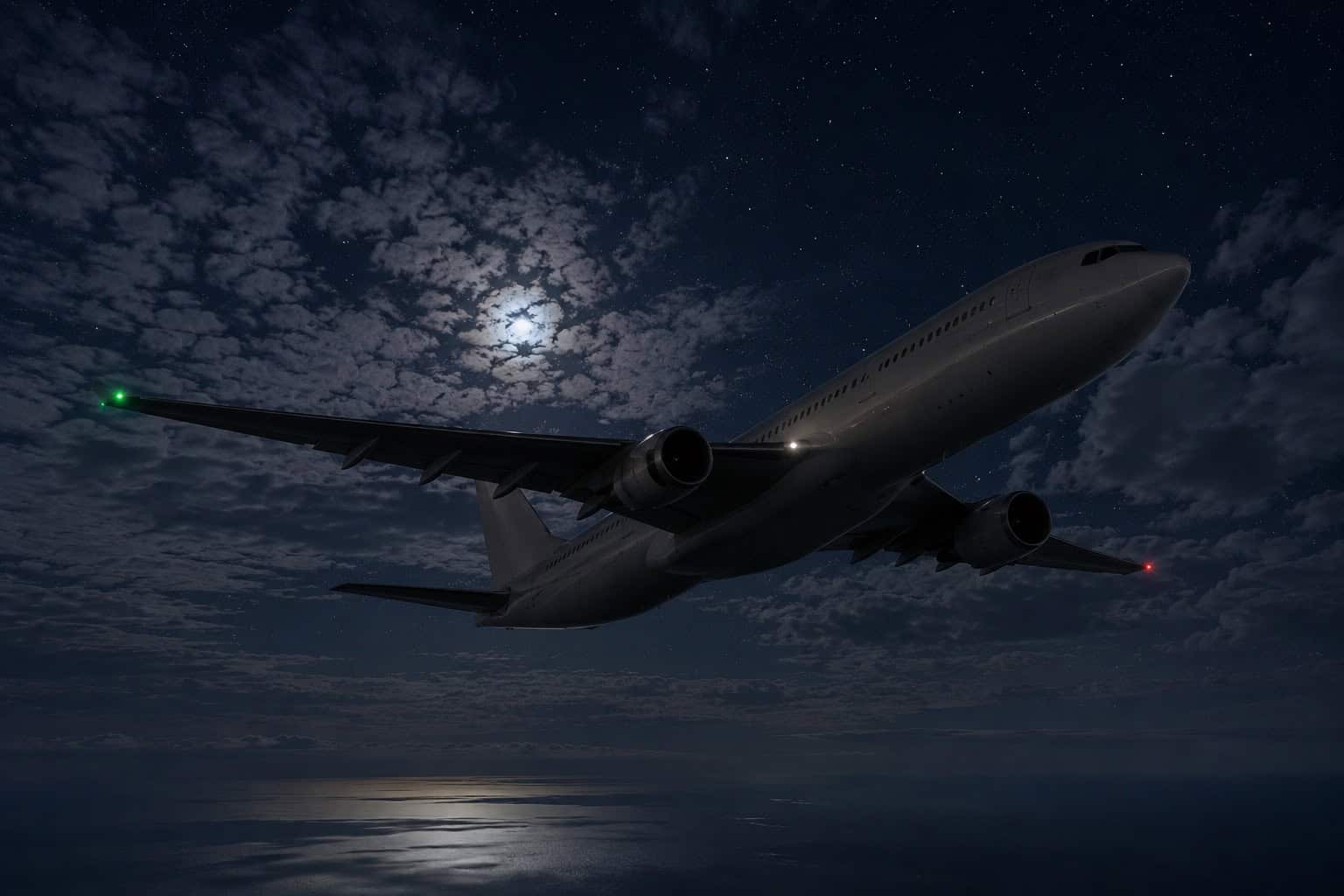
Air France Flight 447 departed Rio de Janeiro’s Guarulhos Airport at 22:29 local time on June 1, 2009, bound for Paris Charles de Gaulle with 216 passengers and 12 crew members on board. Three and a half hours into the flight, as the Airbus A330 crossed the equatorial Atlantic at 35,000 feet, the autopilot disconnected. The crew had 4 minutes and 23 seconds. None of them knew what was happening. None of them survived.
The aircraft was not in mechanical difficulty when the autopilot switched off. Both engines were running. The airframe was intact. What followed was a sequence of events shaped by faulty instruments, an unexpected situation, and training that did not prepare the crew for what they were facing. The investigation that followed produced requirements that changed how airlines around the world train their pilots, requirements that remain in force today.
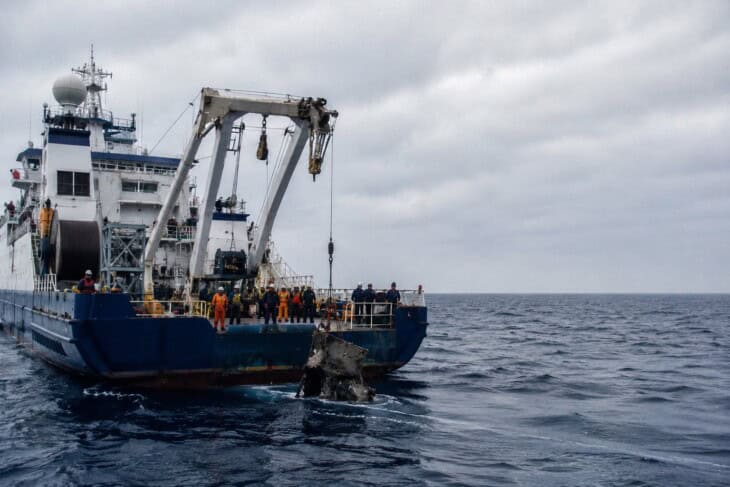
All 228 people on board were killed. Confirming that took two years. The wreckage was scattered across 3,900 meters of Atlantic seafloor, and the flight recorders were not recovered until May 2011. When investigators finally heard the cockpit voice recorder, they found a crew overwhelmed by a situation for which aviation had not yet written adequate rules.
How a frozen airspeed sensor set off a fatal chain of events
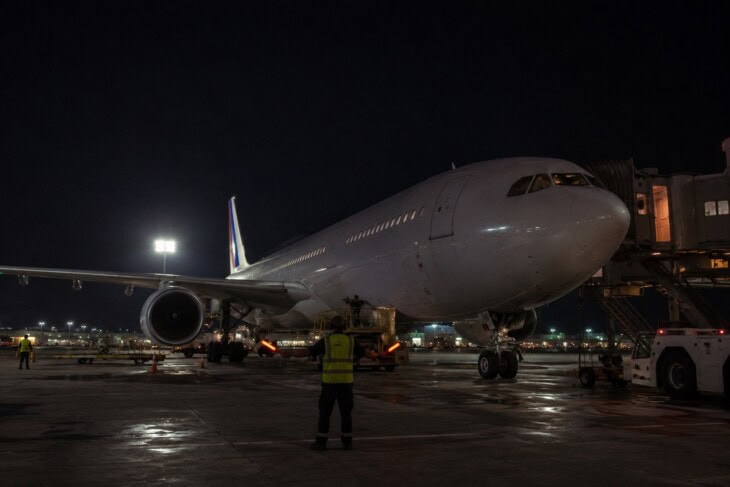
At 02:10:05 UTC on June 2, 2009, the pitot tubes on the forward fuselage of F-GZCP began to ice over. Pitot tubes measure airspeed by comparing the pressure of air entering the tube against the static pressure of the surrounding atmosphere. At high altitude over tropical waters, ice crystals can block the small opening in a pitot probe, causing its reading to freeze or fail entirely. When the three sensors on the A330 disagree, the autopilot disconnects, because the aircraft cannot safely fly itself with inconsistent speed data. This is the system working as designed. The problem was what happened next.
In the right seat was First Officer Pierre-Cédric Bonin, 32, designated as pilot flying for this portion of the cruise. Captain Marc Dubois, 55, had taken his scheduled rest break and was asleep in the crew rest area. First Officer David Robert, 37, occupied the captain’s seat as pilot monitoring. When the autopilot disconnected, it triggered a cascade of system alerts and mode changes. The fly-by-wire protections that normally prevent a pilot from flying outside the aircraft’s safe performance envelope downgraded from normal law to alternate law: the aircraft was now responsive to pilot inputs in ways it had not been a moment before, including inputs that could stall it. In the startling seconds that followed, Bonin pulled back on his sidestick. The nose rose. The aircraft, which had been in stable level flight, began to climb. Airspeed fell. The stall warning activated.
The stall warning on the A330 is unambiguous: a loud synthetic voice repeating “STALL STALL STALL” along with an aural chime, activating any time the aircraft’s angle of attack exceeds a threshold. It sounded 75 times during the 4-minute, 23-second descent. The crew did not recognize or correct the stall. Part of the reason was a characteristic of the fly-by-wire system: at very low indicated airspeed, the stall warning temporarily silenced, because the computer’s logic treated the low reading as an unreliable sensor rather than a real condition. When Bonin’s inputs briefly brought airspeed back into a range the system recognized, the warning resumed. The crew experienced a stall warning that switched on and off, which compounded the confusion. Captain Dubois returned to the cockpit at 02:11:43, 98 seconds after the autopilot had disconnected, to find the aircraft in an unrecoverable descent. The aircraft struck the ocean at approximately 10,900 feet per minute. The nose was pitched slightly up. Bonin had been pulling back on his sidestick for the entire 4-minute fall.
What the cockpit voice recorder found
Five seconds before impact, with the stall warning still sounding and the ocean seconds away, First Officer Bonin said: “But I’ve had the stick back the whole time!” It was the first clear statement, in 4 minutes of recorded audio, that he understood what his inputs had been doing. The BEA’s final report noted that the crew never identified the stall, and that Bonin’s continuous back pressure had maintained it from the first seconds of the upset to the last. The two sidesticks on the A330 are not mechanically linked: when both pilots apply inputs simultaneously, the system sums them. At one point, Robert pushed forward on his stick in an attempt to recover; Bonin continued pulling back. Neither pilot was aware the other was doing this.
The training mandates that came from Flight 447
The most immediate regulatory response was hardware. Airbus had already issued a service bulletin recommending that A330 and A340 operators replace the Thales C16195AA pitot probes with newer Goodrich or Thales BA probes, but this recommendation was not mandatory. Reports of unreliable airspeed at high altitude had been filed by multiple operators in the years before the accident, and the issue was documented in internal communications between Airbus, Air France, and European aviation authorities. EASA issued an Airworthiness Directive on August 31, 2009, making the replacement compulsory across the entire A330 and A340 fleet. The FAA followed with a matching directive on September 3, requiring completion within 120 days. Air France had already replaced all of its affected probes by August 7, 2009, less than two months after the accident. The pitot tube replacement was a binding mandate: not a recommendation, not a voluntary program, but a grounded-aircraft-or-fix-it directive.
The deeper change took longer and went further. The BEA’s final report, published July 5, 2012, concluded that the crew’s response to the autopilot disconnect was shaped by training that had not prepared them for manual flight at high altitude, for the cognitive load of an unexpected system failure at 3 a.m. over open ocean, or for recognizing and recovering from a high-altitude aerodynamic stall. This was not a finding specific to Air France: it applied to the entire industry’s approach to training airline pilots in the era of highly automated flight. The report cited a progressive erosion of manual flying skills in line crews who rarely fly the aircraft by hand, and a training curriculum that emphasized managing automated systems rather than understanding the aerodynamics beneath them.
In 2014, ICAO published amendments to both Annex 1 (Personnel Licensing) and Annex 6 (Operation of Aircraft) of the Convention on International Civil Aviation. Annex 1 introduced requirements for Upset Prevention and Recovery Training as part of the Multi-crew Pilot Licence and multi-pilot type rating training courses. Annex 6 required UPRT programs for all commercial air transport operators. These are ICAO standards: they apply internationally and member states are expected to incorporate them into national regulations. The United States had already moved in this direction. A final rule issued by the FAA in November 2013 amended Part 121 of the Code of Federal Regulations to require stall and upset prevention and recovery training for all Part 121 air carrier crews, with full compliance required by March 12, 2019. Advisory Circular AC 120-111, published as guidance material to support the rule, names Air France 447 as a direct example of the conditions the new training is designed to address.
Two specific training scenarios became mandatory across most Part 121 operators as a direct result of the accident. The first is the airspeed unreliable procedure: when airspeed indications disagree or fail, pilots are trained to set a specific pitch attitude and thrust setting appropriate for the phase of flight, cross-check altitude and vertical speed to confirm the aircraft is flying normally, and resist the urge to chase the failed instruments. This procedure stabilizes the aircraft without a working airspeed indicator and provides time to diagnose and resolve the sensor failure. The second is manual flight at high altitude, a scenario that had rarely appeared in recurrent training before the accident. Both scenarios, along with recognition and recovery from high-altitude aerodynamic stalls, are now standard simulator curriculum requirements at Part 121 carriers in the United States and under EASA’s equivalent regulations in Europe. ICAO’s Commercial Aviation Safety Team identified loss of control in flight as the leading cause of fatal air transport accidents worldwide and established it as a priority area, with AF447 as the primary cited case study. The LOC-I designation has shaped safety initiatives across the industry in the years since.
What changed because of Air France 447
Pitot tube replacement: EASA and FAA issued binding Airworthiness Directives in August and September 2009, mandating immediate fleet-wide replacement of the Thales C16195AA probes on A330 and A340 aircraft. Upset Prevention and Recovery Training: ICAO amended Annex 1 and Annex 6 in 2014 to require UPRT for commercial aviation; the FAA mandated UPRT in Part 121 regulations with full compliance required by March 2019. Airspeed unreliable procedures became a mandatory training scenario globally. The “dual input” limitation on Airbus sidestick summation was reviewed in subsequent aircraft design guidance. ICAO’s Commercial Aviation Safety Team designated loss of control in flight as the leading fatal accident category, with AF447 as the primary case study driving international safety priorities.
Air France Flight 447 is, at its core, a story about the gap between what automation can do and what happens when it stops. The A330’s autopilot disconnected for a reason: it could not trust its own instruments. The crew then had to fly an aircraft they had not recently flown by hand, in conditions they had not been trained to handle, with a cockpit that gave them more information than they could absorb in the time available. The BEA’s conclusion was not that the pilots failed, but that the system failed to prepare them. The pitot tubes were a known problem that should have been fixed sooner. The training gap was a known problem that had been accumulating across the industry for years. The accident made both of them impossible to defer.
For every pilot now practicing the airspeed-unreliable procedure in a simulator, and for every airline that includes manual high-altitude flight in its recurrent training calendar, Flight 447 is the reason. The Flights That Changed Aviation series exists because of accidents like this one: events that cost everything, investigated with rigor, and responded to with rules that mean the same failure cannot happen the same way again. Flight 447 sits alongside United Airlines Flight 232 as one of the defining crew resource management case studies in aviation history, one a failure and one a success, each teaching something the other cannot. And for the role of automation in the modern cockpit, it connects directly to the story of Aloha Airlines 243 and the broader question of what happens when a system works until it doesn’t, and the humans behind it have to take over.
FAQ
Sources and references used for research and fact-checking.
- Final Report: Accident on 1st June 2009 to the Airbus A330-203 registered F-GZCP operated by Air France, flight AF 447, Rio de Janeiro to Paris - Bureau d'Enquetes et d'Analyses (BEA)
- AC 120-111: Upset Prevention and Recovery Training - Federal Aviation Administration
- FAA Part 121 Enhanced Pilot Training Final Rule, November 2013 - Federal Aviation Administration
- EASA Airworthiness Directive: Pitot Probe Replacement on A330/A340 Family Aircraft - European Union Aviation Safety Agency
- ICAO Annex 1 and Annex 6 UPRT Amendments - International Civil Aviation Organization
- Air France 447 accident summary and regulatory context - SKYbrary
- Air France Flight 447 crash investigation: safety message - NASA Aviation Safety
Get the Newsletter
The latest aviation news and stories sent to your inbox.
About the Author

Tim is the owner and lead editor of AeroCorner since 2019, overseeing aviation content covering aircraft, airlines, airports, and the broader aviation industry. Through years of researching, writing, editing, and publishing aviation-focused content, he has developed extensive practical knowledge of commercial aviation and air travel. Based in Asia and a frequent traveler himself, Tim also brings firsthand passenger experience to AeroCorner’s coverage. Outside of publishing, he has also explored aviation firsthand through hands-on flight training in New Zealand.