

Table of Contents
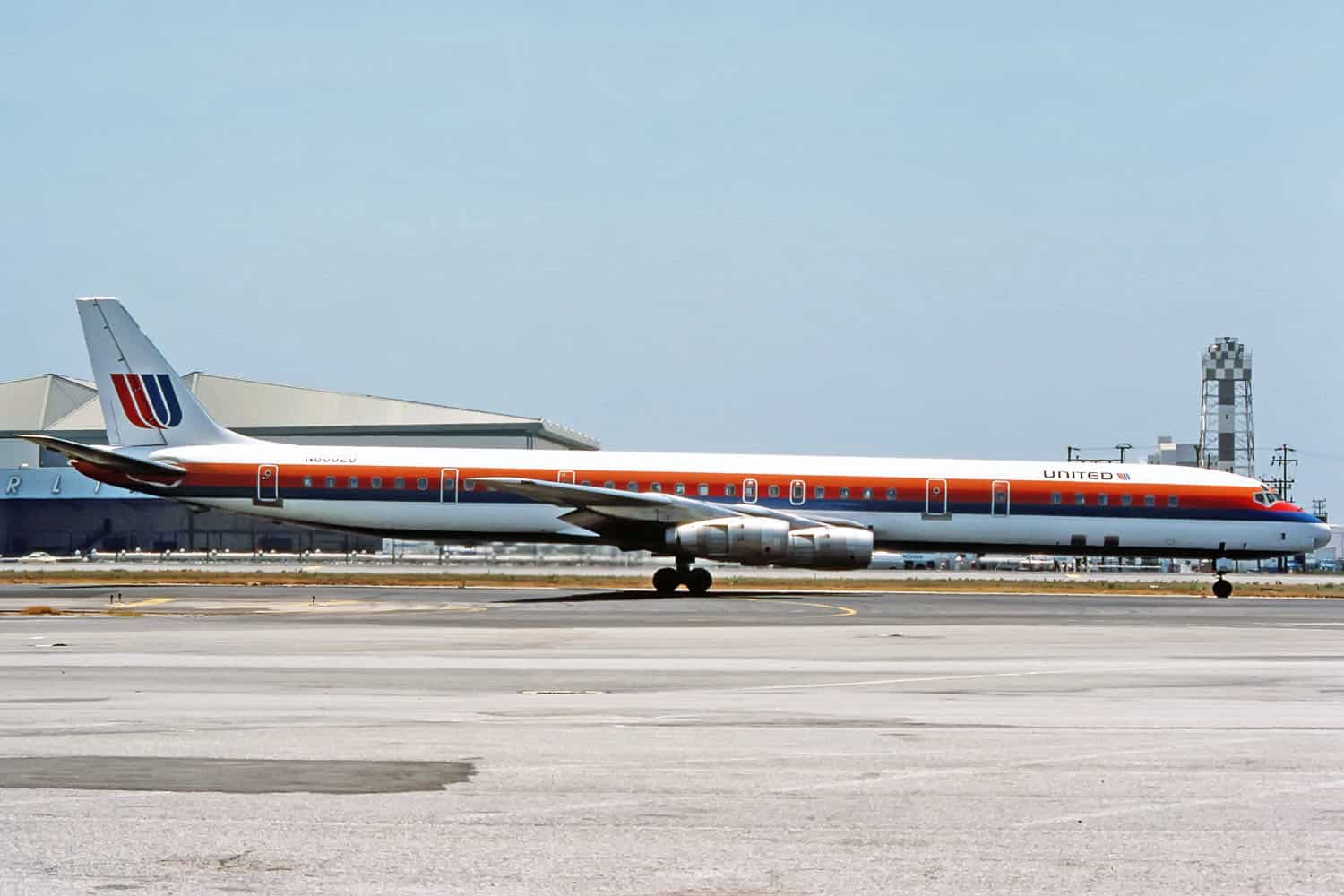
United Airlines Flight 173 departed Denver on the afternoon of December 28, 1978, bound for Portland, Oregon. The aircraft was a McDonnell Douglas DC-8-61, registration N8082U, carrying 181 passengers and a crew of eight under the command of Captain Malburn McBroom, a veteran pilot with more than 27,000 flight hours.
First Officer Rodrick Beebe and Flight Engineer Forrest Mendenhall completed the three-person flight deck crew. The weather in Portland was overcast but within limits. The descent toward Portland International Airport was normal until, at approximately 17,500 feet on the approach, Beebe lowered the landing gear.
As the gear extended, the crew felt and heard an abnormal thump and shudder. The nose gear position indicator showed an ambiguous reading: not the three green lights confirming gear down and locked, but something unclear. Captain McBroom broke off the approach and requested a holding pattern over the Portland area to troubleshoot. His concern was that the nose gear had not extended and locked properly, and that landing with an uncertain gear configuration could cause the nose to collapse on touchdown.
He began preparations: fuel would need to be burned down to reduce the aircraft’s landing weight, the cabin crew would need to be briefed for a possible emergency landing, and the gear problem needed to be identified. The holds began circling over the darkened suburban landscape east of Portland as the cockpit focused on the landing gear.
Over the next sixty-plus minutes, Flight Engineer Mendenhall advised the captain of the aircraft’s fuel state repeatedly. The warnings grew more urgent as the hold continued. The captain acknowledged them, but the preparations for the emergency landing continued to absorb his attention. At approximately 18:15 local time, with the aircraft still circling, all four engines began to flame out one after another as the fuel was exhausted.
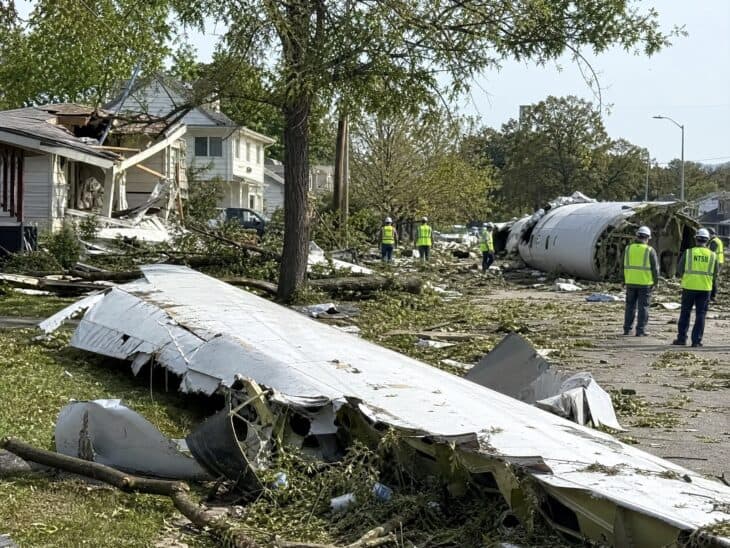
Captain McBroom attempted to reach Portland International, approximately three miles away, but the aircraft was unable to make the airport. United Airlines Flight 173 struck trees and then the rooftops of a suburban Portland neighborhood east of the city. Of the 189 people on board, 10 were killed and 179 survived. The nose gear, when investigators examined the wreckage, had been down and locked throughout.
What the NTSB found: warnings that never reached the captain
The NTSB investigation concluded with a probable cause finding that has been read and re-read in aviation training programs ever since: “The National Transportation Safety Board determines that the probable cause of this accident was the failure of the captain to monitor properly the aircraft’s fuel state and to properly respond to the crew members’ advisories regarding fuel state. This resulted in fuel exhaustion to all engines.
His inattention resulted from preoccupation with a landing gear malfunction and preparations for a possible landing emergency. Contributing to the accident was the failure of the other two flight crew members to fully communicate their concern about the fuel state to the captain.” The language is precise and important: the probable cause was the captain’s failure to respond, but the contributing cause was the crew’s failure to communicate the full severity of the situation.
The CVR record documented what that failure looked like in practice. Mendenhall advised the captain of the fuel state at multiple points during the hold, providing specific quantity readings and time estimates. The captain heard these advisories, acknowledged them, and continued the emergency preparation. What the investigation found was not that the advisories were absent, but that they were delivered in a way that did not break through the captain’s situational frame.
Mendenhall framed the fuel warnings as information rather than as urgent interventions requiring an immediate change of plan. The cultural and professional norm of the era was that a flight engineer did not tell a captain what to do: he reported data, and the captain decided what to do with it. In the 60-odd minutes of the hold, that norm proved fatal. The first officer and flight engineer, both of whom had information pointing to an emergency, did not assert that information with the clarity or force the situation required.
What the cockpit voice recorder documented
According to the NTSB investigation, Flight Engineer Mendenhall provided fuel state advisories to the captain multiple times during the hold, at one point estimating that they had approximately 15 minutes of fuel remaining. The captain acknowledged each advisory. The CVR showed that neither the first officer nor the flight engineer explicitly stated that the aircraft needed to land immediately, or framed the fuel situation as an emergency that required the captain to change his plan right now. That gap, between data delivered and intent communicated, became the central lesson of the investigation and the foundation of Crew Resource Management training.
14:47
Departure from Denver. United Airlines Flight 173 departs Denver International Airport bound for Portland with 189 people on board. Captain McBroom commands a DC-8-61 on a routine afternoon service.
~17:12
Landing gear extended, abnormality noted. On descent toward Portland, the crew lowers the gear and feels an abnormal thump and shudder. The nose gear position indicator shows an ambiguous reading. Captain McBroom requests a holding pattern to investigate and prepare for a possible emergency landing.
~17:15 onward
Hold begins. The aircraft enters a holding pattern east of Portland at approximately 5,000 feet. The crew troubleshoots the gear indication and the cabin crew is briefed for a possible emergency. Flight Engineer Mendenhall begins advising the captain of the fuel state.
~18:00
Fuel warnings escalate. Mendenhall provides increasingly urgent fuel state advisories. The captain acknowledges each one. The hold continues. The aircraft has been circling for approximately 45 minutes.
18:13
Engines begin to flame out. With fuel exhausted, the engines begin to shut down one by one. Captain McBroom attempts to reach Portland International Airport, approximately three miles away.
18:15
Impact. Flight 173 strikes trees and then a suburban Portland neighborhood east of the airport. Ten of the 189 people on board are killed. The nose gear, throughout, had been down and locked.
The crew training revolution that came from Portland
The United 173 accident did not happen in isolation. In the years before it, aviation researchers at NASA Ames Research Center, particularly psychologist John Lauber, had been studying human factors in commercial cockpits. The question driving the research was consistent: why did well-trained, experienced crews make fatal errors? Accident after accident, including Eastern Airlines Flight 401 six years earlier, showed the same pattern: a crew fixated on one problem, with other critical information present but not acted upon. But United 173 gave the research movement something specific and undeniable, a major carrier accident with a clear CVR record showing a crew that had the information needed to avoid the crash and did not use it. In 1979, NASA Ames hosted a workshop titled “Resource Management on the Flight Deck.” That workshop, directly catalyzed by the findings of the United 173 investigation, is the formal origin of what became Crew Resource Management.
CRM, as the framework was eventually named, holds that the most dangerous element in a cockpit is not mechanical failure or bad weather but inadequate use of available resources: information, crew skills, and the ability of crew members to communicate effectively under pressure. The specific lesson of United 173 was that cockpit hierarchy, the unspoken norm that junior crew members report and senior pilots decide, can silence the information that most needs to be heard when a captain is task-saturated. CRM training teaches first officers and flight engineers not just to provide information but to advocate for it: to say not only “we have fifteen minutes of fuel” but “captain, we need to land now.” It also teaches captains to invite that challenge rather than discourage it. United Airlines was the first carrier to develop a formal CRM training program, in 1981, partly in direct response to this accident. The program was called Command, Leadership and Resource Management, and it became a model for the industry.
The FAA’s regulatory response was phased. Advisory Circular AC 120-51, “Crew Resource Management Training,” was first issued in 1989, defining CRM and providing guidance to operators on developing training programs. The Advisory Circular established the framework but was, as its name indicates, advisory: a recommendation, not a binding rule. Binding requirements came through the Part 121 training regulations: 14 CFR 121.404 and 121.409 require CRM training as part of initial qualification and recurrent training programs for flight crewmembers in air carrier operations. The specific content requirements are driven by the operator’s approved training program, but the mandate for CRM as a component of crew training is now codified in federal aviation regulation. Equivalent requirements were adopted by EASA for European operators and incorporated into ICAO guidance documents used by national aviation authorities worldwide.
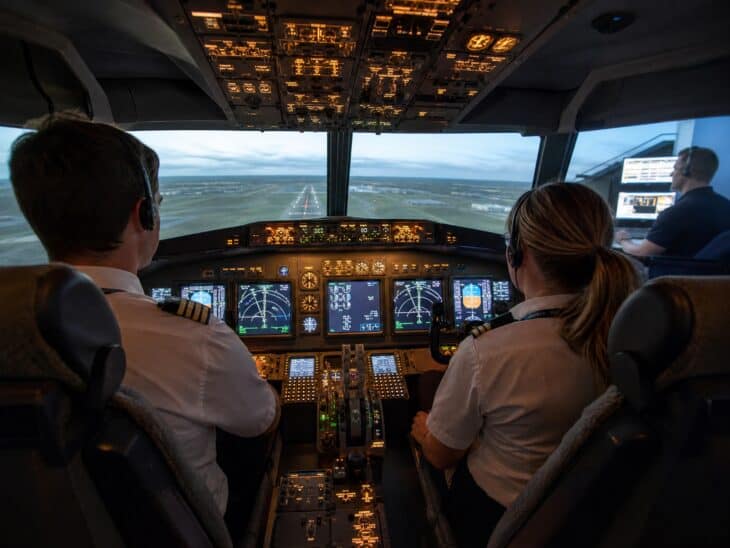
Beyond CRM, the accident also prompted revisions to fuel management procedures and dispatcher coordination requirements. The NTSB recommended clearer standards for fuel monitoring and communication between crews and dispatchers during extended abnormal operations, recommendations that were reflected in subsequent amendments to 14 CFR Part 121 subpart U (fuel requirements) and in operator training standards. The accident became a standard case study in crew resource management training programs at airlines around the world and in simulator scenarios designed to test whether crews would speak up effectively about a critical resource that a preoccupied captain was not managing. In a well-designed CRM scenario derived from United 173, the test is not whether a first officer can fly the aircraft: it is whether they can, when the captain is absorbed in something else, say clearly and with appropriate force what needs to happen right now.
What changed because of United Airlines Flight 173
Crew Resource Management (CRM) training framework developed, directly catalyzed by the NASA Ames workshop of 1979. United Airlines developed the first formal airline CRM program in 1981. FAA Advisory Circular AC 120-51 issued in 1989, defining CRM training standards. CRM training mandated as part of Part 121 initial and recurrent training under 14 CFR 121.404 and 121.409. Equivalent requirements adopted internationally by EASA and incorporated into ICAO guidance. Fuel management procedures and dispatcher coordination standards strengthened through amendments to 14 CFR Part 121 subpart U.
The significance of United Airlines Flight 173 is that it exposed a failure mode that could not be fixed with hardware. Eastern Airlines Flight 401, the year before, had produced a physical fix: put a warning system in the aircraft that the crew cannot ignore. United 173’s failure was not that a warning system was absent but that a human warning system, three crew members with critical information, failed to operate effectively. That is a training and culture problem, and training and culture problems require different solutions: repeated practice, deliberate scenario design, and an organizational commitment to changing the professional norms of the cockpit. CRM produced all three. Every airline that operates commercial flights today trains its crews in CRM. The specific framework, the idea that an effective crew is not a hierarchy but a team in which every member’s information is valued and acted upon, traces directly back to the CVR transcript from Portland in December 1978.
The accident sits naturally alongside two others in this series. Tenerife 1977 is the accident that most clearly shows what happens when the authority gradient runs the other way: a flight engineer who raised a concern, was dismissed by the captain, and did not press further, with 583 people killed. United Airlines Flight 232 is CRM’s greatest success story: a crew that, nine years after United 173, used the exact principles the NASA workshop had described to manage a total hydraulic failure that had no procedure. Together, these three accidents trace the arc of how aviation learned to treat the cockpit as a team rather than a command. The full series is at The Flights That Changed Aviation.
FAQ
Sources and references used for research and fact-checking.
- Aircraft Accident Report: United Airlines, Inc., McDonnell-Douglas, DC-8-61, N8082U, Portland, Oregon, December 28, 1978 - National Transportation Safety Board
- Resource Management on the Flight Deck: Proceedings of a NASA/Industry Workshop - NASA Ames Research Center
- Advisory Circular 120-51E: Crew Resource Management Training - Federal Aviation Administration
- Crew Resource Management (CRM) - SKYbrary
- United Airlines Flight 173 - Aviation Safety Network
Get the Newsletter
The latest aviation news and stories sent to your inbox.
About the Author

Tim is the owner and lead editor of AeroCorner since 2019, overseeing aviation content covering aircraft, airlines, airports, and the broader aviation industry. Through years of researching, writing, editing, and publishing aviation-focused content, he has developed extensive practical knowledge of commercial aviation and air travel. Based in Asia and a frequent traveler himself, Tim also brings firsthand passenger experience to AeroCorner’s coverage. Outside of publishing, he has also explored aviation firsthand through hands-on flight training in New Zealand.