

Table of Contents
TWA Flight 800 had already been on the ground at John F. Kennedy International Airport for more than an hour when it finally pushed back from the gate on the evening of July 17, 1996. The aircraft was a Boeing 747-131, registration N93119, manufactured in 1971 and now in its 25th year of service. It was bound for Paris Charles de Gaulle, carrying 212 passengers and 18 crew members. The delay was routine: a connecting passenger situation. The aircraft’s three air conditioning packs, located in the belly of the fuselage below the passenger cabin floor, had been running the entire time, keeping the cabin cool on a warm summer evening on a busy New York ramp.
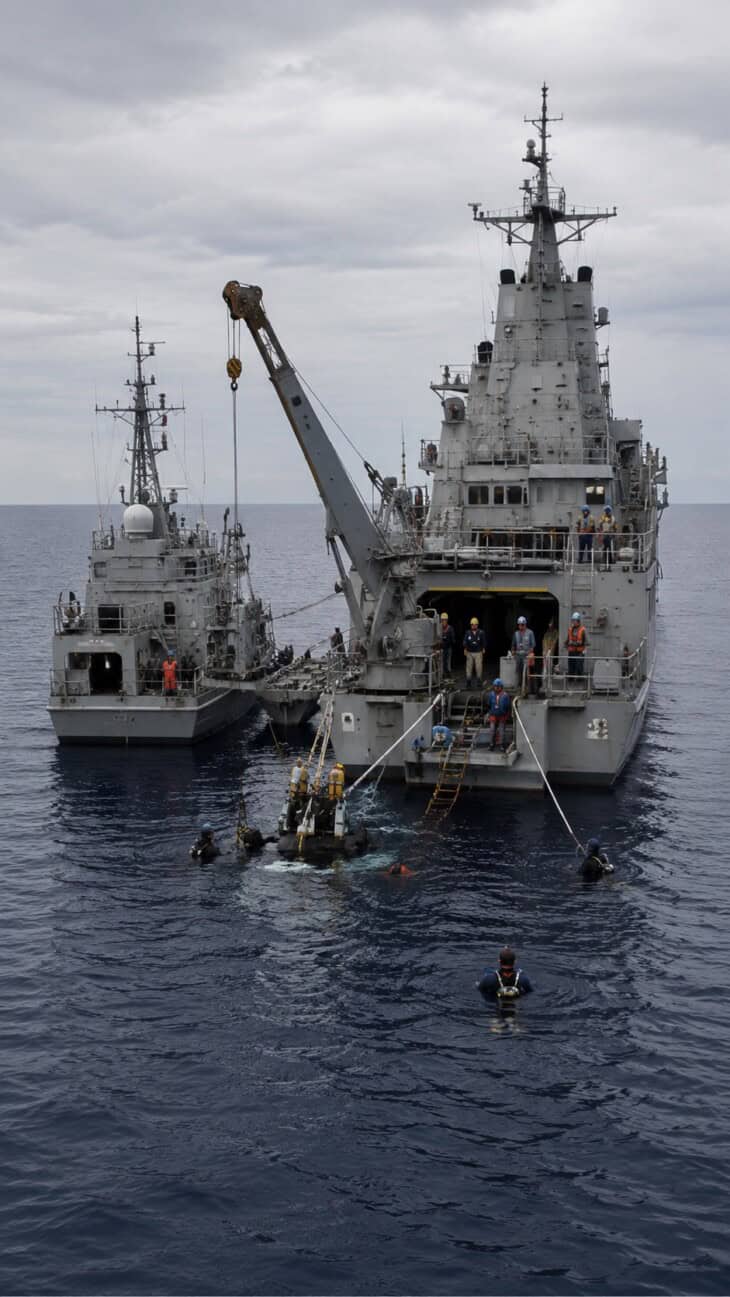
The 747 departed and began a standard climb over the Atlantic. At 8:31 in the evening, approximately 12 minutes after takeoff and at an altitude of about 13,800 feet, the center wing fuel tank exploded. The forward fuselage section separated from the rest of the aircraft and fell toward the ocean. The remaining fuselage and wings continued briefly, trailing fire, before breaking apart and descending. The wreckage came down eight miles south of East Moriches, on the south shore of Long Island. All 230 people on board were killed.
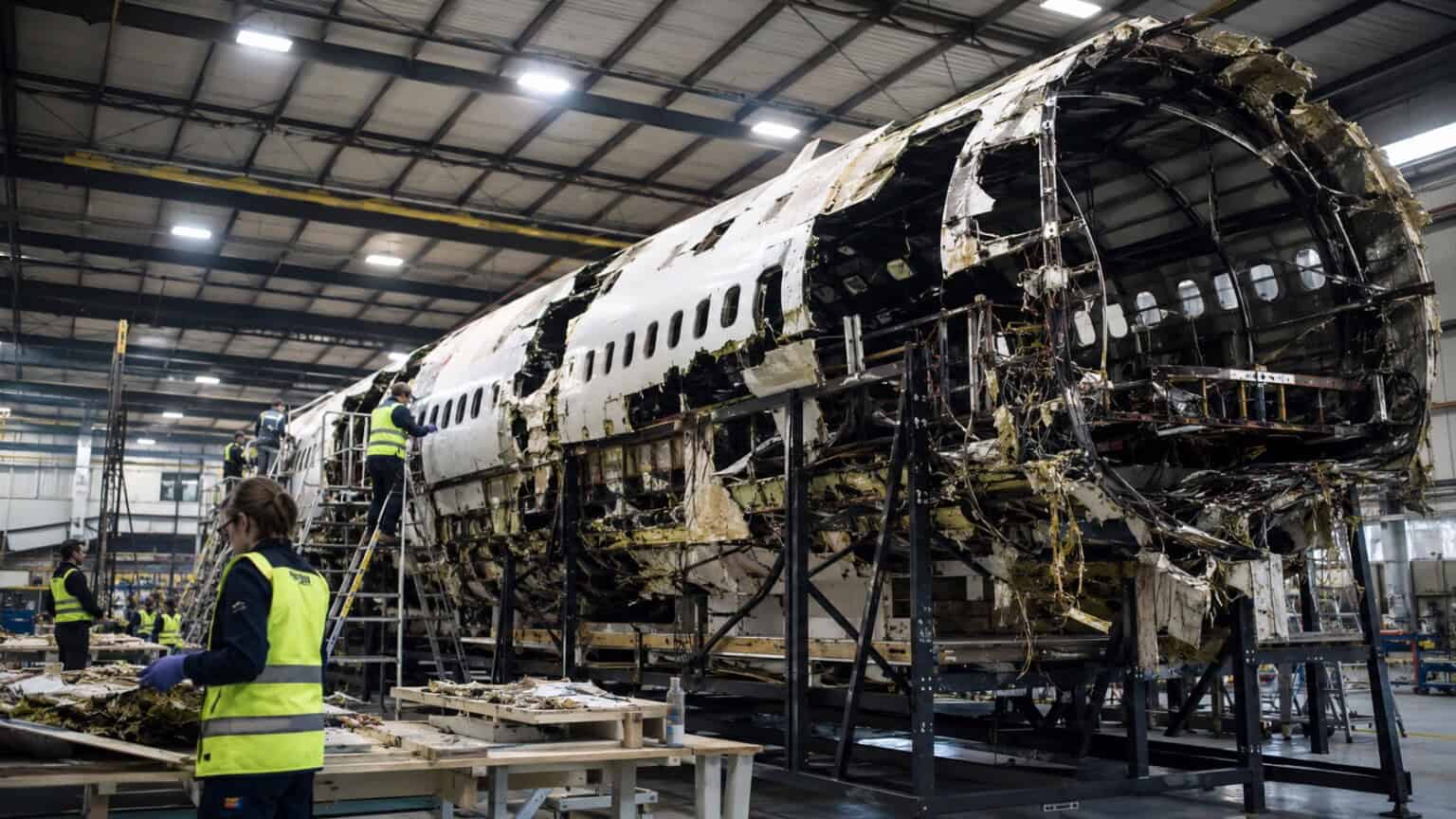
More than 700 witnesses on shore watched it happen. Many reported seeing a streak of light rising toward the aircraft before the fireball. The FBI opened a criminal investigation alongside the National Transportation Safety Board. For nearly two years, the leading hypothesis was a terrorist attack. The investigation that followed involved more than 750 people from the NTSB, FBI, CIA, Navy, and a dozen other agencies. It took four years and one month to complete. When the NTSB approved its final accident report on August 23, 2000, the cause was not a bomb, and it was not a missile. It was the aircraft’s own fuel, heated to a flammable state by a design that had never been required to address that condition.
How a nearly empty fuel tank, heated by air conditioning packs, produced an explosion
The center wing fuel tank runs across the underside of a 747’s fuselage between the two main wing fuel tanks. On a transatlantic flight, the CWT carries a significant share of the aircraft’s fuel. On shorter legs, or when the main tanks hold sufficient fuel for the route, the CWT is typically empty or close to it. On the evening of July 17, TWA 800’s CWT contained approximately 50 gallons of fuel, essentially a residual amount from the previous flight. The tank was otherwise full of air and fuel vapor. Jet A fuel evaporates, and in a nearly empty tank at elevated temperatures, the vapor concentration in that air space can reach flammable levels.
The source of the elevated temperature was directly below the tank. The 747’s three air conditioning packs were mounted in an uninsulated, unvented compartment immediately beneath the CWT’s aluminum floor panel. On the ground at JFK, with the delay extending past an hour, the packs ran continuously. The NTSB’s flight test research, conducted with an identical aircraft on the ground at JFK under comparable conditions, showed that the fuel and vapor in the CWT had reached temperatures between 101 and 127 degrees Fahrenheit by the time the aircraft departed. The NTSB’s testing also established that Jet A fuel vapor in a nearly empty tank could ignite at as low as 96 degrees Fahrenheit. TWA 800’s CWT was significantly above that threshold before the wheels left the runway.
The ignition source was not definitively identified, but the investigation narrowed it to a probable mechanism. Routing through the CWT was the aircraft’s fuel quantity indication system wiring, a set of electrical probes and signal cables used to measure fuel level in the tank. The captain had noted “crazy” readings from the FQIS approximately two and a half minutes before the explosion. The aircraft had accumulated more than 93,000 flight hours over 25 years of service. Investigators found evidence of electrical arcing in FQIS wiring that ran through the tank, consistent with degraded insulation and exposure to heat cycling over decades of operation. The NTSB’s most likely ignition scenario was a short circuit outside the CWT that sent excessive voltage through the FQIS wiring and into the tank. The combination of a flammable vapor space and degraded wiring carrying elevated voltage was sufficient to produce ignition.
This had happened before
The NTSB’s investigation identified two earlier instances in which a nearly empty center wing fuel tank had exploded in flight: an Avianca Boeing 727 in November 1989 and a Philippine Airlines Boeing 737 in May 1990. Both aircraft landed safely, and neither accident produced a regulatory change requiring that CWT vapor be prevented from reaching flammable temperatures during normal operations. The risk had already materialized twice. It had simply never killed everyone on board.
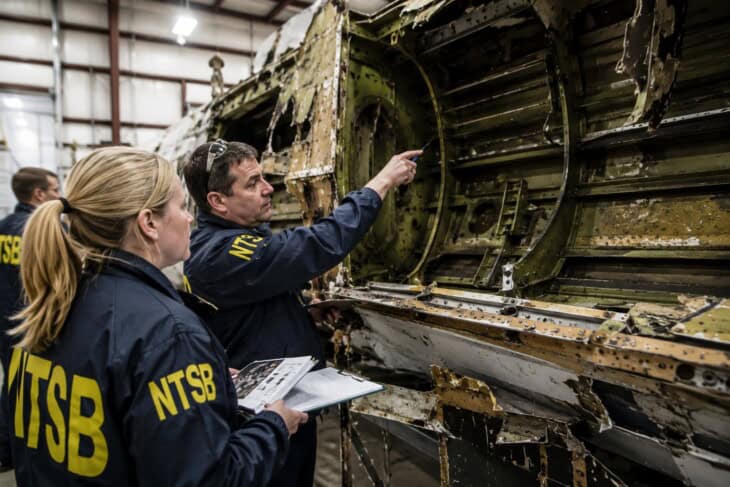
The investigation’s ruling out of terrorism was methodical and comprehensive. The physical evidence was examined by the Naval Air Warfare Center, Sandia National Laboratories, the FBI’s own forensic teams, and equivalent agencies from the United Kingdom, France, and Australia.
The investigation found no pitting, cratering, gas-washing, or petalling of metal surfaces consistent with a high-energy explosive detonation. It found no evidence of missile penetration in the reconstructed airframe. The residue of explosive compounds found on some seat fabric, which had initially supported the terrorism hypothesis, was traced to a dog-handler detection training exercise conducted on the aircraft weeks before the accident.
The 736 witness accounts were analyzed individually. The investigation found that all but a small number were consistent with witnesses observing the aircraft on fire after the initial CWT explosion, during the brief period when the rear portion of the aircraft continued to climb as the nose fell away. The NTSB’s conclusion was unambiguous: the breakup was caused by an internal pressure event, not an external one.
The fuel tank safety rules that came from Flight 800
The NTSB issued its first safety recommendations on fuel tank flammability in December 1996, five months after the accident and years before the final report. The central recommendation was direct: the FAA should preclude aircraft from operating with explosive fuel-air mixtures in fuel tanks. The investigation had already established enough to identify the core problem, even if the ignition source remained unresolved. The NTSB also called on the FAA to consider long-term design modifications such as fuel tank inerting, and short-term operational changes to reduce the likelihood of flammable conditions during ground operations. These recommendations initiated years of regulatory activity.
The first binding regulatory response was SFAR 88, Special Federal Aviation Regulation No. 88, published on May 7, 2001, effective June 6, 2001. SFAR 88 was codified in 14 CFR Part 21 and applied to type certificate holders for large transport category aircraft carrying 30 or more passengers. It required manufacturers to conduct systematic fuel tank system fault tolerance evaluations: a structured process for identifying every potential ignition source in the fuel tank system of each aircraft type they held and developing corrective actions to eliminate or mitigate each one. This was not an advisory guidance document. It was a binding rule with a compliance deadline. The reviews it required identified more than 200 previously unknown potential ignition sources across the commercial fleet, producing a cascade of airworthiness directives requiring specific design modifications and maintenance procedures on aircraft types throughout the industry.
SFAR 88 addressed the ignition side of the failure chain. The second half, keeping fuel tanks from becoming flammable in the first place, required additional rulemaking. On July 21, 2008, the FAA published a final rule under 14 CFR Parts 25, 26, 121, 125, and 129, titled Reduction of Fuel Tank Flammability in Transport Category Airplanes, which took effect on September 19, 2008. The rule required that transport category aircraft with high-flammability fuel tanks incorporate either a flammability reduction means or an ignition mitigation means.
A flammability reduction means is typically an onboard nitrogen generation system that replaces the air in the fuel tank vapor space with nitrogen, making the vapor noncombustible regardless of its temperature. An ignition mitigation means is typically polyurethane foam installed inside the tank, reducing the volume of flammable vapor space. The rule was performance-based, leaving the engineering approach to manufacturers and operators. Both methods achieve the same result: a center wing fuel tank that cannot explode under normal operating conditions, regardless of what the ignition side of the system does. Approximately 2,700 existing airliners operating in the United States were required to retrofit.
The investigation also accelerated the FAA’s attention to aging aircraft wiring. The NTSB issued six safety recommendations in April 1998 specifically regarding aircraft wiring and potential fuel tank ignition sources, noting that cracked, damaged, and contaminated wire insulation was common in aging aircraft and that current maintenance practices did not adequately protect the integrity of wiring systems.
These recommendations fed into the FAA’s Aging Transport Non-Structural Systems Plan and the creation of the Aging Transport Systems Rulemaking Advisory Committee, which developed inspection and refurbishment requirements for electrical systems in aging transport category aircraft. Certification standards for wiring that enters or passes near fuel tanks were revised, and the maintenance requirements for fuel system wiring were tightened across the commercial fleet.
What changed because of TWA Flight 800
SFAR 88 (effective June 6, 2001): Binding rule codified in 14 CFR Part 21 requiring type certificate holders to conduct systematic fuel tank system fault tolerance evaluations and eliminate identified ignition sources across the commercial fleet. FAA final rule (effective September 19, 2008): Binding mandate under 14 CFR Parts 25, 26, 121, 125, and 129 requiring installation of flammability reduction means (nitrogen inerting) or ignition mitigation means (foam inserts) in high-flammability fuel tanks on all US-registered transport category aircraft, affecting approximately 2,700 existing airliners. Aging aircraft wiring: FAA Aging Transport Non-Structural Systems requirements and revised maintenance standards for fuel system wiring, driven by NTSB recommendations issued April 1998.
The failure chain in TWA 800 had been present in every 747 since 1969. The air conditioning packs beneath the CWT had been heating fuel vapor to flammable temperatures on thousands of flights across the entire 747 fleet. The FQIS wiring running through the tank had been aging on aircraft around the world. Neither condition had ever been required, by any airworthiness standard, to be addressed. The accident did not reveal a new risk. It revealed an old one that had already produced two previous in-flight explosions, had simply not yet killed everyone on a given aircraft, and had never been characterized as a certification gap that required a fix.
Every high-flammability fuel tank on a US airliner today is either inerted with nitrogen or fitted with foam inserts. The hardware mandate took 12 years to become law after 230 people died eight miles off the south shore of Long Island. The full history of how aviation has built its safety record through investigation and regulatory follow-through is in The Flights That Changed Aviation. Two other accidents in this series follow the same thread of known but unaddressed risk producing catastrophic consequences: The Roof Tore Off at 24,000 Feet: Aloha Airlines 243 and the Aging Aircraft Crisis examines how aging aircraft structural risk was similarly uncharacterized before a 737 roof failed over Hawaii, and ValuJet Flight 592: How a Cargo Fire in the Everglades Changed What Airlines Can Carry covers another 1996 accident in which an untested design assumption about cargo hold fires proved fatal.
FAQ
Sources and references used for research and fact-checking.
- Aircraft Accident Report: In-Flight Breakup Over the Atlantic Ocean Trans World Airlines Flight 800, Boeing 747-131, N93119, Near East Moriches, New York, July 17, 1996 (AAR-00/03) - National Transportation Safety Board
- TWA 800 Investigation Overview - National Transportation Safety Board
- Special Federal Aviation Regulation No. 88 — Fuel Tank System Fault Tolerance Evaluation Requirements (14 CFR Part 21 Appendix SFAR 88) - Federal Aviation Administration / eCFR
- Federal Register: Reduction of Fuel Tank Flammability in Transport Category Airplanes (Final Rule, July 21, 2008) - Federal Aviation Administration / Federal Register
- FAA Fuel Tank Protection — Fire Safety - Federal Aviation Administration
- Boeing 747-100 Lessons Learned: TWA Flight 800 - Federal Aviation Administration
- SKYbrary: NTSB AAR-00/03 TWA 800 - SKYbrary / EUROCONTROL
Get the Newsletter
The latest aviation news and stories sent to your inbox.
About the Author

Tim is the owner and lead editor of AeroCorner since 2019, overseeing aviation content covering aircraft, airlines, airports, and the broader aviation industry. Through years of researching, writing, editing, and publishing aviation-focused content, he has developed extensive practical knowledge of commercial aviation and air travel. Based in Asia and a frequent traveler himself, Tim also brings firsthand passenger experience to AeroCorner’s coverage. Outside of publishing, he has also explored aviation firsthand through hands-on flight training in New Zealand.