

Table of Contents
ValuJet Flight 592 departed Miami International Airport on the afternoon of May 11, 1996, bound for Atlanta on what should have been a routine two-hour flight. The aircraft was a McDonnell Douglas DC-9-32, registration N904VJ. There were 105 passengers and 5 crew members on board. The weather was clear, visibility unrestricted. Six minutes after takeoff, the crew reported smoke in the cockpit. They declared an emergency, turned back toward Miami, and never arrived. At 2:13 in the afternoon, the DC-9 struck the Florida Everglades approximately ten miles northwest of the airport, inverted, at near-vertical pitch. All 110 people on board were killed.
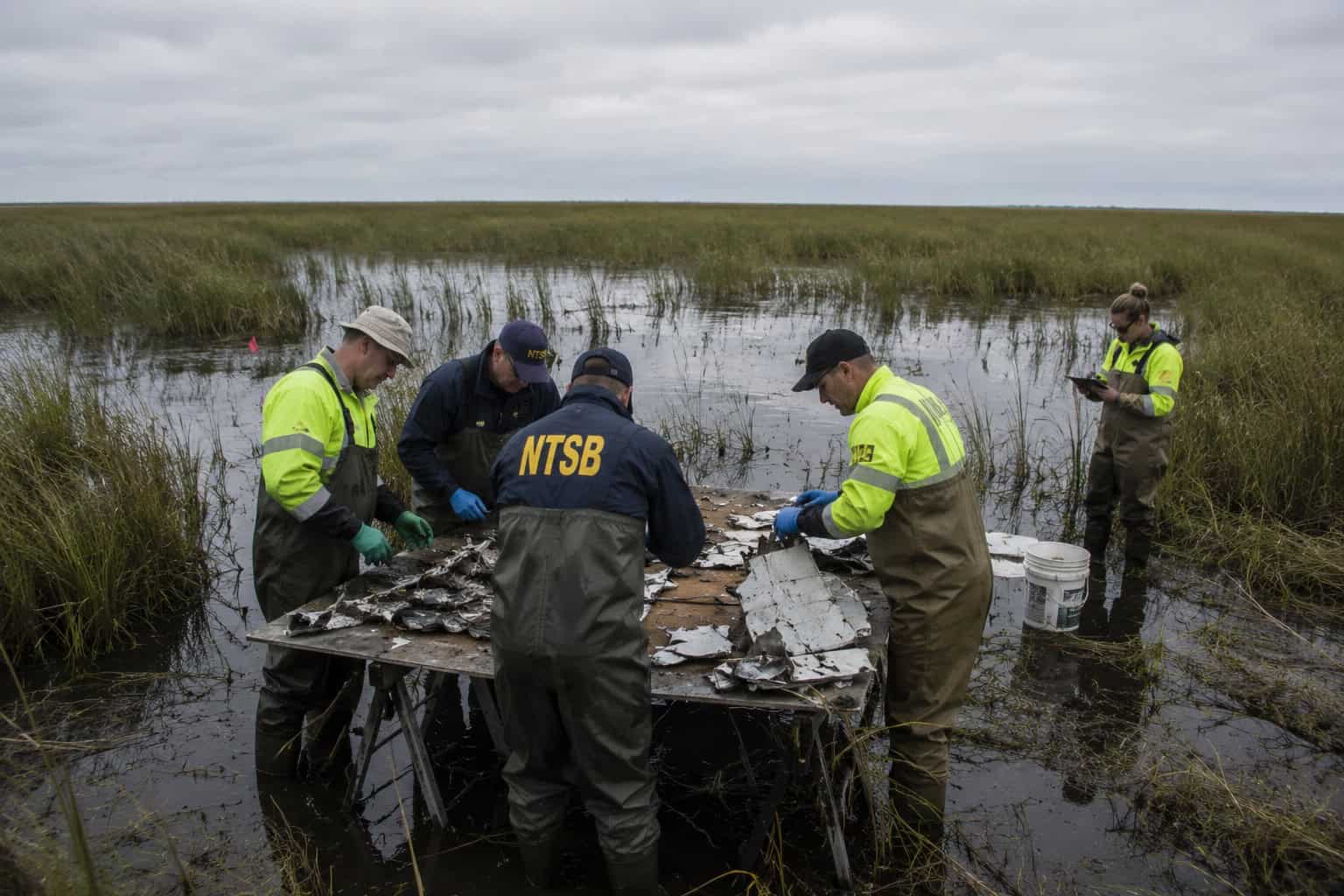
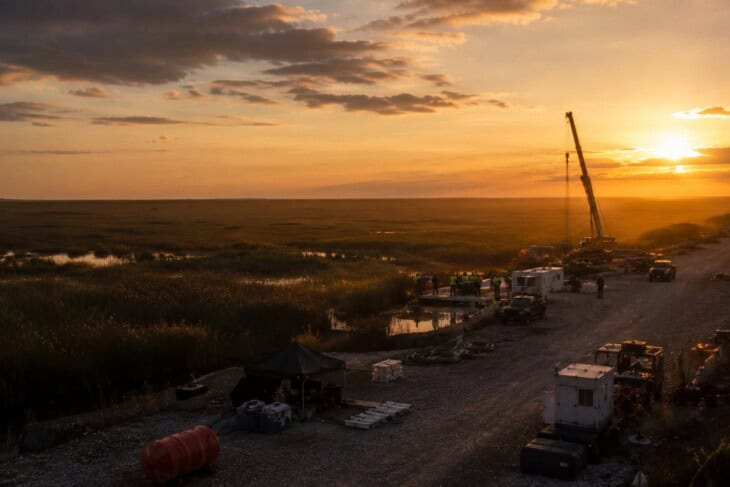
Recovery operations in the Everglades lasted weeks. The crash site was one to three feet of water over soft sediment and bedrock, dense with sawgrass, in terrain that required investigators and divers to work around alligators and exposed debris simultaneously. Less than half of the aircraft’s structural mass was ever recovered. Forty-two of the 110 victims were never positively identified. The National Transportation Safety Board opened its investigation while crews were still searching. The cause was not in question: the aircraft had been destroyed by a fire. The question was what had started it and how the fire had progressed so quickly that an aircraft within gliding distance of its departure airport had been lost before the crew could return.
The answer, when investigators found it, pointed not at the aircraft and not at the crew, but at a cardboard box in the forward cargo hold.
How 144 improperly stored oxygen generators ignited a cargo hold fire
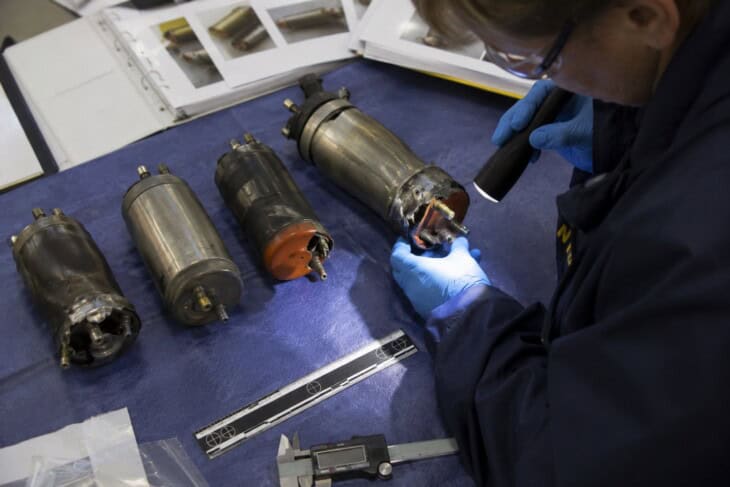
The cargo manifest listed five cardboard boxes in the forward hold. Inside them were 144 chemical oxygen generators: the passenger emergency oxygen canisters that drop from the overhead compartment when a cabin depressurizes. They had been removed from ValuJet MD-80 aircraft during scheduled maintenance at SabreTech, a Miami-based contractor. On the shipping documentation, SabreTech workers had labeled the boxes “OXY CANISTERS” and marked them “EMPTY.” They were not empty. They had never been fired. The generators were intact, loaded with sodium chlorate, and capable of producing sustained heat and oxygen the moment their firing pins were triggered.
A chemical oxygen generator works through an exothermic chemical reaction: sodium chlorate decomposes to produce oxygen, and the process generates surface temperatures approaching 500 degrees Fahrenheit for the duration of the burn. The canister is designed to feed an oxygen mask during an emergency, but the heat it produces while doing so is substantial. The generators on Flight 592 had not been rendered inert before shipment because SabreTech workers did not install protective caps over the firing pins. The caps, a standard safety requirement for transporting the devices, cost a few cents each. They were not installed because SabreTech did not have them readily available and did not obtain them before boxing up the generators and including them in the cargo shipment.
The forward cargo hold of the DC-9 was a Class D hold. Under FAA regulations as they existed in May 1996, a Class D hold had no smoke detection equipment and no active fire suppression system. The design rationale was passive: if a fire started inside a Class D hold, the sealed compartment would eventually starve it of oxygen. The logic was sound for ordinary combustibles. It was not sound for a device that manufactures its own oxygen supply. When the generators activated during the flight, probably from vibration and contact with other cargo in the hold, they began burning. They ignited the cardboard boxes, the rubber oxygen masks packed alongside them, and a set of tires also loaded in the hold. The fire had both fuel and a self-replenishing oxygen supply, and the sealed Class D hold offered neither detection nor suppression.
What the cockpit voice recorder captured
At 2:10 PM, six minutes after departure, First Officer Richard Hazen contacted Miami Approach Control. “Critter five-ninety-two, uh, we need, uh, the closest airport available,” he reported, using ValuJet’s radio callsign. Seconds later: “We’re on fire, we need to go back to Miami.” Air traffic control cleared the crew for an immediate return to Miami International. The last intelligible cockpit voice recorder transmission came 43 seconds before the aircraft struck the Everglades. Miami International Airport was less than ten miles away.
The NTSB final report, AAR-97/06, identified three probable causes. The first was SabreTech’s failure to properly prepare, package, and identify the oxygen generators before shipping them. The second was ValuJet’s failure to adequately oversee the work of its maintenance contractors and to ensure that hazardous materials were not being unknowingly loaded onto its aircraft. The third was the FAA’s failure to require smoke detection and fire suppression systems in Class D cargo holds on passenger aircraft. The board found that the FAA had been aware of the theoretical risk posed by an unmonitored hold and by the possibility of mislabeled hazardous cargo, and had not acted to close either gap. On May 11, 1996, both gaps were open simultaneously, on the same aircraft, in the same hold.
The cargo hold rules and airline oversight reforms that came from Flight 592
The FAA moved on the most immediate hazard first. Twelve days after the crash, on May 23, 1996, the agency issued an emergency order prohibiting chemical oxygen generators from being carried as cargo on passenger aircraft. The order was binding and effective immediately. No regulatory process was required: the FAA issued it under emergency authority before the NTSB investigation had produced a final report. The crash had made unmistakably clear that a device designed to generate heat and oxygen had no business being transported in an unmonitored, unsuppressed cargo compartment, regardless of what the shipping label said.
The larger structural change followed through the standard rulemaking process. On February 10, 1998, the FAA published a final rule under 14 CFR Parts 25 and 121 requiring that every Class D cargo hold in a US-registered passenger aircraft be converted to a Class C hold. A Class C hold is required to have both a smoke detection system and an active fire suppression system, typically using Halon. Airlines were given until early 2001 to complete the conversions. The rule was a binding mandate: after the compliance deadline, operating a passenger aircraft with a hold that lacked smoke detection and fire suppression was a federal aviation regulation violation. The passive design that contributed to the destruction of Flight 592 was removed from the US commercial fleet entirely. Every cargo hold on every US passenger aircraft today has smoke detection and fire suppression. That requirement exists because of what happened in the Everglades on May 11, 1996.
The regulatory response to the oversight failures was also significant. ValuJet was grounded by the FAA on June 16, 1996, five weeks after the crash, following a safety review that found systemic deficiencies in the airline’s oversight of its maintenance contractors. It was the first time the FAA had grounded a major US airline since the DC-10 grounding that followed American Airlines Flight 191 in 1979. ValuJet contested the grounding, resumed limited operations in September 1996, and subsequently merged with AirWays Corporation, rebranding as AirTran Airways in 1997. The grounding itself, and the legal and operational ordeal that followed, established that the FAA was prepared to use its authority to shut down a certified carrier that had lost control of its own safety management systems.
The investigation also produced a broader institutional change in how the FAA oversaw certified carriers. In October 1998, the FAA established the Air Transportation Oversight System, known as ATOS. The previous inspection model had been largely reactive: inspectors conducted periodic compliance checks against checklists, visiting airlines on schedule and verifying documented procedures. ATOS introduced a risk-based approach, requiring FAA principal inspectors to assess the systemic safety risks at each carrier rather than simply confirming paperwork compliance. The distinction mattered because ValuJet had been compliant on paper: it held a valid operating certificate, its aircraft were certified airworthy, and its maintenance was being performed by a certificated contractor. None of that had detected that SabreTech’s actual practices bore no relationship to the procedures that had earned the certification. ATOS was designed to make that gap visible before the next cargo hold fire, rather than after.
What changed because of ValuJet Flight 592
FAA emergency order, May 23, 1996: chemical oxygen generators prohibited from cargo on passenger aircraft, binding and effective immediately. FAA final rule, February 10, 1998: all Class D cargo holds in US passenger aircraft required to be converted to Class C holds with smoke detection and active fire suppression, under 14 CFR Parts 25 and 121, compliance required by early 2001. ValuJet grounded by FAA, June 1996: first major US carrier grounding since 1979, demonstrating FAA’s willingness to use that authority against systemic safety failures. FAA Air Transportation Oversight System (ATOS) established October 1998: replaced compliance-checklist inspections with risk-based carrier safety assessment.
The lessons of Flight 592 are about the limits of assumptions. The Class D hold design assumed that nothing loaded into it would produce its own oxygen. The certification model assumed that a licensed contractor would follow the procedures that earned its certification. The shipping documentation assumed that workers labeling boxes “empty” had verified that they were. Each assumption was individually reasonable. Together, unchecked, they were lethal. The aircraft was within gliding distance of its departure airport when it hit the ground, and the crew had done everything correctly from the moment they detected the smoke. There was nothing left to do by then.
Today, the oxygen generators in every passenger aircraft overhead compartment are subject to strict handling, labeling, and disposal procedures. No one may put them in a cargo hold as freight, with or without a cap on the firing pin. Those procedures, and the fire suppression systems that now protect every cargo hold on every US airline, trace directly to the NTSB’s patient work in the Everglades and the two years of regulatory action that followed. The full history of how aviation built its safety record through exactly this process is in The Flights That Changed Aviation. Two other articles in the series follow the same thread of how oversight failures and delegated safety responsibility created conditions for catastrophic accidents: 346 Lives and a Grounded Fleet: How the 737 MAX Crisis Remade Aircraft Certification covers the consequences of the FAA’s delegation of certification authority to Boeing, and The Roof Tore Off at 24,000 Feet: Aloha Airlines 243 and the Aging Aircraft Crisis examines how an inspection system that worked on paper failed against a failure mode it was not designed to detect.
FAQ
Sources and references used for research and fact-checking.
- Aircraft Accident Report: In-Flight Fire and Impact with Terrain, ValuJet Airlines Flight 592, DC-9-32, N904VJ, Everglades, Near Miami, Florida, May 11, 1996 (AAR-97/06) - National Transportation Safety Board
- Prohibition of Oxygen Generators as Cargo Aboard Passenger-Carrying Aircraft - Federal Aviation Administration
- 14 CFR Parts 25 and 121: Improved Cargo Fire Protection (Final Rule, February 10, 1998) - Federal Aviation Administration / Federal Register
- Air Transportation Oversight System (ATOS) - Federal Aviation Administration
- SKYbrary: ValuJet Flight 592 - SKYbrary / EUROCONTROL
Get the Newsletter
The latest aviation news and stories sent to your inbox.
About the Author

Tim is the owner and lead editor of AeroCorner since 2019, overseeing aviation content covering aircraft, airlines, airports, and the broader aviation industry. Through years of researching, writing, editing, and publishing aviation-focused content, he has developed extensive practical knowledge of commercial aviation and air travel. Based in Asia and a frequent traveler himself, Tim also brings firsthand passenger experience to AeroCorner’s coverage. Outside of publishing, he has also explored aviation firsthand through hands-on flight training in New Zealand.