


Table of Contents
The fastest twin turboprop plane in the world is the Piaggio P.180 Avanti EVO, with a published maximum cruise speed of 402 knots (463 mph, 745 km/h). No other twin turboprop in production comes close, and it is still being built in Italy in 2026.
The fastest twin-turboprop airliner is the Saab 2000 at 370 knots, 10 knots ahead of the far more common De Havilland Dash 8-400. Below them, a pack of business twins and commuter airliners runs from about 350 knots down to 300.
This list ranks two-engine turboprops by the highest level-flight speed their manufacturer, or the standard reference for out-of-production types, publishes. Single-engine aircraft have their own ranking in our list of the fastest single-engine turboprop planes.
| Rank | Aircraft | Top published speed | Seats | Status |
|---|---|---|---|---|
| 1 | Piaggio P.180 Avanti EVO | 402 kt (463 mph), max cruise | 7 to 9 | In production |
| 2 | Saab 2000 | 370 kt (426 mph), max cruise | 50 to 58 | Built 1992 to 1999 |
| 3 | De Havilland Dash 8-400 | 360 kt (414 mph), max cruise | Up to 90 | Production paused |
| 4 | Piper Cheyenne 400 | 351 kt (404 mph), top speed | Up to 8 | Built 1984 to 1991 |
| 5 | Beechcraft Starship 2000A | 335 kt (386 mph), max speed | 6 | Built to 1995 |
| 6 | Dornier 328 | 335 kt (385 mph), cruise | 30 to 33 | Built 1991 to 2000 |
| 7 | Embraer EMB 120 Brasilia | 328 kt (378 mph), max speed | 30 to 36 | Built 1983 to 2001 |
| 8 | Beechcraft King Air 360 | 312 kt (359 mph), max cruise | Up to 11 occupants | In production |
| 9 | Swearingen Metro III and Merlin | 311 kt (358 mph), max speed | Up to 19 | Built to 1998 |
| 10 | Grumman Gulfstream I | 302 kt (348 mph), max cruise | 10 to 24 | Built 1959 to 1969 |
How this ranking works
Only aircraft with two turboprop engines that reached production qualify. We use the highest level-flight speed each type’s manufacturer publishes, usually the maximum cruise speed. For out-of-production types we use Jane’s All the World’s Aircraft or the type’s pilot handbook. Where a reference lists both a maximum speed and a lower cruise speed, we rank on the higher figure and name which one it is. Speeds are true airspeed in knots, with mph alongside.
1. Piaggio P.180 Avanti EVO: 402 knots

Piaggio rates the P.180 Avanti EVO at a maximum cruise speed of 402 knots (463 mph). It climbs at 2,770 feet per minute and has a service ceiling of 41,000 feet, which is jet territory.
The speed comes with an unusual layout: a small forward canard wing, a conventional tail, and two Pratt & Whitney Canada PT6A engines of 850 shp each mounted as pushers. In 2014, Flying magazine called it the “Fastest Civilian Turboprop Twin” and put its speed on par with Cessna’s M2 light jet.
It is also the one aircraft on this list with a clear future. Turkish drone maker Baykar completed its purchase of Piaggio Aerospace on June 30, 2025, set a goal of 20 to 25 aircraft a year, and unveiled an updated Avanti NX on February 28, 2026. We found no published speed figures for the NX as of October 2026.
Faster than its own top speed
In 2003, Joe Ritchie and Steve Fossett flew an Avanti from San Diego to Charleston, South Carolina, at an average of 475.2 knots, setting NAA and FAI transcontinental speed records. That is well above the Avanti’s 402-knot cruise speed. A city-to-city record is timed over the ground, so a strong tailwind counts.
2. Saab 2000: 370 knots

Saab lists the Saab 2000 at a maximum cruise speed of 370 knots (426 mph, 685 km/h), the fastest of any twin-turboprop airliner. It carries 50 to 58 passengers and cruises within 32 knots of the Avanti, a nine-seat business plane.
Saab says it can climb from the ground to 9,000 meters (29,500 feet) in eight minutes and one second, and calls it “still a World record holder in its class.” The company built only 63 before the last one was delivered in April 1999.
The airframe outlived its airline career. A handful still fly passengers, and an airborne early warning version carries Saab’s Erieye radar for military operators. It was developed from the smaller Saab 340, which appears further down this page.
3. De Havilland Dash 8-400: 360 knots

De Havilland Canada gives the Dash 8-400, long sold as the Bombardier Q400, a maximum cruise speed of 360 knots (414 mph, 667 km/h). It seats up to 90 passengers, which makes it the largest aircraft in the top three.
It runs on two Pratt & Whitney Canada PW150A engines, and its speed is part of the answer to why airlines still fly turboprops. Between its 2000 service entry and 2018, 585 were delivered.
New production is on hold. De Havilland paused the line in 2021, left its Toronto factory in 2022, and in 2023 said it planned to restart at a new site in Wheatland County, Alberta, by 2033. We found no restart announced as of October 2026.
4. Piper Cheyenne 400: 351 knots
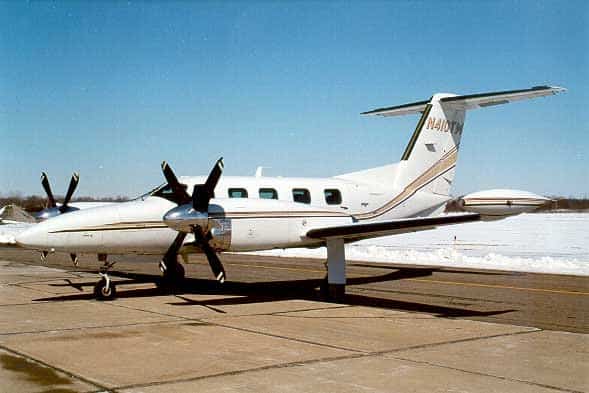
The Cheyenne 400, first sold as the Cheyenne IV and then the Cheyenne 400LS, has a top speed of 351 knots (404 mph). AOPA puts its cruise at 350 knots with a climb rate of 3,200 feet per minute at maximum takeoff weight.
Piper built it as an answer to the Cessna Citation I jet without designing a new airframe. It took the Cheyenne III, swapped in two Garrett TPE331-14 engines flat rated to 1,000 shp each, and enlarged the tail for stability at higher speeds.
It is the largest aircraft Piper ever made, and one of the rarest. Wikipedia counts 43 built, AOPA about 45.
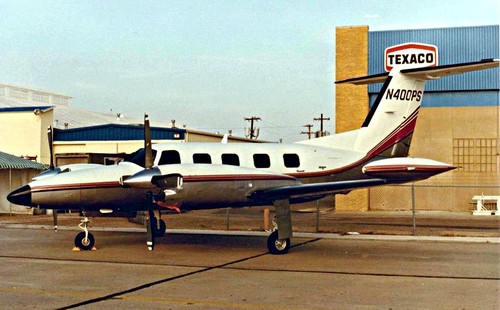
On April 16, 1985, Chuck Yeager flew the 400LS N400PS out of Hillsboro, Oregon, to two time-to-climb records for its class and two for all turboprops. It reached 3,000 meters in 1 minute and 47.6 seconds.
5. Beechcraft Starship 2000A: 335 knots


The Beechcraft Starship has a published maximum speed of 335 knots (386 mph) and a cruise speed of 307 knots. It seats six passengers behind one or two pilots.
Few aircraft looked further ahead. It had a carbon-fiber composite airframe, a forward canard wing, pusher propellers and one of the first glass cockpits on a civil aircraft. Certification came in 1987, two years late, after trouble with the composite structure.
It was meant to replace the King Air and lost to it instead. Only 53 were built before production ended in 1995, Beechcraft stopped operating its own Starships in 2003, and most survivors were scrapped or went to museums. A few still flew into the 2020s.
6. Dornier 328: 335 knots

Jane’s gives the Dornier 328-110 a cruise speed of 620 km/h (335 knots, 385 mph) at 20,000 feet. That ties the Starship, but the Dornier does it with 30 to 33 passengers aboard.
Dornier shaped the fuselage for high cruise speed from the start. Its higher cruise and approach speeds also let controllers slot it among jetliners more easily than most turboprops.
Production ran from 1991 to 2000. Deutsche Aircraft is now developing a re-engined successor, the D328eco, and broke ground on a new final assembly line at Leipzig/Halle Airport in 2023.
7. Embraer EMB 120 Brasilia: 328 knots
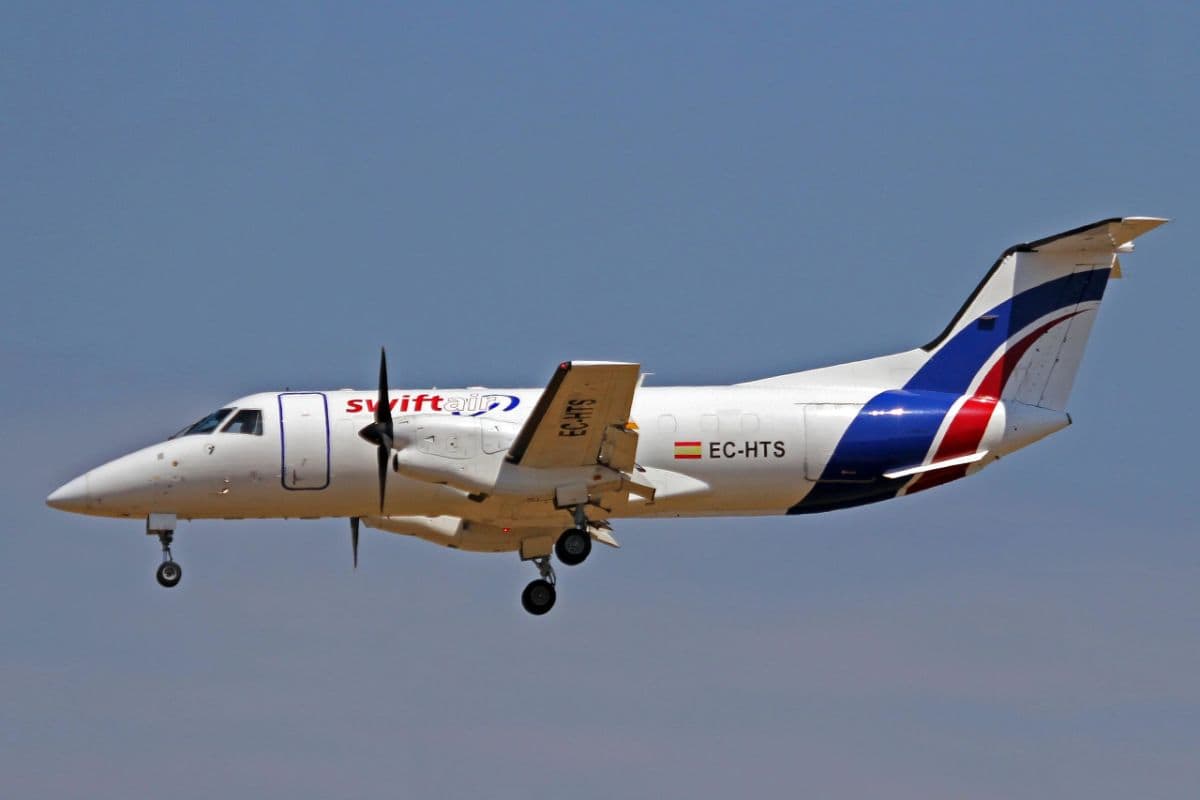
Jane’s lists a maximum speed of 608 km/h (328 knots, 378 mph) at 20,000 feet for the EMB 120 Brasilia, with a cruise speed of 552 km/h (298 knots). It carries 30 to 36 passengers on two Pratt & Whitney Canada PW118 engines.
The Brasilia first flew on July 27, 1983, and entered service with Atlantic Southeast Airlines in October 1985. Embraer ended production in 2001.
8. Beechcraft King Air 360: 312 knots


Textron Aviation rates the King Air 360 at a maximum cruise speed of 312 knots (359 mph). It has a maximum range of 1,806 nautical miles, room for up to 11 occupants, and two PT6A-60A engines of 1,050 shp each.
It is one of only two aircraft on this list still in production. The Super King Air family has been built continuously since 1974, the longest production run of any civilian turboprop in its class, and the 360 arrived in August 2020 with autothrottles and a lower cabin altitude.
9. Swearingen Metro III and Merlin: 311 knots


The Metro III commuter airliner has a published maximum speed of 311 knots (358 mph) with 19 passengers. Its corporate sibling, the Merlin IIIC, is listed by Jane’s at a maximum cruise speed of 300 knots at 10,000 feet with up to nine passengers.
The Merlin III and the Metro shared a wing, landing gear and tail, and both ran on Garrett TPE331 engines. Short-fuselage Merlin production ended in 1983, and the last Metro was built in 1998, after more than 600.
10. Grumman Gulfstream I: 302 knots

The oldest design on the list still makes the top 10. Jane’s gives the Gulfstream I a maximum cruise speed of 348 mph (302 knots) at 25,000 feet at maximum takeoff weight.
It first flew on August 14, 1958, on two Rolls-Royce Dart turboprops, and Grumman built 200 through 1969. Most carried 10 to 12 executives, though a stretched airline version seated 37.
Fast twins just outside the top 10
Below 300 knots the field gets crowded, and several well-known twins sit within a few knots of each other.
| Aircraft | Top published speed | Measure |
|---|---|---|
| Cessna 441 Conquest II | 295 kt (340 mph) | Max speed at 16,000 ft |
| Mitsubishi MU-2L | 295 kt (340 mph) | Max cruise at 15,000 ft |
| BAe Jetstream 41 | 295 kt (339 mph) | Max cruise at 20,000 ft |
| Saab 340B | 283 kt (326 mph) | Cruise |
| ATR 72-600 | 275 kt (316 mph) | High-speed cruise |
| Cessna 425 Conquest I | 264 kt (304 mph) | Max speed at 17,700 ft |
Cessna 441 Conquest II
Jane’s lists the Conquest II at 340 mph (295 knots) at 16,000 feet. Cessna built 362 between 1977 and 1986, seating up to nine passengers with two pilots.

Mitsubishi MU-2 and BAe Jetstream 41
Jane’s gives the MU-2L a maximum cruise speed of 547 km/h (295 knots) on two Garrett TPE331 engines. The 29-seat Jetstream 41 matches it at 295 knots at 20,000 feet.
Saab 340
Saab’s datasheet gives the 34-seat Saab 340B a cruise speed of 283 knots (326 mph). The Saab 2000 at number two was developed from it, and outruns it by 87 knots.

ATR 72
The ATR 72-600 cruises at up to 275 knots (316 mph) and seats up to 78 passengers. That is 85 knots slower than the Dash 8-400 at number three.

Cessna 425 Conquest I
The smaller Cessna 425, sold as both the Corsair and the Conquest I, has a maximum speed of 264 knots (304 mph) at 17,700 feet and seats four to six passengers. It was a turbine development of the piston-engined Cessna 421.


What is the fastest turboprop of all?
Drop the twin-engine rule and the answer is Russian. Guinness World Records lists the Tupolev Tu-95 bomber family, including the Tu-114 airliner, as the fastest propeller-driven aircraft in standard production form, with a maximum cruise speed of 925 km/h (575 mph), or Mach 0.82.
On March 24, 1960, the Tu-114 set an FAI record of 871.38 km/h (541 mph) over a 1,000 km closed circuit, a record that still stands in its original category. Both types use four engines, each driving two contra-rotating propellers.
Propellers are why no turboprop goes much faster. Shock waves form on the blades as they approach the speed of sound, and the Tu-95’s blade tips are already supersonic, which makes it one of the loudest military aircraft flying. For the outright speed records, see our list of the fastest aircraft in the world.
What about military twin turboprops?
They are not faster. The US Navy’s E-2 Hawkeye radar plane tops out at 350 knots, and the Alenia C-27J Spartan transport at 602 km/h (325 knots). Neither comes within 50 knots of the Avanti EVO.
If speed matters less than price, our guide to the cheapest turboprops covers the other end of the market.
FAQ
Sources and references used for research and fact-checking.
- Piaggio Aerospace via Airframer, Avanti EVO receives EASA and FAA certification for landing gear system
- Piaggio Aerospace, One year on: Baykar stabilizes and relaunches Piaggio Aerospace
- Wikipedia, Piaggio P.180 Avanti
- Saab, Saab 2000
- Wikipedia, Saab 2000
- De Havilland Canada, Dash 8-400 spec sheet
- Wikipedia, De Havilland Canada Dash 8
- AOPA, Piper Cheyenne 400LS quick look
- Wikipedia, Piper PA-42 Cheyenne
- Wikipedia, Beechcraft Starship
- Wikipedia, Dornier 328
- Wikipedia, Embraer EMB 120 Brasilia
- Textron Aviation, Beechcraft King Air 360
- Wikipedia, Beechcraft Super King Air
- Wikipedia, Fairchild Swearingen Metroliner
- Wikipedia, Swearingen Merlin
- Wikipedia, Grumman Gulfstream I
- Wikipedia, Cessna 441 Conquest II
- Wikipedia, Mitsubishi MU-2
- Wikipedia, British Aerospace Jetstream 41
- Wikipedia, Saab 340
- Wikipedia, ATR 72
- ATR, ATR 72-600
- Wikipedia, Cessna 425
- Wikipedia, Fastest propeller-driven aircraft
- Wikipedia, Tupolev Tu-114
- Wikipedia, Tupolev Tu-95
- Wikipedia, Grumman E-2 Hawkeye
- Wikipedia, Alenia C-27J Spartan
Get the Newsletter
The latest aviation news and stories sent to your inbox.
About the Author

Tim is the owner and lead editor of AeroCorner since 2019, overseeing aviation content covering aircraft, airlines, airports, and the broader aviation industry. Through years of researching, writing, editing, and publishing aviation-focused content, he has developed extensive practical knowledge of commercial aviation and air travel. Based in Asia and a frequent traveler himself, Tim also brings firsthand passenger experience to AeroCorner’s coverage. Outside of publishing, he has also explored aviation firsthand through hands-on flight training in New Zealand.