


Table of Contents
Most commercial airliners cruise between 460 and 575 mph (740 to 925 km/h), which is roughly Mach 0.78 to Mach 0.85. They lift off at about 160 to 180 mph and touch down at around 150 to 165 mph.
If you have looked this up before, you have probably seen 500 mph on one site, 575 mph on another, and 600 mph on a third. None of them is lying. They are quoting three different speeds, and we explain which is which further down.
Speed also depends entirely on what is flying. A training aircraft cruises near 140 mph. The retired SR-71 Blackbird once hit 2,193 mph.
| Aircraft type | Typical cruise speed | Takeoff speed | Landing speed |
|---|---|---|---|
| Commercial airliner | 460 to 575 mph (740 to 925 km/h) | 160 to 180 mph | 150 to 165 mph |
| Business jet | 480 to 610 mph (770 to 980 km/h) | 120 to 140 mph | 110 to 130 mph |
| Turboprop | 250 to 450 mph (400 to 725 km/h) | 90 to 120 mph | 80 to 110 mph |
| Single-engine piston | 100 to 180 mph (160 to 290 km/h) | 55 to 75 mph | 50 to 70 mph |
| Military fighter jet | 1,200 to 1,500+ mph (Mach 1.6 to 2+) | 180 to 200 mph | 130 to 155 mph |
What Is the Average Speed of an Airplane?
The average speed of a commercial airplane in cruise is about 550 mph (885 km/h). That single number covers the bulk of the world’s passenger fleet, from a Boeing 737 to an Airbus A380.
Average speed across a whole flight is lower, because a flight is not all cruise. Taxiing, climbing, descending, and holding all pull the average down.
On a short domestic hop, the average speed door to door can be closer to 400 mph. On a long-haul flight, where cruise makes up most of the trip, the average sits much nearer the true cruise number.
Why Every Website Gives a Different Airplane Speed
An airplane has three speeds at any given moment, and they are all different numbers. This is the single biggest reason published figures disagree.
Indicated airspeed is what the pilot sees on the instrument. True airspeed is how fast the aircraft is actually moving through the air. Ground speed is how fast it is moving over the map, and it is the only one that decides when you land.
The FAA defines these in the Pilot’s Handbook of Aeronautical Knowledge. True airspeed is indicated airspeed corrected for air pressure and temperature. Ground speed is true airspeed corrected for wind.
Air at 35,000 feet is thin, so an aircraft has to move much faster through it to register the same reading on the instrument. Here is the same 737 at the same instant, cruising with a 100-knot tailwind:
| Which speed | Reading | What it means |
|---|---|---|
| Indicated airspeed | ~270 knots (311 mph) | What the cockpit instrument shows and what the pilot flies to |
| True airspeed | ~448 knots (515 mph) | Actual speed through the air, Mach 0.78 at this altitude |
| Ground speed | ~548 knots (631 mph) | Speed over the ground, and what your seat-back map displays |
The number you see on the seat-back screen is the fastest one
In-flight maps show ground speed, which is inflated by any tailwind. That is why passengers on eastbound transatlantic flights sometimes photograph readouts above 700 mph. The aircraft is not flying any faster through the air than usual, it is riding a jet stream that is moving with it.
So when one site says 500 mph and another says 600 mph, they are usually quoting true airspeed and ground speed respectively. Neither figure is wrong, they just answer different questions.
If you want to go deeper on the instrument reading itself, we cover what KIAS means in aviation separately.
How Fast Do Airplanes Go at Takeoff?
A commercial airliner lifts off at roughly 160 to 180 mph (260 to 290 km/h). In the units pilots actually use, that is a rotation speed of about 140 to 155 knots for a Boeing 737 or Airbus A320.
There is no single takeoff speed for an aircraft type. The number is calculated before every departure from the aircraft’s weight, the runway length, the air temperature, and the wind.
A heavily loaded long-haul 777 leaving on a hot day needs a noticeably higher rotation speed than the same aircraft departing light and cold. Heavier aircraft need more airflow over the wing to generate the same lift.
The three takeoff speeds pilots calculate
Crews work to three separate numbers on every takeoff roll, not one.
| Speed | Typical airliner value | What happens at it |
|---|---|---|
| V1 | 135 to 155 knots (155 to 178 mph) | Decision speed. Past this point the takeoff must continue even if an engine fails. |
| Vr (rotation) | 140 to 160 knots (161 to 184 mph) | The pilot pulls back and the nose comes up. |
| V2 | 145 to 165 knots (167 to 190 mph) | Safe climb speed with one engine out. |
Smaller aircraft rotate far more slowly. A Cessna 172 lifts off at around 55 knots, about 63 mph, which is highway speed.
Before any of that, the aircraft is only taxiing. Ground movement around the airport happens at about 20 to 30 mph, dropping to walking pace in tight turns.
How Fast Do Airplanes Go When Landing?
Airliners touch down at about 150 to 165 mph (240 to 265 km/h). On final approach they are flying at roughly 130 to 150 knots, which is 150 to 173 mph.
Landing speed follows the same logic as takeoff. It is set by weight, so an aircraft arriving with nearly empty tanks lands slower than one that has just diverted with a full fuel load.
A Boeing 747 crosses the threshold at around 145 to 160 knots, roughly 167 to 184 mph, depending on its landing weight. Despite its size it does not land dramatically faster than a narrow-body, because its enormous wing and extensive flap system do the work.
Light aircraft again sit far lower. A Cessna 172 approaches at 60 to 70 knots and touches down near 55 knots, about 63 mph.
Landing speed is a range, not a spec
Manufacturers do not publish a single landing speed the way they publish a cruise speed. Approach speed is recalculated for every arrival from the aircraft’s actual weight, so two identical aircraft landing on the same runway an hour apart can legitimately fly approaches 15 knots apart.
How Fast Do Commercial Airplanes Cruise?
Large commercial airplanes cruise between Mach 0.78 and Mach 0.85. At normal cruising altitude that works out to roughly 515 to 561 mph of true airspeed.
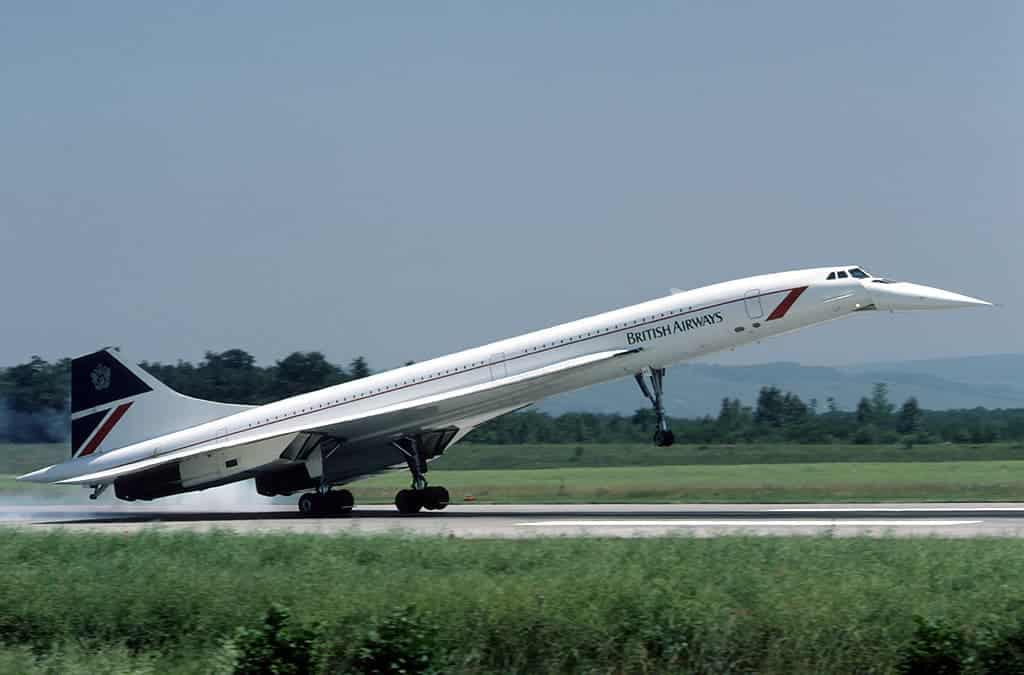
Cruise speed is chosen for efficiency, not for maximum performance. Every airliner can fly faster than it normally does, and airlines trade that speed away for fuel savings.
| Aircraft | Typical cruise Mach | Approximate true airspeed |
|---|---|---|
| Airbus A320neo | Mach 0.78 | 515 mph (830 km/h) |
| Boeing 737 MAX | Mach 0.79 | 521 mph (839 km/h) |
| Boeing 777 | Mach 0.84 | 554 mph (892 km/h) |
| Boeing 787 Dreamliner | Mach 0.85 | 561 mph (903 km/h) |
| Airbus A350 | Mach 0.85 | 561 mph (903 km/h) |
| Airbus A380 | Mach 0.85 | 561 mph (903 km/h) |
| Boeing 747-8 | Mach 0.855 | 564 mph (908 km/h) |
The differences between these aircraft are small. A 787 is only about 45 mph faster in cruise than an A320neo, which on a two-hour flight is worth a handful of minutes.
The FAA publishes Type Certificate Data Sheets for every certificated aircraft, and those give the official speed limits for each model. They are the authoritative source when a manufacturer’s marketing number and a spec site disagree.
Why Airplanes Slow Down Below 10,000 Feet
In United States airspace, aircraft are legally capped at 250 knots indicated airspeed, about 288 mph, below 10,000 feet. The rule is FAR 91.117.
The limit drops further near airports. Within 4 nautical miles of the primary airport in Class C or Class D airspace, at or below 2,500 feet above the surface, the cap is 200 knots (230 mph).
The reason is traffic. Low altitudes mix airliners with light aircraft, and slower speeds give everyone more time to see and avoid each other, and give controllers room to sequence very different aircraft into the same runway.
Every speed limit in the rule is in indicated airspeed
FAR 91.117 caps indicated airspeed, not true airspeed or ground speed. An aircraft at 250 knots indicated below 10,000 feet may well be doing more than 300 mph over the ground with a tailwind, and it is still perfectly legal.
Once above 10,000 feet the restriction lifts. Airliners typically accelerate to about 280 to 290 knots for the climb, then switch to a fixed Mach number as they approach cruising altitude.
Mach, Knots, and mph: How the Units Compare
A Mach number is not a speed. It is a ratio of the aircraft’s speed to the speed of sound, and the speed of sound changes with air temperature.
At sea level in standard conditions, Mach 1 is 761 mph (1,225 km/h). At 36,000 feet and above, where the air is around 70 degrees below zero, Mach 1 falls to 660 mph (1,062 km/h).
That 100 mph gap is why the same aircraft is published at different speeds by different sources. Mach 0.85 is 647 mph at sea level but only 561 mph at cruising altitude.
| Speed | In mph | In km/h | In knots |
|---|---|---|---|
| Mach 0.78 (at cruise altitude) | 515 mph | 829 km/h | 448 knots |
| Mach 0.85 (at cruise altitude) | 561 mph | 903 km/h | 488 knots |
| Mach 1 (at cruise altitude) | 660 mph | 1,062 km/h | 574 knots |
| Mach 1 (at sea level) | 761 mph | 1,225 km/h | 661 knots |
| 250 knots (the low-altitude limit) | 288 mph | 463 km/h | 250 knots |
How Fast Do Private Jets Fly?
Private jets are the fastest civilian aircraft flying today, and the quickest of them are meaningfully faster than any airliner.
The Bombardier Global 8000 is the current record holder. Bombardier publishes a top speed of Mach 0.95 and a high-speed cruise of Mach 0.90, and calls it the fastest civil aircraft since Concorde.
It entered service in December 2025, with the first delivery going to NetJets in early 2026. The Gulfstream G700 and G800 follow at a maximum operating speed of Mach 0.935.
The Citation X+ has lost its title twice over
Many speed guides still name the Cessna Citation X+ as the fastest civilian jet at Mach 0.935. Production of the Citation X line ended in 2018 after 339 aircraft, only 29 of them X+ models, so it has not been a current aircraft for years. The Global 8000 has since taken the outright speed title as well.
No civilian aircraft in production today flies supersonic. The last one that did was the Concorde, which cruised at Mach 2.04, about 1,354 mph (2,179 km/h), until it was retired in 2003.
Several companies are developing new supersonic airliners, but as of 2026 none has entered commercial service. We look at how fast Concorde really flew in more detail separately.
How Fast Do Small and Single-Engine Planes Fly?
Single-engine aircraft cover an enormous range, from about 100 mph to nearly 400 mph. Quoting one average for the category is misleading.
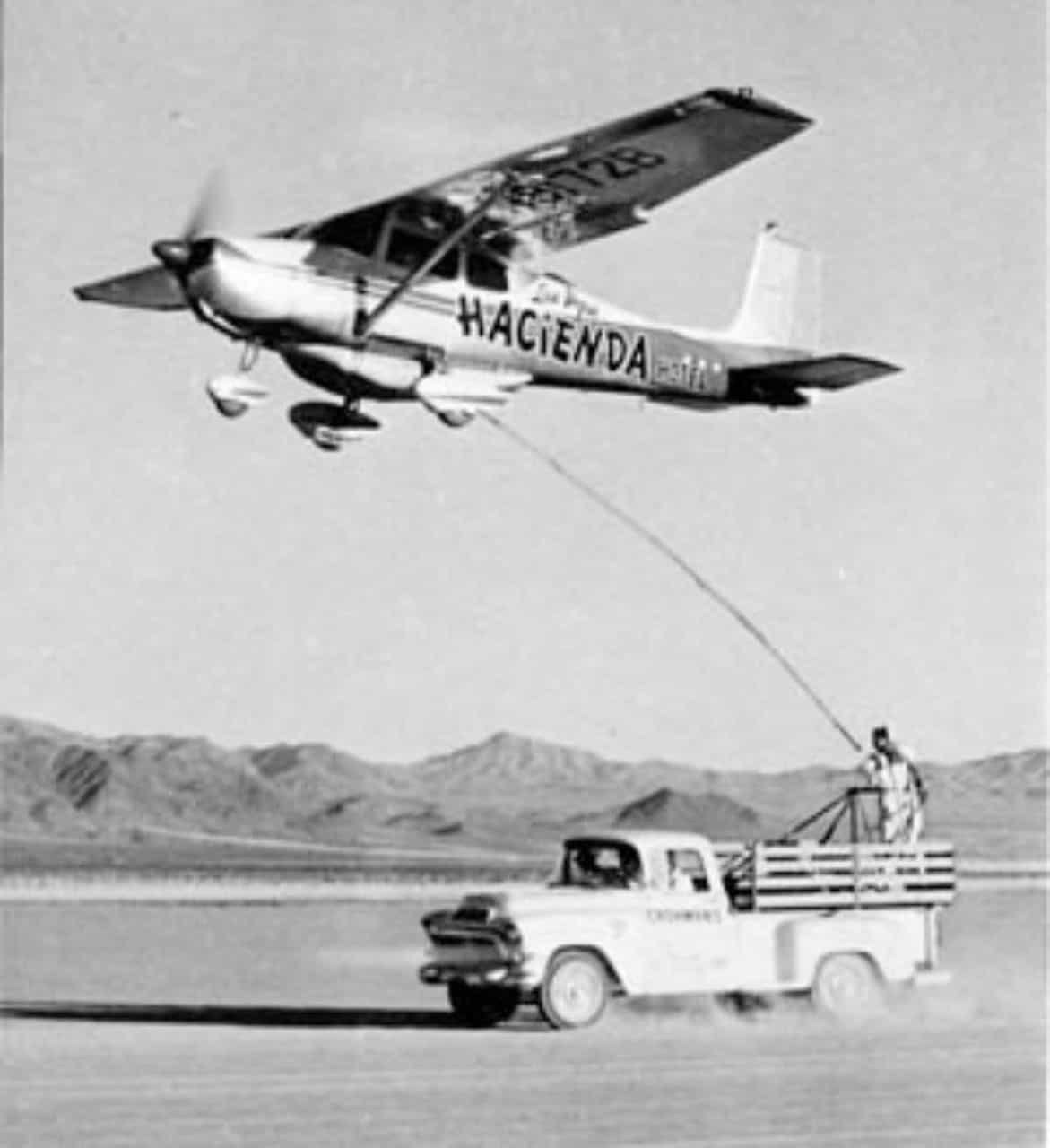
A Cessna 172, the archetypal training aircraft, has a maximum cruise speed of about 124 knots, which is 143 mph (230 km/h). Most flight training happens well below that.
Higher-performance piston singles are considerably quicker. A Cirrus SR22 cruises near 183 knots, about 211 mph.
The fastest single-engine production aircraft is a turboprop, not a piston aircraft. The Epic E1000 GX cruises at 333 knots, roughly 383 mph (616 km/h), which puts it within reach of some jets.
Turboprops in general run from about 250 to 450 mph. They are most efficient lower and slower, while jets earn their advantage high and fast. We rank the quickest of them in our guide to the fastest single-engine turboprop planes.
How Fast Do Military Planes Fly?
There are so many types of military aircraft that no single speed describes them. The range runs from transport aircraft slower than an airliner to fighters at more than twice the speed of sound.
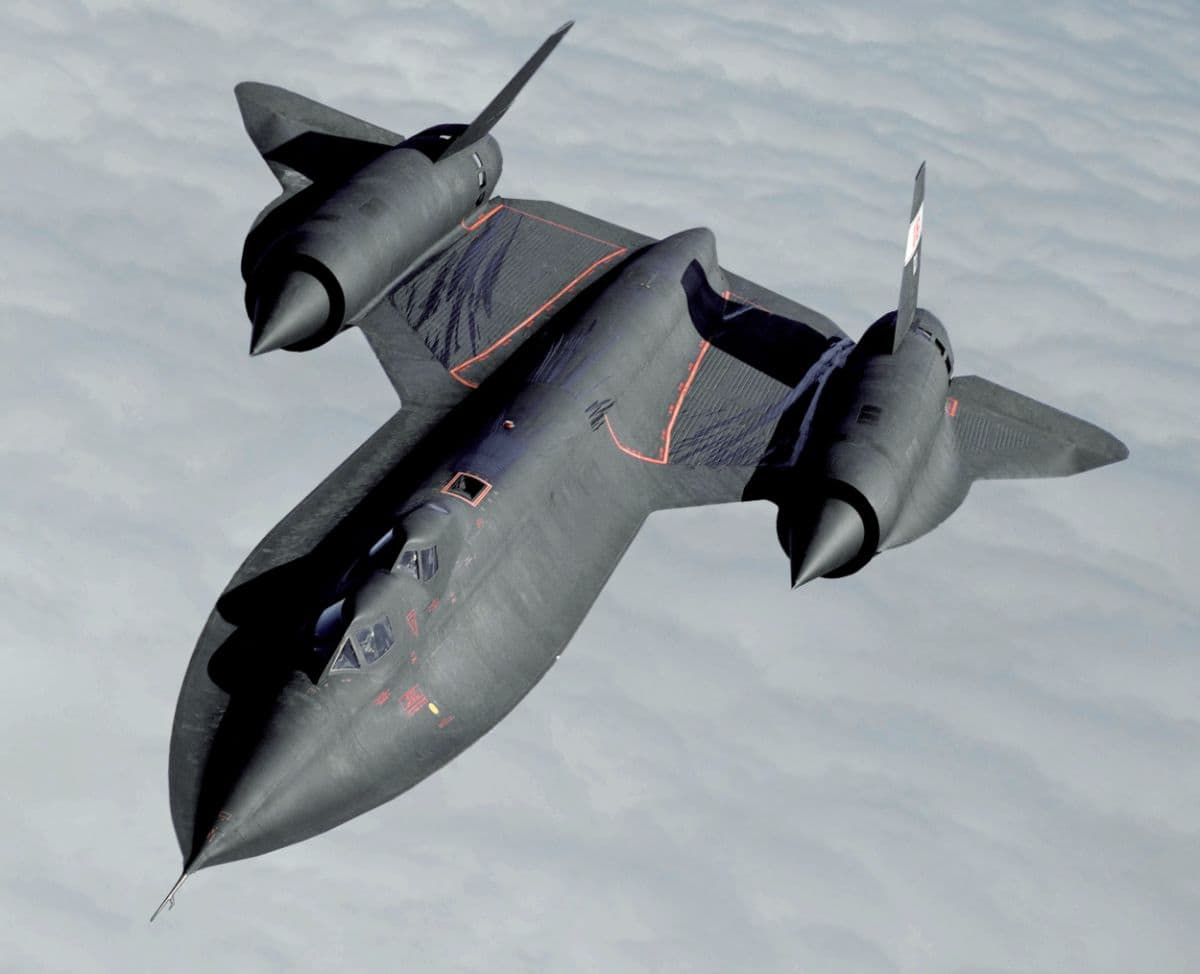
Modern fighters cruise subsonic and use their top speed sparingly. An F-35 or F/A-18E tops out around Mach 1.6, and an F-16 or F-22 can exceed Mach 2, but afterburner fuel burn means those speeds last minutes, not hours.
Military transports sit at the other end. A C-17 Globemaster cruises at about Mach 0.75, roughly 520 mph, slower than most of the airliners it shares airspace with.
That spread is why large military cargo aircraft and the fastest fighter jets are best compared separately rather than averaged together. Our ranking of the fastest military aircraft in the world covers the whole field.
The Fastest Airplanes Ever Flown
The outright records were set decades ago and still stand. Nothing crewed has flown faster since 1967.
| Aircraft | Speed | Record | Date |
|---|---|---|---|
| North American X-15 | 4,520 mph (7,274 km/h), Mach 6.7 | Fastest crewed aircraft flight, rocket powered | October 3, 1967 |
| Lockheed SR-71 Blackbird | 2,193 mph (3,530 km/h) | FAI absolute record, crewed air-breathing aircraft | July 28, 1976 |
| Concorde | 1,354 mph (2,179 km/h), Mach 2.04 | Fastest airliner in commercial service | 1976 to 2003 |
| Bombardier Global 8000 | Mach 0.95 | Fastest civil aircraft in production | In service since 2025 |
The SR-71 record was set by Captain Eldon W. Joersz and Major George T. Morgan Jr. over Beale Air Force Base on July 28, 1976. It remains the fastest speed ever recorded by a crewed aircraft breathing air rather than carrying its own oxidiser.
The SR-71's top speed was not classified, it was thermal
A persistent myth holds that the Blackbird’s real maximum is secret. The actual limit was a temperature gauge: the Pratt & Whitney J58 engines were cleared to a compressor inlet temperature of 427 degrees C (800 degrees F), and crews slowed down when they reached it. That capped the aircraft at roughly Mach 3.2 to 3.3 in normal operation, and it was an engine limit rather than an airframe one.
The X-15 record belongs to Major William J. Knight, who reached Mach 6.7 at 102,100 feet on October 3, 1967. Every hypersonic vehicle flown since has been uncrewed or a spacecraft.
For the full ranking across every category, see our guide to the fastest aircraft in the world.
What Actually Changes an Airplane’s Speed
Wind is the largest single variable on any given flight. The jet stream can add or subtract more than 100 mph from ground speed, which is why the same route takes longer westbound than eastbound.
Altitude matters almost as much. Thinner air means less drag, so an aircraft achieves a higher true airspeed for the same engine power the higher it climbs.
Weight, air temperature, and how much the airline is willing to spend on fuel fill in the rest. Airlines routinely fly a slightly slower cruise Mach than the aircraft is capable of to cut fuel burn.
When you buy an airline ticket the schedule gives you a departure and arrival time but never a speed. You can estimate it yourself if you know the distance between the two cities, and the answer will usually land close to 500 mph.
FAQ
Sources and references used for research and fact-checking.
- eCFR, US Government Publishing Office, 14 CFR 91.117 - Aircraft speed
- Federal Aviation Administration, Pilot's Handbook of Aeronautical Knowledge (FAA-H-8083-25B)
- Fédération Aéronautique Internationale, 50 years of Lockheed Blackbird FAI records
- Air Force Test Center, October 3, 1967: X-15 Human Speed Record
- Bombardier, Global 8000 aircraft specifications
- Robb Report, Cessna Citation X Production Comes to an End
Get the Newsletter
The latest aviation news and stories sent to your inbox.
About the Author

Articles credited to the AeroCorner Editorial Team are created or maintained by multiple aviation contributors working under a shared editorial framework. Content is researched using authoritative aviation sources and reviewed to ensure clarity, technical accuracy, and consistency across AeroCorner.