

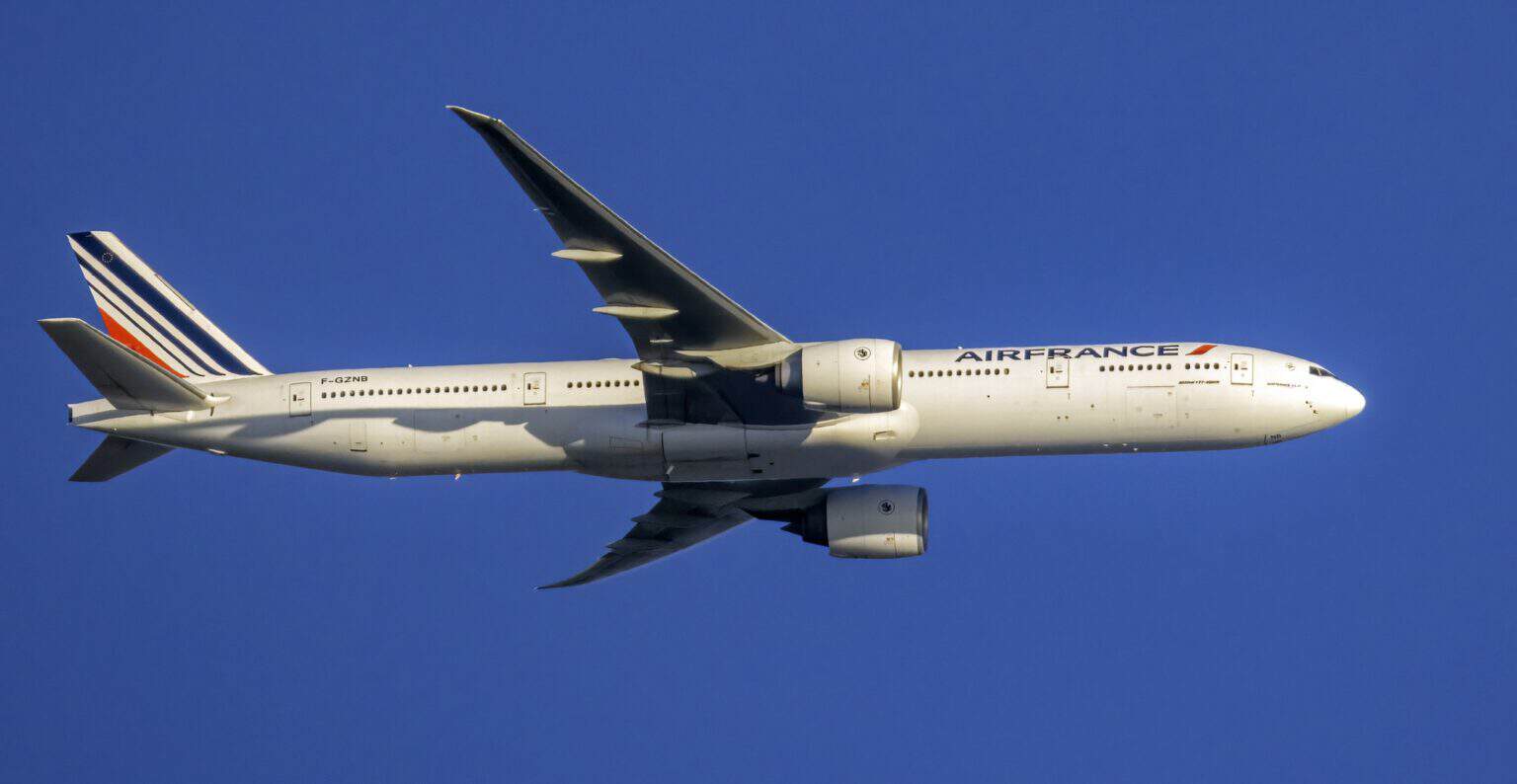
On October 23, 2026, the US Department of Transportation fined Air France $105,000 and KLM $320,000 for flying flights that carried Delta Air Lines’ flight numbers through Iraqi airspace below 32,000 feet. US airlines are barred from that airspace, and the ban followed the Delta code onto the two European carriers’ flights.
Both airlines agreed to consent orders “to avoid litigation” and were ordered to cease and desist. Both airlines say passengers and crew were never adversely affected. The case turns on the conditions attached to carrying a US airline’s code.
What the orders say
According to the DOT’s Air France order, the airline operated more than 30 Delta-coded flights through the Baghdad Flight Information Region below Flight Level 320 between April 2022 and November 2025. Of its $105,000 penalty, $65,000 is due within 60 days.
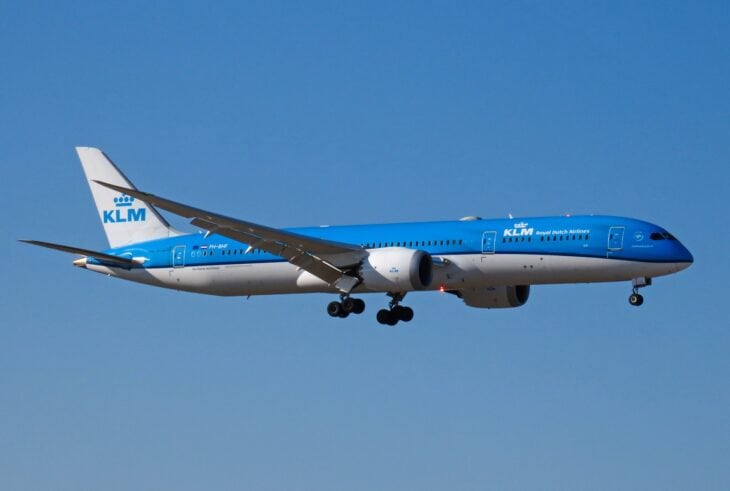
The KLM order counts more than 100 such flights between January 2022 and May 2025. KLM pays $200,000 within 60 days of its $320,000 penalty.
The rest of each fine, $40,000 for Air France and $120,000 for KLM, becomes payable only if the airline breaks the order within a year. The investigations were run by the DOT’s Office of Aviation Consumer Protection.
The airlines blamed air traffic control
Both carriers told the DOT they had planned the flights above FL320. They said that because of conflicting traffic, local controllers told their crews to descend or refused to let them climb, and that the flights went back up as soon as they were cleared.
The airlines argued this fell under the rule’s “emergency situations” exemption, since refusing an air traffic control instruction carries its own safety risk. The DOT disagreed.
Its reasoning is the core of the case. The department says it is not penalizing crews for obeying controllers in the air, but the airlines for failing over three years to reroute or drop the Delta code on a route where they “knew or should have known” controllers kept sending aircraft below FL320.
The Air France order also discloses a second, dropped matter. Before October 2022, it says, Air France flew multiple Delta-coded flights through Somali airspace below the FAA’s floor while descending into Djibouti, but the FAA later changed that rule to allow such descents and the DOT treated the issue as moot.
Why a US rule reaches European airlines
The FAA’s Iraq ban does not cover foreign airlines flying under their own codes. It does bar US operators from airspace it judges too dangerous, and over Iraq that ban is Special Federal Aviation Regulation 77, which since October 2020 has prohibited US operators from flying below FL320 in the Baghdad region.
The link is the codeshare. A foreign airline needs DOT approval to put a US partner’s code on its flights, and that approval comes with a condition: the flight may not carry the US code through any airspace the FAA has closed to US operators.
Air France and KLM both hold that approval for Delta’s DL code. Under it, a Delta-coded flight that dips below FL320 over Iraq is treated as flying without proper DOT authority, which is the violation both orders cite.

Per the DOT, the Iraq restriction has been extended to October 26, 2027. Risk assessments for the region keep moving, as the split between Gulf carriers and Europe’s regulator over flying over Iran showed this summer.
Not the first codeshare fine
The DOT has run this kind of case before. On December 30, 2024, it fined Lufthansa $220,000 and Swiss $200,000 for flying United-coded flights in FAA-prohibited airspace, and Lufthansa’s order rests on the same Baghdad rule.
Lufthansa made the same argument as Air France and KLM: it had planned to fly above FL320, but local controllers did not clear it to climb. The DOT answered then, too, that it was penalizing the airline for continuing to fly a route where it could not stay above the floor.
Earlier that month, as Aviation A2Z reported, the DOT fined Ethiopian Airlines $425,000 over United-coded flights between Ethiopia and Djibouti and Etihad $400,000 over JetBlue-coded flights between the UAE and the US. In both cases, the DOT said, the flights crossed FAA-prohibited airspace, and some continued after the department had raised the issue.
The 2026 orders also cite a June 2024 order against Emirates. Read together, the cases send foreign partners of US airlines one message: if controllers keep pushing a route below the FAA’s floor, change the route or take the US code off it.
Sources and references used for research and fact-checking.
- US Department of Transportation, Trump's Transportation Department Holds Foreign Airlines Accountable for Operating Flights in Prohibited Airspace Using U.S. Codes
- US Department of Transportation, Consent Order 2026-10-9, Société Air France (Docket DOT-OST-2026-0001)
- US Department of Transportation, Consent Order 2026-10-10, KLM Royal Dutch Airlines (Docket DOT-OST-2026-0001)
- US Department of Transportation, Consent Order, Deutsche Lufthansa AG (Docket DOT-OST-2024-0001)
- US Department of Transportation, USDOT Fines Lufthansa and Swiss for Operating Flights Carrying a U.S. Carrier's Code in Prohibited Airspace
- US Department of Transportation, USDOT Fines Ethiopian Airlines and Etihad Airways for Operating Flights Carrying a U.S. Carrier's Code in Prohibited Airspace
Get the Newsletter
The latest aviation news and stories sent to your inbox.
About the Author

AeroCorner News is the aviation news desk of AeroCorner.com. It covers accidents and incidents, safety rulings, airline and airport disruption, and new aircraft. It works from primary sources such as the NTSB, FAA, EASA and the manufacturers' own announcements.