

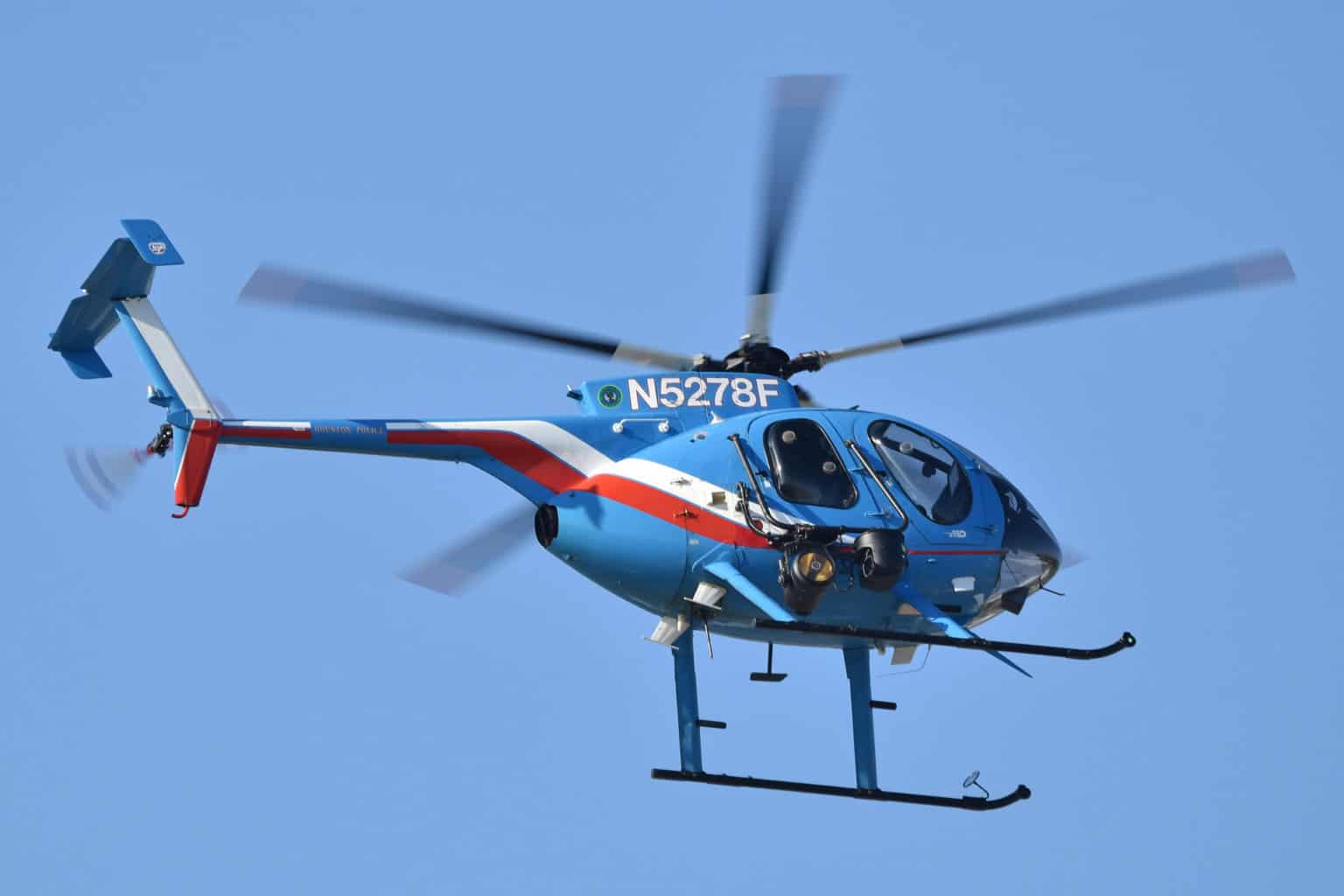
The FAA has ordered owners of MD 500-series helicopters to inspect the main transmission drive shaft coupling, part number 369H5660, for cracked splines, then replace the suspect part. Airworthiness Directive 2026-21-05 was published in the Federal Register on October 23, 2026.
The trigger was a supplier problem. According to the FAA, a new vendor improperly manufactured some of these couplings, and 148 of them were shipped to customers between June 3, 2020, and May 1, 2022.
The manufacturer has recovered 86 of those parts. The remaining 62 are at unknown locations, the FAA said, so the directive has every owner of an affected helicopter check what is installed.
Which Helicopters and Which Parts
The directive covers MD Helicopters Models 369D, 369E, 369F, 369FF, 369H and 500N, in any category. It applies only to aircraft with an installed coupling P/N 369H5660 carrying serial numbers 8564-0001 through 8564-0308.
The 369 numbers are the Hughes-era model designations behind familiar names such as the MD 500C (369H), MD 500D (369D), MD 500E (369E) and MD 530F (369F). The type traces back to the Hughes Model 369 that won the US Army’s light observation helicopter contest and flew as the OH-6 Cayuse in 1963.
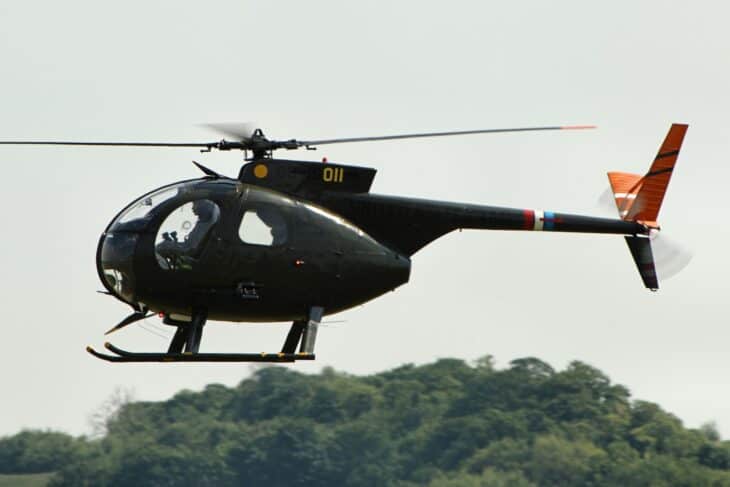

The FAA estimates that 568 helicopters on the US registry fall under the rule. The serial range in the applicability spans 308 numbers, more than the 148 suspect parts, and the final rule does not say how the two figures map onto each other.
AD 2026-21-05 at a glance
Part: main transmission drive shaft coupling P/N 369H5660, S/N 8564-0001 to 8564-0308. Inspect: within 50 hours or 6 months after November 27, 2026, whichever comes first. Cracked: replace before further flight. Not cracked: replace within 300 hours after that date.
What the Damage Is and Why It Matters
Couplings were found with mechanical damage to the spline root fillets, the spline faces and the major diameter, according to the FAA. Splines are the interlocking teeth that let the coupling pass engine torque to the main transmission.
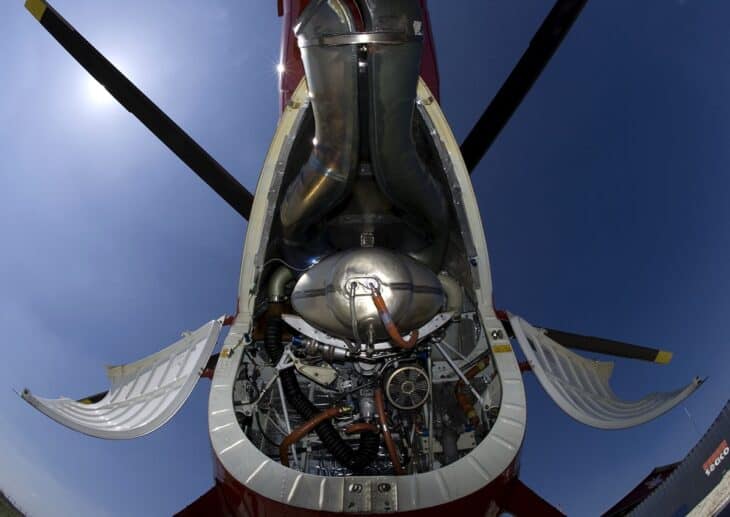

The FAA’s concern is fatigue cracks growing from those damaged root fillets and spline faces. Left alone, it says, they could lead to failure of the coupling, cutting power to the main rotor blades and possibly forcing an emergency autorotational landing.
An autorotation is the maneuver helicopter pilots train for an engine or drive failure. The pilot lowers collective pitch so that air flowing up through the descending rotor keeps it turning, then trades that rotor energy for a cushioned touchdown. It works, but it leaves the pilot no choice of landing spot beyond what is within gliding reach.
What Owners Have to Do
The rule takes effect 35 days after publication, on November 27, 2026. Within 50 hours time-in-service or six months after that date, whichever comes first, each affected coupling must be inspected for spline cracks under a bright light and 10X magnification.
A cracked coupling must come out before the next flight. An uncracked one still has to be replaced with a serviceable coupling within 300 hours time-in-service after the effective date, so in practice every affected part leaves the fleet.
For telling normal broaching tool marks from real damage, the AD points mechanics to example photos in a set of MD Helicopters service bulletins dated May 26, 2023, including SB369H-264R1 and SB500N-067R1. The manufacturer had therefore published inspection guidance more than three years before the FAA made the check mandatory.
The FAA puts the inspection at one work-hour, or $85 per helicopter and $48,280 across the US fleet. A replacement adds two work-hours and $1,681 per coupling, up to $3,532 per helicopter, and the manufacturer told the FAA some of that may be covered under warranty.
Why One Inspection, Not Repeat Checks
The proposal was published on July 1, 2026, and drew a single comment. An anonymous commenter argued that a one-time look catches only cracks that already exist, not fatigue cracks that might appear hundreds of hours later, and asked what data supported skipping recurring inspections.
The FAA answered that the directive targets a manufacturing defect in specific parts. The 300-hour replacement deadline is set well short of the calculated time for a crack to grow to a critical size, it said, so every defective part should be gone before any crack becomes dangerous.
That logic differs from the FAA’s recent Bell 407 cyclic stick directive, which imposed repeat inspections because that cracking was traced to force applied during routine preflight checks. Here the part itself is the problem, so the remedy is to remove it.
Apart from minor edits, the final rule matches the proposal. The FAA’s one change was to drop the references to incorporated service material, which it said were included by mistake, so the bulletins are now cited only as a note.
Sources and references used for research and fact-checking.
Get the Newsletter
The latest aviation news and stories sent to your inbox.
About the Author

AeroCorner News is the aviation news desk of AeroCorner.com. It covers accidents and incidents, safety rulings, airline and airport disruption, and new aircraft. It works from primary sources such as the NTSB, FAA, EASA and the manufacturers' own announcements.