


The FAA published a final airworthiness directive on October 19, 2026, that covers every Airbus A330-841 and A330-941, the A330-800neo and A330-900neo, and orders a bleed monitoring computer (BMC) software update on those still running older versions. AD 2026-20-15 replaces AD 2025-04-05 and takes effect on November 23, 2026.
It is the latest step in a fix that has run since August 2022, when leaking high-pressure valves (HPV) in the engine bleed air system first prompted emergency orders from EASA and the FAA. The FAA estimates 22 affected airplanes on the US register.
What the new A330neo directive requires
The rule adopts EASA AD 2025-0104R1, dated March 19, 2026, which Europe’s regulator issued as the state of design authority for Airbus. Airplanes running BMC software 4.0 or 4.1 must be brought up to the BMC software 5.0 standard.
Under the EASA text and the FAA’s date substitutions, US operators have 12 months from November 23, 2026, to load that software. They must also add new minimum equipment list provisions for the engine bleed overpressure valve within 30 days on airplanes still on the older software.
Once an airplane has the new software, the directive bars anyone from putting BMC software 4.0 or 4.1 back on it. Jets that already have version 5.0 but still carry an older valve get a smaller job: deleting operations engineering bulletin reminder data from the flight warning computer database.
The earlier requirements stay in force, with one exception: the repetitive replacement of the clips on the older valves. Seal integrity tests, borescope checks for debris after a clip failure, and the flight manual and dispatch limits all carry over from AD 2025-04-05.
The clip swaps have not simply gone away. EASA says the task now sits in the airworthiness limitations section of Airbus’s A330 maintenance documents, which Europe mandated in a separate directive, EASA AD 2026-0059.
Why the high-pressure valve clips matter
Jet engines feed compressed air, called bleed air, to systems such as the air conditioning packs. On the A330neo, the HPV sits upstream of a pressure regulating valve (PRV), which keeps the duct pressure in check.
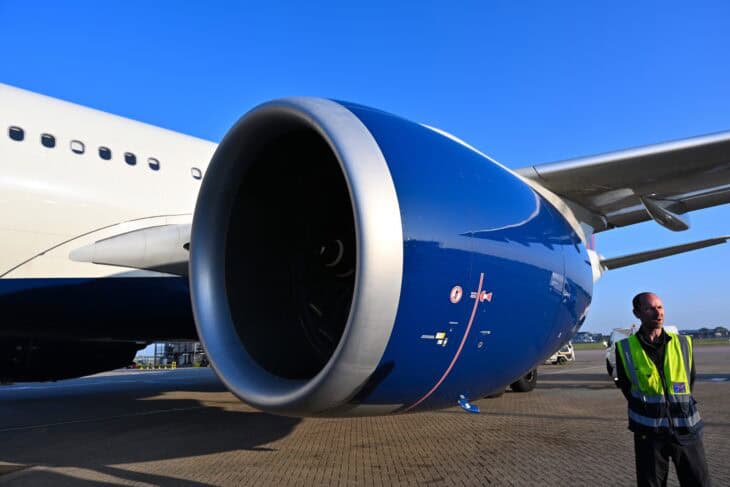

EASA says operators reported leaking HPVs, caused by failed HPV clips and damaged sealing rings. A leaking valve can expose the PRV to high pressure, damage it and stop it from closing when needed.
The FAA states the worst case plainly: high pressure and temperature in the duct downstream of the PRV, a possible duct burst, damage to several systems, and loss of control of the airplane. The directives also cover the wing bellow on each engine, which must be inspected after certain valve faults and replaced if it is damaged or deformed.
The affected valves are part numbers 71070A010001 and 71070A020001, fitted with clips P/N 6764-222. EASA counts an older valve as serviceable only while its clips are new or have under 4,000 flight hours and under 600 flight cycles since first installation.
How the jet is flown matters as well. On older-software jets, a takeoff or go-around flown with the packs off, the APU bleed on or an engine bleed off triggers a seal integrity test of each HPV, which EASA sets within 10 flight cycles for one group of airplanes.
Four years of fixes, and a redesigned valve
The FAA’s first move was Emergency AD 2022-18-51 on August 18, 2022, which barred takeoff in certain configurations and restricted dispatch. A September 2022 rule added the repetitive clip replacements, a June 2023 rule followed, and AD 2025-04-05 in February 2025 shortened the intervals by counting flight cycles as well as hours.
The lasting fix is hardware. Airbus has certified an improved HPV, P/N 71070A030001 (Airbus modification 210503), with several design changes and clips that do not need replacing at set intervals.
Fitting it in place of both affected valves is optional, but it ends the clip replacement for that airplane as long as no older valve goes back on. The FAA puts the cost at $97,790 per airplane, almost all of it the $96,885 in parts.
That option was widened after a comment from Delta Air Lines. Delta asked for credit for swapping the old valves for the new part number with Airbus maintenance manual tasks during unscheduled work, and the FAA agreed, so a replacement counts the same as a modification.
The mandatory work is cheap by comparison. The FAA estimates the retained actions at up to $1,303 per airplane and the new software update, extra work and equipment list revision at $949, while any on-condition repairs could reach $116,357 per airplane.
For the A330-900neo fleet, the direction is clear: software that monitors the bleed system better, and a valve that no longer wears out its clips. Bleed valves have been a theme in widebody rules this autumn: in September the FAA also moved to stop Trent-powered 787s flying with a broken engine bleed valve.
Sources and references used for research and fact-checking.
- FAA / Federal Register, Airworthiness Directives; Airbus SAS Airplanes (AD 2026-20-15, FR Doc 2026-21331)
- EASA, AD 2025-0104R1: Pneumatic, High Pressure Valve, Modification / Inspection / Replacement
- FAA / Federal Register, Airworthiness Directives; Airbus SAS Airplanes (AD 2022-19-05, FR Doc 2022-19459)
- FAA / Federal Register, Airworthiness Directives; Airbus SAS Airplanes (AD 2025-04-05, FR Doc 2025-03293)
Get the Newsletter
The latest aviation news and stories sent to your inbox.
About the Author

AeroCorner News is the aviation news desk of AeroCorner.com. It covers accidents and incidents, safety rulings, airline and airport disruption, and new aircraft. It works from primary sources such as the NTSB, FAA, EASA and the manufacturers' own announcements.