

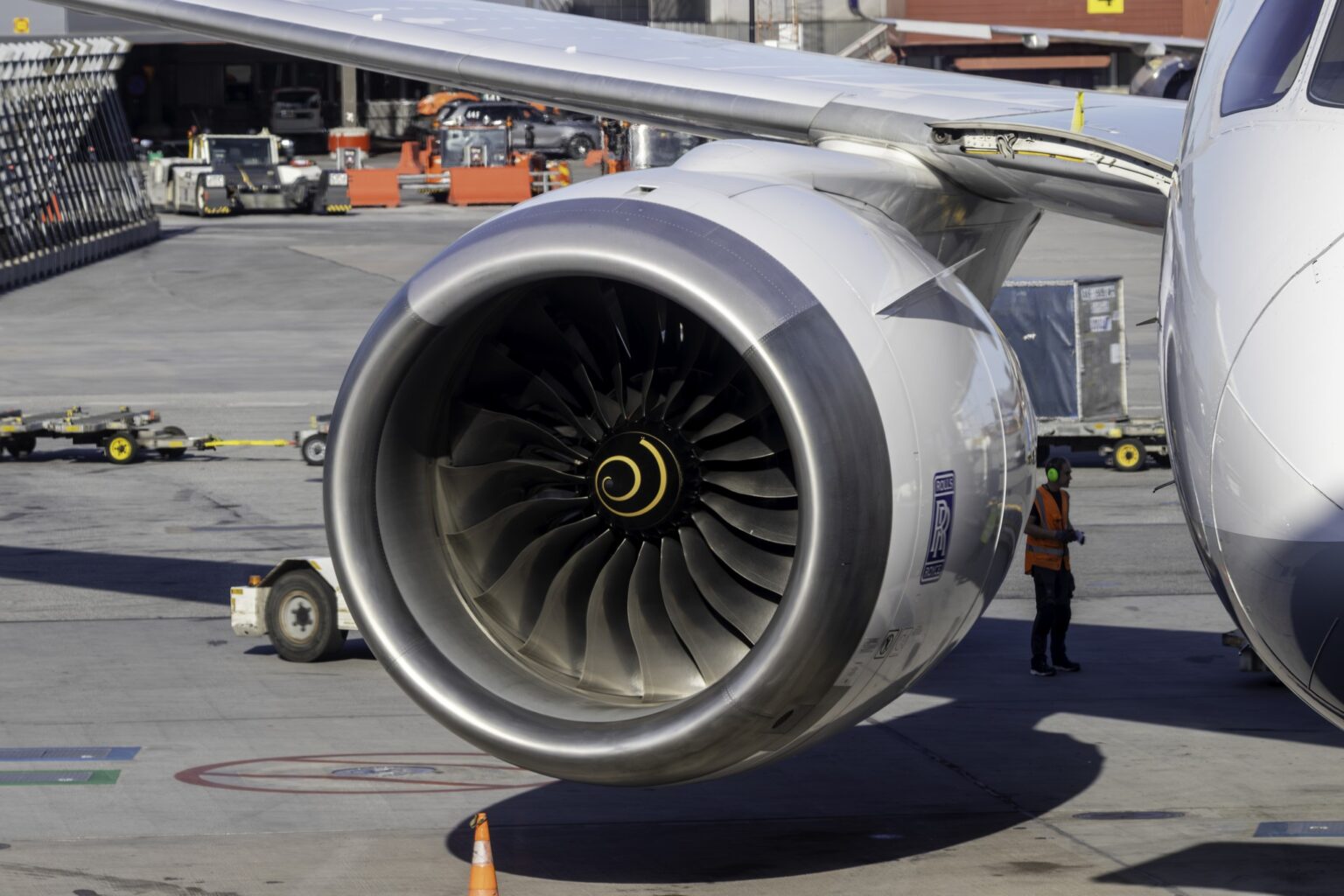
The FAA has turned its August proposal on Rolls-Royce Trent 1000-powered Boeing 787s into a binding rule. Airworthiness directive 2026-20-16, published in the Federal Register on October 19, 2026, requires operators to identify and fix a fan cowl that leaves parts of the right engine exposed to debris from the left one.
The directive takes effect on November 23, 2026. It covers 787-8, 787-9 and 787-10 jets fitted with seven Trent 1000 variants: the AE3, CE3, D3, G3, H3, J3 and K3.
What the final rule requires
Operators must check maintenance records, or inspect the right engine, to find the part number of its left fan cowl. The affected cowls are part numbers 725Z2300-307, 725Z2300-305 and 725Z2300-5003, according to the final rule.
Where one of those cowls is fitted, the operator has to modify or replace it. The work follows a Boeing Special Attention Requirements Bulletin, B787-81205-SB540022-00 RB, dated February 19, 2026.
From the effective date, nobody may install one of the three part numbers on a 787 that does not already carry one. That stops an affected cowl from being fitted to a jet that does not already have one.
The FAA sets no deadline of its own in the text. It points operators to the compliance times in Boeing’s bulletin, and wherever the bulletin counts from its own issue date, the clock starts on the AD’s effective date instead.
What changed since August
Almost nothing. This is the same rulemaking docket, FAA-2026-7233, as the proposed directive AeroCorner covered on August 7, and the FAA says it adopted the rule as proposed, apart from minor editorial changes.
The comment period, which closed on September 21, drew a single response. It came from the Air Line Pilots Association, International, which supported the proposal without change, according to the FAA.
The applicability, the seven engine variants and the part numbers all match the proposal. The FAA still counts 22 affected airplanes on the US register, the same figure it gave in August.
The cost estimates are also unchanged. The records check or inspection is put at 3 work-hours, or $255 an airplane and $5,610 across the US fleet.
A cowl modification is estimated at $5,226 an airplane, of which $4,716 is parts. A replacement is put at $170 in labor, with no parts price, because the FAA says it has no definitive data for one. According to the parts manufacturer, some or all of the cost may be covered by warranty.
| Item | August 7 proposal | October 19 final rule |
|---|---|---|
| Docket | FAA-2026-7233 | FAA-2026-7233 |
| Models | 787-8, 787-9, 787-10 | Unchanged |
| Engines | Trent 1000-AE3, CE3, D3, G3, H3, J3, K3 | Unchanged |
| US airplanes | 22 | 22 |
| Inspection cost, US fleet | $5,610 | $5,610 |
| Comments | Open to September 21 | One, from ALPA, in support |
| Status | Proposal | Effective November 23, 2026 |
Why the inboard side of one engine matters
The cowl in question is the left half of the right engine’s cowling, the side that faces the fuselage and the other engine. The FAA says it does not adequately cover several oil lines and the P30 sense line, a pressure-sensing line, on the right engine.
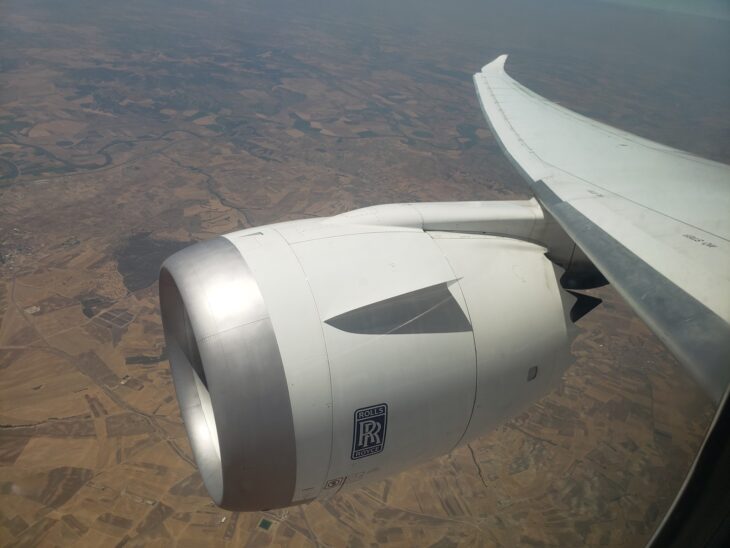

The scenario the agency describes is an uncontained failure of the left engine’s intermediate pressure turbine rotor stage, which throws debris across the aircraft. If that debris damaged the right engine’s critical systems, the result could be an in-flight shutdown of both engines.
That is why a cowl panel gets its own directive. A twin-engine Boeing 787 Dreamliner depends on one engine surviving whatever happens to the other, so shielding between the two is a safety system, not trim.
The FAA’s notice says the action was prompted by a report from the manufacturer. The notice does not describe any in-service event. Its finding concerns how much of the right engine the cowl covers.
It is not the only recent FAA action on Trent-powered 787s. In September the agency also barred dispatch with an inoperative bleed valve on Trent 1000 jets, a separate engine issue.
Sources and references used for research and fact-checking.
Get the Newsletter
The latest aviation news and stories sent to your inbox.
About the Author

AeroCorner News is the aviation news desk of AeroCorner.com. It covers accidents and incidents, safety rulings, airline and airport disruption, and new aircraft. It works from primary sources such as the NTSB, FAA, EASA and the manufacturers' own announcements.