

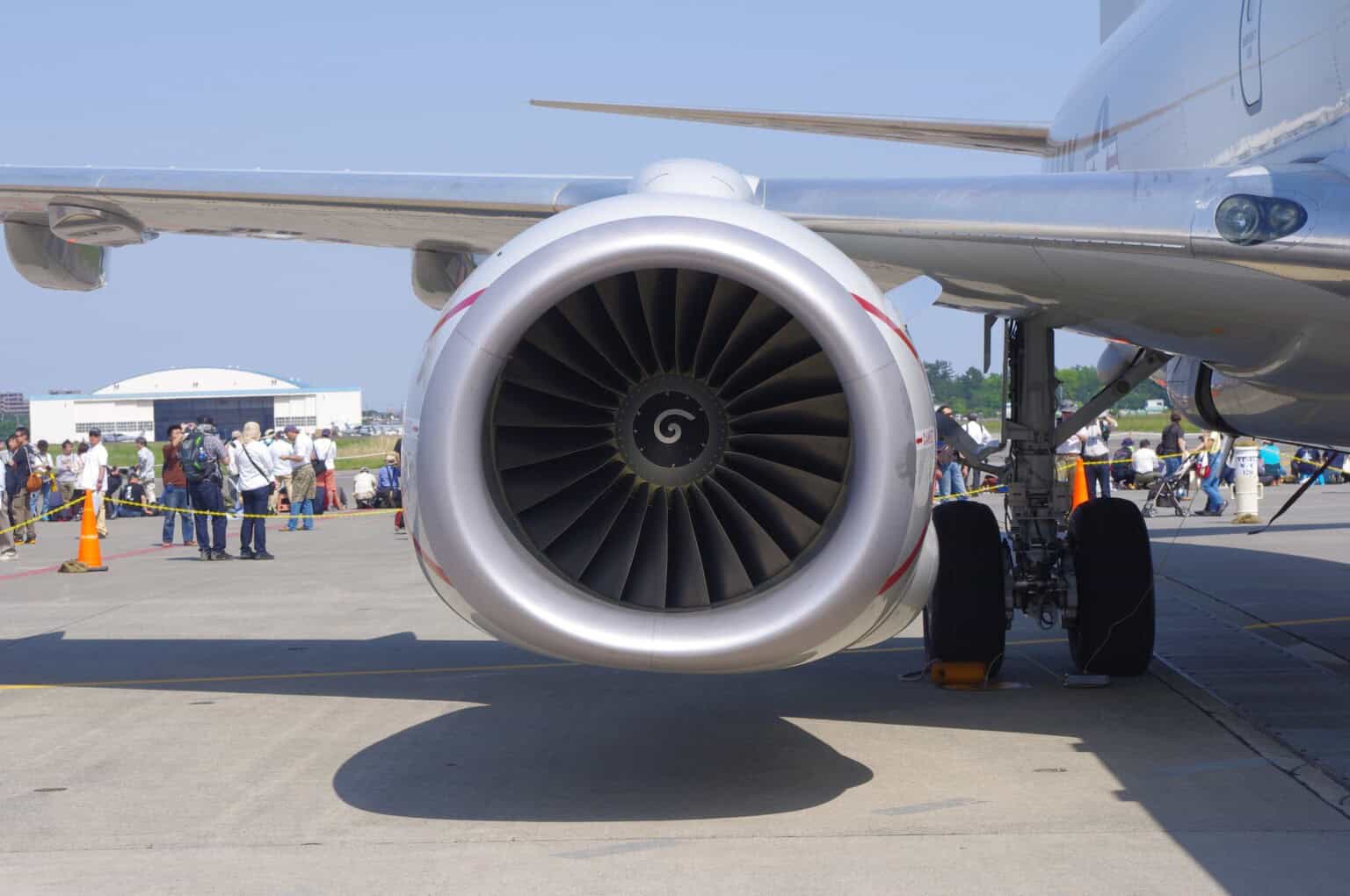
On July 31, 2026, the FAA published a proposed airworthiness directive that would rewrite the fan blade inspection program for every CFM56-7B engine, the powerplant on the entire Boeing 737 Next Generation family. It would supersede the directive the agency issued in December 2018 after a fan blade broke apart on Southwest Airlines Flight 1380.
The FAA estimates the rule would apply to 4,553 engines installed on US-registered airplanes. Comments are due 30 days after publication.
What Would Change
The existing directive, AD 2018-26-01, already requires repeating ultrasonic or eddy current inspections of certain fan blades and replacing any that show crack indications. The proposal keeps that structure but changes the instructions operators follow.
According to the FAA, CFM has since issued service material that improves the ultrasonic procedure and expands what the agency calls the “ultrasonic inspection gated area” to increase crack detectability. The same technique now sweeps more metal.
Operators would inspect both the concave and convex sides of the fan blade dovetail, the fir-tree-shaped root that locks each blade into the fan disk, per CFM Service Bulletin 72-1033 Revision 5 or a revised eddy current procedure.
The intervals keep their shape: an initial inspection before a blade reaches 17,000 cycles since new, then a repeat at least every 1,600 flight cycles. A blade may not be installed unless it meets one of those conditions.
What it costs
The FAA puts the inspection at two work-hours plus parts, or $340 per engine, and about $1.55 million across the US fleet. Replacing a fan blade pair, if an inspection turns one up, runs $208,385. The agency says it has no way to estimate how many blades will need replacing.
Why the Dovetail Is the Part That Matters
A turbofan’s fan is the big spinning disc at the front of the engine, and each blade is held to the disk only at its root. The dovetail carries the entire centrifugal load of a blade being flung outward thousands of times a minute.
The FAA describes what a crack there can do in unusually concrete language. Left unaddressed, it writes, the condition could result in fan blade failure, the engine inlet cowl disintegrating, and debris penetrating the fuselage, causing a loss of pressurization and prompting an emergency descent.
That sentence is a description of Southwest 1380. On April 17, 2018, the number 13 fan blade on a 737-700 fractured at the dovetail, cowl debris struck the fuselage, a cabin window departed the airplane, and one passenger was killed.
The NTSB traced it to a low-cycle fatigue crack that began on the convex side near the leading edge, and found it had probably existed before the blade set’s 2012 overhaul, when the inspection method in use did not catch it. Every revision since has been an attempt to find that kind of crack earlier.
April 17, 2018
Southwest 1380. A CFM56-7B fan blade fractures at the dovetail, cowl debris breaches a cabin window, and one passenger dies.
October 1, 2018
First directive. The FAA issues AD 2018-18-01 mandating ultrasonic or eddy current inspections of CFM56-7B fan blades.
December 26, 2018
Intervals tightened. AD 2018-26-01 supersedes it and shortens the initial inspection interval while the root cause investigation continues.
July 10, 2026
Ryanair engine failure. A Malta Air 737-800 suffers a CFM56-7B failure out of Thessaloniki. The cause is still under investigation.
July 15 and 28, 2026
New CFM instructions. CFM revises the engine shop manual, then the ultrasonic service bulletin, expanding the inspection area.
July 31, 2026
Proposal published. The FAA proposes superseding AD 2018-26-01 with the updated procedures under Docket FAA-2026-7232.
The Ryanair Event the FAA Mentions but Does Not Blame
The proposal notes the July 10, 2026 failure of a CFM56-7B on a Malta Air 737-800 operating as Ryanair flight FR1879 out of Thessaloniki. Debris shattered a cabin window and a passenger was partially pulled through the opening before crew and other passengers recovered him.
The FAA is careful about what it claims. The cause is still under investigation, the agency writes, and it “has received no factual information that indicates that the incident is related to the unsafe condition addressed by this proposed AD.” The event is noted for completeness only.
It does show up in the process, though. The FAA gave this proposal a 30-day comment period rather than the standard 45, saying the shorter window is needed to align with EASA and in consideration of the recent in-service engine event.
Reality check
This is a proposal, not a mandate. Nothing here is binding until the FAA reviews comments and issues a final rule, and the terms can change before then. CFM’s updated instructions were already in the works with a third-quarter 2026 release planned, so most operators will see the new procedures through normal maintenance channels regardless.
Why This Keeps Getting Revised
Airworthiness directives are rarely one-and-done. The first one is written from what investigators know in the opening weeks, then sharpened as metallurgy, fleet data, and detection methods catch up.
The CFM56-7B is a useful case because there is so much of it. Boeing built more than 7,000 Next Generation 737s, all powered by this one engine family, so a small change in coverage touches thousands of airframes at once.
That is also why the per-engine numbers look small while the fleet total does not: two hours of labor on any one engine, $1.55 million once you multiply by 4,553. Comments go to Docket No. FAA-2026-7232 at regulations.gov.
Sources and references used for research and fact-checking.
Get the Newsletter
The latest aviation news and stories sent to your inbox.
About the Author

Tim is the owner and lead editor of AeroCorner since 2019, overseeing aviation content covering aircraft, airlines, airports, and the broader aviation industry. Through years of researching, writing, editing, and publishing aviation-focused content, he has developed extensive practical knowledge of commercial aviation and air travel. Based in Asia and a frequent traveler himself, Tim also brings firsthand passenger experience to AeroCorner’s coverage. Outside of publishing, he has also explored aviation firsthand through hands-on flight training in New Zealand.