

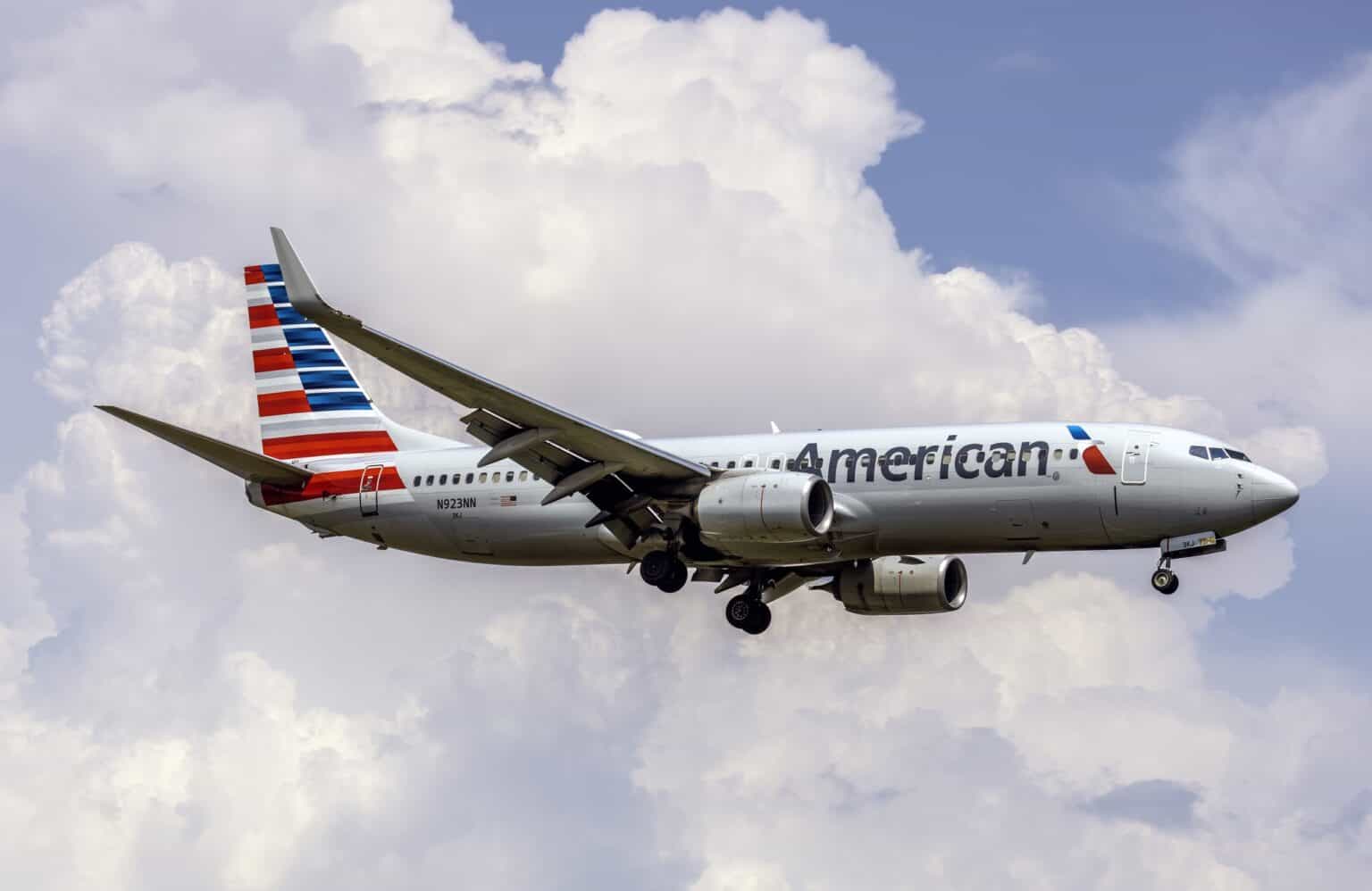
The FAA has ordered airlines to replace overhead video monitors on Boeing 737NG jets with versions held by a backup tether, after some of the screens broke free of their mounting rails during a hard landing. Airworthiness Directive 2026-20-13 was published in the Federal Register on October 19, 2026, and takes effect on November 23, 2026.
The rule covers the 737-600, -700, -700C, -800, -900 and -900ER, but only airplanes fitted with monitors mounted on the passenger service unit, or PSU. The FAA estimates that 459 US-registered jets are affected.
What came loose, and why it matters
The PSU is the overhead panel above each seat row that holds the reading lights and call buttons. On a Boeing 737-800 or other 737NG equipped with them, video monitors are mounted on the same PSU rails.
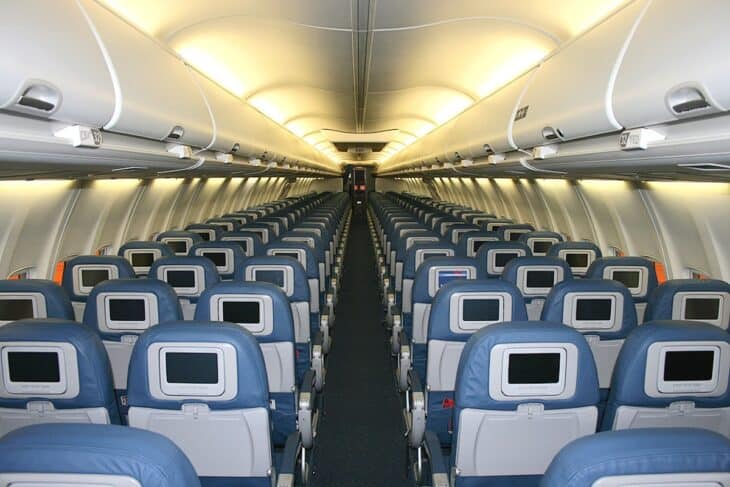

According to the directive, the FAA received a report that some of those monitors detached from the PSU rails during a hard landing. The landing did not exceed the emergency load requirements the PSUs are designed to withstand, the agency said.
That detail is the reason for the rule. A monitor that falls free, or ends up dangling at head height, could injure passengers and get in the way of passengers and crew during an emergency evacuation, the FAA wrote.
The directive does not say when or where the hard landing happened, which airline operated the jet, which make of monitor came loose, or whether anyone was hurt.
What airlines have to do
Operators must swap every PSU-mounted monitor that lacks a secondary retention lanyard for one that has it. The work follows two Boeing Special Attention Requirements Bulletins, both at Revision 1 and dated July 15, 2025: 737-25-1851 RB for Burrana monitors and 737-25-1858 RB for Panasonic monitors.
Jets listed in those bulletins follow the compliance times in Boeing’s tables, counted from the directive’s effective date rather than the bulletins’ issue dates. Any other 737NG with these monitors, for example one fitted under a supplemental type certificate, gets 60 months and needs an FAA-approved alternative method.
Airlines can confirm whether a jet has the monitors by a physical inspection or a records check, the FAA said in answer to a question from Delta Air Lines. The directive does not list which airlines’ 737NGs carry them.
The FAA’s cost estimate assumes up to 30 monitors per airplane, at two work-hours and $170 in labor for each one.
| Monitor group | US airplanes | Cost per monitor | Fleet cost, up to |
|---|---|---|---|
| Burrana (Boeing RB 737-25-1851) | 62 | $2,904 | $5,401,440 |
| Panasonic (Boeing RB 737-25-1858) | 342 | $524 | $5,376,240 |
| Not in either Boeing bulletin | 55 | Up to $2,904 | $4,791,600 |
Added together, the three groups come to as much as about $15.6 million for US operators.
Panasonic pushed back on the wording
Panasonic Avionics asked the FAA to state that some monitors had not come loose in such landings, and described its own fix as a fail-safe enhancement rather than the correction of a defect. The FAA replied that it is unaware of Panasonic monitors detaching in hard landings within the emergency load limits, but it left the text unchanged because the rule already says “some, not all” monitors detached.
The agency also declined to accept a Panasonic service bulletin as a way to comply, saying Panasonic had not provided it and the FAA lacked the data to approve it. Boeing supported the proposal without change.
A slow fix for a cabin hazard
The paper trail runs long. Boeing issued the original bulletins on December 15, 2023, and the FAA proposed the rule on January 17, 2025, before Boeing revised both bulletins that July.
Some airlines may already have done the work. The directive gives credit for jets modified under the original Burrana bulletin, and for airplanes in groups 3 and 4 of the original Panasonic bulletin.
The hazard it targets is one the certification rules have long named. The FAA’s general emergency landing standard for transport-category airplanes, 14 CFR 25.561, says equipment and other large masses in the cabin must be positioned so that, if they break loose, they are unlikely to injure occupants or put the escape facilities out of use.
A second tether is the low-tech answer. The replacement includes making sure each monitor’s inboard lanyard is attached to the inboard PSU rail, according to the FAA’s proposal, so a screen that breaks free should stay tied to the cabin ceiling.
The FAA published a near-identical proposal for Boeing 757-200 and -300 jets on the same day in January 2025. A Federal Register search on October 20, 2026, found no final rule for the 757 yet.
The monitor rule appeared alongside a second 737NG directive in the same October 19 edition, which orders horizontal stabilizer freeplay checks on the same family. Earlier this month the FAA also targeted cabin evacuation equipment on the Airbus side, with an A320 slide inflation hose directive.
Sources and references used for research and fact-checking.
- FAA / Federal Register, Airworthiness Directives; The Boeing Company Airplanes (AD 2026-20-13, Amendment 39-23486, Docket FAA-2025-0004), final rule, October 19, 2026
- FAA / Federal Register, Airworthiness Directives; The Boeing Company Airplanes (737NG PSU-mounted video monitors), proposed rule, January 17, 2025
- FAA / Federal Register, Airworthiness Directives; The Boeing Company Airplanes (757 PSU-mounted video monitors), proposed rule, January 17, 2025
- eCFR, 14 CFR 25.561, Emergency landing conditions: General
Get the Newsletter
The latest aviation news and stories sent to your inbox.
About the Author

AeroCorner News is the aviation news desk of AeroCorner.com. It covers accidents and incidents, safety rulings, airline and airport disruption, and new aircraft. It works from primary sources such as the NTSB, FAA, EASA and the manufacturers' own announcements.